
Pa. election 2026: What to know about the governor’s race between Josh Shapiro and Stacy Garrity
Here’s a look at what’s at stake in the midterm race, where Shapiro and Garrity stand on key issues and more.
Listen 1:06

File: Democratic incumbent Gov. Josh Shapiro faces challenger Republican Stacy Garrity in Pennsylvania's 2026 election for governor. (AP Photo/Marc Levy, File)
- Pa. governor’s race: Who’s running | What’s at stake | Where Shapiro and Garrity differ | Path to victory
- Democrat Josh Shapiro: About | Political experience | Top priorities | Points of contention
- Republican Stacy Garrity: About | Political experience | Top priorities | Points of contention
In the Nov. 3 general election, Pennsylvania voters will decide who will serve as governor and lieutenant governor for the next four years.
Here’s what voters should know about the 2026 gubernatorial race:
Who are the candidates?
Democratic Gov. Josh Shapiro and running mate Lt. Gov. Austin Davis are running for a second term. The incumbent duo faces Republican state Treasurer Stacy Garrity and her running mate Jason Richey, along with Libertarian Ken Krawchuk and his running mate John Thomas. Green Party nominee Tony Dastra was also running but failed to make the ballot for November.
Minor-party candidates have historically struggled to break through in Pennsylvania governor races. When Krawchuk last ran in 2018, he received 0.98% of the vote; the Green Party nominee that year received 0.55%, according to official state returns.
What does the governor do?
The governor proposes the state budget and negotiates spending and policy priorities with lawmakers while overseeing agencies responsible for education, health care, environmental regulation, prisons and state police.
The governor can also sign or veto legislation, issue executive orders, declare emergencies, make appointments and grant pardons or commute sentences when recommended by the Board of Pardons.
The statewide elected office is limited to two consecutive four-year terms.
By definition, the lieutenant governor’s role is secondary to that of the governor, but the choice of running mate has consequences. The lieutenant governor takes over if the governor cannot finish the term — including if the governor is elected president of the United States. The lieutenant governor also presides over sessions of the Pennsylvania State Senate and serves as the deciding vote when the Senate is tied, except on final bill passages.
What’s at stake in the governor’s race
The Pennsylvania legislature is narrowly divided. Democrats hold 103 seats in the state House to Republicans’ 100, while Republicans hold a 27-23 state Senate majority. The split has forced Shapiro to negotiate with GOP senators and has stalled priorities from both parties.
The election could determine whether the next governor continues to face divided government or works with a legislature controlled by the same party, giving the executive significant power to implement their agenda.
The winner will also confront rising energy and housing costs, pressure to finish the court-ordered overhaul of public school funding, growing electricity demand from data centers, recurring fights over transit funding and debates over abortion, marijuana and election rules.
Where do Shapiro and Garrity split on the issues?
The candidates’ sharpest differences are over abortion, education, energy and elections. Shapiro supports abortion rights and has used his office to protect access, while Garrity has a long anti-abortion record, though she now says she would not sign a ban.
Shapiro has directed billions of additional dollars toward public schools and backed an adequacy formula aimed at underfunded districts. Garrity favors a broader school-choice approach that would steer more support toward charter, cyber charter and private-school alternatives. Shapiro has also supported a school voucher program in the past, but Democrats pushed back on his efforts.
Both say Pennsylvania needs more electricity generation and lower utility bills. Shapiro’s plan mixes natural gas, nuclear power and renewables and would tighten some environmental standards; Garrity would put greater emphasis on natural gas production and tax cuts.
On elections, Shapiro has defended mail voting and expanded automatic voter registration. Garrity supports stricter voter-identification and ballot-handling rules and has criticized how the 2020 election was administered.
What will it take to win the governor’s race?
Shapiro begins the fall campaign with the advantages of incumbency, broad name recognition and a strong approval rating. Fifty-six percent of Pennsylvania voters approve of Shapiro’s performance, including 23% of Republicans, a poll from Quinnipiac University showed.
Garrity’s favorability rating was 22%, while 58% of voters said they had not heard enough about her.
“Still one of the country’s most popular governors, Josh Shapiro benefits by his opponent Stacy Garrity’s greatest obstacle: people don’t know much about her,” Quinnipiac polling analyst Tim Malloy said in a written statement.
Pennsylvania voters have also elected Democrats in the last three governor races — the last Republican to win was Tom Corbett in 2010. But the commonwealth remains closely divided: President Donald Trump carried it in 2016 and 2024, while Joe Biden won it in 2020.
Both campaigns will likely need to turn out their respective support — Shapiro in metro areas such as Philadelphia and Pittsburgh and Garrity in the state’s rural counties — while competing for swing voters in the populous suburbs around Philadelphia and in the Lehigh Valley.
Garrity’s central challenge is introducing herself to voters and motivating Republicans who may not be as energized about this year’s election. Shapiro will likely have to keep the cross-party support — as reflected in his job-approval numbers — while further energizing his Democratic base.
The legislative races add another layer. Democrats are trying to hold their narrow House majority and flip three Senate seats to gain full control of Harrisburg, while Republicans are seeking to defend the Senate and win back the House. The governor’s race could shape turnout in those contests, and the legislature elected alongside the governor will determine how much of either candidate’s agenda can become law.
Related Content

Pa. election 2026: Voter guides, key races and more
Election Day is Tuesday, Nov. 3. Here’s what you should know beforehand, from voter deadlines to who’s on the ballot in Philadelphia and statewide.
1 day ago
What to know about Josh Shapiro, the Democratic incumbent
Shapiro, 53, grew up in Montgomery County and earned a law degree from Georgetown University. After working on Capitol Hill, he served in the state House and on the Montgomery County Board of Commissioners before winning two terms as attorney general.
As attorney general, Shapiro released a scathing statewide grand jury report documenting child sexual abuse and institutional concealment in Pennsylvania’s Catholic dioceses. He helped negotiate opioid settlements that brought substantial funding to Pennsylvania and defended Pennsylvania’s 2020 presidential election results against legal challenges from Trump and Republicans. His office also investigated and brought cases involving worker pay, consumer protection and environmental violations.
He is an observant Jewish man whose faith is an important part of his public identity. He and his wife, Lori, have four children together.
Related Content
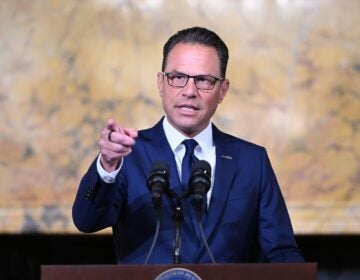
Governors’ races are being increasingly buffeted by the toxic politics of data centers
Pennsylvania Gov. Josh Shapiro is just one of several governors across the country trying to address the hot button issue of residents not wanting data centers near them.
6 days ago
What to know about Stacy Garrity, the Republican challenger
Garrity, 62, grew up in Bradford County and earned a finance and economics degree from Bloomsburg University. She served for three decades in the Army Reserve and retired as a colonel after three overseas deployments, during which she received two Bronze Stars and the Legion of Merit. At Camp Bucca, an American detention facility in Iraq, she became known as the “Angel of the Desert” for her compassionate treatment of prisoners.
Garrity also worked for Global Tungsten & Powders in Towanda, where she rose from cost accountant to vice president of government affairs. Her work included lobbying for federal policies benefiting domestic tungsten producers.
After an unsuccessful congressional bid in 2019, Garrity narrowly defeated Democratic Treasurer Joe Torsella in 2020. She won reelection in 2024 with approximately 3.5 million votes, the largest statewide vote total in Pennsylvania history.
Garrity is a self-described “strong ally of President Trump,” campaigned for him in 2024 and has received his endorsement in the governor’s race.
Related Content
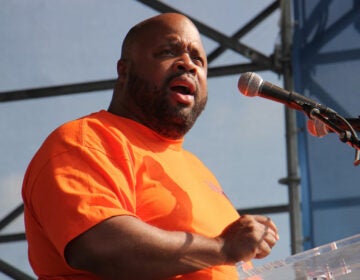
The Philadelphia Building Trades and Construction Council supported Stacy Garrity for state treasurer in 2024. Now, the union is campaigning against her bid for governor.
1 week ago
Listen 1:03
Get daily updates from WHYY News!
WHYY is your source for fact-based, in-depth journalism and information. As a nonprofit organization, we rely on financial support from readers like you. Please give today.
Part of the series
The ruling creates uncertainty weeks ahead of the 2026 midterms. Here’s what that means for Pennsylvania voters.
4 hours ago

Delaware election 2026: These 3 Democrats are hoping to replace Treasurer Colleen Davis
Ted Lauzen, Michael Alexander Smith and Mike Miller are looking to fill the seat of incumbent Colleen C. Davis, who announced she would not be running for reelection.
12 hours ago
Pa. election 2026: Voter guides, key races and more
Election Day is Tuesday, Nov. 3. Here’s what you should know beforehand, from voter deadlines to who’s on the ballot in Philadelphia and statewide.
1 day ago