
Pennsylvania Gov. Shapiro signs wide-ranging executive order reining in data center development
While stopping short of issuing a moratorium on new data centers, Shapiro’s executive order accuses developers of “predatory” behavior against local communities.
Listen 1:20
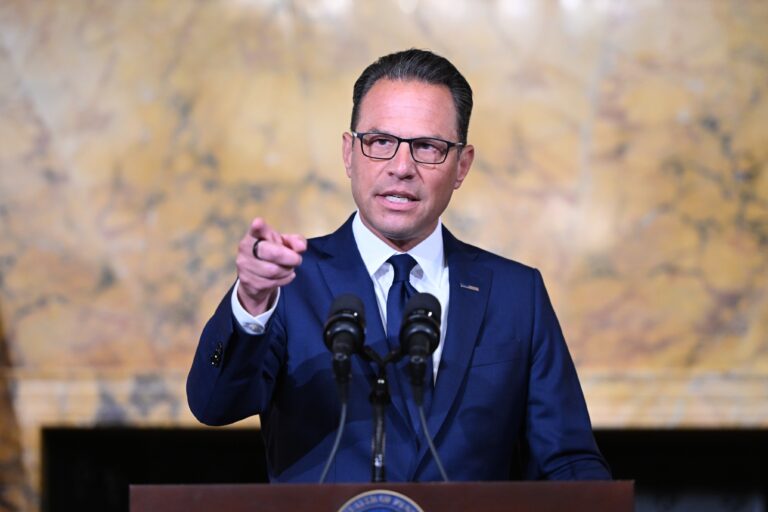
Pennsylvania Gov. Josh Shapiro speaks during a news conference at the state Capitol, Tuesday, Aug. 18, 2026, in Harrisburg, Pa. (AP Photo/Marc Levy)
This story is part of the WHYY News Climate Desk, bringing you news and solutions for our changing region.
From the Poconos to the Jersey Shore to the mouth of the Delaware Bay, what do you want to know about climate change? What would you like us to cover? Get in touch.
Gov. Josh Shapiro signed an executive order Tuesday, dramatically shifting his stance on data center development in Pennsylvania, calling out “predatory” data center developers who are “running roughshod” over local communities.
“While there are no AI data centers up and running right now in Pennsylvania, and only five have the permits they would need to begin operating,” Shapiro said at a press conference , “these speculators are nevertheless scaring our communities — being aggressive with township officials, bullying our neighbors and refusing to listen to the people of Pennsylvania.”
While not naming him directly, Shapiro had strong words for the Montgomery County developer Brian O’Neill, who local officials have accused of “bullying” behavior to get his hyper-scale data center plans approved.
“Instead of respecting those residents, listening to them and trying to work with them, that developer is attempting to sue his way into building these data centers,” Shapiro said. “And he is creating this chaos and stoking fear in the community, even though he has no realistic path to getting power at the sites any time soon. Here’s something else he has no realistic path to getting: my support.”
A representative for O’Neill said he had no comment.
The remarks and the wide-ranging executive order are a sharp departure for Shapiro, who had touted data center development in his February budget address.
But as more proposals surface, and local opposition mounts to artificial intelligence and the data centers that power it, Shapiro said he has listened to residents and local officials struggling to beat back proposals that he said “lack detailed plans, have insufficient financing, don’t have access to the electricity they actually need to build these centers and have no agreement with a tech company to use the space once it’s built.”
A recent poll by the University of Pennsylvania’s Annenberg Public Policy Center found that 61% of U.S. citizens, both Democrats and Republicans, oppose new data center construction. The research revealed a sharp jump in opposition by 12 points in just four months after a previous survey.
Shapiro is running for reelection against Republican Stacy Garrity, who has called for a “pause” on data center development. He is also rumored to be eyeing a run for president in 2028.
Related Content
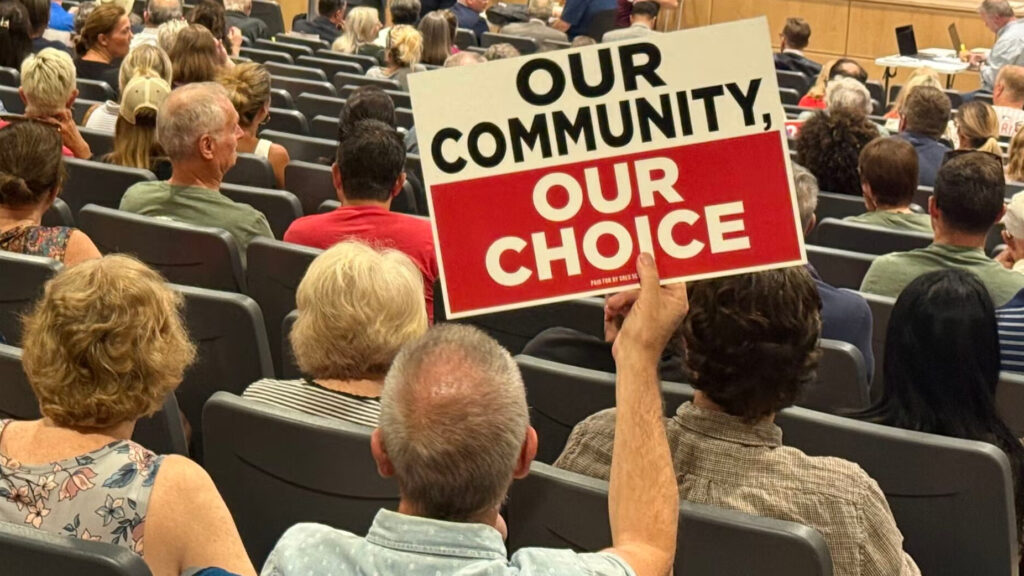
Opposition to data center construction is rising sharply, survey says
Opposition has jumped significantly among both Democrats and Republicans, according to a recent Penn poll.
2 months ago
Listen 1:07What is in Shapiro’s executive order on data centers?
The order eliminates fast-tracked data center permit approvals, a key provision outlined in his budget address that applied to those who agreed to abide by the Governor’s Responsible Infrastructure Development, or GRID, standards. Data center developers are now required to implement the GRID standards, which were passed by the state House but stalled in the Senate. Developers will have to sign a consent order agreeing to the GRID terms, and could face penalties if they fail to comply.
Data center plans, including water usage and any resulting pollution, will also have to be permitted by the Pennsylvania Department of Environmental Protection. The order also instructs the DEP to create new regulations limiting data center pollution.
In addition to increasing global-warming carbon emissions, data centers that use natural gas and diesel engines impact local air quality. They can also use significant water to cool the servers, which has dried up residential wells in some parts of the country.
One of the requirements of GRID is that data centers will also have to “bring their own power” and not rely on the region’s electrical grid. Centers will also have to commit to provide 32% renewables by 2035.
“They must get an increasingly significant portion of that power from clean energy sources like solar, advanced nuclear and battery storage,” Shapiro said.
Speculative data center development has helped drive up the costs of electricity bills, according to PJM Interconnection, the region’s grid operator. That’s because PJM has to plan for future demand by holding auctions to ensure a reliable supply. If data center developers report a high demand for power, but are never built, that can artificially drive up the cost of electricity supply for everyone.
New data centers planned for the regional grid, which includes 13 states and the District of Columbia, make up 94% of new energy demand for the next four years, according to PJM.
“No one’s utility bill should go up because these wealthy companies don’t pay their fair share,” Shapiro said. “They should pay for every penny of electricity that they need.”
Some speculate that the extra load by data centers could result in rolling blackouts. But Shapiro said if a shortage occurs, data centers that are attached to the grid will have to go offline.
PJM Interconnection has a proposal to federal regulators that would also have the data centers that don’t bring their own power be subject to shutting down on days when there’s a shortage of electricity.
Under Shapiro’s executive order, developers will also have to pay for any infrastructure upgrades to the grid, rather than socializing those costs among all ratepayers, which is the current practice.
“What we’re seeing today is a compounding threat,” said Patrick Cicero, an attorney with the Pennsylvania Utility Law Project, which works to protect low-income ratepayers. “Rising energy bills driven by data center load growth and a regulatory system that cannot move fast, but for too long has also been tilted against communities and consumers.”
Cicero, who spoke at the governor’s press conference, said that in 2025, almost 290,000 Pennsylvania residents had their electricity shut off for nonpayment.
“That is a 14% increase over 2024,” he said. “We cannot have a system where billion-dollar companies get economic windfalls and a grandmother in Pennsylvania gets stuck paying the electricity bill.”
Cicero said he wants to see the Public Utility Commission require data centers pay into the fund that helps keep the lights on for low-income families.
The order also gives priority to local authorities, blocking any state approvals if the developers fail to get approval from communities. If local municipalities do approve of the projects, the developers must negotiate a community benefits agreement.
“These are the wealthiest companies in the world, they shouldn’t get a tax break for gouging our communities,” Shapiro said.
Shapiro also touted the state’s Environmental Rights Amendment in his remarks, which guarantees clean air and clean water to all residents under the state constitution.
Related Content
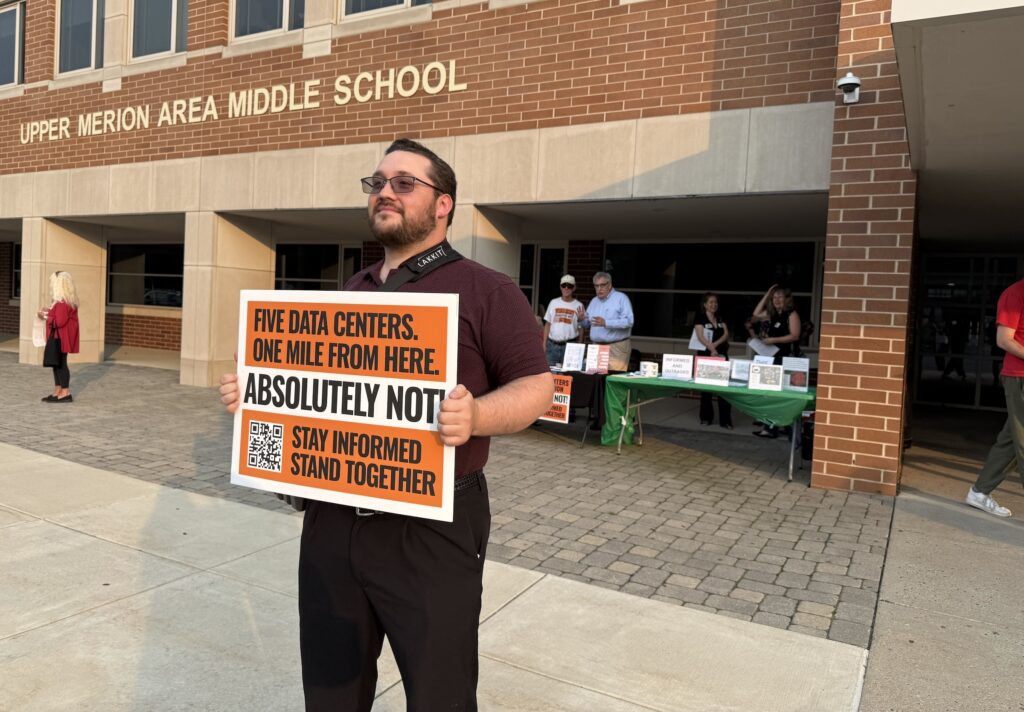
Upper Merion board denies hyperscale data center campus near King of Prussia
Residents have pushed back against the data center campus, voicing concern about noise, pollution and impacts on property values.
2 months ago
What does the data center industry say about Shapiro’s executive order?
In an emailed statement, Data Center Coalition Executive Vice President Dan Diorio said the industry wants to protect “the interests of residents and communities across the Commonwealth,” but cautioned against the sudden change in rules.
“In distinguishing speculative proposals from real projects, it’s important that rules are not changed midstream impacting ongoing investment in verified and responsible data center projects,” Diorio said. “Companies have made plans, communities have prepared for economic opportunities, and workers are ready to build the next generation of digital infrastructure right here in Pennsylvania.”
Diorio said the industry “supported 129,600 jobs, contributed $19.6 billion in GDP, and generated $1.9 billion in state and local taxes” in the state in 2024.
“Clear, predictable, and workable standards can help provide communities with confidence while allowing Pennsylvania to compete for billions of dollars in investment, create jobs, and strengthen local economies. One-size-fits-all policies that stifle investment and job creation are not the path forward,” Diorio said.

Get daily updates from WHYY News!
WHYY is your source for fact-based, in-depth journalism and information. As a nonprofit organization, we rely on financial support from readers like you. Please give today.
Part of the series
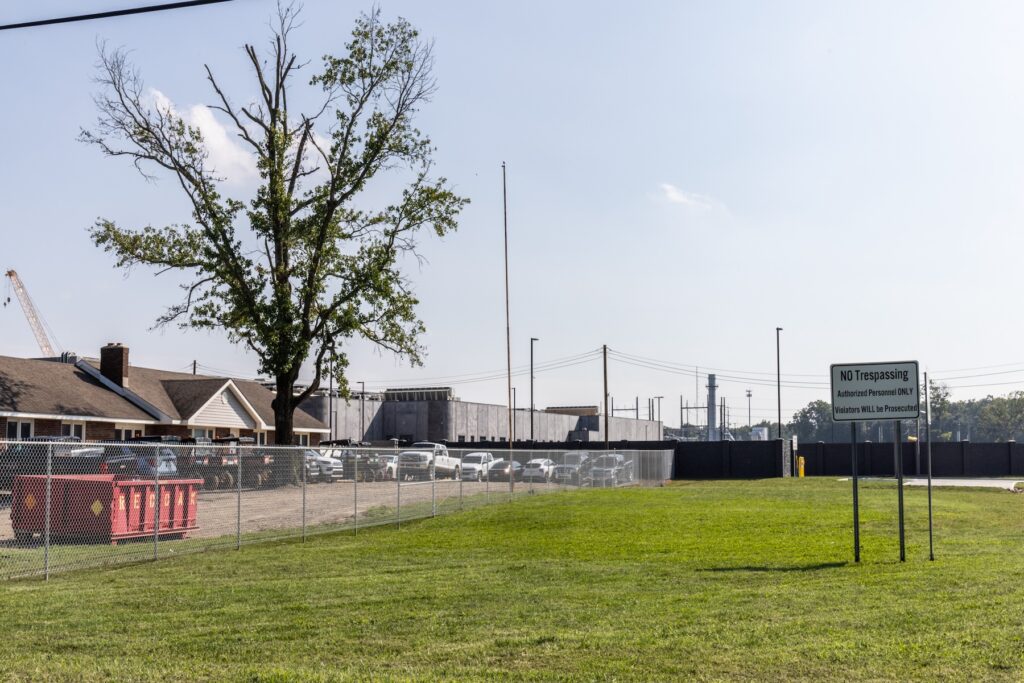
Vineland residents plan to sue data center over unpermitted natural gas engines
The data center in South Jersey was fined last month for operating natural gas engines without a permit.
16 hours ago
Listen 1:07
Hydropower parts manufacturer in Northeast Philadelphia lands federal research partnership
Kingsbury plans to test new materials for hydroelectric power equipment that can support the needs of modern-day grids.
3 weeks ago
Listen 1:09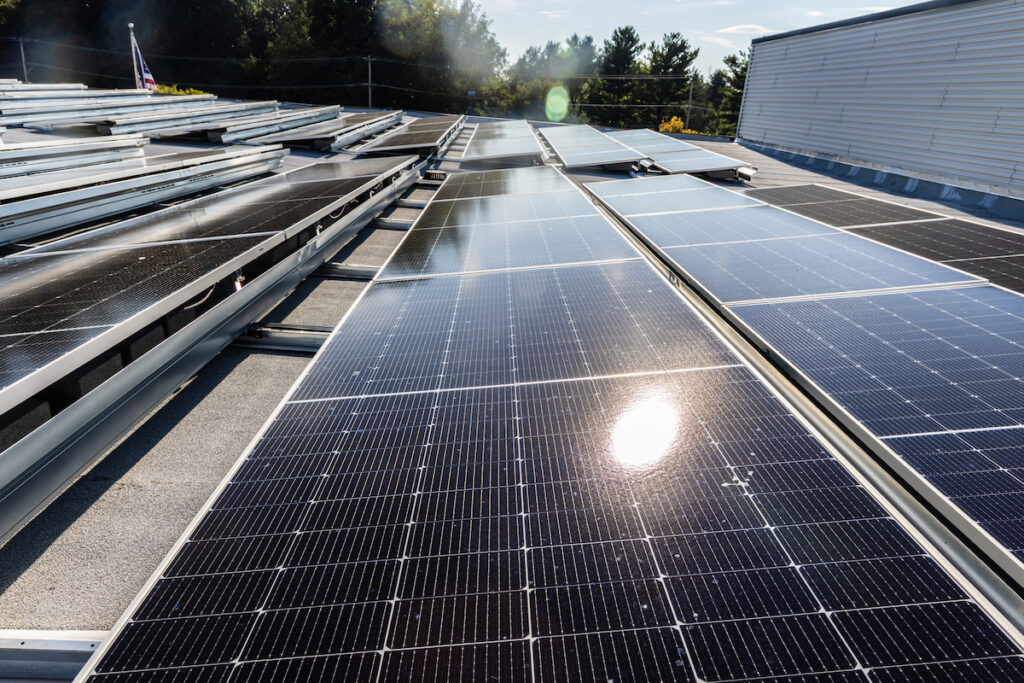
Philadelphia-area schools are tapping the sun’s energy and saving money on utilities
Unionville High School in Kennett Square and Universal Audenried Charter School in Philadelphia are building solar arrays that will slash their energy bills.
4 weeks ago
Listen 1:04