

Delaware at-home solar initiative aims to reduce energy bills while reducing emissions
The plan aims to expand access to grants and rebates that help people install solar at home.

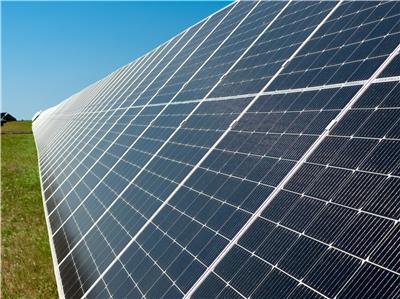
File: Solar panels in Oregon. (Business Wire)
This story is part of the WHYY News Climate Desk, bringing you news and solutions for our changing region.
From the Poconos to the Jersey Shore to the mouth of the Delaware Bay, what do you want to know about climate change? What would you like us to cover? Get in touch.
As energy bills continue to soar, Delaware is taking new steps to help more residents save money by connecting to solar power.
Gov. Matt Meyer announced last week what he calls the “most comprehensive” solar and battery storage program in the U.S.
The initiative, dubbed Delaware SHINES, will offer grants, loans and rebates to help residents, small businesses and nonprofits utilize solar energy generation and battery storage. The goal is to lower energy bills, decrease the state’s greenhouse gas emissions and reduce strain on the electric grid.
The initiative, which stands for “Solar + Storage Home Incentive Network for Economic Stability,” comes about a year after the Trump administration dismantled parts of the Inflation Reduction Act, which provides incentives for green energy. The move repealed the Residential Clean Energy Credit, which covers up to 30% of the cost of installing qualified clean energy properties, such as solar energy projects.
“We understand that what is being done in Washington is neither based on sound energy science, nor economic policy,” Meyer said during an interview with WHYY News. “If you want to reduce costs for Delawareans and Americans, if you want to sustain the environment for generations to come, we should be incentivizing solar and wind and other renewable energy forms.”
The price per unit of energy, as well as the price to deliver energy to households, has increased significantly – driving energy companies like Delmarva Power to raise peoples’ bills.
Prices for grid operator PJM Interconnection’s capacity auction, a complex pricing system that guarantees future electricity supply, have increased significantly because of a supply-demand imbalance, increased demand from AI data centers and slow construction for new energy generation.
The energy needed to power data centers, large facilities that house servers that fuel artificial intelligence and cloud computing, has led some states to pass laws preventing those costs from being handed down to residents.
Experts say at-home solar and battery storage can reduce the load, decreasing open-market power purchases.
“Anything that you can do to generate your own electricity, as well as reduce your consumption, which is the cheapest and cleanest thing to do, can be beneficial,” said Drew Slater, executive director of Energize Delaware, which is helping to coordinate Delaware SHINES. “Because I don’t think their prices are going to come down anytime soon at the PJM market, which is a significant part of your everyday bill.”
Meyer said one of his goals is to ensure Delaware produces more of its own power. About 60% of the state’s total electricity is brought in from out-of-state power suppliers through the PJM grid.
Related Content
Wilmington residents encouraged to sign up for community solar initiative
Proponents of community solar energy say the initiative is a solution to rising costs of electricity.
6 months ago
Listen 1:26Reducing energy bills
Families are struggling to keep up with the cost of keeping the lights on. In 2024, there were more than 30,000 electric service disconnections in Delaware because of unpaid bills, according to the U.S. Energy Information Administration.
Households that use solar can benefit from significant energy savings, but the amount varies based on a household’s size and power usage. The process works through net-metering, which credits homeowners and businesses for the excess electricity their solar panels send back to the grid.
Russell Pfaller, operations manager at Green Street Solar, said people who finance solar systems typically see a full return on their investment before their loan is over.
“It does vary per individual, but if you’re paying cash and not paying any interest at all, if you are a Delmarva Power customer with a relatively good exposure to the sun, it’s not unreasonable to see a six-year, five-year, return on investment,” he said.
At-home solar generates electricity from sunlight, while battery storage saves that surplus electricity for later use. Batteries allow residents to store energy and use it when they lose connection to the grid. In states that have higher energy rates during certain times of the day, residents can use their batteries to save money.
In the future, the program may also make way for virtual power plants on peoples’ roofs. Virtual power plants utilize solar panels, batteries, electric vehicle chargers and smart thermostats that are linked together by software to operate like a single, large power plant.
Delaware SHINES will utilize existing energy programs in the state to expand access to at-home solar and battery storage.
The state’s Department of Natural Resources and Environmental Control will use increased Green Energy Fund grants to help make installing solar projects more affordable for residents.
Related Content
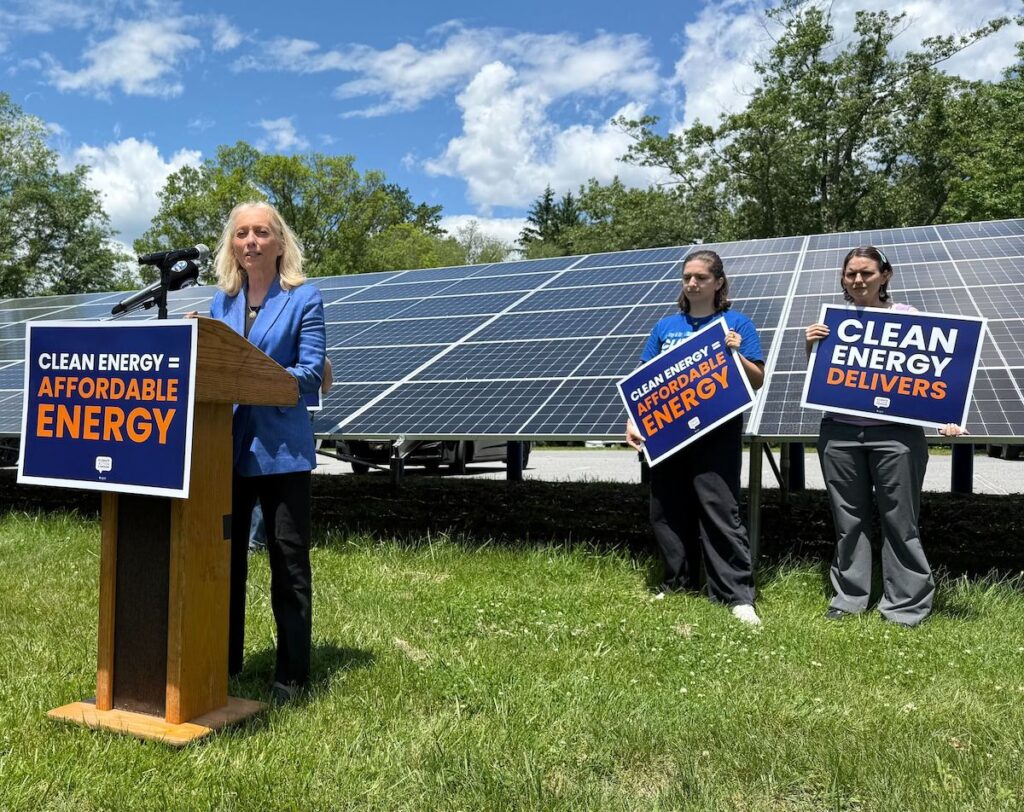
Pennsylvania lawmakers push federal bill to boost clean energy
The Energy Bills Relief Act would reinstate tax incentives and speed the development of new clean energy projects.
5 months ago
Listen 1:12The program, which began in 1999, offers financial rebates and incentives for the installation of renewable energy systems. The program this year raised residential solar rebates from $6,000 to $10,000.
Delaware SHINES will also be coordinated by the state’s Energize Delaware program. Funded by the Regional Greenhouse Gas Initiative, it offers energy audits, financial incentives and low interest financing to help residents and businesses connect to solar.
Slater said the nonprofit saw a spike in demand for its services in the weeks before the federal tax credits expired. Since then, it has increased its loan maximum from $30,000 to $50,000. The loans now cover 100% of a project’s cost, and its terms have increased to up to 15 years. The interest rate remains the same at 3.9%
Delaware SHINES aims to help reduce the financial barriers to accessing solar.
“In the past, there’s always been an argument, ‘I have to pay more for the solar than I’d be paying for the electricity from the grid,’ or ‘I’m basically paying the same thing,’” Pfaller said. “These [Delaware SHINES] incentives bring you to a place where it actually does make sense on paper.”
In addition to lowering energy bills, Meyer said the plan will create jobs in the energy sector and help the state meet its goal of reducing greenhouse gas emissions by 50% by 2030.
“We’re increasing affordability while reducing the impact on climate, reducing the reliance on fossil fuels and on gas and the oil powered energy,” he said. “Every rooftop system is power generated, not through importation from another state or country, its emissions not produced, and its money very directly kept in Delaware family’s pockets when climate policy and kitchen table economics point in the same direction.”

Get daily updates from WHYY News!
WHYY is your source for fact-based, in-depth journalism and information. As a nonprofit organization, we rely on financial support from readers like you. Please give today.
Part of the series
Hydropower parts manufacturer in Northeast Philadelphia lands federal research partnership
Kingsbury plans to test new materials for hydroelectric power equipment that can support the needs of modern-day grids.
6 days ago
Listen 1:09
Nor’easter scoured Jersey and Delaware beaches, causing erosion and flooding
A 2025 beach-replenishment project in Atlantic City cost about $40 million, while work this year in Sea Isle, Strathmere and Ocean City had a $41 million price tag.
2 weeks ago
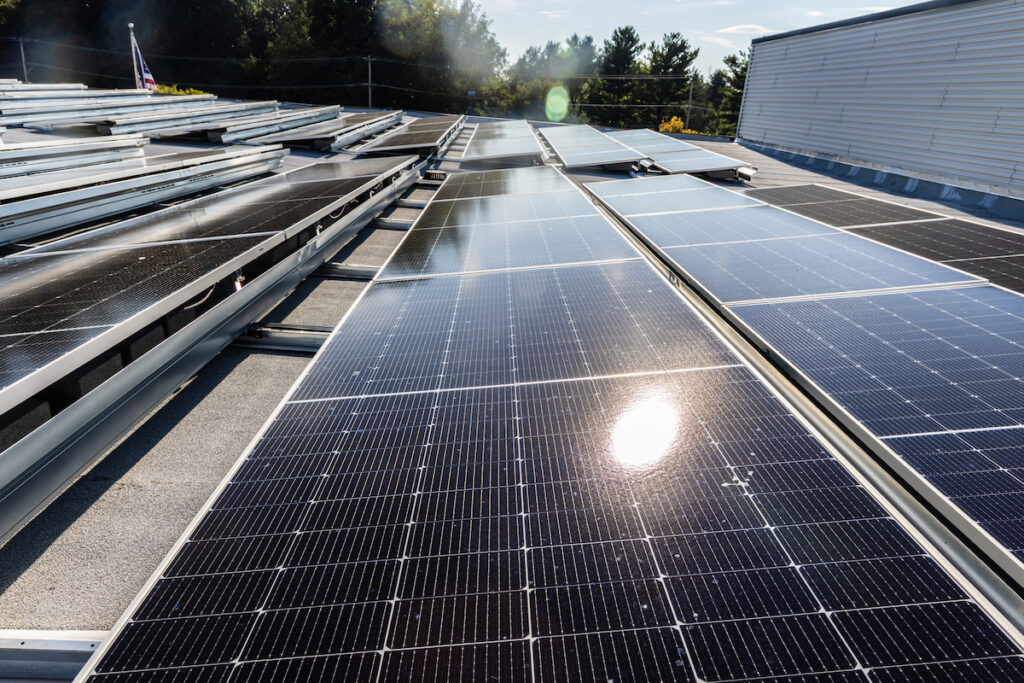
Philadelphia-area schools are tapping the sun’s energy and saving money on utilities
Unionville High School in Kennett Square and Universal Audenried Charter School in Philadelphia are building solar arrays that will slash their energy bills.
2 weeks ago
Listen 1:04