


Speed up Philadelphia port expansion plan to keep pace with East Coast rivals, City Controller says
The report points to deeper shipping channels, expanded terminals and better road and rail connections as key to PhilaPort’s long-term growth.
Listen 1:06
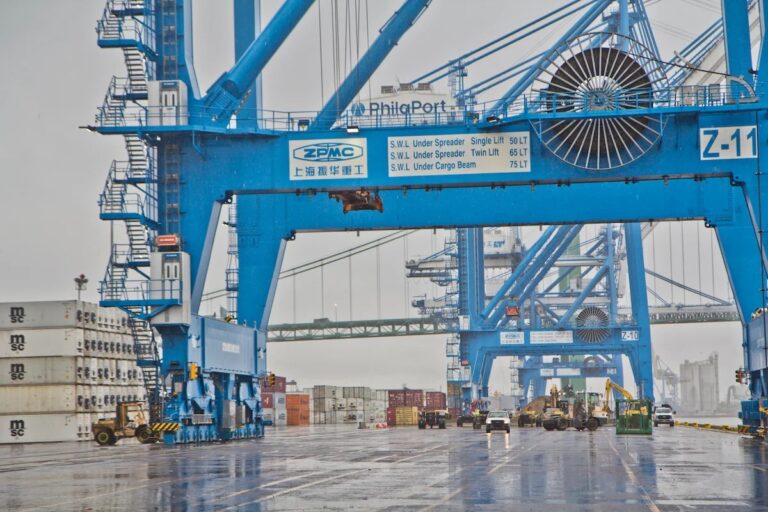
FILE - PhilaPort oversees the city’s shipping terminals and warehouses. (Kimberly Paynter/WHYY)
Have a question about Philly’s neighborhoods or the systems that shape them? PlanPhilly reporters want to hear from you! Ask us a question or send us a story idea you think we should cover.
The Port of Philadelphia risks losing ship traffic to ports in New York, New Jersey and other states unless it accelerates implementation of its expansion plan, City Controller Christy Brady says in a new report.
PhilaPort, the agency that oversees the city’s shipping terminals and warehouses, released a strategic plan in October 2024 that calls for several measures to improve its competitiveness, including creation of more storage space, terminal modernization and a controversial proposal to deepen the Delaware River’s main shipping channel to 50 feet.
The plan, Destination 2040, would spark a traffic increase, creating 9,000 jobs directly involved in port operations and generating $3 billion in additional revenue for businesses, the agency estimated. The port has handled about 7.4 million tons of cargo annually in recent years and currently supports 8,000 direct and indirect jobs, such as those at outside businesses that serve port operations.
But Brady said PhilaPort must pick up the pace on its plan to avoid falling behind its competitors and ensure the work includes steps that other port cities have taken in recent years, such as coordinated road and rail improvements to accommodate increased cargo movement.
“The comparison with other East Coast ports demonstrates that long-term success depends on more than expanding terminals,” she wrote in her report.
“The nation’s leading ports are investing in coordinated transportation networks, deeper navigation channels, environmental initiatives, and diversified operations to position themselves for future growth. Destination 2040 reflects many of these same priorities, but timely implementation will be critical,” Brady wrote.
A decades-long project to dredge and dig out rock from the Delaware’s main shipping channel to a depth of 45 feet was completed in 2021, and the authority now wants to deepen it further to 50 feet to attract larger vessels.
The ports in Baltimore and New York/New Jersey have 50-foot channels, and the Port of Virginia in Norfolk is the deepest on the East Coast at 55 feet deep.
Environmentalists have criticized the proposal, saying it would allow salty seawater to move further upriver, threatening local water supplies and the survival of endangered sturgeon and other animals and plants that live in and along the Delaware.
A deepening project would require approvals from the Philadelphia Water Department, the Delaware River Basin Commission, the U.S. Army Corps of Engineers and other agencies.
Related Content

Cruises restarted departures from Philadelphia in April after a 15-year break, offering trips to Bermuda and Canada and creating 2,200 jobs.
2 months ago
More warehouses and better road and rail access
Destination 2040 envisions a wide variety of improvements to PhilaPort’s three port districts: North Port in Port Richmond, Central Port between the Walt Whitman Bridge and the Benjamin Franklin Bridge, and South Port, south of the Walt Whitman Bridge.
In South Port, which has the most room for growth, the authority would improve the site’s road, rail and terminal infrastructure, increase container storage capacity, construct a new wharf, and create additional land by filling in part of the river to expand a pier. In the long term, PhilaPort also wants to conduct a larger land-reclamation project and acquire additional ship-to-shore cranes.
“PhilaPort appreciates the City Controller’s review of Destination 2040 and recognition of the Port’s importance to Philadelphia and the region,” PhilaPort CEO Rich Lazer said in a statement.
“PhilaPort is the fastest-growing port in the country and one of the most efficient ports in North America. With support from Gov. Shapiro and our federal and local partners, we will continue investing in SouthPort, expanding capacity, creating family-sustaining jobs, and positioning Philadelphia to capture new cargo opportunities,” he said.
In North Port, PhilaPort would upgrade a dock and build a new 150,000-square-foot warehouse, a new maintenance and repair facility, and a redesigned gate complex for truck traffic. It also wants to study adding a liquefied natural gas shipping facility.
In Central Port, the planned improvements include building a 150,000-square-foot warehouse, expanding two existing warehouses, and acquiring the mostly abandoned Southwark Generating Station for possible future use.
Related Content
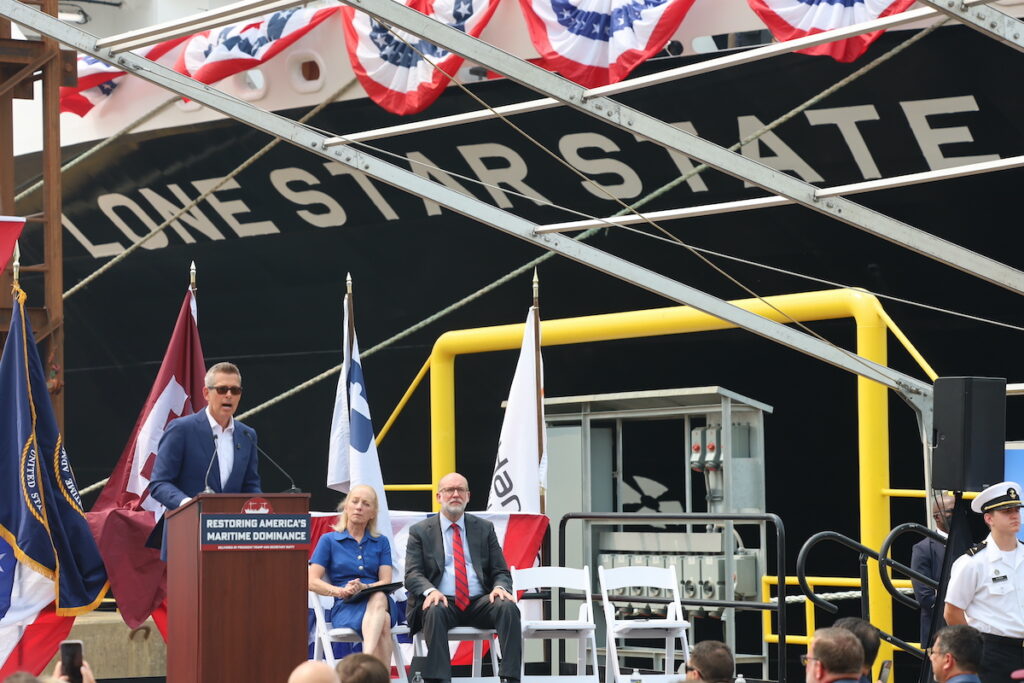
The Hanwha Philly Shipyard was also awarded a contract to build a missile detection ship that will be part of the president’s “Golden Dome” anti-missile defense system.
3 months ago
Listen 1:17Coordinated improvements to boost competitiveness
Brady also reviewed operations and investments underway at other major East Coast ports — Boston, Baltimore, New York and New Jersey, Virginia and Charleston — and identified practices PhilaPort could adopt to increase its competitiveness.
One of her top conclusions was that different types of infrastructure investments should be coordinated.
“Expanding terminals, improving road and rail access, and deepening navigation channels are most effective when planned together as a comprehensive system. Expanding terminal capacity without improving the surrounding transportation network can limit the benefits of the investment,” she wrote.
She also found that transportation connectivity improves the efficiency of cargo movement and reduces congestion; long-term competitiveness depends on accommodating larger ships; and diversifying operations — by adding cruise terminals, energy infrastructure and specialized cargo facilities — improves a port’s economic resilience.
In addition, environmental sustainability has become “an increasingly important part of long-term planning,” she wrote.
PhilaPort has seen increased shipping traffic in recent years. The authority reported a 6% increase in container volume in 2025 compared to the previous year, and said volumes have grown 39% since 2020. That’s in part because of its specialization in temperature-controlled cargo, port officials have said. In 2025, 64% of its containerized imports were refrigerated.
PhilaPort also celebrated the completion of a new $60 million cruise terminal near Philadelphia International Airport in August, after cruise departures resumed in April following a 15-year hiatus.
Officials said the cruise terminal supports 2,185 direct and indirect jobs, and is projected to generate $108 million in wages and $12 million in state and local tax payments.

Get daily updates from WHYY News!
WHYY is your source for fact-based, in-depth journalism and information. As a nonprofit organization, we rely on financial support from readers like you. Please give today.
Brought to you by PlanPhilly

PlanPhilly
In-depth, original reporting on housing, transportation, and development.

Here’s how Jefferson Health will spend a new $28M donation from the Kimmel family in Philly
The hospital’s emergency department will undergo $19 million in renovations, including a new 30-bed medical-surgical unit.
1 year ago

Most legislation to raise the minimum wage in Pennsylvania doesn’t survive a committee vote, but two years ago a bill passed the House but stalled in the Senate.
1 year ago
Listen 0:53
Close to a dozen residents of the flood-prone neighborhood met with members of Congress Tuesday.
1 year ago
Listen 1:10