

Nor’easter scoured Jersey and Delaware beaches, causing erosion and flooding
A 2025 beach-replenishment project in Atlantic City cost about $40 million, while work this year in Sea Isle, Strathmere and Ocean City had a $41 million price tag.
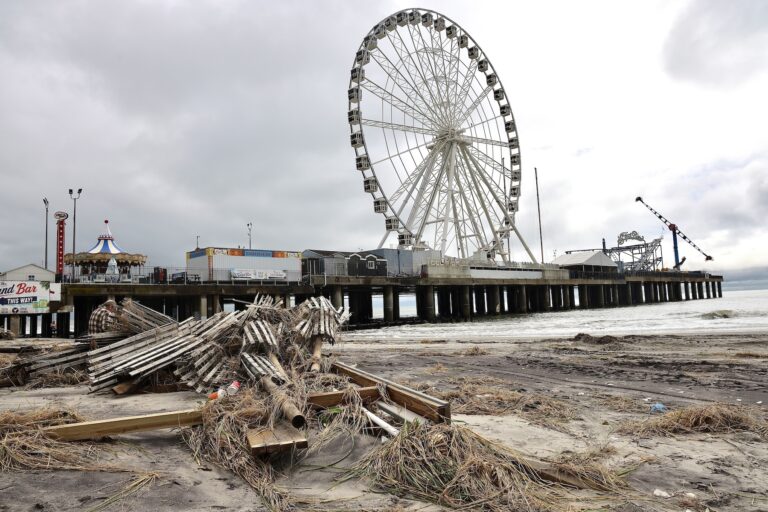
Debris is piled up on the beach in Atlantic City near the Steel Pier after a nor’easter. (Emma Lee/WHYY)
This story is part of the WHYY News Climate Desk, bringing you news and solutions for our changing region.
From the Poconos to the Jersey Shore to the mouth of the Delaware Bay, what do you want to know about climate change? What would you like us to cover? Get in touch.
State and federal officials are assessing damage to the New Jersey and Delaware coastlines after this weekend’s nor-easter scoured the beaches, causing flooding and erosion.
Along the Atlantic City boardwalk, beachgoers strolled and ate lunch on Monday, taking photos where the storm swept away new sand that had reinforced the beach last year, leaving 8–10 feet cliffs between the boardwalk and the beach.
New Brunswick resident Alfred Tumolo is a regular visitor to Atlantic City who said he watched this winter as workers replenished the beach with sand dredged from 2–3 miles out in the ocean.
“I watched the dozers all winter here,” Tumolo said. “You see them digging the sand out there, pumping the sand back to the beach, and they separate the junk out of it, and it’s clean sand again. And then it happens again, the same erosion, just can’t stop it.”
-
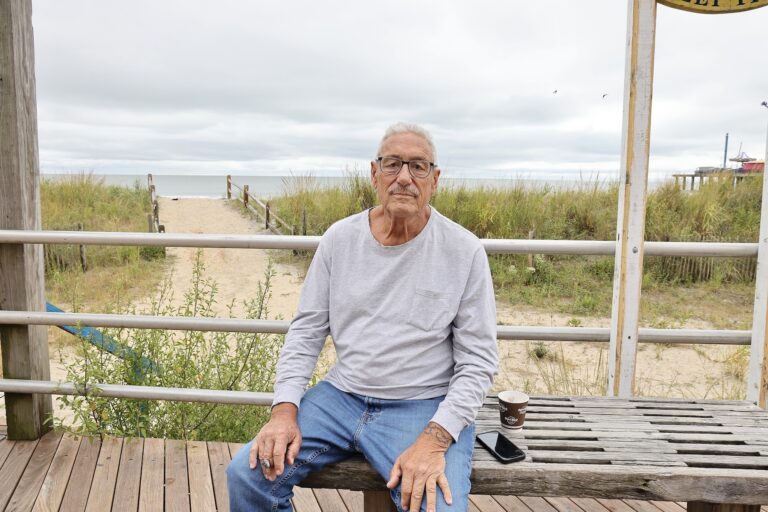
Alfred Tumolo of New Brunswick sits on the boardwalk at Atlantic City, near a beach that was closed because of erosion. (Emma Lee/WHYY) -

Children feed pigeons on the boardwalk in Atlantic City in the calm after a nor’easter. (Emma Lee/WHYY) -
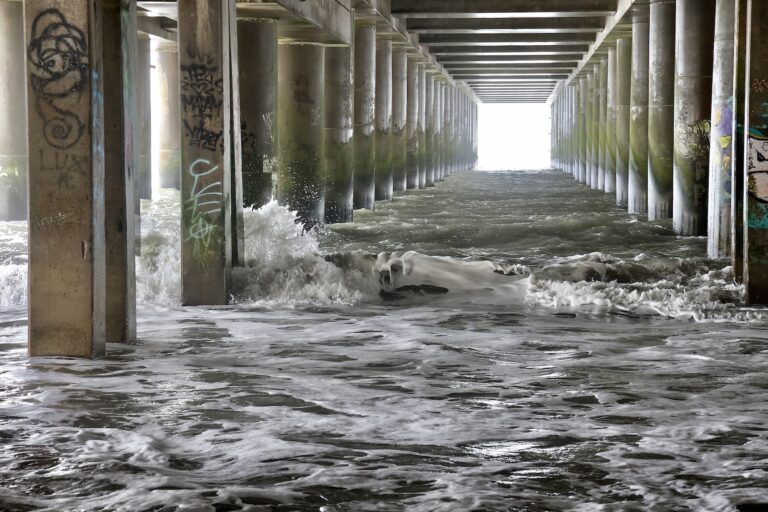
Waves crash against the pillars of Steel Pier in Atlantic City. (Emma Lee/WHYY) -
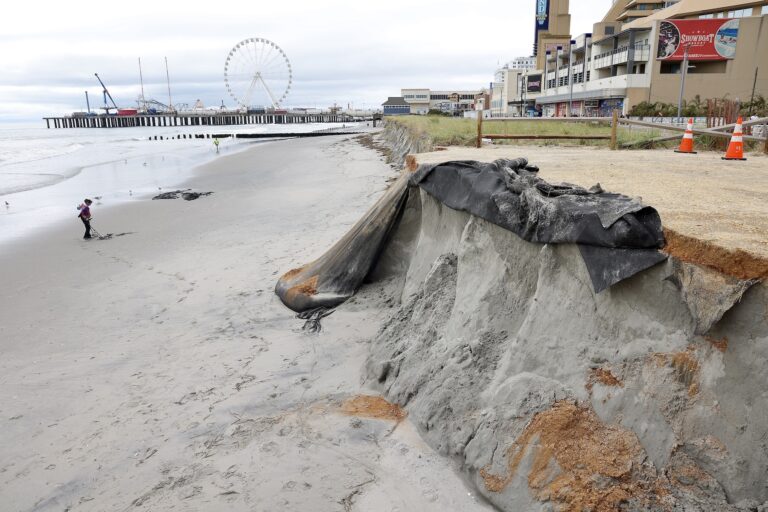
A nor'easter scoured away portions of Atlantic City’s beaches, leaving sand cliffs between the boardwalk and the ocean. (Emma Lee/WHYY) -
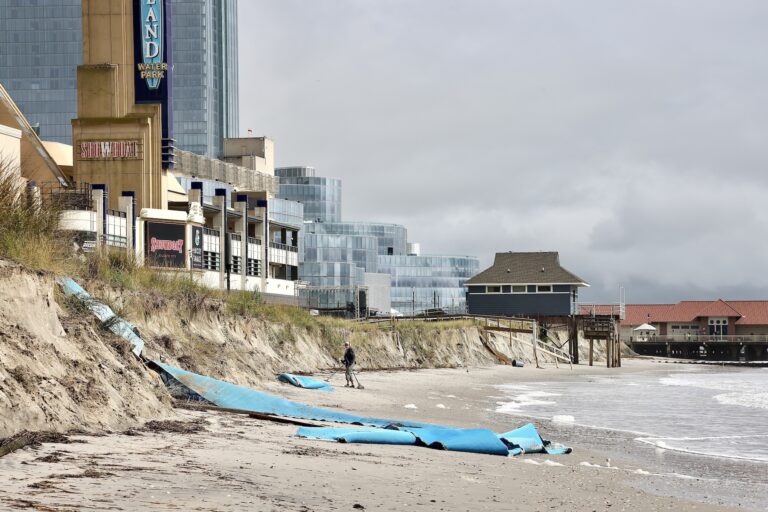
A nor’easter scoured away portions of Atlantic City’s beaches, leaving sand cliffs between the boardwalk and the ocean. (Emma Lee/WHYY)
Steve Downey, chief of the Atlantic City Beach Patrol, said the storm destroyed much of the beach that had been replenished last year, at a cost of about $40 million.
“It’s washed away all, if not pretty much all, of the new sand that they put in between the piers,” Downey said. “Pennsylvania Avenue, North Carolina Avenue, a lot of erosion there as well, it’s not anything we haven’t seen in the past, so it’s kind of to be expected.”
A spokesman for the Army Corps of Engineers said in addition to the 2025 work in Atlantic City, it had completed beach-nourishment projects earlier this year in Sea Isle City, Strathmere and northern Ocean City, which cost $41.1 million. Work in Avalon had just begun before the storm hit.
“There was significant erosion to some of the projects completed earlier this year,” said U.S. Army Corps of Engineers spokesperson Steve Rochette.
Rochette said the Corps also has projects in Delaware’s Fenwick Island, as well as Rehoboth, Dewey and Bethany beaches. He said the dune and beaches are fortified to take the brunt of the coastal storms in order to protect homes and businesses.
“The dunes and beaches are sacrificial in nature,” Rochette said. “We understand that there is going to be erosion with some of these projects. There is the initial construction and then periodic nourishment.”
Related Content
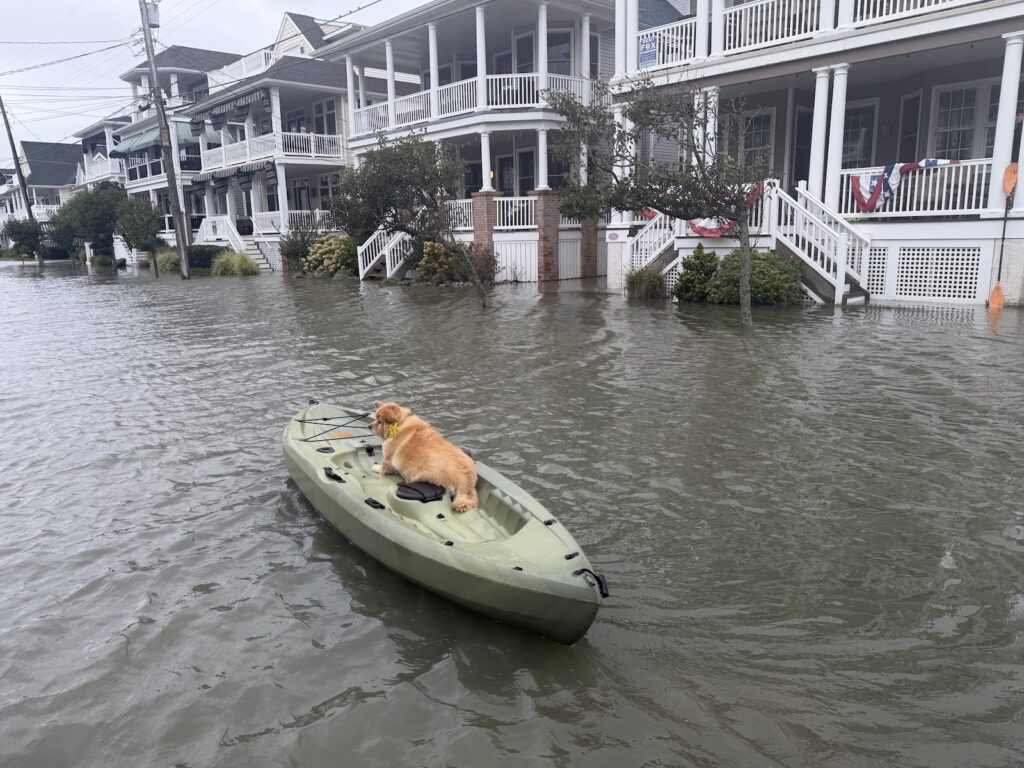
Nor’easter aftermath: Jersey Shore cleanup underway after widespread flooding
In Wildwood, waves breached a beach berm as back bay flooding inundated streets, renewing questions about how to protect the shore.
2 weeks ago
Flooding in the back bay
Rochette said the beaches get damaged by waves, while the back bays present a different challenge.
“It’s unique, it’s more tied towards water pouring in through coastal inlets, storm surges as we know it, and then raising the water levels in the bay, which can flood infrastructure along those areas,” Rochette said.
On Monday, residents and workers were cleaning up Atlantic City’s Ducktown neighborhood, where some streets flooded along an inlet in the back bay.

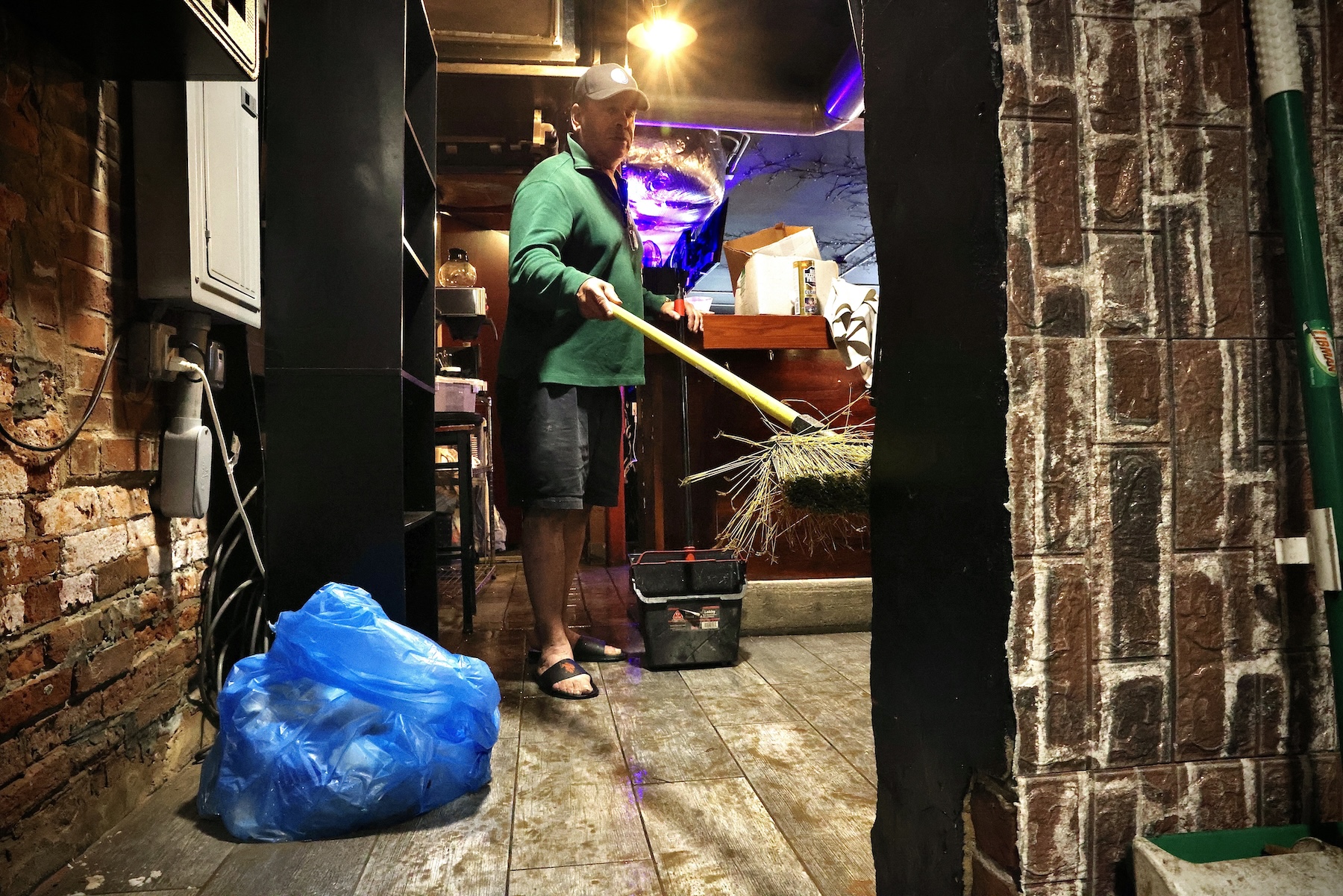
At Moments at Scannicchio’s, an Italian restaurant, employees and a cleaning crew wiped down tables and chairs and hosed muddy water off the kitchen floor.
Employee Frankie Cruz Alejandro said the water crept past flood barriers on the doors and covered the dining room floors about 2 feet high.
He said they learned their lesson during a flood last year — and raised refrigerators off the ground to keep them safe.
“We try to get used to it, but Mother Nature is a mother,” Alejandro said.
A 2019 study by the Army Corps and New Jersey Department of Environmental Protection found that towns along the back bays risk $1.5 billion in damage each year if nothing is done to protect them. Rochette said there have not been any major projects in the back bays.
Rochette said it could be at least a week before its erosion assessment is complete.

Get daily updates from WHYY News!
WHYY is your source for fact-based, in-depth journalism and information. As a nonprofit organization, we rely on financial support from readers like you. Please give today.
Part of the series
Part of the series
Watershed
Preserving Our Water: How we use our Delaware Watershed.
The project is funded by The William Penn Foundation.
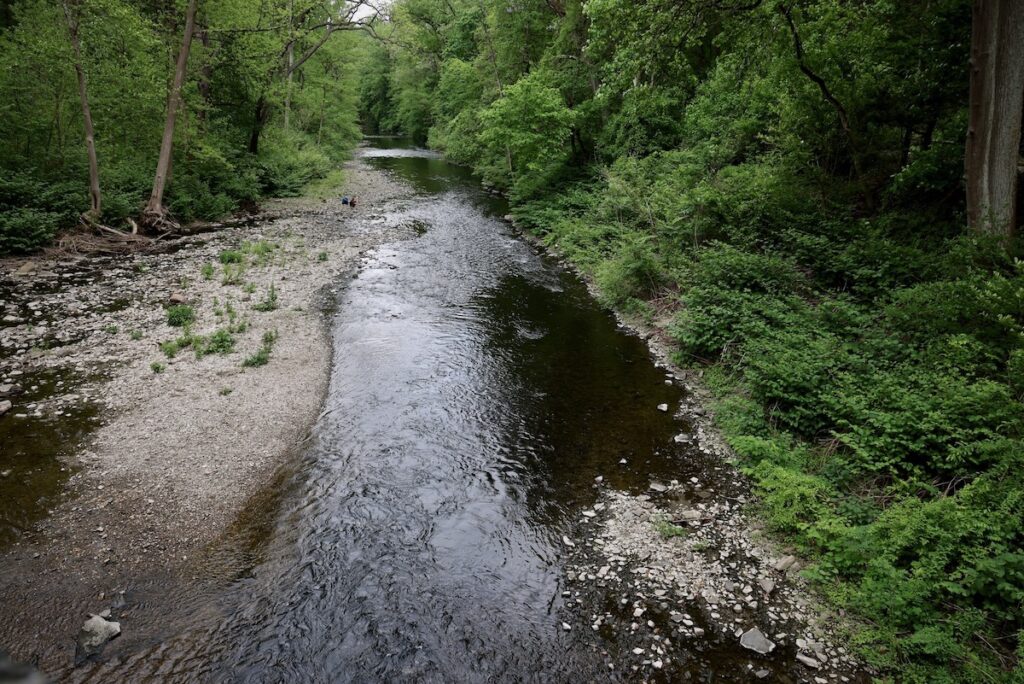
Anglers warned to not eat PFAS contaminated fish from the Wissahickon watershed
Environmental regulators found high levels of PFAS chemicals in fish tissue sampled from the Wissahickon Creek and its tributaries.
2 days ago
Listen 1:04
Hydropower parts manufacturer in Northeast Philadelphia lands federal research partnership
Kingsbury plans to test new materials for hydroelectric power equipment that can support the needs of modern-day grids.
6 days ago
Listen 1:09
EPA announces new plan to clean up arsenic contamination at Vineland chemical site
The Vineland Chemical Company produced arsenic-based herbicides and fungicides for 45 years, causing widespread contamination.
6 days ago
Listen 0:53