

A spotlight on Halloween’s roots in an ancient Celtic holiday grows in the Philadelphia region
From business owners and academics to spiritual practitioners, more people are embracing Samhain, an ancient Celtic festival that gave birth to many Halloween traditions.
Listen 1:09
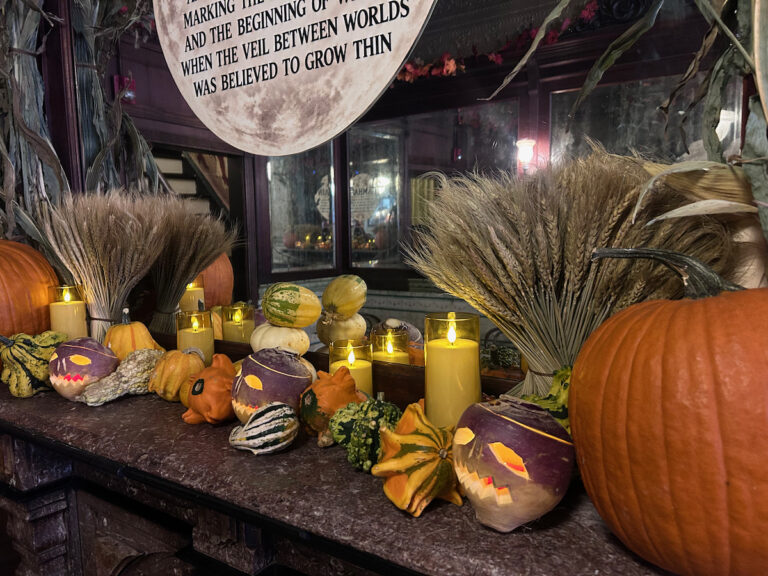
Neill Laughlin and Donal McCoy, co-owners of Sassafras Bar and Restaurant in Philadelphia's Old City neighborhood, decided to host the first-ever Samhain street festival outside of their restaurant on Saturday, Oct. 31, 2026. Laughlin and McCoy are Irish, and wanted to celebrate the ancient Celtic festival that helped form Halloween. Decorations inside the restaurant included carved turnip heads. (Courtesy of Neill Laughlin)
From Delco to Chesco and Montco to Bucks, what about life in Philly’s suburbs do you want WHYY News to cover? Let us know!
Through Saturday evening, Philadelphia’s streets will be filled with ghouls and goblins, ghosts and witches, and countless other more niche costumes.
Dressing up in disguises, from the fantastical to the terrifying, is just one of the modern-day Halloween traditions that come from the ancient Celtic festival of Samhain — a celebration that people in the Philadelphia region and beyond are increasingly exploring on its own terms amid the usual spooky season revelries.
From spiritual practices to business owners’ events, Samhain is getting its turn in the spotlight.
What is Samhain?
Samhain, pronounced SOW-in, is the Irish word for November, said Joseph Lennon, director of the Center for Irish Studies at Villanova University.
The holiday was first celebrated throughout Ireland, Britain and other places where Celtic people lived stretching as far back as Neolithic times, according to some historians. People dressed up in costumes, carved turnip heads, built fires and ate sweets on the night halfway between the fall equinox and the winter solstice, marking the end of the harvest season and the start of the darker time of the year.
“There’s folk stories. There’s pseudo-history stories. There are medieval tales. There are legends,” Lennon said. “So all woven throughout that are stories of this night when the door between the worlds is the most porous.”
Samhain’s rituals were characterized as existing in a liminal space, between the past and future, at a time when the afterlife and the spiritual world are closer to the world of the living, he said.
“Samhain is a way to venerate the dead and to think about the dead,” he said. “But it’s also a way to revere the future, because it’s a children’s holiday here, and it’s about celebrating children. So I love that it’s both backward-looking and forward-looking.”
The tradition of children dressing up in costume, Lennon said, came out of people’s fears of this perceived proximity to unearthly realms.
“That’s when you have to be careful of the good people from the other side coming over to snatch children,” he said. “So you have to disguise your children, preferably as something ugly and and grimy or grubby or scary, so that they won’t look like the sweet innocents that they are to be taken away to the other side.”
Bringing Samhain to Old City
Neill Laughlin, co-owner of Sassafras Bar and Restaurant in Philadelphia’s Old City neighborhood, recalls carving turnips — ”pumpkins were unheard of” — and donning a mask as a child in Belfast, Northern Ireland. He and his peers performed songs and recited rhymes to receive money from his neighbors on the night of Oct. 31. They then would go out for a meal with their families and tell stories.
The focus was on community, Laughlin said, “the old heritage of people gathering together, over a cocktail or a beer and some food, and remembering the past and what it signifies to them today.”
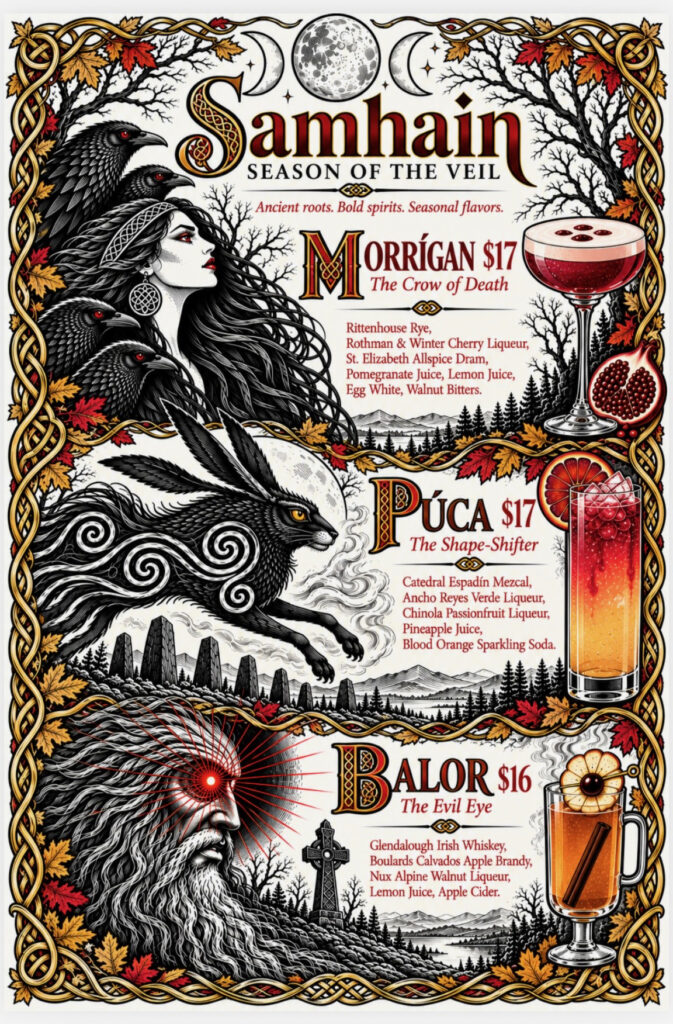
Laughlin and his business partner, Donal McCoy, who is also Irish, are inviting more people to share that aspect of their heritage with their first-ever Samhain street festival Saturday evening.
Musicians, jugglers, stilt walkers and fire dancers will entertain guests and passersby starting at 5:30 p.m., Laughlin said, and the restaurant will feature a suite of Samhain-themed cocktails.
“I feel like Halloween’s kind of gotten away from its origins, where it’s more for children collecting candy, and I think today people are interested in the origins of events and what starts them and where did they come from,” he said.
Saturday’s event is also a way for Irish people to “hold on to our heritage,” he said.
“That’s part of the adventure of the evening, will be to have people learn something new about what Halloween really is and where it all came from,” Laughlin said.
Related Content
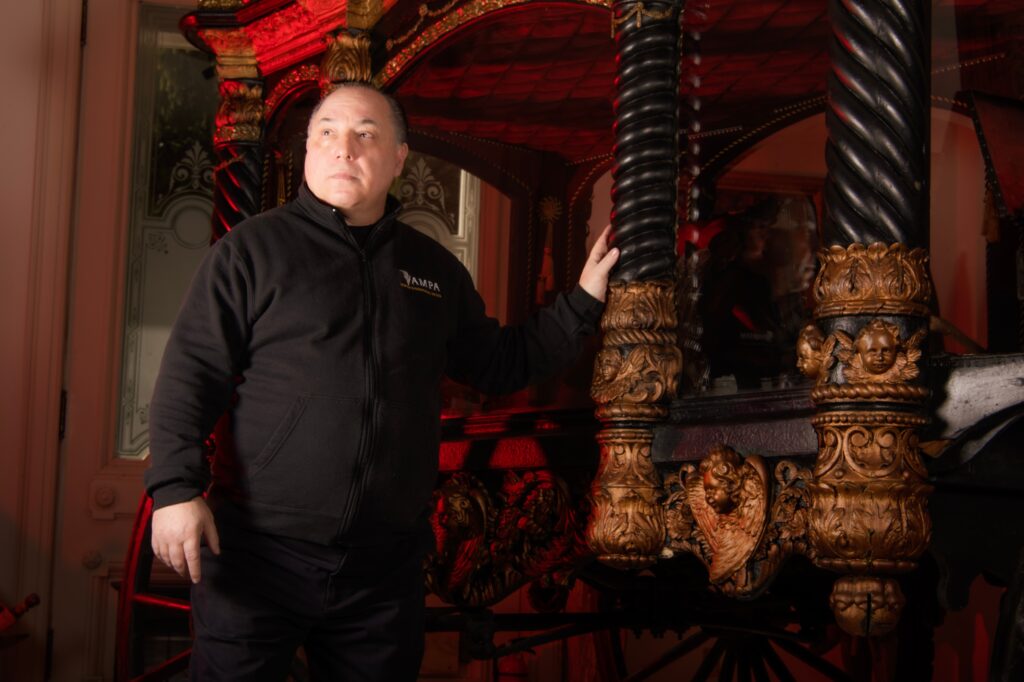
Edmondo Crimi’s “actually very funny” book about vampires features hundreds of paranormal artifacts on display at the VAMPA Museum in Doylestown.
2 weeks ago
Listen 2:02‘A desire for the witchiness’
Halloween’s name comes from “All Hallows’ Eve,” rooted in the Christian traditions that celebrate Nov. 1 as All Saints Day, and Nov. 2 as All Souls Day.
Samhain, a pre-Christian tradition that is also still celebrated by pagan and neo-pagan groups, was in part folded into the early Catholic Church’s practices, said Sara Jolena Wolcott, a reverend and podcast host who has been facilitating Samhain gatherings in the Philadelphia region for nearly a decade.
On Friday, she led a Quaker Samhain gathering in Chestnut Hill with Katy Hawkins, who runs The Center for Centering, that was attended by 25 people.
“I work with both Christian and non-Christian traditions, so I’m always interested in how we go in between, as well as deepening within each in these earth-honoring traditions,” said Wolcott, a graduate of Haverford College who now lives in New York’s Hudson Valley. “I think there’s a lot of reasons why it’s grown over time. And I find it fascinating that it has grown as much as it has.”
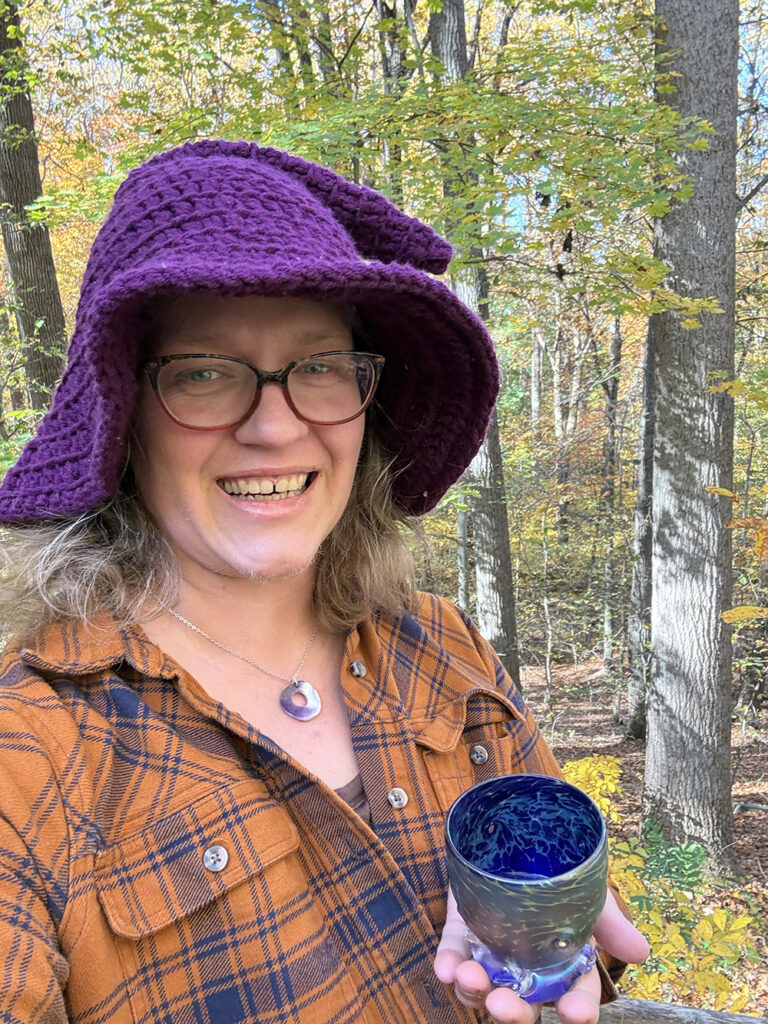
Anecdotally, she has seen interest in Samhain as a spiritual practice grow in the region and throughout the United States.
“What I’ve noticed today in America is that many people from many different ethnic backgrounds are reclaiming Samhain,” she said.
Halloween and Samhain are not exactly the same, Wolcott said, and have co-evolved over time.
But a core area of overlap includes the sense of “in-between space,” along with “uncertainty and play and celebration,” she said.
The holiday speaks to the yearning of many people, religious and non-religious, to engage with “deeper questions” about who they are and what they are doing here, Wolcott said.
“There’s a desire in our culture for that,” she said. “I’m going to call [it] a desire for the witchiness, and a desire for magic, and a yearning to become more familiar and more practiced with that which we sense at the edge of our fingertips, that which is both very practical, very crafty, but also beyond us. Also a little bit in the realms of both the seen and the unseen, and where those connect.”
Many of the people who come to her gatherings do not self-identify as pagan or “witchy,” Wolcott said. Some might practice Christianity, Judaism, Hinduism or Islam; others might not be religious at all. But Samhain gatherings can serve as an interfaith space, Wolcott said, for people to talk about their spiritual experiences.
“It’s like an exhale, and a sense of connecting with the web of life that is always around you,” Wolcott said.
The timing of Samhain close to the U.S. general election is also significant for many people who come to gatherings, Wolcott said, and is fitting for the celebration’s themes around uncertainty.
“It’s a time when we’re thinking about both what has come and what’s coming, and there’s often a lot of trepidation,” she said. “And so being in a moment that can feel legitimately precarious in a circle is very powerful.
Folk traditions like those associated with Samhain, Wolcott said, are powerful vehicles for exploring spiritual questions within and outside the frameworks of religion.
“I don’t think the human search for meaning has ever gone away, and so just living in a secular society doesn’t make that any less any less important of an endeavor,” she said. “It changes how we experience that search. It kind of changes the cosmovisions and mythological stories that we are telling ourselves and one another about what is good, what is a good life, what is evil. … Those kinds of ethical questions don’t leave us.”

Get daily updates from WHYY News!
WHYY is your source for fact-based, in-depth journalism and information. As a nonprofit organization, we rely on financial support from readers like you. Please give today.
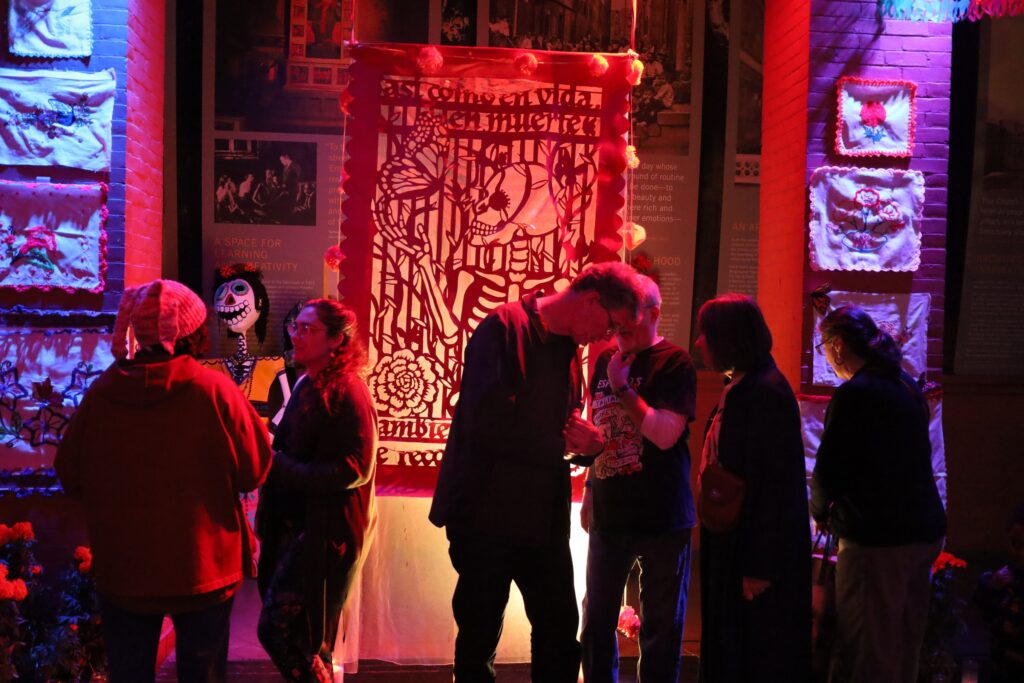
Philadelphia celebrates Día de los Muertos with thousands joining in procession
Thousands gathered in South Philadelphia for the traditional Mexican holiday that celebrates culture and ancestry.
1 week ago
Listen 1:25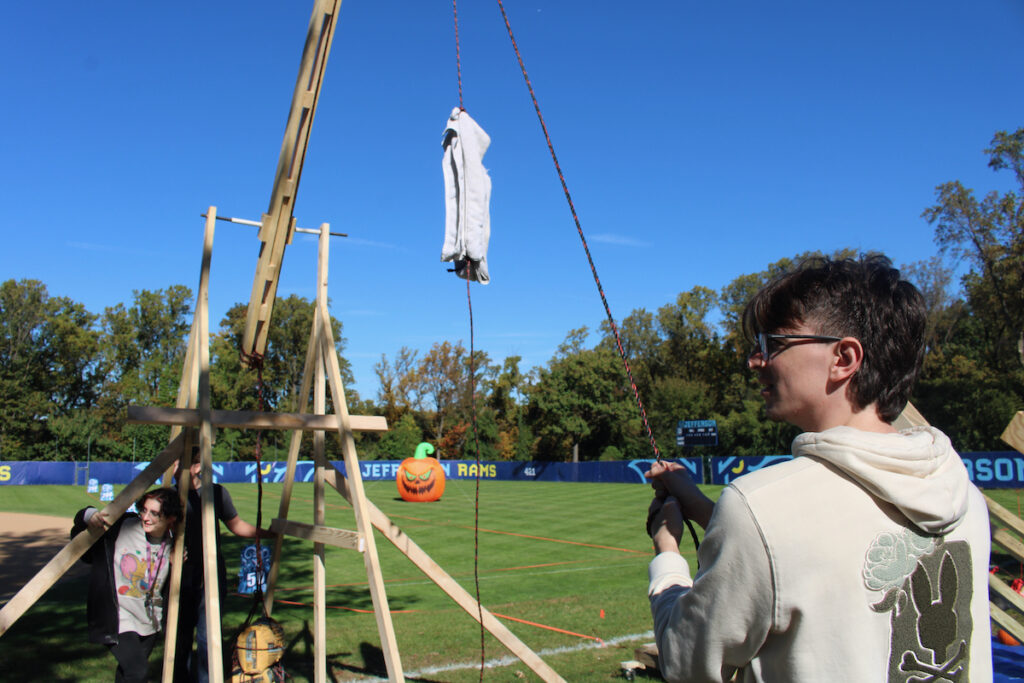
Seven teams of architecture, design and engineering students built wooden contraptions to see who could launch a 5-pound gourd the farthest.
2 weeks ago
Listen 1:10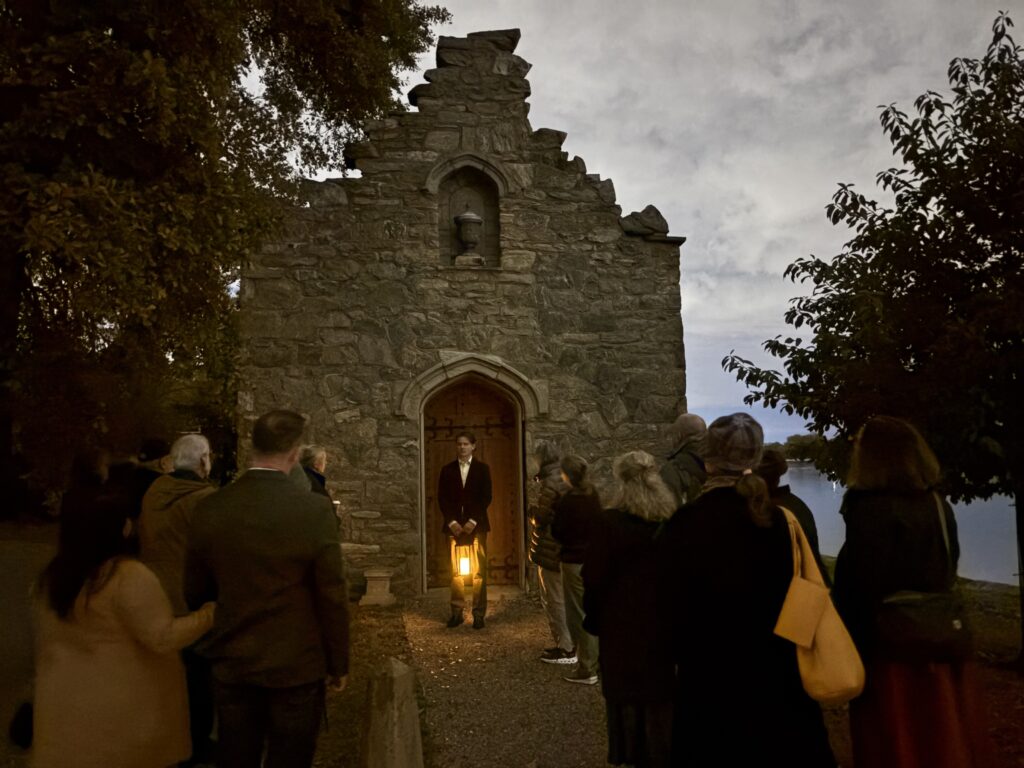
A horror writer’s visit to this Bucks County historic house inspires spooky after-dark tours
Edgar Allan Poe once roamed the halls of Andalusia Historic House. This October, you can retrace his steps while listening to the literary giant’s work.
1 month ago
Listen 1:56