

Gov. Shapiro signs law requiring home sellers to disclose more about a home’s flood risk
Sellers will now be required to reveal whether a home has flooded and whether they’ve filed a flood insurance claim.
Listen 0:58
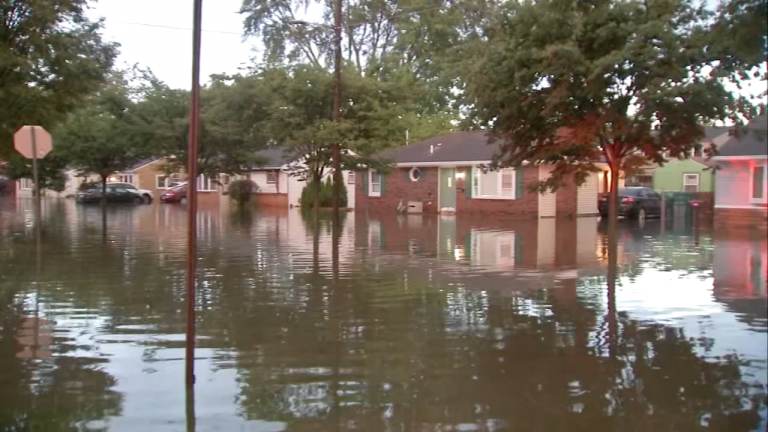
Homes are pictured amid rising floodwaters in Croydon, Pennsylvania. (6ABC)
This story is part of the WHYY News Climate Desk, bringing you news and solutions for our changing region.
From the Poconos to the Jersey Shore to the mouth of the Delaware Bay, what do you want to know about climate change? What would you like us to cover? Get in touch.
Homeowners in Pennsylvania will need to reveal more information about flood risk to potential buyers beginning as soon as 2028.
A new law signed by Gov. Josh Shapiro last week requires that sellers disclose whether the home has flooded in the past and whether they’ve ever filed a flood insurance claim.
“A few inches of water on your first floor can be tens of thousands of dollars worth of damage,” said Steven Koller, insurance research and policy engagement manager at the nonprofit Insurance for Good and a research fellow at Harvard University’s Joint Center for Housing Studies. “If you move into a place and you’re not budgeting for those potential costs, that could be a very serious negative financial shock.”
Close to three quarters of U.S. states have some form of flood risk disclosure law, according to a 2025 analysis by the Natural Resources Defense Council. Without them, home buyers can be left in the dark about how likely their new home could flood or how much they’ll need to pay for flood insurance.
Currently, home sellers in Pennsylvania are required to disclose, to the best of their knowledge, whether a property sits in a flood zone or has past or present flooding problems. The law signed Thursday goes further, requiring disclosure of the number of times and estimated dates of any past flooding incidents impacting a property, whether the home is in a high- or moderate-risk flood zone as designated by the Federal Emergency Management Agency, whether the buyer will be required to purchase flood insurance, whether the seller has received government assistance for flood damage and whether they’ve filed a flood insurance claim.
Homeowners insurance does not cover flood damage. Instead, homeowners have to purchase flood insurance separately. Homes in high-risk flood zones with federally backed mortgages are required to carry flood insurance, but homeowners and renters living outside these zones can also purchase it. Still, just 2% of insured homes in Pennsylvania have flood coverage.
Related Content
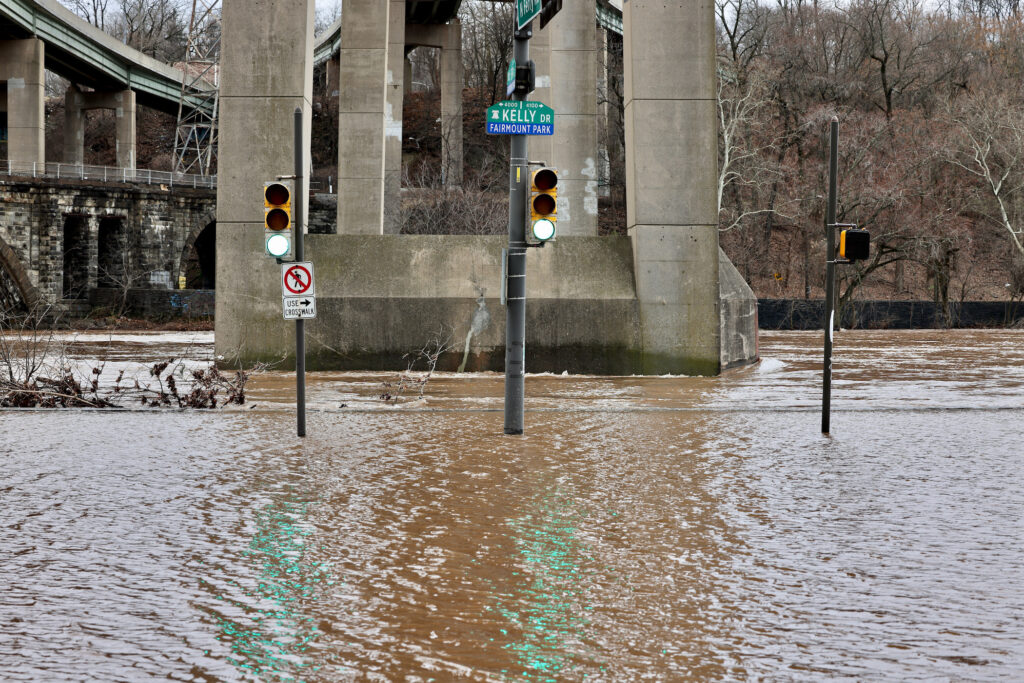
Flood risk is increasing in the Philly region. Here’s what you need to know
Here’s what to do if you’re caught in a flash flood, how you can protect yourself from increased flood risk and how climate change factors in.
2 years ago
Flood insurance policies can cost hundreds or thousands of dollars per year, Koller said.
“Just from a budgeting standpoint, that’s something that would be helpful for prospective homeowners to know,” Koller said.
Most realtors in Pennsylvania already reveal flood risk information during the home selling process because they use a property disclosure statement form published by the Pennsylvania Association of Realtors that asks seven questions about flood risk, including flood history and whether the property requires flood insurance, said Mark Kibbe, who chairs the association’s legislative committee.
When Kibbe was selling a home along a river in Erie, where he works as a realtor, he said he disclosed the home’s location in a flood zone and found that some potential buyers were turned off, while one couple who loved to kayak decided to purchase the house.
“They recognized that there was going to be some additional cost in doing that, but the reward was worth the added cost to them,” he said. “There were a lot of people that decided that was not the correct property for them. But there’s always somebody out there willing to [buy]. Because of being on the water, they’re willing to pay that extra cost.”
Kibbe said the new law will ensure that other types of real estate professionals and homeowners selling their homes themselves disclose the same information.
“It fills in the gaps,” he said.
Related Content
For years, Philadelphia has built rain gardens to prevent stormwater and sewage from entering waterways. Are those efforts enough?
2 weeks ago
Listen 5:54Dakota Fisher, an advocate for climate adaptation and health at the Natural Resources Defense Council, sees flood risk disclosures in the home selling process as responsible fiscal policy. A former FEMA employee, Fisher said that if homebuyers know the risks, it allows them to take proactive steps to limit flood damage like elevating their homes or using water-resistant building materials. This protects taxpayers by limiting the need for National Flood Insurance Program payouts, Fisher said.
He said that, as a taxpayer, he would rather have home buyers know as much as possible about the risk.
“[So] that individual homeowner buying the dream home along the river … will make the investments they need to make so that they are not impacted by future extreme weather events, and I am not holding the bag,” he said.
Koller, who sees Pennsylvania’s new law as “robust,” said disclosure requirements have their limits. He said a shortage of affordable housing options may push people to purchase homes in flood zones even when they know the risk.
“Even though you might hope that this disclosure law leads to better decision making across the board, many folks are presumably going to take this into account, but still perhaps purchase a place that has some flood risk because of their limited options in terms of alternative affordable housing,” he said.
The new law does not require landlords to share flood risk information with renters.
Another bill introduced by state Rep. Perry Warren, D-Bucks County, would require landlords to inform renters if the property has flooded in the past, if it lies within a flood zone, whether the landlord has flood insurance and whether that insurance covers damage to the tenants’ personal property. This bill has not moved since it was referred to a House committee in July 2025.
Sellers will need to start complying with the new disclosure requirements by the summer of 2028, the deadline by which the Pennsylvania State Real Estate Commission must put the changes to the property disclosure statement into effect.

Get daily updates from WHYY News!
WHYY is your source for fact-based, in-depth journalism and information. As a nonprofit organization, we rely on financial support from readers like you. Please give today.
Part of the series
Part of the series
Watershed
Preserving Our Water: How we use our Delaware Watershed.
The project is funded by The William Penn Foundation.

Philadelphia releases toolkit to help neighbors talk about climate change
The digital toolkit is meant to help residents get to know each other and prepare their neighborhoods for extreme heat, flooding and more.
5 days ago
For years, Philadelphia has built rain gardens to prevent stormwater and sewage from entering waterways. Are those efforts enough?
2 weeks ago
Listen 5:54
The new technology aims to prevent microplastics from entering the Atlantic Ocean.
2 weeks ago
Listen 1:07