

Conservationists to restore wetlands, save habitat for diamondback terrapins in New Jersey
Tidal salt marshes across New Jersey are being drowned out by sea level rise.

This story is part of the WHYY News Climate Desk, bringing you news and solutions for our changing region.
From the Poconos to the Jersey Shore to the mouth of the Delaware Bay, what do you want to know about climate change? What would you like us to cover? Get in touch.
The Wetlands Institute in Stone Harbor, New Jersey, will temporarily close Tuesday as conservationists work to restore 5 acres of tidal salt marshes that provide habitat for diamondback terrapins.
Scotch Bonnet Island along Cape May County’s coastline provides habitat for creatures like turtles and coastal birds, and soaks up flood waters.
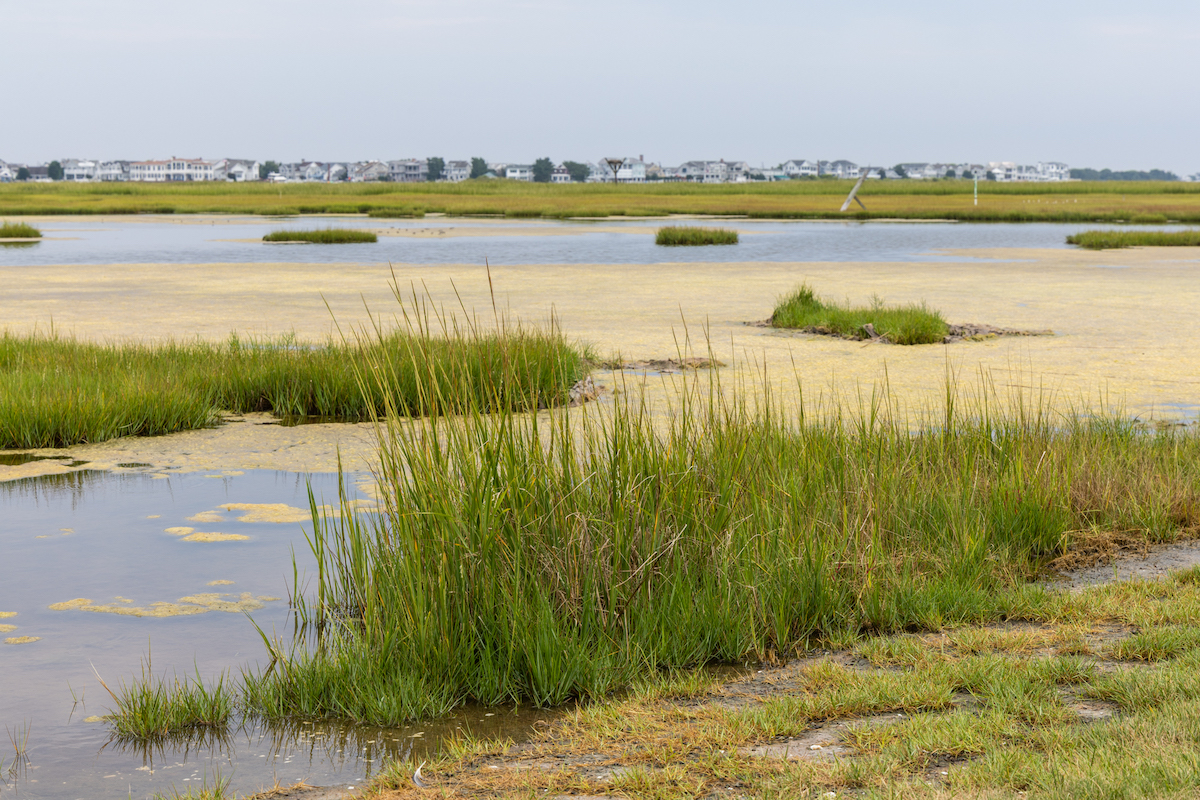
But sea level rise, which in New Jersey is occurring at twice the global average, is drowning out marshes. More of these coastal wetlands are being lost, and converting into open water and mud flats.
Wetland loss is impacting species that rely on them for nesting, while leaving some communities more vulnerable to flooding.
“Our marshes are really important to help us with coastal resilience. Aside from the huge biodiversity that’s out there, the reliance of 75% of our commercial food fish comes from the marsh,” said Lenore Tedesco, executive director of the Wetlands Institute. “So, losing marsh acreages is impacting all of those things, including our ability to be protected by these marshes during storms.”
Wetlands have historically been impacted by development, particularly between the 1950s and 70s, before state regulations were implemented to protect these natural resources. New Jersey lost 39% of its wetlands through the 1970s until the New Jersey Wetlands Act of 1970 and the New Jersey Freshwater Wetlands Protection Act of 1987 regulated dredge and fill activities.
Related Content
New Jersey is investing $11 million to restore salt marshes, including Scotch Bonnet Island
Rising seas are drowning New Jersey wetlands. A new round of state climate funding aims to make them more resilient.
9 months ago
Today, about 20% of the state’s remaining salt marshes are highly vulnerable to “drowning” or transitioning into tidal mudflats due to sea level rise, according to Rutgers University.
“Our marshes are more frequently inundated, and that means that a lot of the marsh vegetation has a hard time hanging on,” said Tyler Kinney, a coastal biologist with the New Jersey Fish and Wildlife Bureau of Lands Management, who has partnered with the Wetlands Institute.
“In a typical environment, the marsh surface accretes at the same rate, and it gains elevation at the rate that sea level rise would elevate, and vice versa, it’ll lose elevation as sea level rises, so it remains a balanced system where the rate of sea rise we’re seeing today means the system is falling out of balance and our marshes are drowning.”
The marsh complex at Scotch Bonnet Island is no different. The marsh’s trail previously flooded about twice a year. Today, it floods more than 60 times each year, making it more difficult for the marshes to absorb flood waters. The damage also impacts species like diamondback terrapin turtles, which rely on the marshes for nesting. Many of these turtles are killed on roadways as they search for new habitat.
“That high ground is a really important place for diamondback terrapin nesting. We have a lot of coastal birds using that upland area as well,” Tedesco said. “But with sea level rise, we’re losing, those areas are now starting to flood as well, so that’s no longer as suitable a habitat as it had been in the past.”
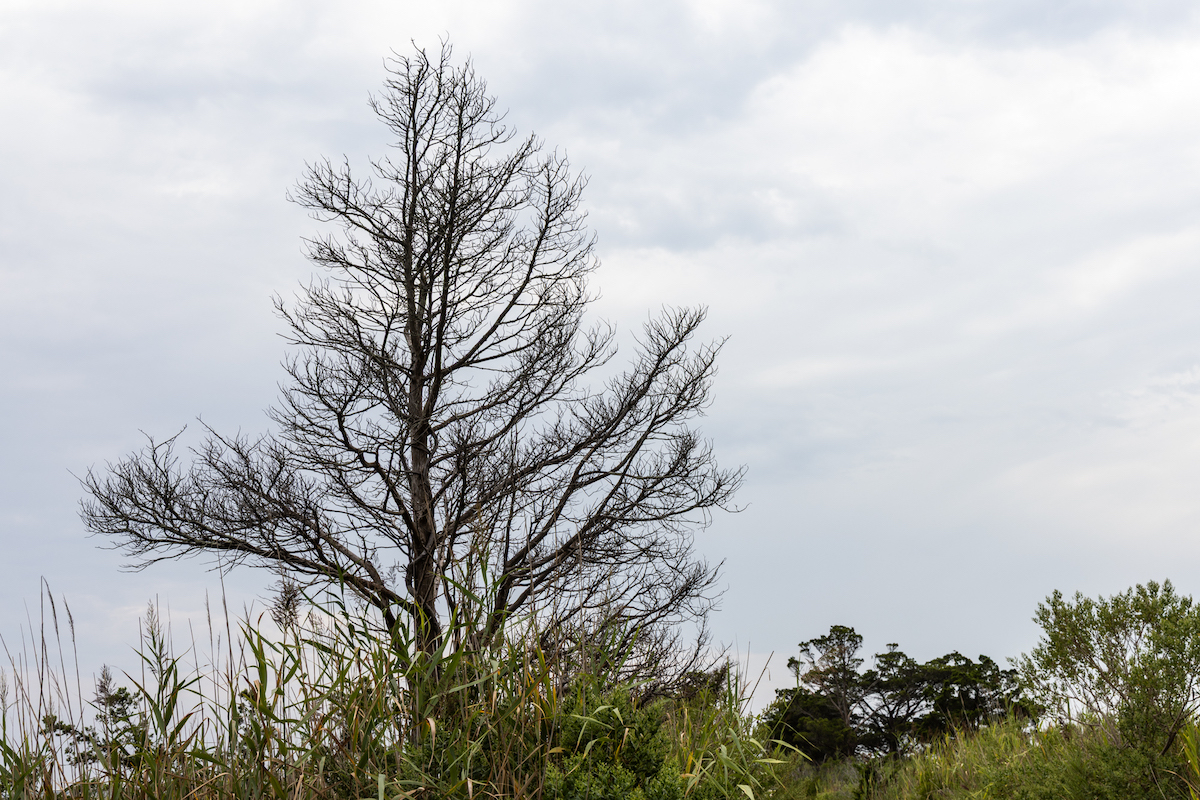
The Salt Marsh Trail Revitalization project involves widening and elevating the trail by 2 to 3 feet using earthen berms, and increasing vegetation. The goal is to restore the marshes, sequester carbon, buffer against flooding and enhance habitat for diamondback terrapins and coastal bird species.
The Wetlands Institute is working on the project in partnership with the University of Pennsylvania, the New Jersey Department of Environmental Protection and Fish and Wildlife and the borough of Avalon.
The project is being funded with a more than $3 million grant from New Jersey’s Regional Greenhouse Gas Initiative Natural Climate Solutions program. It’s one of several projects across the state aimed at restoring and protecting wetlands.
The Wetlands Institute will close Sept. 8 and temporarily relocate to the New Jersey Coastal Conservation Center as it undergoes the restoration work. The Wetlands Institute will also be replaced with a new building to help enhance its research, conservation and environmental education.
Kinney said the project will not only help vulnerable species that rely on wetlands, but will also benefit New Jersey residents.
“A lot of our fisheries, the same fisheries that provide food to the people of New Jersey operate in these waters, and the fisheries are directly connected to these natural systems. A lot of the brookeries for these fish occur in these salt marshes,” he said.
-
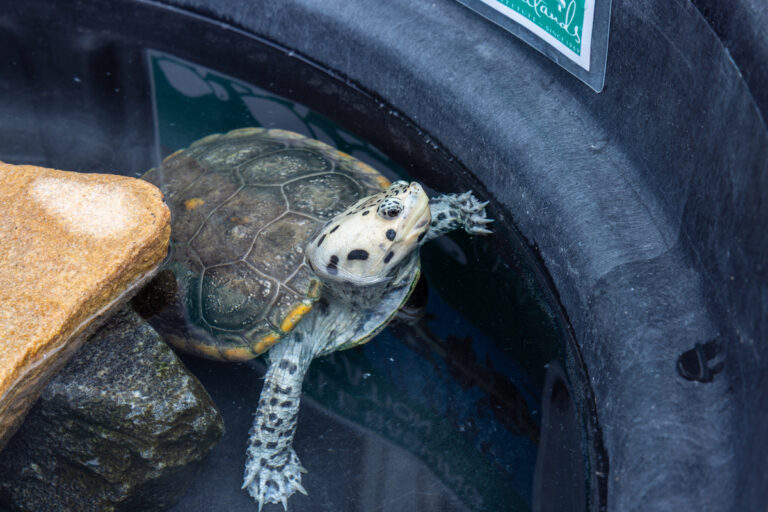
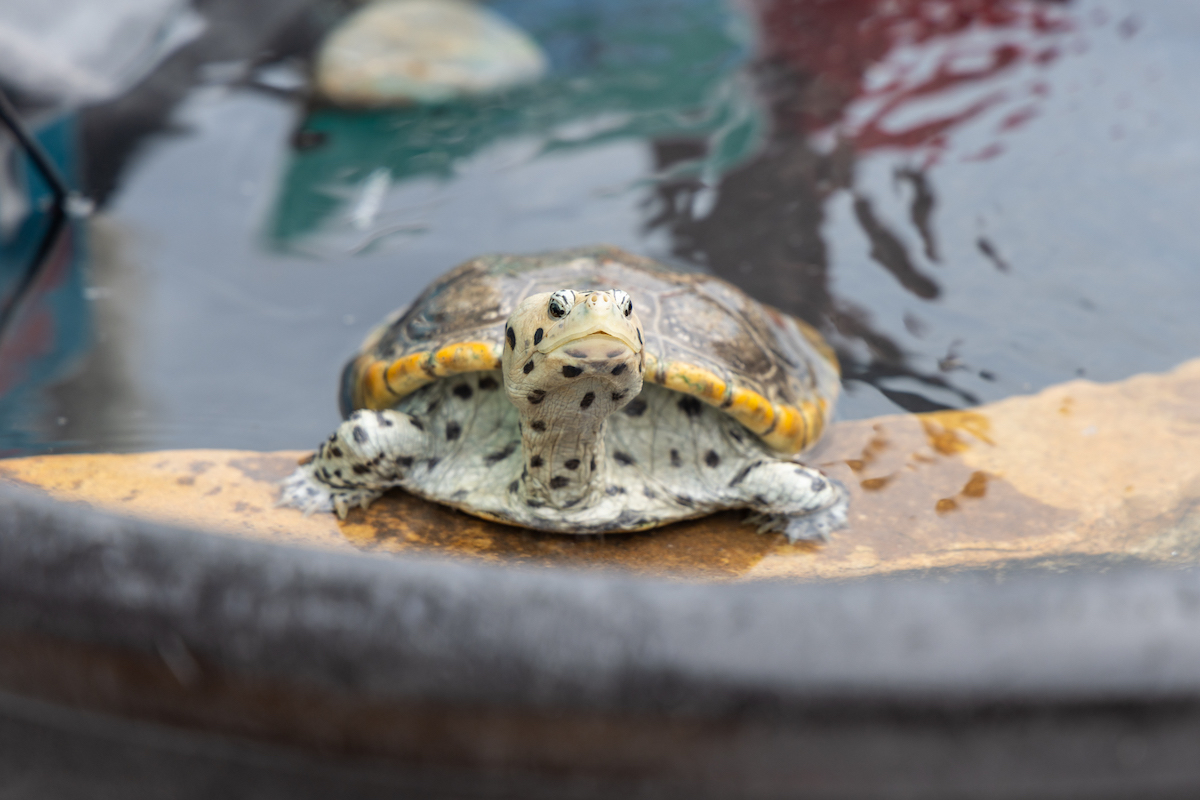
Lovey, a diamondback terrapin rescued in Stone Harbor, N.J., greeted visitors at the Wetlands Institute’s Terrapin Tuesday event. (Kimberly Paynter/WHYY) -
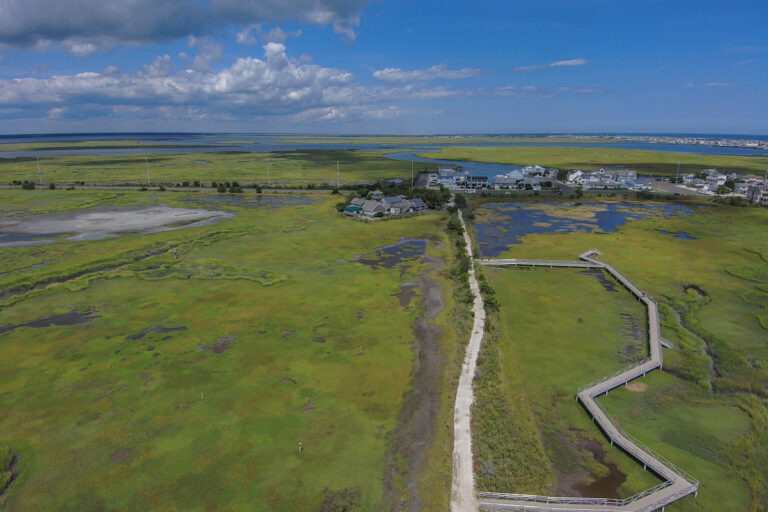
The Wetlands Institute and education trail in Stone Harbor, N.J. (Courtesy of the Wetlands Institute) -
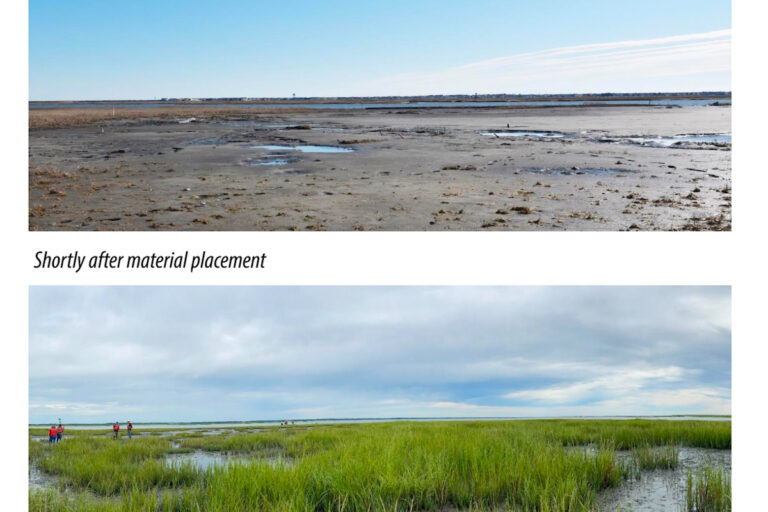
A before and after image of salt marsh restoration in N.J. (Courtesy of the Wetlands Institute) -
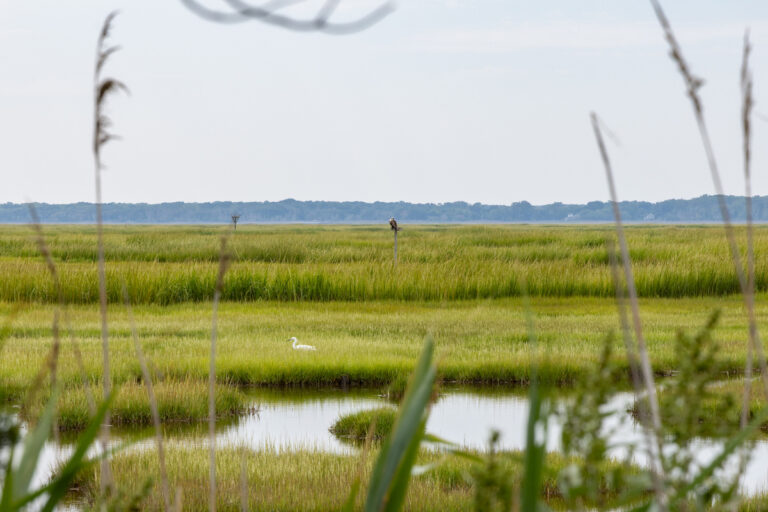
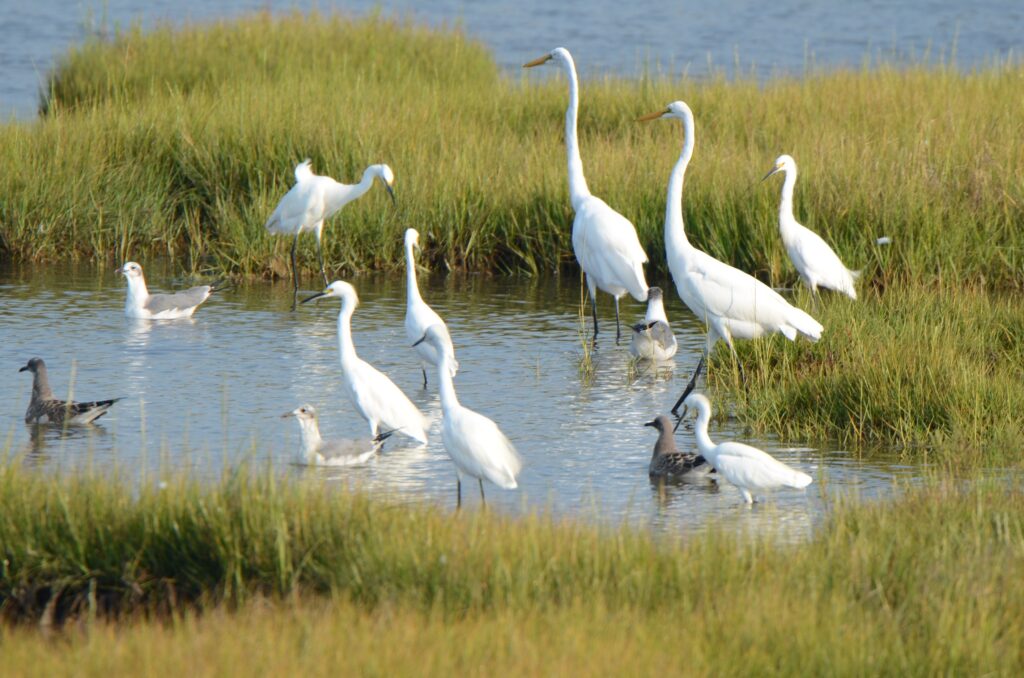
A snowy egret and an osprey lounge in the salt marsh near the Wetlands Institute in Stone Harbor, N.J. (Kimberly Paynter/WHYY) -
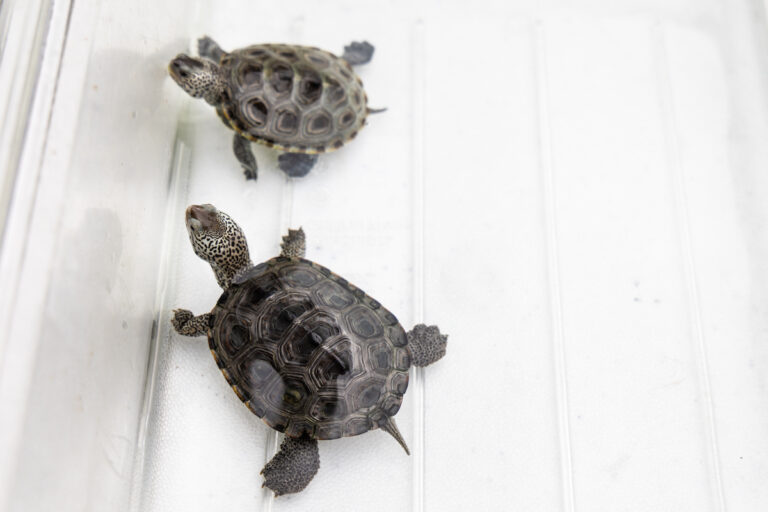
Two tiny diamondback terrapins born in 2026 were rescued by the Wetlands Institute in Stone Harbor, N.J. (Kimberly Paynter/WHYY) -
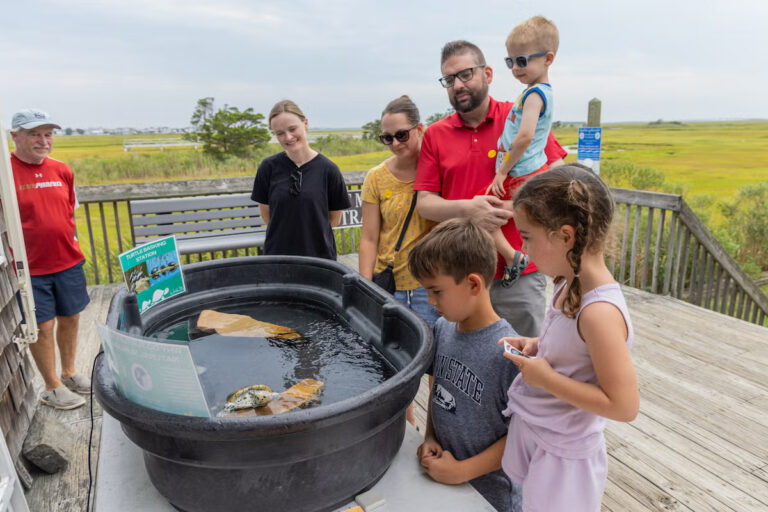
Visitors to the Wetlands Institute in Stone Harbor, N.J., meet Lovey, a diamondback terrapin who’s been with the organization since 1986. (Kimberly Paynter/WHYY) -
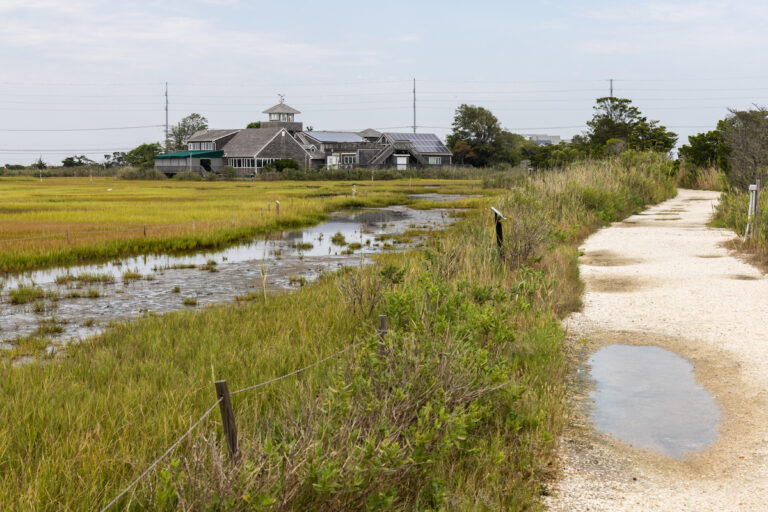
The Wetlands Institute in Stone Harbor, N.J., maintains an education trail that educates the public about the importance of the habit, their diversity comparable to rainforests and coral reefs. (Kimberly Paynter/WHYY) -
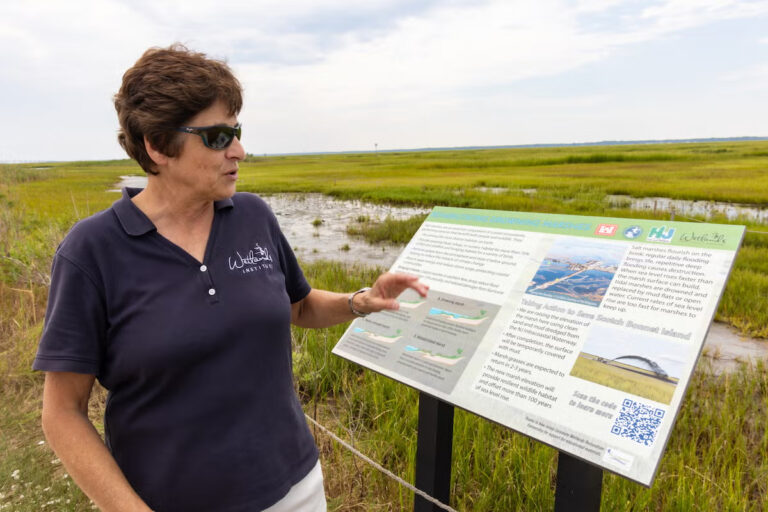
Dr. Lenore Tedesco, executive director of The Wetlands Institute in Stone Harbor, describes how the salt marsh will be restored with dredge material from shipping channels. (Kimberly Paynter/WHYY) -
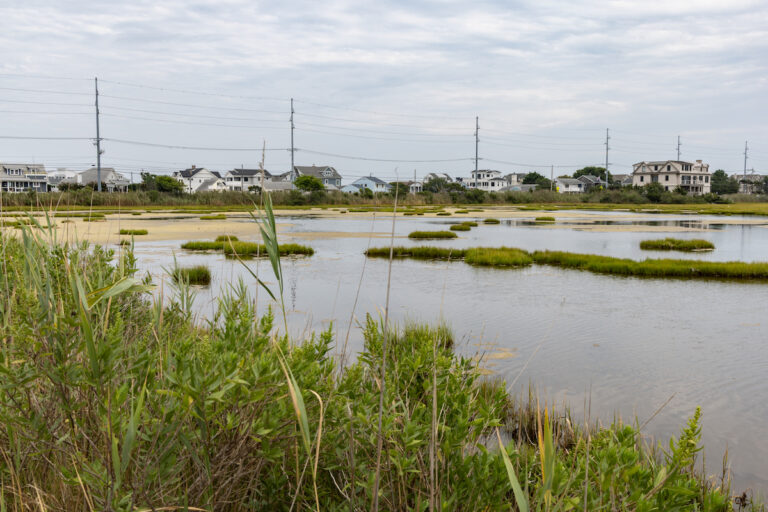
When marsh grass dies back it leaves bare mud flats and then becomes open water. Stone Harbor, N.J., has seen loss of wetlands habitat due to sea level rise. (Kimberly Paynter/WHYY) -
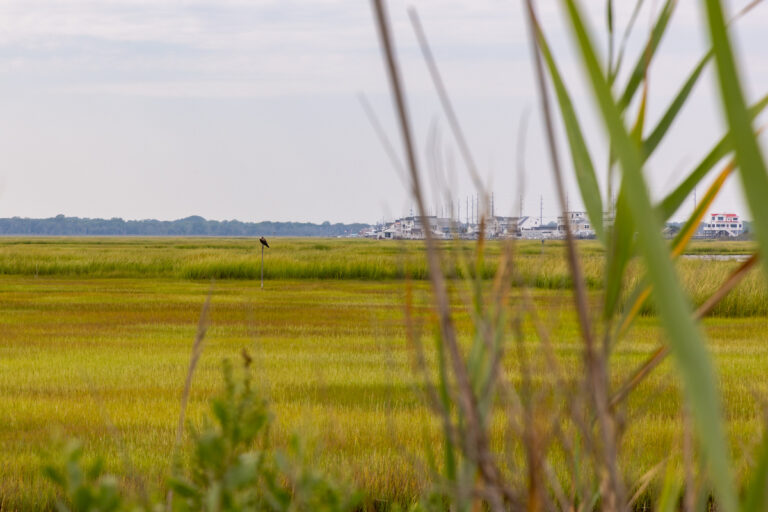
An osprey perches in the salt marsh nearby the Wetlands Institute in Stone Harbor, N. J. (Kimberly Paynter/WHYY)

Get daily updates from WHYY News!
WHYY is your source for fact-based, in-depth journalism and information. As a nonprofit organization, we rely on financial support from readers like you. Please give today.
Part of the series
Part of the series
Watershed
Preserving Our Water: How we use our Delaware Watershed.
The project is funded by The William Penn Foundation.
Toxic ‘forever chemicals’ in New Jersey’s tap water have dropped 55%, Rutgers study finds
PFAS are commonly found in household items and can remain in the environment — and our blood — for decades.
6 months ago
Listen 1:19
While Atlantic Shores took the step to cancel its contract with New Jersey, the company says its project is in a holding pattern while awaiting a new political climate.
1 year ago
Listen 1:21
New Jersey board declines to award new wind energy contracts
The canceled solicitation for proposals is the latest blow to New Jersey’s offshore wind industry and the planned Atlantic Shores project.
2 years ago
Listen 1:29