

‘Pre-election chaos’: Supreme Court lifts block on Trump mail ballot order, prompting new questions for Pa.
The ruling creates uncertainty weeks ahead of the 2026 midterms. Here’s what that means for Pennsylvania voters.
Listen 1:17
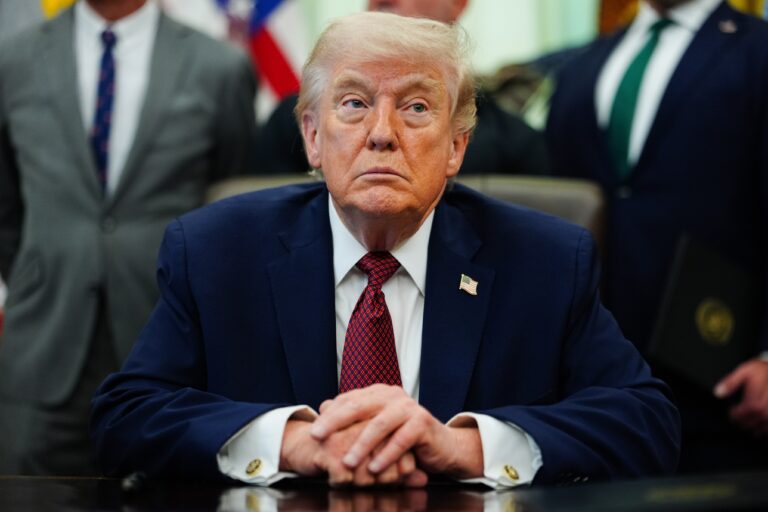
President Donald Trump listens in the Oval Office of the White House, Saturday, April 18, 2026, in Washington. (AP Photo/Julia Demaree Nikhinson)
What questions do you have about the 2026 elections? What major issues do you want candidates to address? Let us know.
The U.S. Supreme Court has cleared the Trump administration to move forward with portions of an executive order targeting mail voting, lifting an injunction obtained by Pennsylvania and nearly two dozen other states less than three months before the 2026 midterm elections.
In an unsigned 6–3 ruling issued Monday, the court’s conservative majority concluded that the states sued prematurely because President Donald Trump’s order directs federal agencies to pursue election-related policies but does not itself require states to change their procedures.
The decision does not determine whether those policies are legal. It also leaves Pennsylvania and the other states free to file another lawsuit if the administration takes steps that ultimately undermine their election processes.
Gov. Josh Shapiro, who joined the challenge on Pennsylvania’s behalf, vowed to continue fighting the order.
“Donald Trump does not run elections here in Pennsylvania — or in any state,” Shapiro posted on social media. “We’ll see the Trump Administration in court.”
Since the decision, Pennsylvania and the other states filed a follow-up lawsuit challenging the executive order.
A U.S. District Court judge in Boston had issued a separate nationwide injunction blocking the Postal Service from implementing new proposed requirements for the November election. However, that judge withdrew the order in light of the Supreme Court’s ruling.
The USPS rules, finalized Friday, require election officials to submit mail ballot envelope designs for federal review, place unique barcodes on outbound and return envelopes and upload each voter’s name, mailing address and barcode information to a federal portal.
Under the rule, USPS could decline to accept an outbound batch until election officials correct envelope or data discrepancies. The Postal Service has said it would not verify voters’ citizenship or eligibility.
Trump’s executive order and alleged harm
Trump issued the executive order in March, directing the Department of Homeland Security to create citizenship lists for every state, the Justice Department to prioritize investigations and appropriate prosecutions of officials who provide federal ballots to ineligible voters, and the U.S. Postal Service to begin rulemaking on ballot-envelope tracking and verification requirements.
The Supreme Court’s ruling lifts the injunction against those directives, allowing the federal agencies to proceed while the appeal continues. The majority said states “are not required to use the Lists” and had not yet shown a concrete, imminent injury.
“If the Postal Service’s final rule harms the States, they may challenge that rule,” the decision says.
As for the Justice Department provision, the court said setting prosecutorial priorities falls within the president’s constitutional power.
“His decision to prioritize the prosecution of certain offenses does not inflict a traditionally recognized harm on the States,” the decision said.
The states, however, argue the danger is not merely hypothetical, saying that any federal citizenship list would be incomplete and could omit eligible voters, including naturalized citizens, forcing election officials to spend money reconciling records or risk scrutiny for declining to rely on the federal data.
The majority treated those planning costs as a response to “a speculative threat.” Justice Sonia Sotomayor, joined by Justice Elena Kagan, countered that the administration could use refusal to use a list as evidence of an intent to violate federal voting laws.
New Jersey may offer a concrete example. Under a state law that took effect this year, 17-year-olds may vote in a primary if they will turn 18 by the general election. The states argued that Trump’s order — which describes eligible federal voters as citizens age 18 or older — could expose officials to investigation for issuing those lawful primary ballots.
The majority called the concern a “red herring,” noting that the order requires lawful implementation and that the administration had disavowed any intention to prosecute officials for giving ballots to eligible 17-year-olds.
Related Content
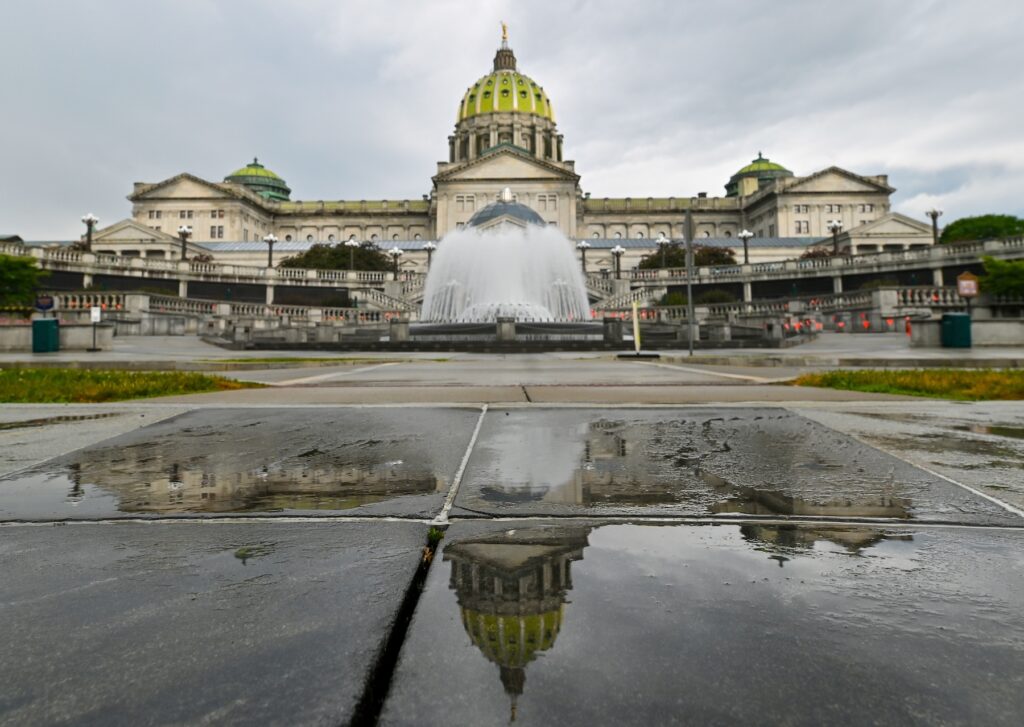
Democrats have big policy plans if they win the three seats they need for a majority in the state Senate.
3 months ago
Listen 1:00‘Chaos weeks before the election’
The ruling nevertheless creates uncertainty for state and county election officials. Counties, which run elections in Pennsylvania, have already purchased envelopes, arranged printing and mailing services to prepare for the Nov. 3 election. Pennsylvania’s deadline to apply for a mail ballot is Oct 27.
“With just weeks until ballots go out, last-minute federal interference sows chaos for the voters we serve,” Neil Makhija, Montgomery County commissioner and chair of the Board of Elections, said in a statement. “The Court itself acknowledged that implementing this scheme may still be unlawful.”
In one of two dissents, Justice Ketanji Brown Jackson said the ruling “contributes to pre-election chaos instead of quashing it.”
“States administering elections and the voting public that relies on them to do so deserve clarity, not caginess or confusion,” she wrote. “The Court does a disservice to all.”
In an interview for a story earlier this month, Seth Bluestein, a Republican Philadelphia City Commissioner, echoed those sentiments, adding that the additional ballot scrutiny is unnecessary.
“Philadelphia, like the other counties in the commonwealth, already verifies that a ballot is only counted if the voter’s identity has been confirmed on their application,” Bluestein said. “So we already know that only eligible voters are voting by mail.”
The states have also argued that Congress and the states are responsible for elections as authorized by the Constitution.
Another mail ballot injunction, and what happens next
The order is part of a broader Republican effort to impose new citizenship-verification requirements on federal elections. The U.S. House passed the SAVE Act in 2025, which would require people registering to vote to provide documentary proof of citizenship. Voting-rights advocates have warned that such requirements could burden eligible citizens who lack ready access to passports, birth certificates or other qualifying records.
Editor’s note: This article was updated to reflect that, following the Supreme Court decision, the U.S. District Court judge canceled her injunction against the USPS rules and the states filed a new lawsuit.

Get daily updates from WHYY News!
WHYY is your source for fact-based, in-depth journalism and information. As a nonprofit organization, we rely on financial support from readers like you. Please give today.
Part of the series
Part of the series
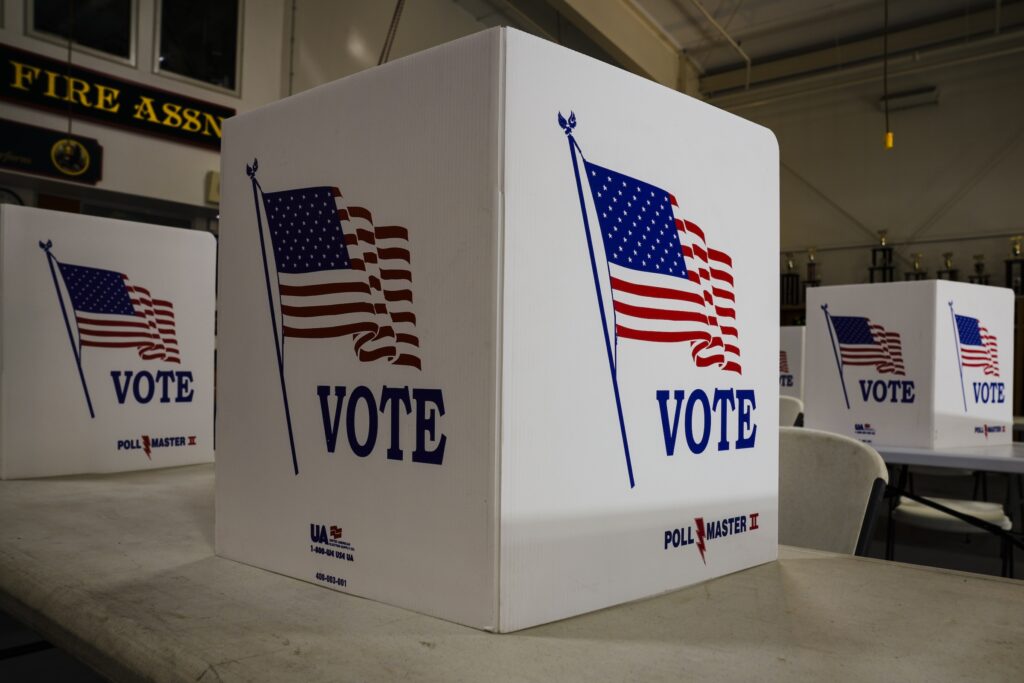
Who are the future voters of Pennsylvania and what do they want from their legislators?
As Pennsylvania’s next generation prepares to vote, they are determined to make their voices heard.
21 hours ago
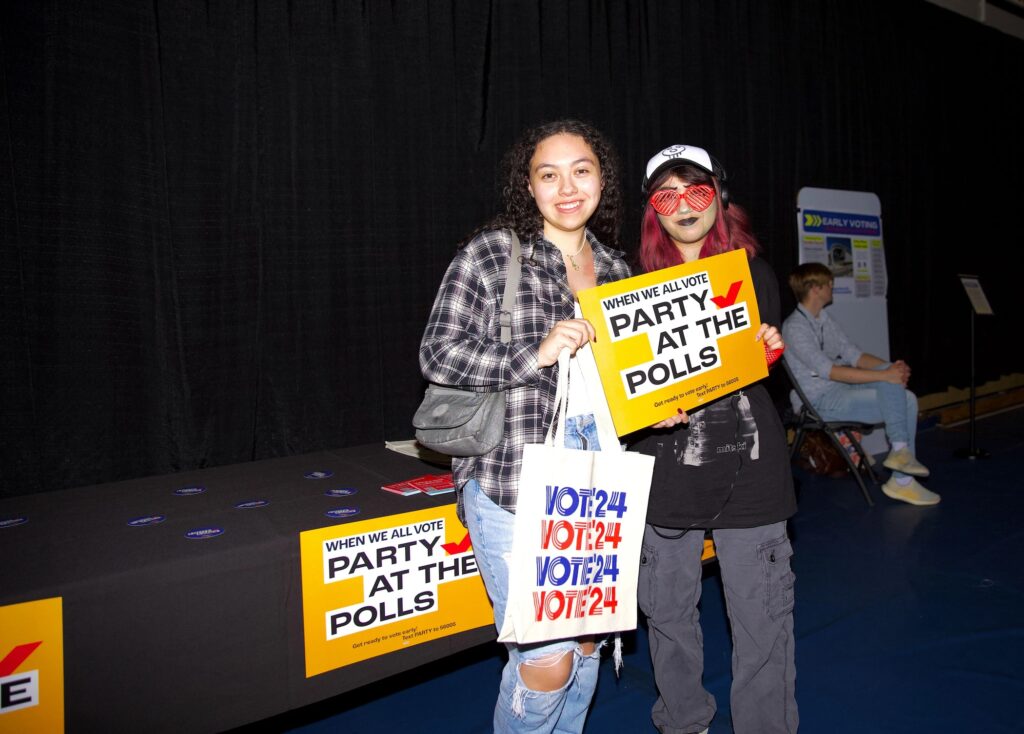
How campus voting initiatives in Pennsylvania aim to tackle barriers to youth voting
As the midterm elections near, universities across Pennsylvania are taking part in the ALL IN Campus Democracy Challenge to help young people navigate the voting process.
22 hours ago
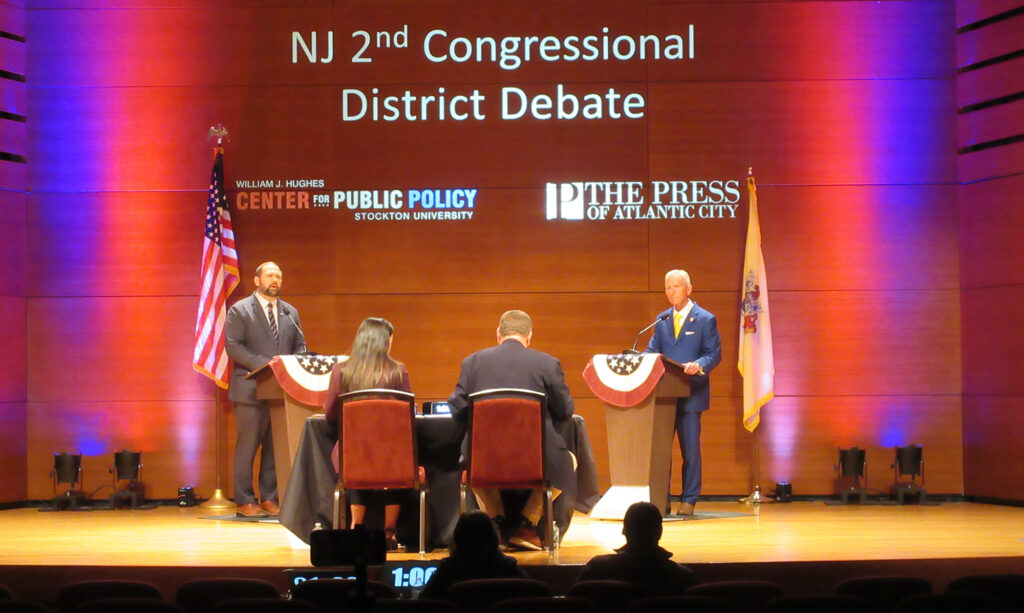
Van Drew and Mullock exchange ideas and jabs at 2nd District debate
U.S. Rep. Van Drew is seeking his fifth term in the seat as he faces off against Zack Mullock in the 2026 midterm elections.
2 days ago
Listen 1:12