
At Philadelphia’s President’s House, an anniversary gathering remembers slavery in America while its history remains contested
Amid a dispute between federal and city officials over the site’s slavery exhibit, the gathering marked the anniversary of enslaved Africans’ arrival in America in 1619.

From Philly and the Pa. suburbs to South Jersey and Delaware, what would you like WHYY News to cover? Let us know!
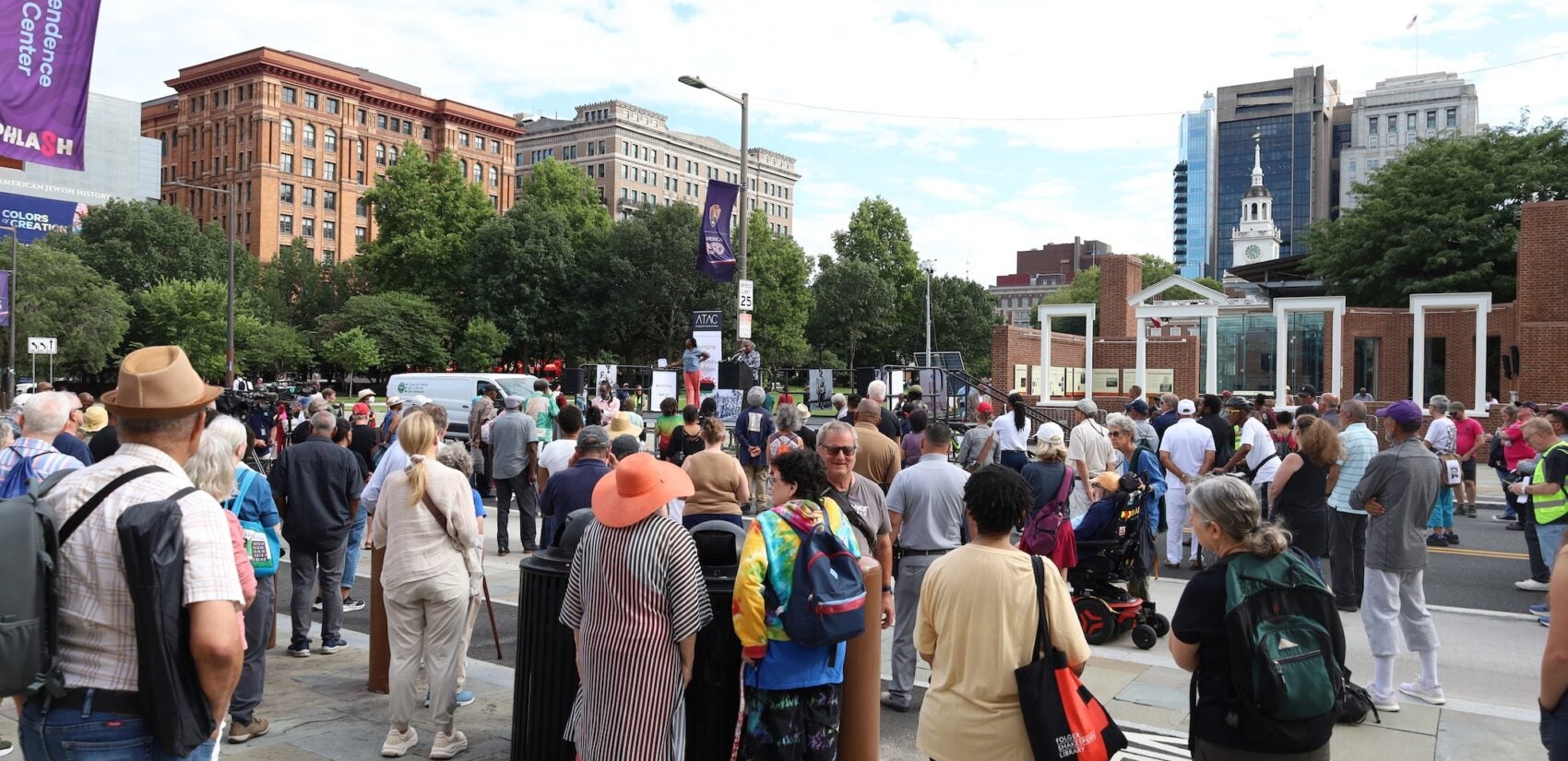
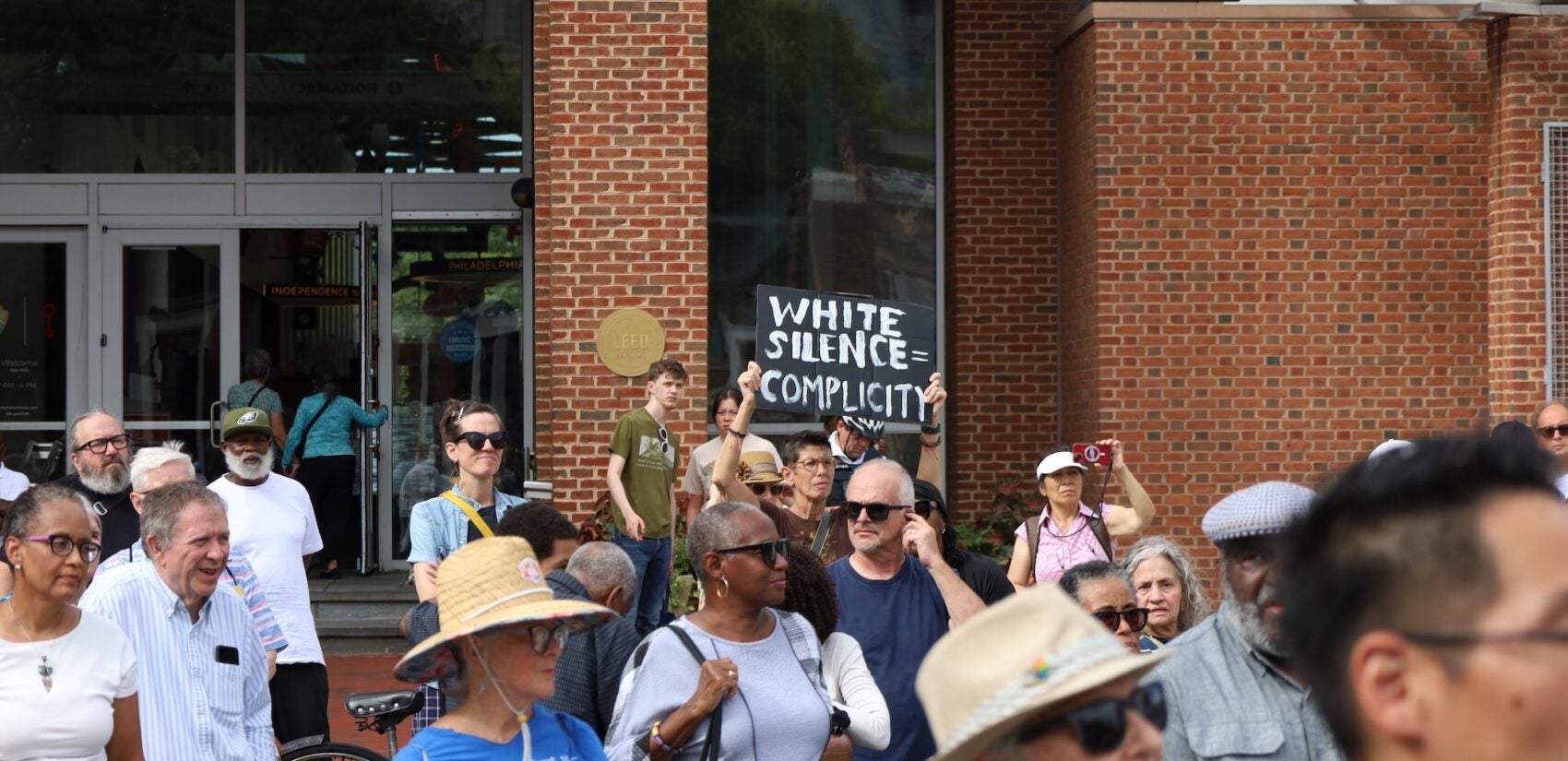
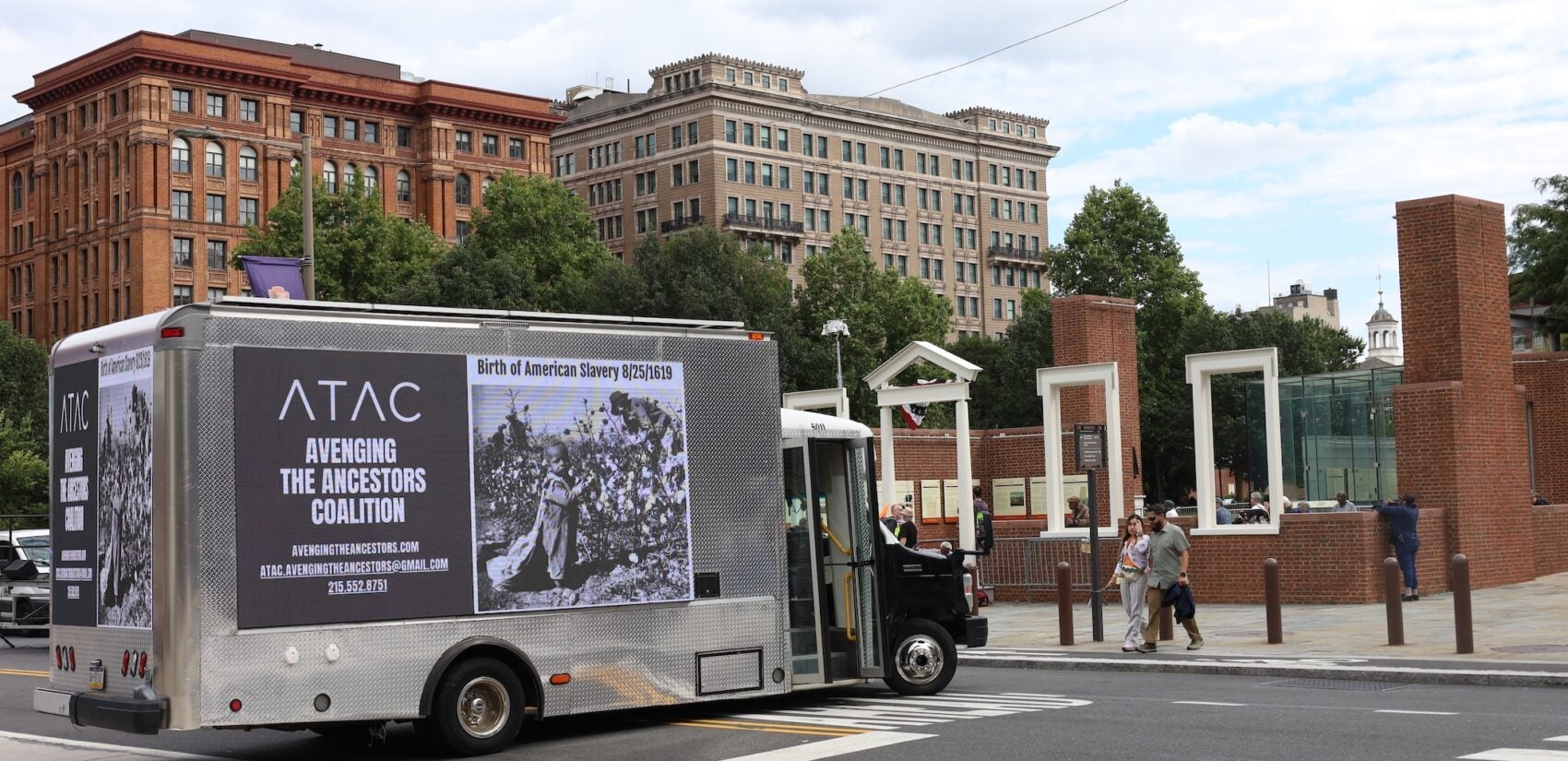
In remembrance of the first documented enslaved Africans arriving in America, dozens gathered at the President’s House Site at Independence Mall in Philadelphia on Tuesday.
The first ship carrying enslaved Africans arrived in Virginia on Aug. 25, 1619. An English privateer had captured the Africans from a Spanish slave ship and later traded them to English colonists in exchange for food.
The Avenging the Ancestors Coalition organized the gathering as a “solemn remembrance of those whose forced labor helped build the United States.”
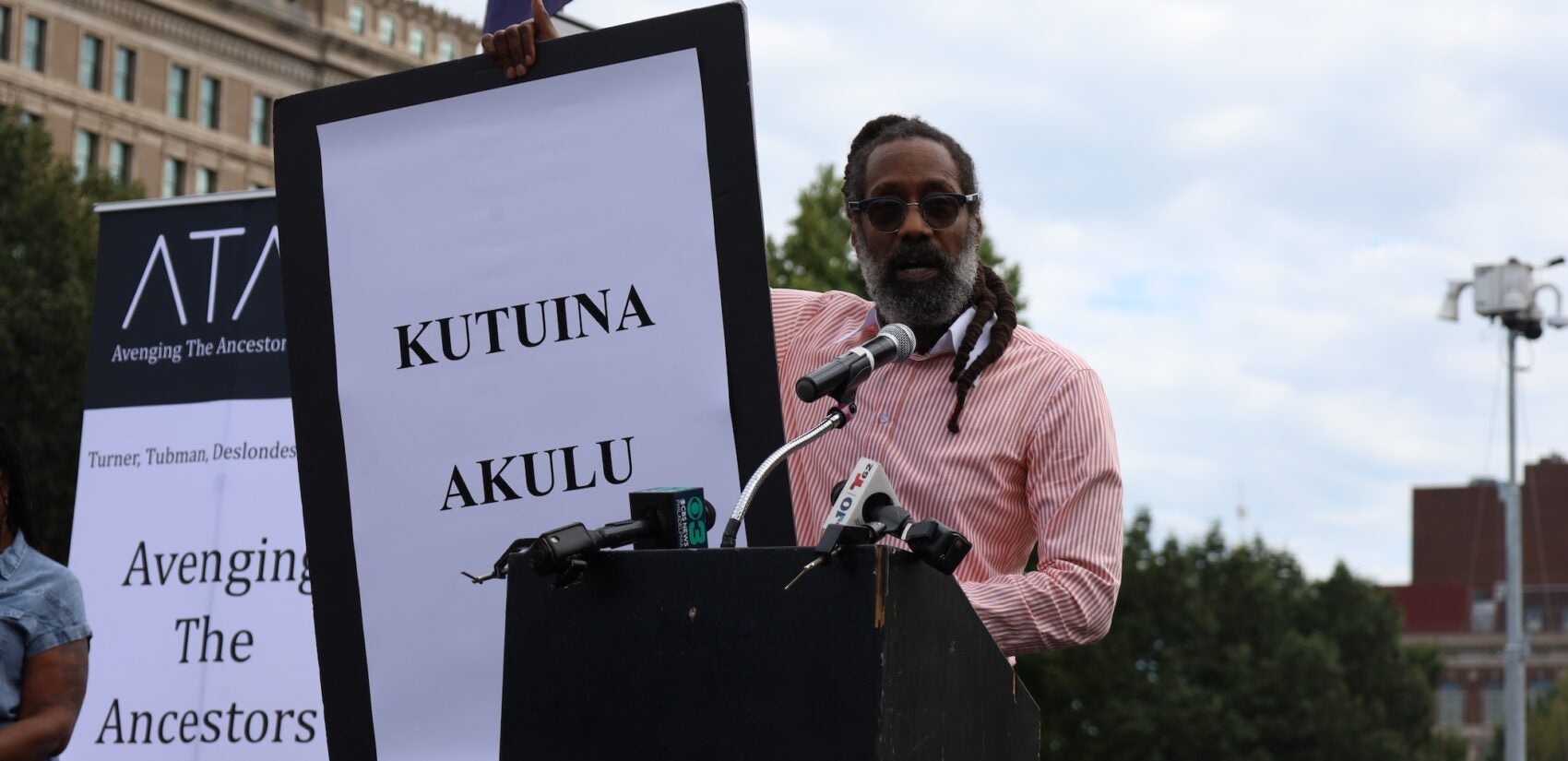
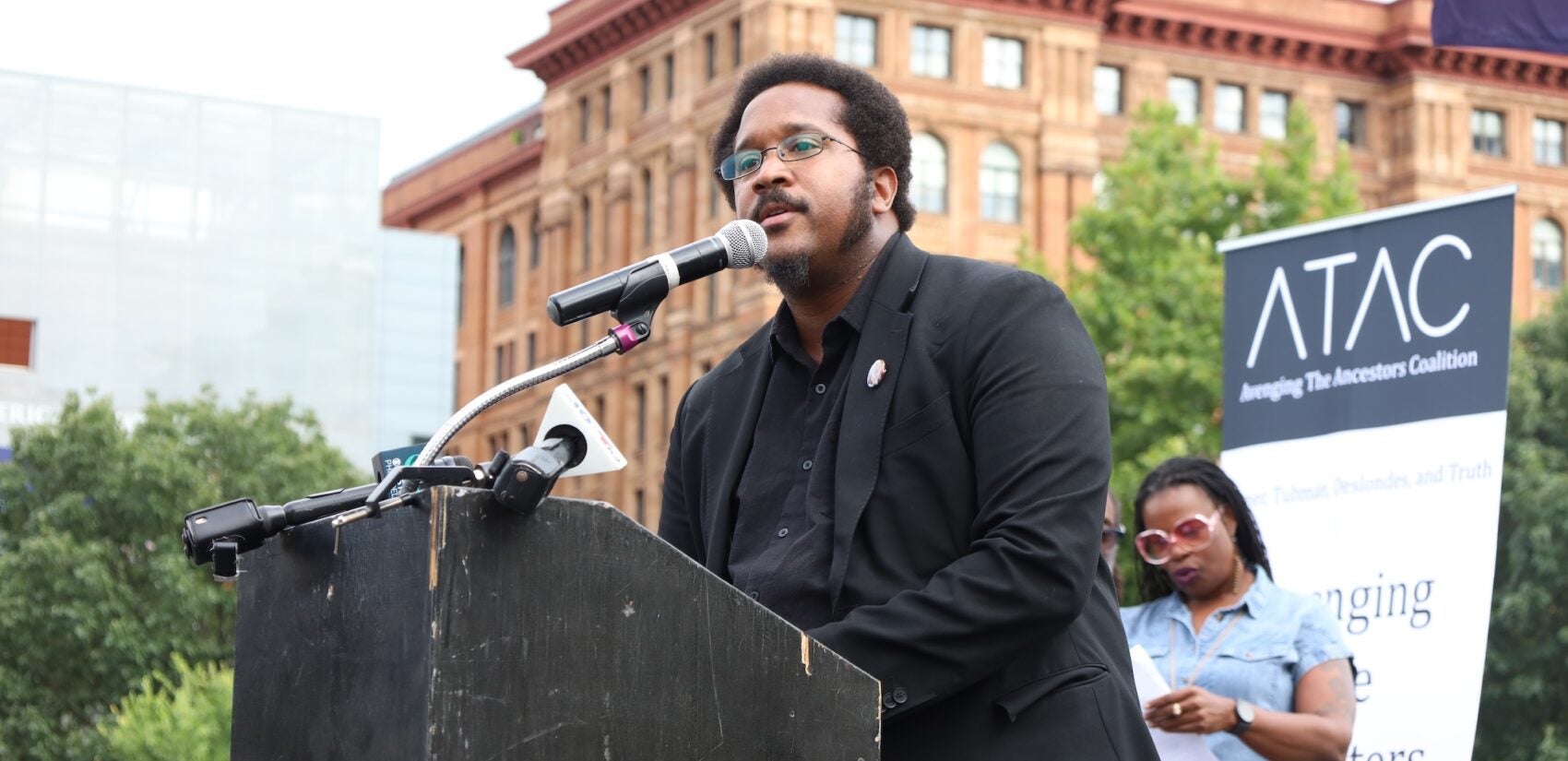
From a podium set up at 6th and Market streets, attorney Michael Coard spoke to those in attendance about the impact of slavery in America.
“Imagine you had a company,” Coard said. “And for 246 years from 1619 until 1865, you didn’t have to pay your employees a dime. Well, at the end of the day, you’d have a prosperous company too. America is that company.”
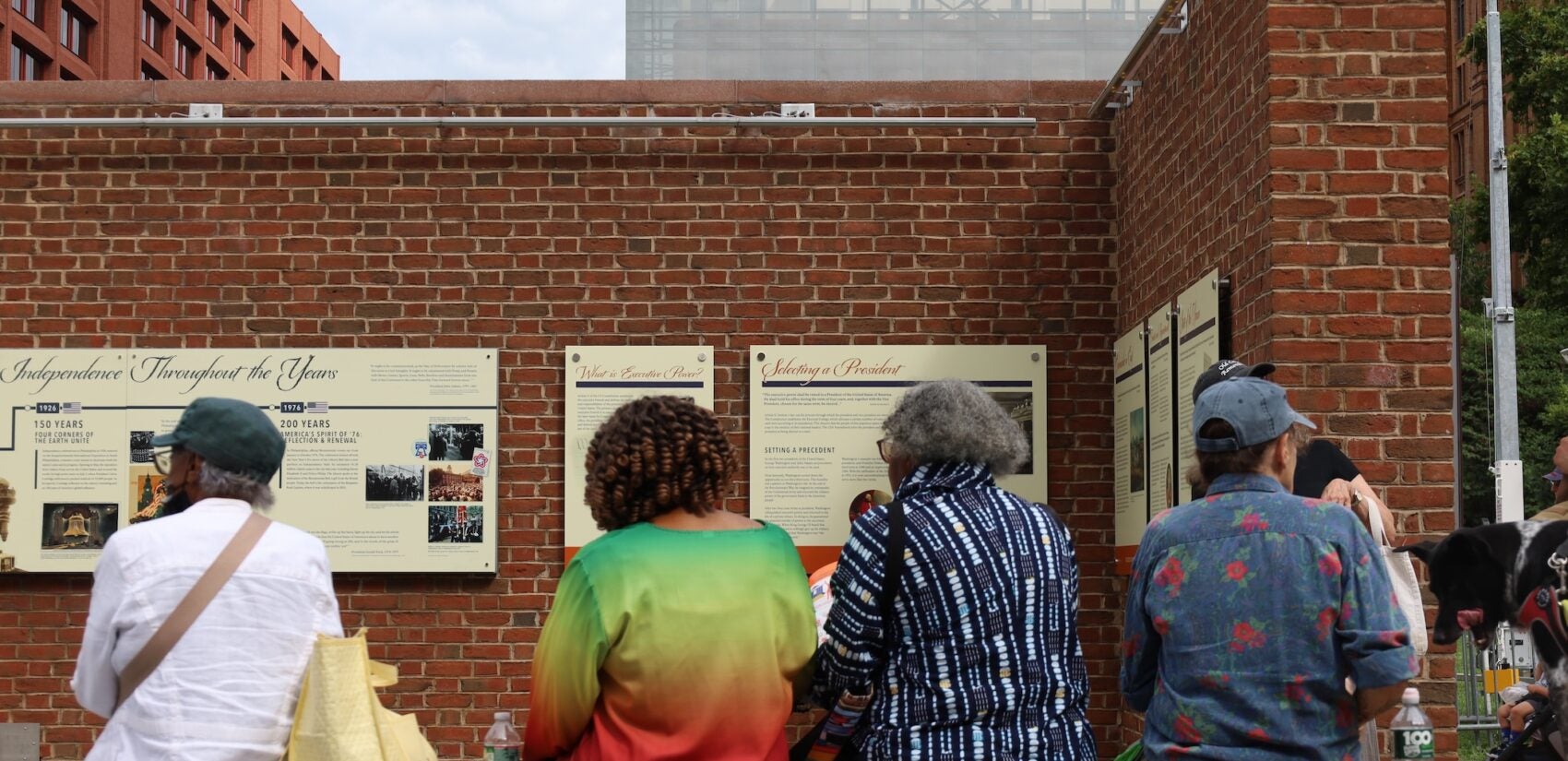
This year’s event carried the added weight of taking place at the historic site targeted by recent moves by President Donald Trump’s administration to remove panels detailing George Washington’s role as an enslaver.
The National Park Service removed the exhibit panels in January after Trump issued an executive order targeting what his administration described as “divisive” historical displays. The city filed a lawsuit the same day, arguing that the removal violated federal law and the agreement governing the site.
Earlier this month, city attorneys asked the U.S. Court of Appeals for the 3rd Circuit, which decided the case, to rehear its decision allowing the panels to be taken down. The city argues the ruling created a “Catch-22” that could allow federal agencies to take consequential actions while avoiding judicial review.
The current exhibit contains references to slavery and those enslaved by George Washington, but softens the first president’s views on slavery and puts more emphasis on the history of the executive mansion and early presidency.
Related Content
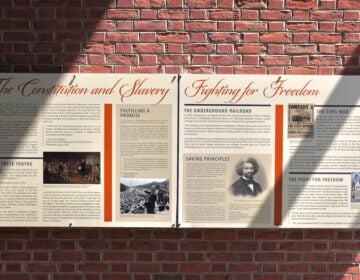
Philadelphia asks appeals court for rare review of President’s House ruling
The city argues the decision created a “Catch-22” that could allow federal agencies to carry out consequential actions while avoiding judicial review.
3 weeks ago
Listen 0:54Black history tour guide Mijuel Johnson said there’s a direct line between what happened in Virginia 407 years ago and what took place at the President’s House Site just a few months ago.
“Our history is still under threat of being erased,” Johnson said. “Erased by people who would rather forget that it ever happened. We will not let that happen. The history of slavery in this nation is fundamental to this nation. The history of Black people in this nation is fundamental to this nation. And no, we cannot and we will not tolerate an attempt at erasure.”
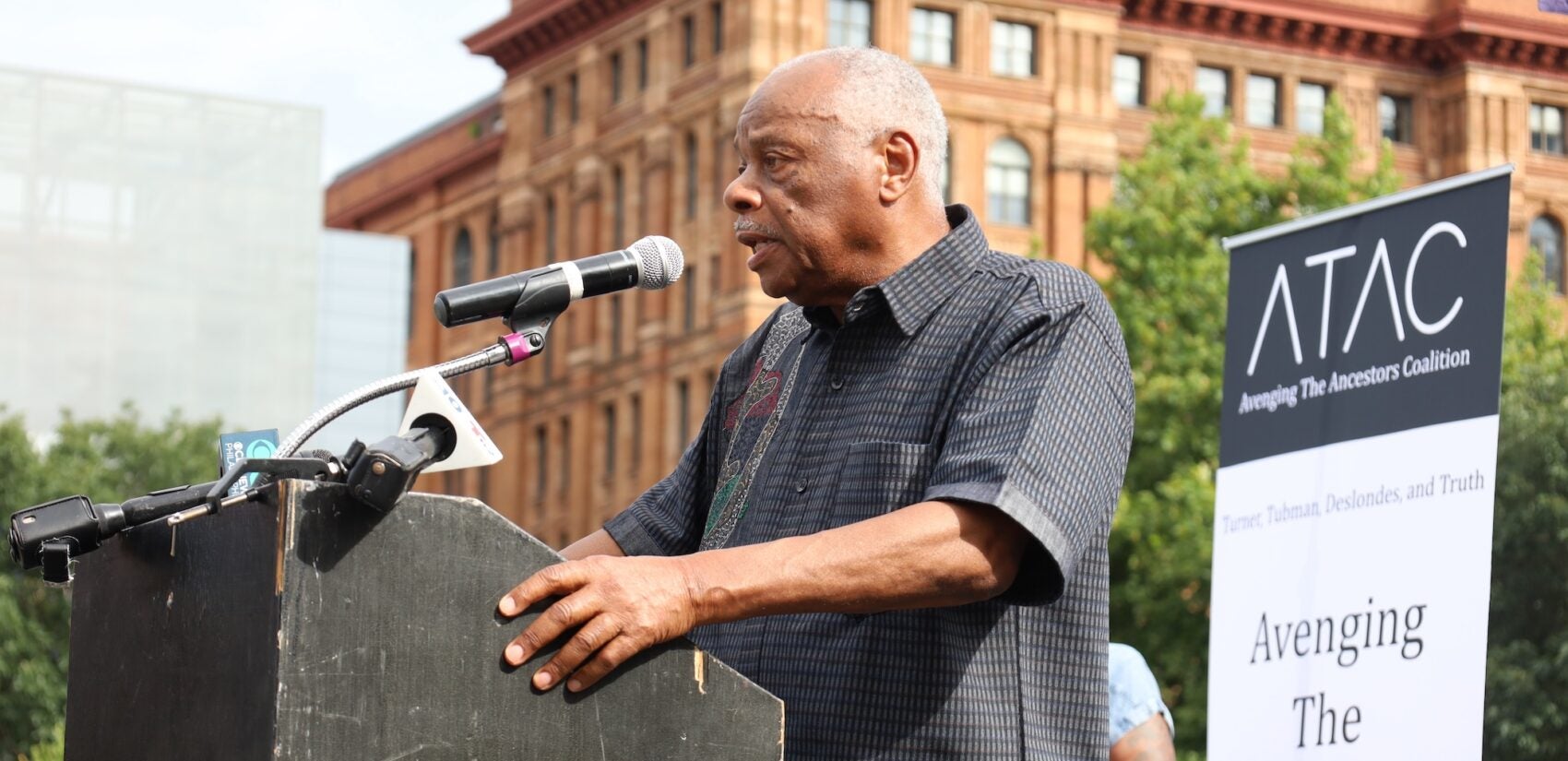
“I will not forget, and you [Trump] will not forget those nine Africans who stood, lived, worked and toiled on this soil,” said Temple University professor Molefi Kete Asante.
Asante said that once Trump exits office, the “truth will again reveal itself.”.
“And we will restore their image, and we will restore them to their rightful place,” he said. “So we have not come here to agitate, we have not come here to demonstrate, we have come here to commiserate.”

Never miss a moment with the WHYY Listen App!


WHYY is your source for fact-based, in-depth journalism and information. As a nonprofit organization, we rely on financial support from readers like you. Please give today.
Part of the series
‘ICE Out’ in Philly: Advocates are filling in the gaps where they say the city has fallen short
Immigrant advocacy groups say many residents don’t fully understand what protections the legislation provides or how the city is enforcing the new laws.
7 days ago

Philadelphia Mayor Cherelle Parker needs to do more to enforce ‘ICE Out’ legislation, activists say
Immigrant rights groups on Tuesday requested a meeting with Parker and outlined what actions her administration should take to implement the new laws.
4 weeks ago
Listen 1:12
Philadelphia’s oldest Juneteenth festival draws thousands to the Johnson House in Germantown
The festival celebrated its 20th year with music, vendors, a small-business opening and renewed calls to preserve Black history.
2 months ago