

Trump administration replaces Philly President’s House slavery exhibit ‘under the cover of darkness’ after monthslong legal battle
The city and activists have vowed to continue the legal fight to restore the original panels that focused on the nine enslaved people held by George Washington at the site.
Listen 1:08
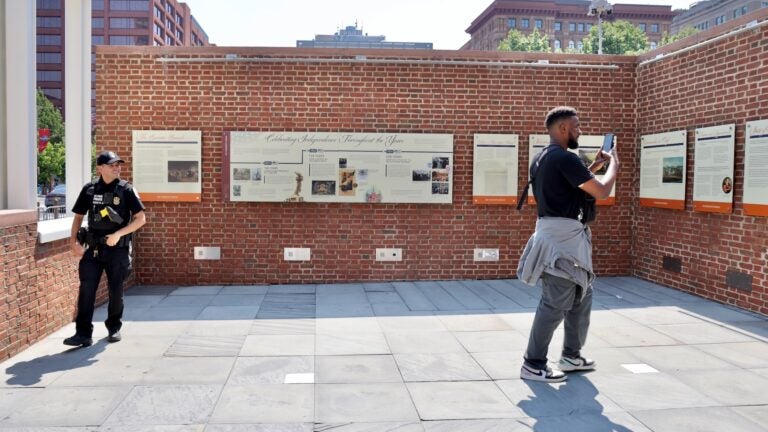
A park policeman stands guard over newly installed panels at the President's House historic site on Independence Mall. ''Celebrating Independence Throughout the Years'' is new to the site. ''The Dirty Business of Slavery'' is no longer part of the exhibit. (Emma Lee/WHYY)
From Philly and the Pa. suburbs to South Jersey and Delaware, what would you like WHYY News to cover? Let us know!
The Trump administration has completed its overhaul of the President’s House Site on Independence Mall, installing a new exhibit that critics say softens George Washington’s role as an enslaver and shifts attention away from the nine people he held in bondage while living in Philadelphia.
Workers replaced the remaining exhibits overnight Tuesday, the latest in a monthslong fight that has pitted the city of Philadelphia against the federal government over who controls the story told at the historic site.
The move came days after a federal appeals court concluded that Philadelphia had no legal authority to dictate interpretive content at the federally owned memorial after donating the site to the park service nearly two decades ago.
“To say that we are outraged is an understatement,” civil rights lawyer Michael Coard said during a quickly organized press conference at the site.
In a statement, Mayor Cherelle Parker said the federal government acted “under the cover of darkness.”
“It was allowed to do this by the decision of the federal court, but that it did so at night shows it understands this action is shameful, that it violates community trust,” she wrote.
Changing history
The new exhibit retains references to slavery and those enslaved by Washington while serving as president in Philadelphia, but it devotes significantly more space to the history of the executive mansion and the early presidency. A panel that had been titled ”The Dirty Business of Slavery,” for example, has now been replaced by signage that reads, ”Celebrating Independence Throughout the Years.”
It also softens Washington’s views on slavery compared to the previous display.
“In 1774, Washington helped draft the Fairfax Resolves at Mount Vernon,” one panel reads. “These condemned the slave trade as ‘wicked,’ ‘cruel,’ and ‘unnatural’ and called for putting ‘an entire Stop’ to it. Over time, he became increasingly committed to the gradual abolition of slavery.”
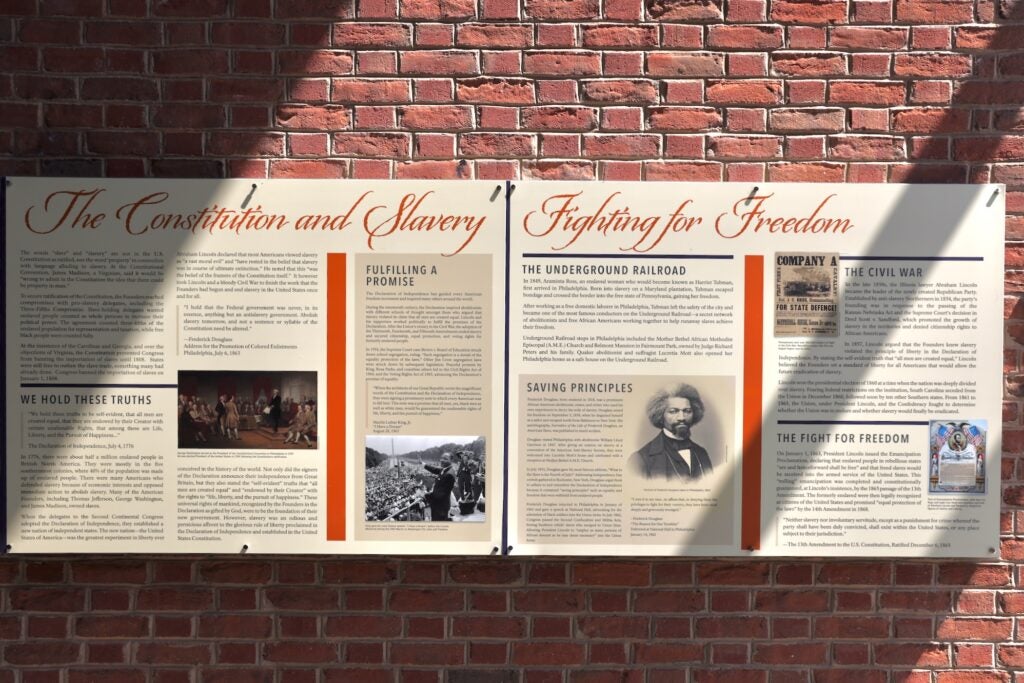
The new exhibit also notes that as president, Washington signed legislation that “both upheld and limited slavery,” including the Fugitive Slave Act, “passed by a veto-proof majority of Congress, which allowed slaveholders to recapture those who had escaped and penalized anyone who assisted them.”
-
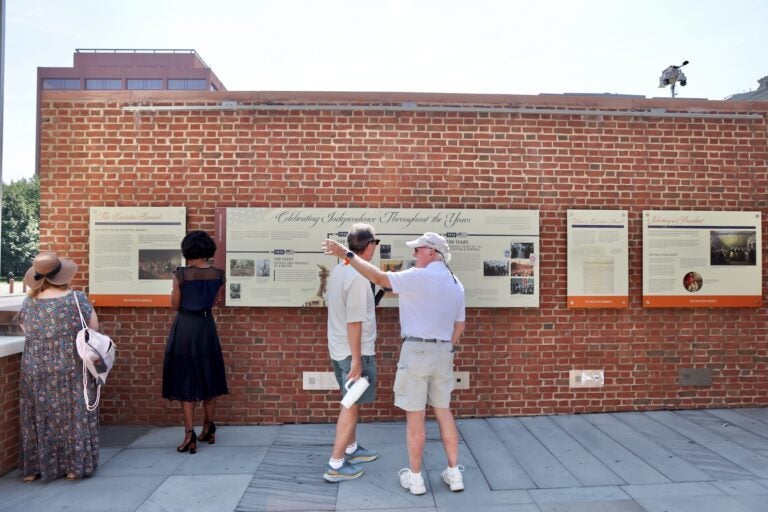
A wall in the President's House exhibit on Independence Mall once held panels about ''The Dirty business of Slavery.'' The replacement panels discuss ''Celebrating Independence Throughout the Years. (Emma Lee/WHYY) -
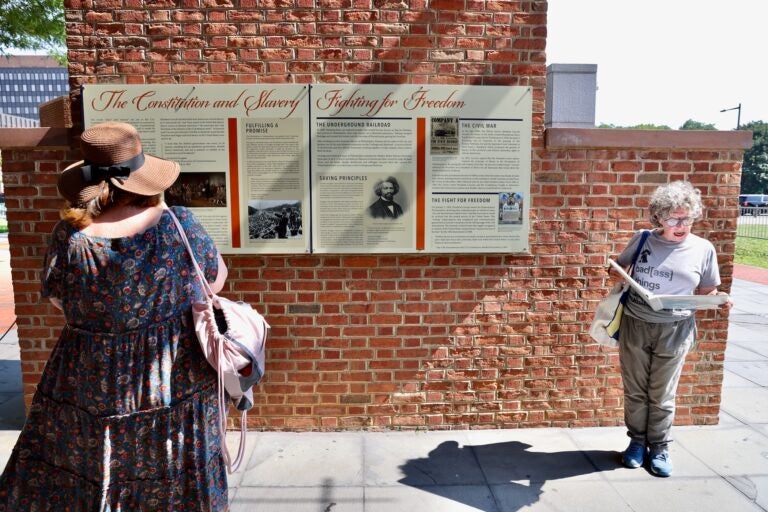
Sheri Utain (right), a volunteer with Old City Remembers, reads aloud the stories of Absalom Jones and Richard Allen, who are not included in the new panels at the President's House historic site on Independence Mall. (Emma Lee/WHYY) -
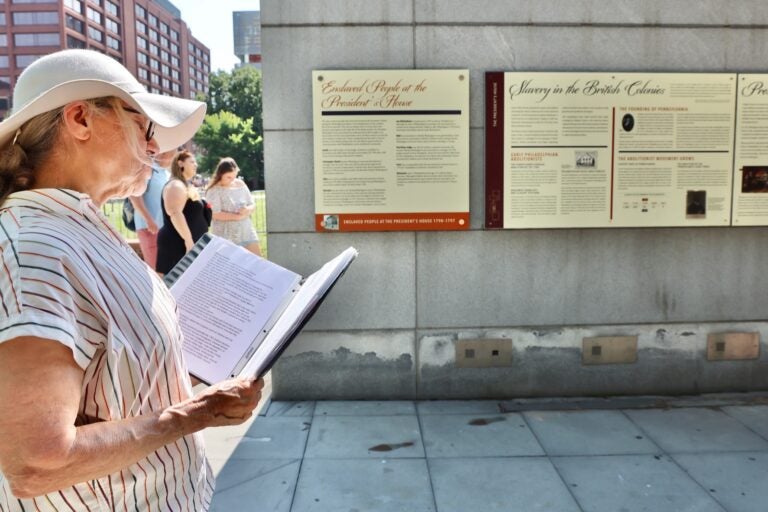
Ann Kell, a volunteer with Old City Remembers, reads aloud the parts missing from the President's House exhibit as visitors file through looking at the new panels that touch on slavery but turn the focus of the exhibit away from the nine people who were enslaved in George Washington's presidential residence. (Emma Lee/WHYY) -
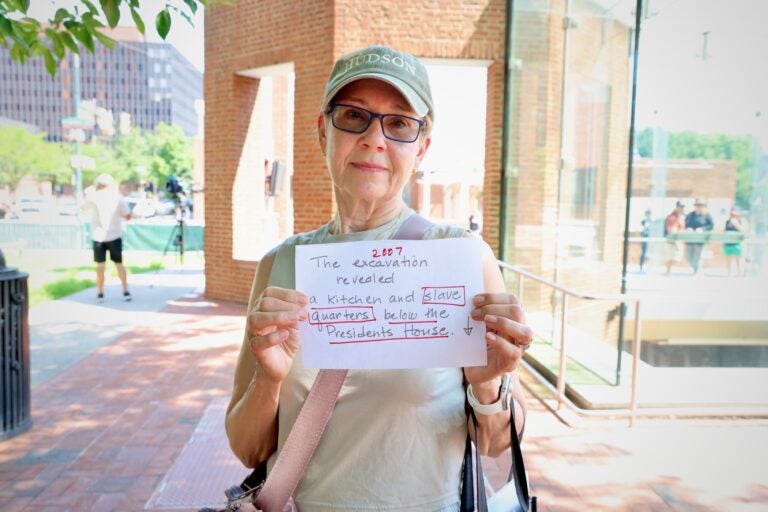
Sandra Shachar-Krasnoff holds the handwritten sign she attemped to tape to the glass surrounding the President's House ruins. She was issued a citation for vandalism on federal property, which carries a $305 fine. (Emma Lee/WHYY) -
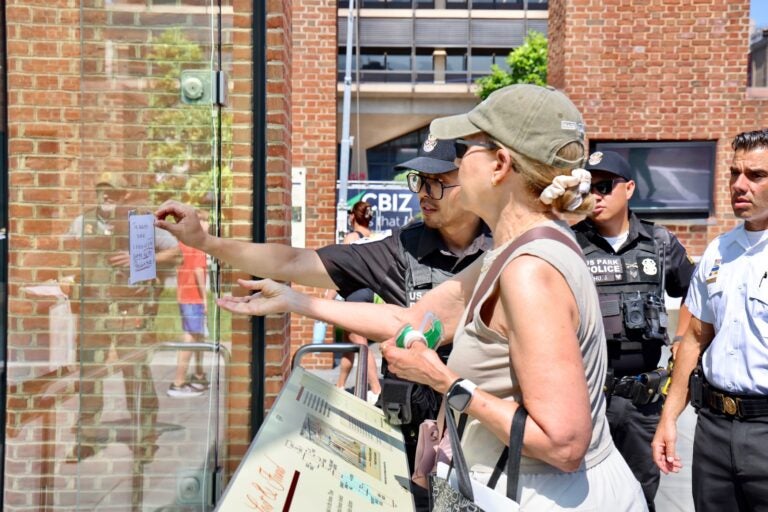
A U.S. Park Police officer starts to remove a handwritten sign after Sandra Shachar-Krasnoff taped it to the glass around the ruins of the President's House. She was cited for vandalism on federal property. (Emma Lee/WHYY) -
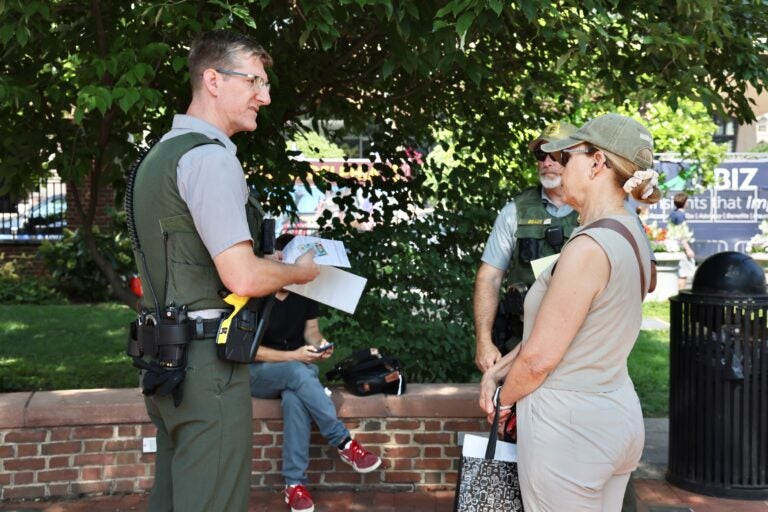
Sandra Shachar-Krasnoff gets a citation for vandalism on federal property after she tried to tape a handwritten sign to the glass enclosing the President's House ruin. (Emma Lee/WHYY) -
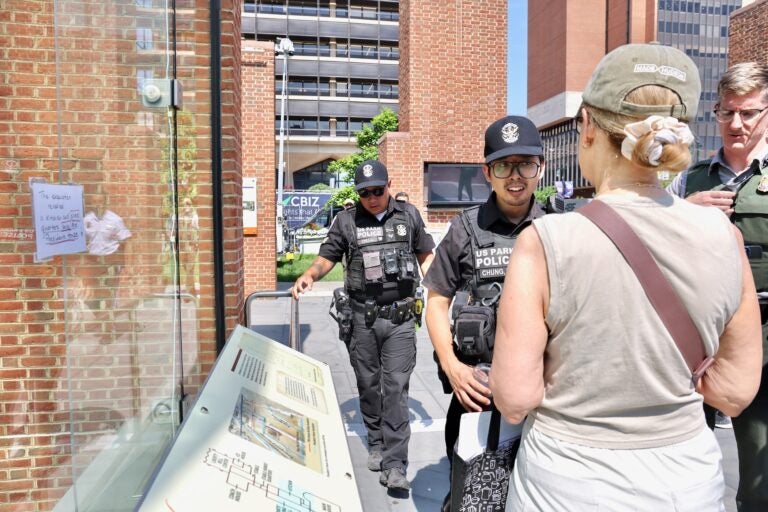
U.S. Park Police confront Sandra Shachar-Krasnoff after she taped a handwritten sign to the glass around the ruins of the President's House. She was cited for vandalism on federal property. (Emma Lee/WHYY) -
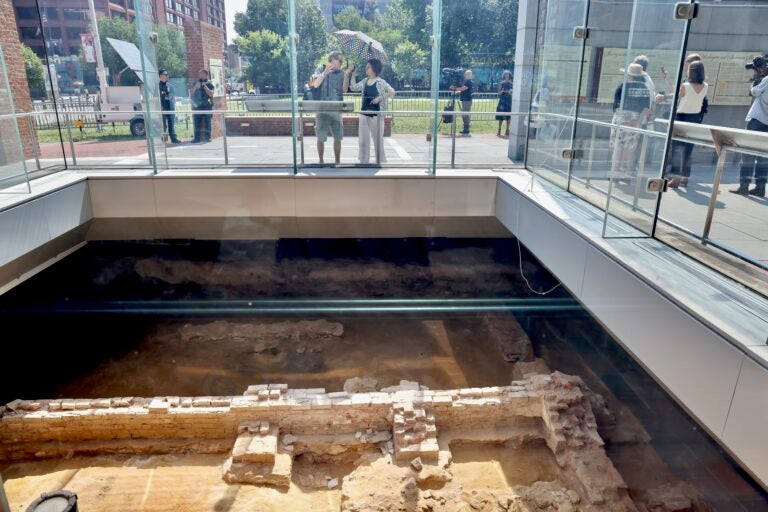
Visitors stop to look at the ruins of America's first White House, located under Independence Mall in Philadelphia. (Emma Lee/WHYY) -
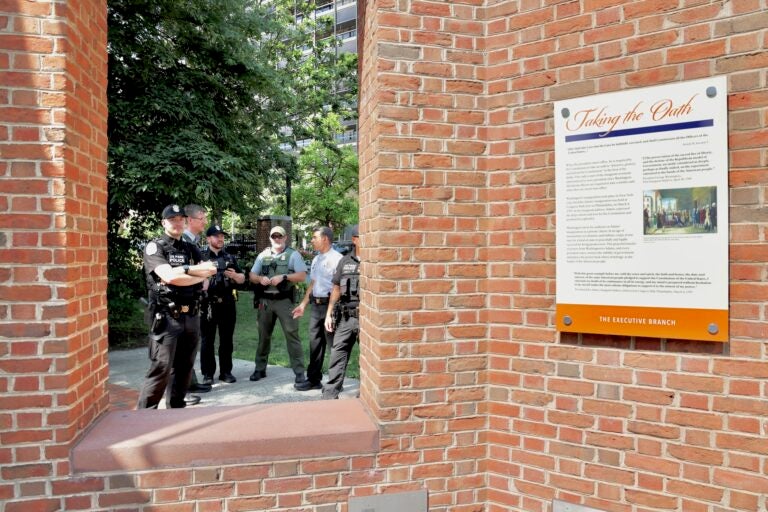
U.S. Park Police astand guard over the newly refashioned President's House exhibit on Independence Mall. (Emma Lee/WHYY)
“He also signed measures restricting slavery’s expansion, including the 1789 Northwest Ordinance, which banned slavery in the Northwest Territory, and the 1794 Slave Trade Act, which barred the participation of American ships in the transatlantic slave trade,” that panel reads.
Several other panels go in depth about “anti-slavery sentiments in the colonies” and early abolitionist movements, particularly those led by Quakers in Pennsylvania. A panel titled “The Constitution and Slavery” declares that the words “‘slave’ and ‘slavery’ are not in the U.S. Constitution as ratified.’”
Related Content
As the Trump administration moves to take down panels on slavery at Independence Mall, local institutions are affirming their dedication to telling a full history.
2 months ago
Federal defense
The Department of the Interior defended the new exhibit, with a spokesperson saying in a statement that the agency acknowledges “the evils of slavery including its injustices and hypocrisies, and, by telling the stories of the nine slaves that Washington kept in the President’s House, remind us of their essential humanity.”
“These new panels are full of historical context and highlight the momentous events that took place in the President’s House and the other sites at Independence National Historical Park,” the spokesperson said in an email to WHYY News.
“By telling the full story, every triumph, every challenge, and every step towards a more perfect union we strengthen our shared understanding and ensure that future generations inherit not just the land we love, but the truth of the journey that brought us here,” the email continued.
However, Coard likened it to downplaying the evils of the Holocaust and said the same standard could be applied to other important American historical sites.
“If we have presidents like Trump after this one and after that one and after that one, then nobody will know what happened during slavery,” he said. “Nobody will even know what happened during the civil rights struggle of the ’50s and ’60s.”
‘A monument to democracy’
The site originally opened in 2010 after years of archaeological research and community advocacy. The exhibit focused on the contradiction between the nation’s founding ideals and the fact that Washington enslaved people while living just steps from what is now the Liberty Bell.
Some critics, such as Michael Lewis, professor of architecture at Williams College and author of “Philadelphia Builds: Essays on Architecture,” said the site’s focus on slavery overshadowed Washington’s role in shaping the presidency.
However, retired National Park Service archaeologist Jed Levin, who led the excavation that uncovered the foundations of the president’s house, called the original exhibit a “monument to democracy,” and the result of a grassroots effort to create an exhibit that relayed part of “American history that’s not often told.”
“This site spoke to that truth, that fundamental truth of who we are in a way that no other place in the country or the world really did,” Levin said. “And it did it because of a democratic upswell on the part of people in Philadelphia and beyond.”
The city of Philadelphia and the Avenging the Ancestors Coalition, which led the movement to develop the original site, committed to continuing the legal fight over the exhibit. Parker announced in her statement that the city would seek a rehearing on “serious legal issues presented in the Third Circuit panel’s June 18, 2026, decision.”
Activists also vowed to keep the original story alive. Paul Steinke, executive director of the Preservation Alliance for Greater Philadelphia, said his organization would continue to organize volunteers to read from the old panels throughout the coming days.
Mijuel K. Johnson, a guide with The Black Journey: African-American Walking Tour of Philadelphia, said they would continue to visit the site during tours and tell the story of the nine who were enslaved there.
“We will not be erased,” Johnson said.
Over the July Fourth weekend, before the new panels were erected, visitors encountered an incomplete exhibit as activists taped reproductions of the missing panels onto the walls and held public readings from the removed displays. However, on Wednesday, several armed members of the National Park Service Police were seen vigilantly watching over the site.
Some activists, such Dr. Sandra Shachar-Krasnoff of Philadelphia, had been regularly posting information since the site was first dismantled by the Trump administration in January. However, on Wednesday, she was stopped by park service officials after she briefly taped a piece of paper that stated, “the excavation revealed a kitchen and a slave quarters below the President’s House Site” to one of the building’s walls.
She was fined $310.
“There was nothing to indicate that today was any different from previous days when we have been apparently ‘allowed to do this,’ as the officer said,” she told WHYY News. “Well, when did that law change?”
Asked about the incident, an Interior spokesperson told WHYY News by email that “any vandalism, tampering, destroying or defacing of cultural or archeological resources is a federal crime.”
Shachar-Krasnoff said she plans to fight the fine for “vandalism,” but it would deter her from posting fliers in the future.
“The history about our leaders, our founders, involvement in slavery as a part of our history, is important for us to know,” she said. “I love my country and I want all of its citizens to have access to the full story of our history. The good, the bad and the ugly … We can handle the truth.”
The dispute over the slavery exhibit started after President Donald Trump signed an executive order directing federal agencies to remove or revise exhibits deemed to “disparage” American history. Park service workers removed the President’s House exhibit in January, prompting an immediate lawsuit from the city and protests from historians, elected officials and community advocates.
A federal judge sided with the city and ordered the exhibit restored, but the Trump administration appealed to the 3rd Circuit, which sided with the White House last month.

Get daily updates from WHYY News!
WHYY is your source for fact-based, in-depth journalism and information. As a nonprofit organization, we rely on financial support from readers like you. Please give today.
Part of the series
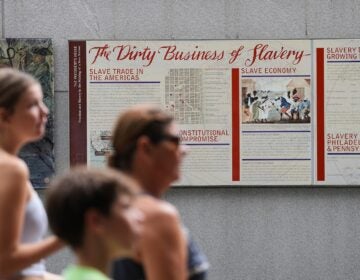
As the Trump administration moves to take down panels on slavery at Independence Mall, local institutions are affirming their dedication to telling a full history.
2 months ago
Court blocks National Park Service plans to replace slavery exhibit at President’s House Site
Advocates for the site say the new renderings diminish references to slavery and whitewash American history. A federal court stopped any further changes.
5 months ago
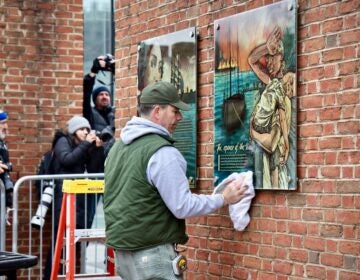
Philadelphia’s slavery exhibit is being restored at the President’s House
“This is the American people fighting back and saying we will not accept this,” said one Independence Mall visitor. “Will not allow history to be rewritten.”
6 months ago