
Activists look to keep the story of Washington’s slaves alive as thousands visit Independence Park for July 4 festivities
The exhibit remains half-restored as local leaders consider their next moves after a federal appeals court ruled in favor of the Trump administration.
Listen 1:25
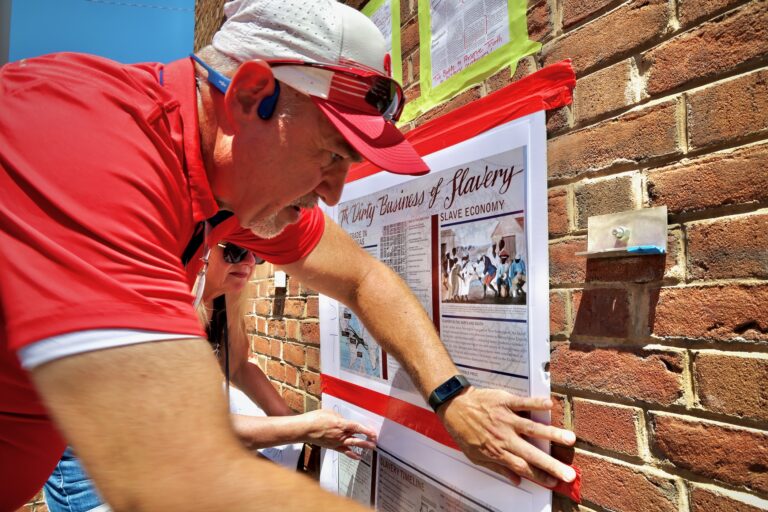
Albert DerMovsesian of Willow Grove tapes up copies of the missing panels at the President's House Site at Independence National Historic Park. (Emma Lee/WHYY)
From Philly and the Pa. suburbs to South Jersey and Delaware, what would you like WHYY News to cover? Let us know!
Visitors arriving at the President’s House Site in Philadelphia on Independence Day encountered a monument caught between two versions of history.
The site remains at the center of a months-long legal battle after the Trump administration ordered the National Park Service to remove material it viewed as “disparaging” to American history and replace the exhibit with a revised version.
As a result, portions of the exhibit detailing the lives of the nine people enslaved by President George Washington while he lived in Philadelphia remained absent.
“I think that it is a disgrace to our city,” said Mary Gillogly, a Philadelphia resident who was joining festivities on Independence Mall. “There are people visiting for FIFA, for Fourth of July, the 250th … This is part of our history, and they need to be fully informed of everything that happened here, not just pick and choose.”
Visitor Fernando Muñoz Piedra said that the struggle for recognition hasn’t changed in the last 250 years.
“Yes, slavery ended a long time ago. And yet even now we’re still fighting for the acknowledgement and the representation of the atrocities that happened,” he said.
‘I know what it’s like to have your history erased’
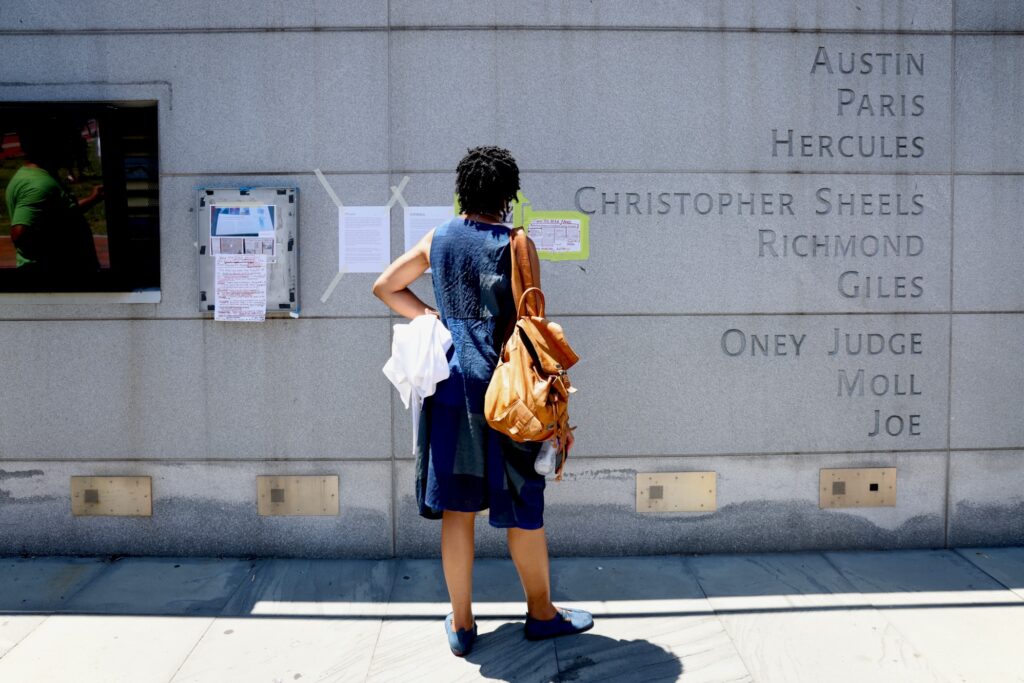
While much of the exhibit was still missing, the site’s video screens had been turned back on. Activists posted information about the site, including news articles and explanations, printed in several languages, about why some of the panels were absent.
Albert DerMovsesian took the train in from Willow Grove in order to post large re-creations of the missing panels printed on foam board he attached to the walls with tape.
“My grandfather is from Armenia; I know what it’s like to have your history erased,” he said. “I know they’ll get torn down, but hopefully there’s enough people here today for the holiday that they’ll be seen and maybe it’ll inspire someone else to do the same.”
Nearby, Abbie Hyde read passages removed from the exhibit, including text about the decade Philadelphia served as the nation’s capital.
“During those 10 years, George Washington lived here and he owned slaves that he kept in Mount Vernon and Virginia, cycled back and forth every five and a half months because after six months, enslaved people were supposed to be freed,” she read.
“When John Adams became president, he announced, ‘I will never own another human being,’” she said. “That’s my favorite quote.”
Related Content
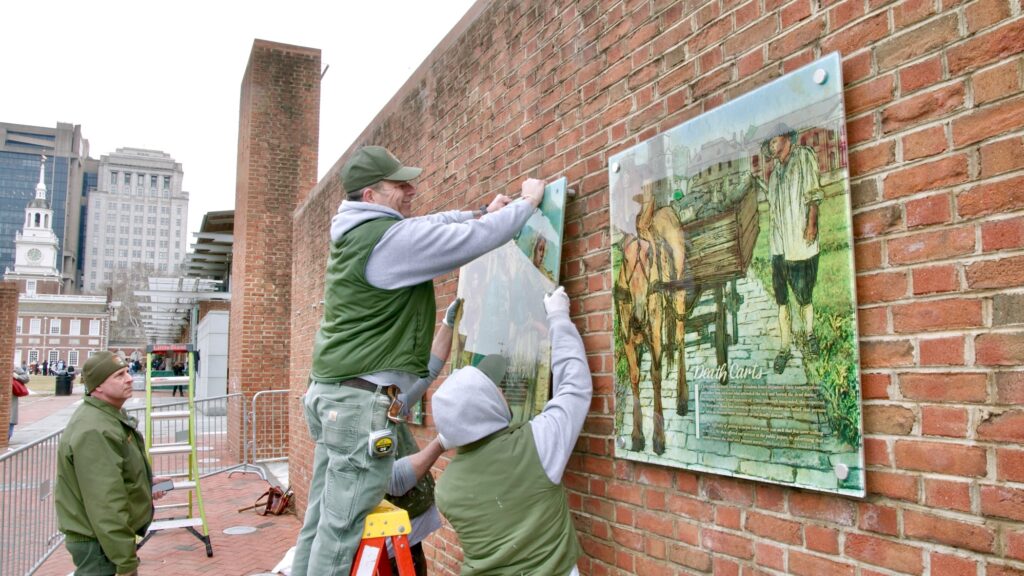
A unanimous appeals court panel ruled Philadelphia lacks authority to control exhibits at the Independence Mall site.
3 months ago
‘I am the American story’
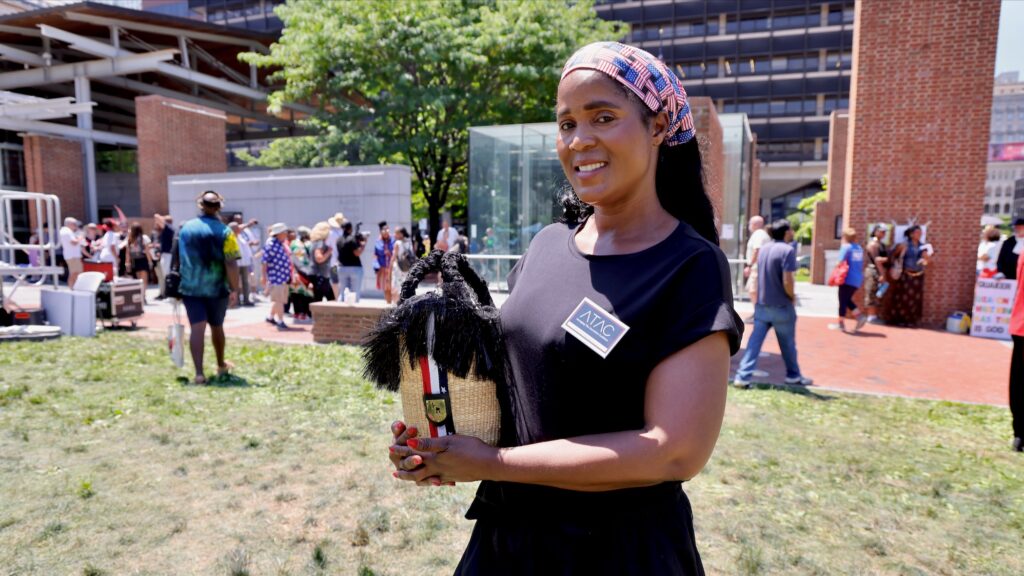
At 1 p.m., the Avenging the Ancestors Coalition, or ATAC — the group that was formed to advocate for the original slavery exhibit — staged a performance with actors telling the stories of the nine people enslaved by Washington. The youngest, Khylei Bailey, 8, recounted the life of Richmond, the 11-year-old son of Washington’s cook Hercules Posey and seamstress Alice.
“I also have to sweep the chimneys, which is very dirty work,” he said. “I once tried to escape from George Washington but did not make it. I’m just happy that my father will eventually escape to freedom. I am the American story.”
ATAC activist Farugh Maat said it was important for them to “tell the whole story” of American history.
“George Washington was a magnificent general, great president, but you can’t be a great human being if you’re enslaving people,” he said. “When you talk about white liberty, you got to talk about African bondage. That’s part of the story. Everything has a contrast. And so that’s why we here. We got to tell our ancestors’ story.”
Among the several dozen attendees were City Councilmember Rue Landau, Philadelphia District Attorney Larry Krasner and City Council President Kenyatta Johnson, who also took to the podium to speak.
“I think about my two boys, Isaiah Mandela and Elijah Kwame, growing up here — not only here in the city of Philadelphia, but most importantly in this country — and I’m always advocating on the front line to make sure that they deserve to have a city and a country that advocates for freedom, justice and equality for everyone,” he said. “So as we celebrate this Fourth of July, let’s continue to make sure we are advocating and fighting for progress and justice for everyone.”
The fight continues
The legal battle over the site started when President Donald Trump issued an executive order, “Restoring Truth and Sanity to American History,” which directed federal agencies to remove or revise content deemed “improperly disparaging” to American history. The National Park Service subsequently moved to alter the President’s House exhibit, prompting the city of Philadelphia to sue in January. A federal district judge ordered them restored.
However, the Trump administration appealed to the 3rd Circuit, which reversed the lower court’s decision. On Friday, the appeals court cleared the way for the park service to erect the new proposed exhibit “without further delay.” The Parker administration then immediately sought further review of the ruling.
The new panels also mention the nine people enslaved at the site. However, they change the overall tone of the exhibit, softening and significantly reducing references to slavery, and shifting the focus toward the “anti-slavery sentiments” of the slave-owning Founding Fathers.
The new exhibit also goes deeper into the house’s history and gives more space to Washington’s actions, while living in the house, that are not related to slavery.
Timothy Welbeck, a professor and director of the Center for Anti-Racism at Temple University who was also visiting the site, said that those stories are prevalent enough around Philadelphia.
“We know that part of the story,” he said. “What most of the people who come through here do not know is the story of Ona Judge and Paris and Christopher and the others who were enslaved here. And so to de-emphasize them, particularly when they have such a foundational role in the creation of America, is not something that should be happening.”
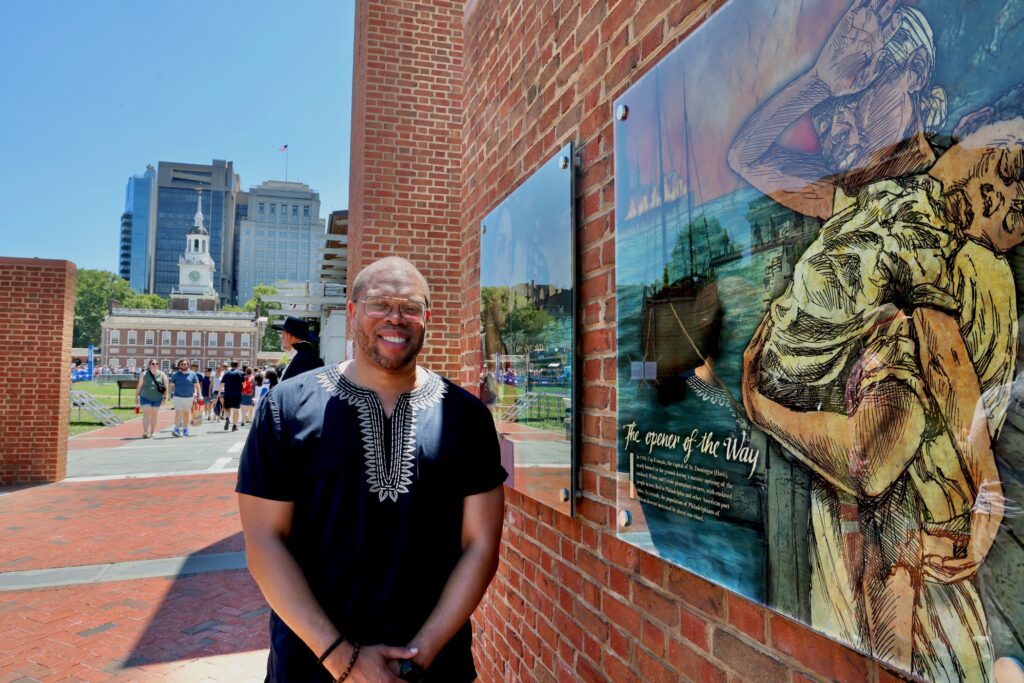
The fight to protect the exhibit drew support from across the political spectrum, from Gov. Josh Shapiro to Pennsylvania’s Republican U.S. Sen. David McCormick.
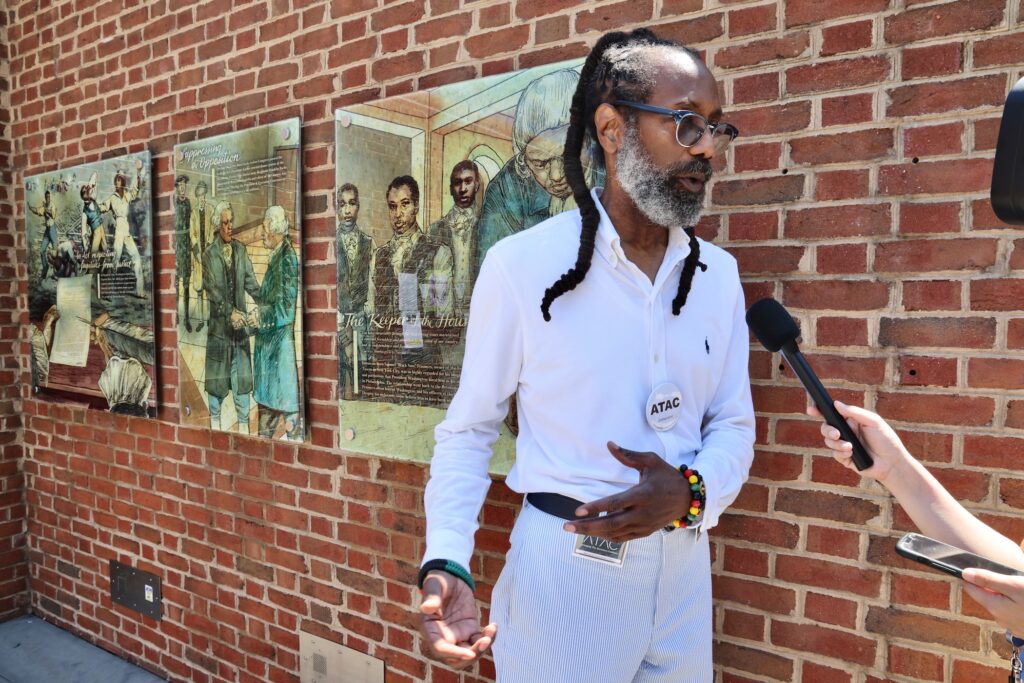
Michael Coard, an attorney and co-founder of ATAC, told the audience Saturday that they intend to continue to fight, either by seeking an en banc review — whereby all active judges of an appellate court hear a case together, rather than the usual three-judge panel — or possibly filing another “more expansive” lawsuit. He said an appeal to the U.S. Supreme Court was unlikely.
“Sometimes you’ve got great legal issues, but you don’t take them to a court that’s going to rule against you,” he said.

Get daily updates from WHYY News!
WHYY is your source for fact-based, in-depth journalism and information. As a nonprofit organization, we rely on financial support from readers like you. Please give today.
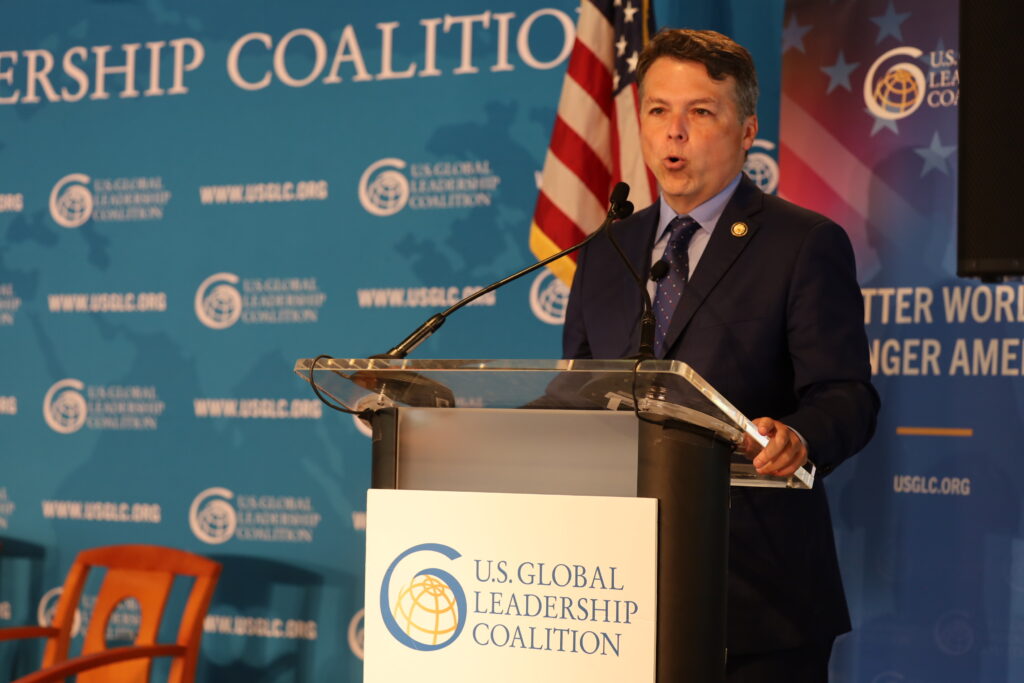
The Pennsylvania Democrat says preparations for the 2037 commemoration should build on Philadelphia’s role in this year’s celebration of America’s 250th birthday.
2 weeks ago
Listen 0:58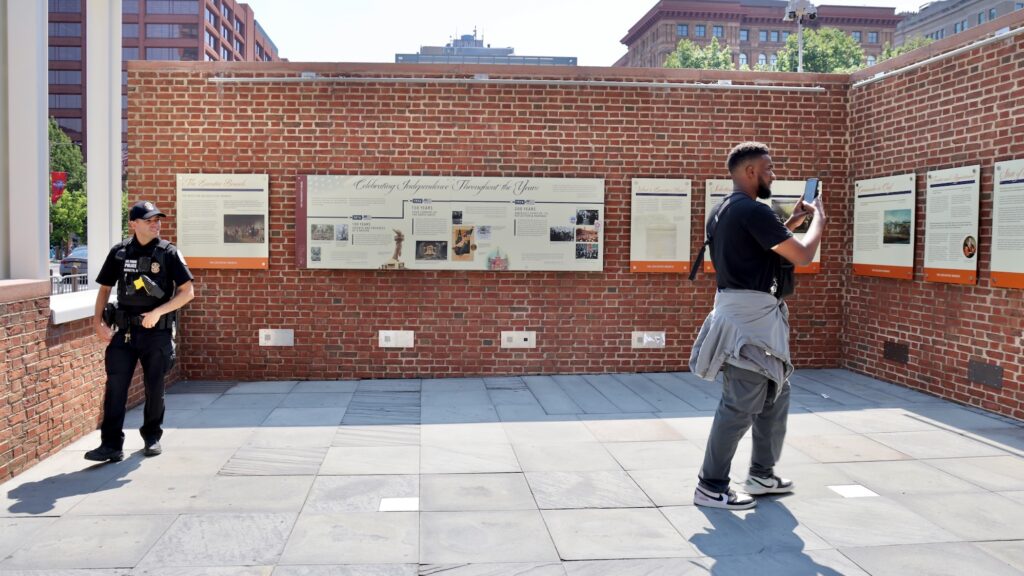
The city and activists have vowed to continue the legal fight to restore the original panels that focused on the nine enslaved people held by George Washington at the site.
2 months ago
Listen 1:08
Semiquin- what? Why Independence Day is celebrated on July 4
The Continental Congress voted for independence two days earlier, but the Declaration transformed July 4 into a lasting national symbol.
3 months ago
Listen 1:10