Semiquin- what? Why Independence Day is celebrated on July 4
The Continental Congress voted for independence two days earlier, but the Declaration transformed July 4 into a lasting national symbol.
Listen 1:10
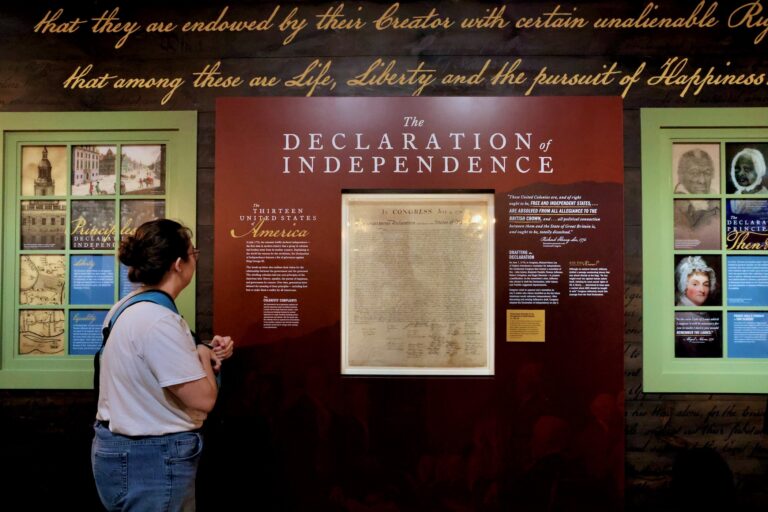
At the National Constitution Center, an 1833 copy of the Declaration of Independence meticulously preserves the look of the original signed by members of the Second Continental Congress. (Emma Lee/WHYY)
From Philly and the Pa. suburbs to South Jersey and Delaware, what would you like WHYY News to cover? Let us know!
Americans celebrate Independence Day on July 4, but the vote that severed the colonies from Great Britain actually took place two days earlier.
So why did July 4 become the nation’s birthday?
Historians say the answer lies not in the moment Congress declared independence, but in how the news spread, how Americans commemorated it and how generations of political leaders and citizens transformed the date into a national holiday.
The vote before the Fourth
On April 19, 1775, the first shots in what would become known to Americans as the Revolutionary War rang out in Concord and Lexington, Massachusetts, beginning a slow march toward the creation of the United States of America.
It was an important moment. Colonists, angry with King George III of Britain over a list of grievances — a lack of self-determination, the forcing of colonists to house military troops and, of course, “taxation without representation” — had already been bothered by the monarch’s iron-fisted rule for years. Protests over the king’s policies had led to incidents such as the Boston Massacre and the Boston Tea Party.
Twenty-seven such grievances were enumerated in the Declaration of Independence, many of which share a theme, said Andrew Shankman, chair of the history department at Rutgers University-Camden.
“A lot of the grievances, such as taxing without representation, suspending trial by jury and virtually every other grievance they’re making, has something to do with the idea that there is a rule of law that government should be answerable and accountable to,” he said. “The British government under King George III in 1776 ceased to be under the authority of a rule of law.”
On June 7, 1776, Virginia delegate Richard Henry Lee introduced a resolution in the Second Continental Congress proposing independence for the American colonies. Congress then appointed a committee of five delegates — including Thomas Jefferson — to draft a declaration explaining the colonies’ reasons for seeking independence in case Lee’s resolution was passed.
Emma Hart, director of the McNeil Center for Early American Studies and a professor at the University of Pennsylvania, said many colonies were still unsure about breaking away from Great Britain, but support had grown since Thomas Paine published his famous anti-imperial essay “Common Sense” earlier that year.
“It was far from a given, right up until the last minute… so there was a lot of humming and hawing before they finally took the plunge,” Hart said. “Paine’s ‘Common Sense’ made them believe that it was a chance worth taking.”
The Second Continental Congress voted in favor of Lee’s resolution on July 2.
For some, at the time, that was the moment that created the new nation. John Adams wrote to his wife that the day would “be the most memorable Epocha, in the History of America. I am apt to believe that it will be celebrated, by succeeding Generations, as the great anniversary Festival.”
“It ought to be solemnized with Pomp and Parade with shews, Games, Sports, Guns, Bells, Bonfires and Illuminations from one End of this continent to the other from this Time forward forever more,” he concluded.
Related Content
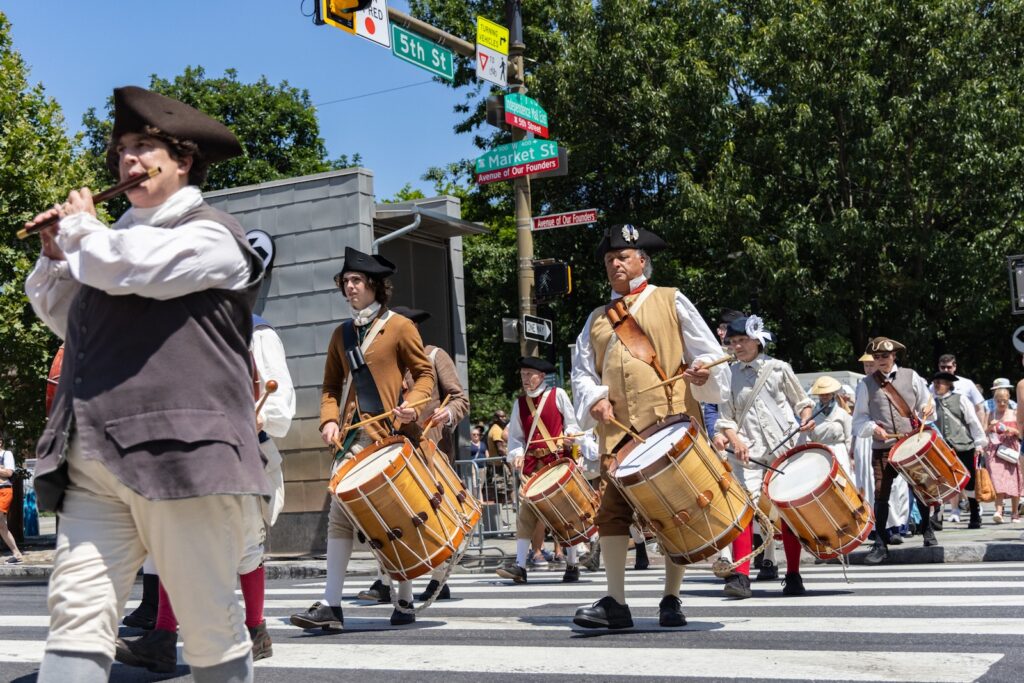
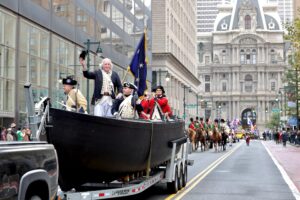
Extreme heat forced Philly to cancel its 250th parade. Tourists flocked to Independence Mall anyway
Parade organizers said they were “heartbroken” for thousands of participants who traveled from as far away as Italy to take part.
3 months ago
Listen 1:03How July 4 became Independence Day
However, Americans now recognize July 4 as Independence Day because it was the day those same delegates approved the final wording of Jefferson’s Declaration of Independence and approved its publication. The document was sent to a printer, John Dunlap, who made 200 copies that were distributed around the colonies.
In the days and weeks following July 4, the document would be read aloud on the steps of state houses, in town squares and in military camps. Gen. George Washington read it to his troops as they prepared for an impending attack by the British. In that way, the date of July 4 became synonymous with independence in the minds of commoners.
Most delegates signed the final, official parchment version on Aug. 2, 1776.
“This is of course not a 24-hour news era, so it takes time to get it drawn up and then also to make the proclamation,” Hart said. “And then it takes time for the information to circulate. So it’s because it becomes public knowledge on July the Fourth, and it’s proclaimed on that day, that this ends up being Independence Day. It’s not just a few men in a room making a decision. It’s the actual proclamation to the people at large.”
Adams got his “Pomp and Parade” on the first anniversary of the event in Philadelphia which “celebrated here with a festivity and ceremony becoming the occasion,” he wrote in a letter to his daughter.
However, it was years before the newly formed nation saw enough peace to exercise its new freedoms. King George III was not ready to release the New World, which provided staple raw materials like tobacco, lumber and iron, served as a captive market for British manufactured goods and generated significant tax revenues. The American Revolution lasted another seven years and cost an estimated 50,000 lives between the two sides.
The war officially ended on Sept. 3, 1783, when the United States and Great Britain signed the Treaty of Paris, recognizing America’s sovereign independence. In 1787, Philadelphia hosted the Constitutional Convention, where delegates from 12 of the former colonies — now states — drafted the U.S. Constitution, which went into effect on March 4, 1789.
It’s in the succeeding years that July Fourth became popularly known as an anniversary.
From anniversary to national holiday
“It really takes a while to take off,” Hart said. “People do things like have fireworks and put candles in their windows to show their support quite early on, but to become the official day of the birth of America, that takes time for everyone to get behind it.”
The holiday took on even greater meaning after July 4, 1826, when Thomas Jefferson and John Adams died, on the same day — the day they helped place into history.
“Jefferson comes to claim writing the declaration as his greatest achievement, and his supporters start to celebrate July the Fourth with parades and with orations as a really meaningful moment,” Hart said. “And then, of course, that baton is taken up across all of the 19th century after his death.”
Another 50 years later, the centennial coincided with the World’s Fair, which was also held in Philadelphia, leading to another “huge celebration” and further solidifying it as a day to commemorate, Shankman said.
Shankman added that, while Americans debate whether the nation has lived up to the ideals it was founded on, it’s a debate that has raged since the beginning.
“People have been arguing almost since the start about what exactly the American experiment is and what kind of nation that came into being, at least on paper on July 4, 1776 — what it was meant to be and what it should be,” he said.

Never miss a moment with the WHYY Listen App!


WHYY is your source for fact-based, in-depth journalism and information. As a nonprofit organization, we rely on financial support from readers like you. Please give today.
Part of the series
Philadelphia 250
The United States is marking its semiquincentennial — or its 250th anniversary — in and around the City of Brotherly Love.

The Pennsylvania Democrat says preparations for the 2037 commemoration should build on Philadelphia’s role in this year’s celebration of America’s 250th birthday.
3 weeks ago
Listen 0:58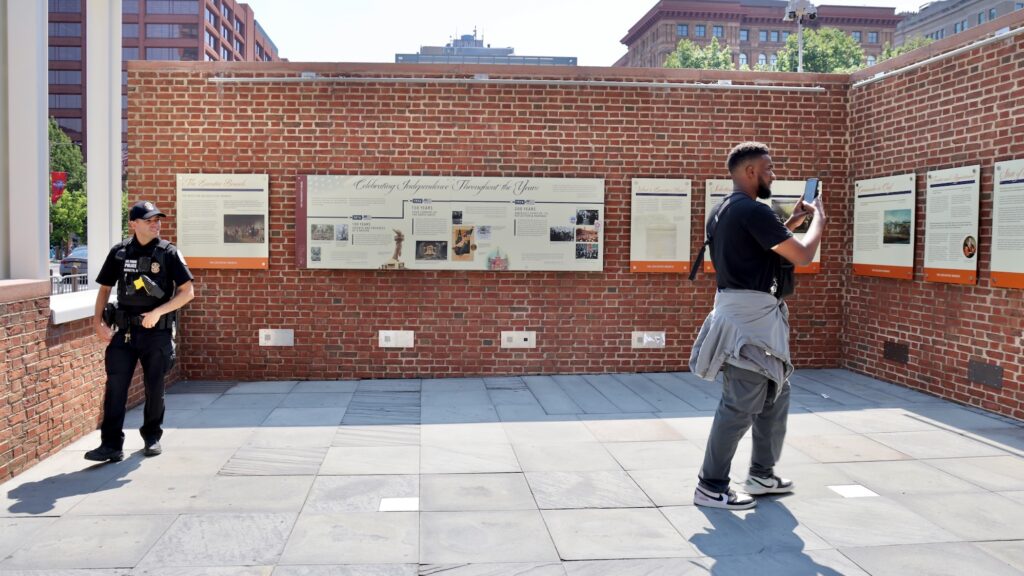
The city and activists have vowed to continue the legal fight to restore the original panels that focused on the nine enslaved people held by George Washington at the site.
3 months ago
Listen 1:08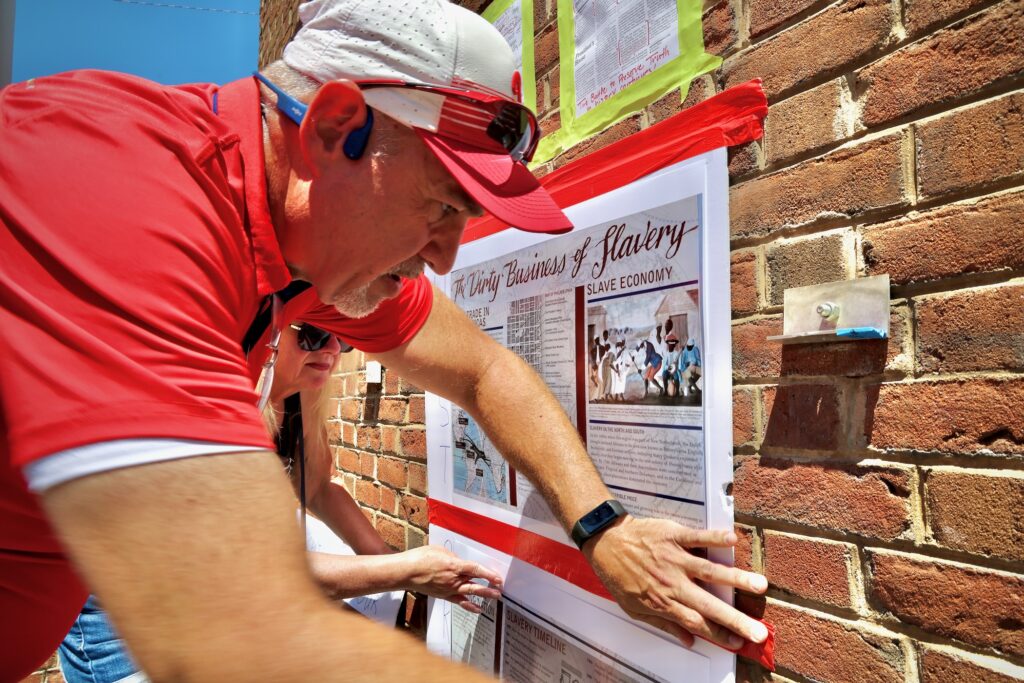
The exhibit remains half-restored as local leaders consider their next moves after a federal appeals court ruled in favor of the Trump administration.
3 months ago
Listen 1:25