

Delaware’s drinking water supplier Veolia files suit against 9 companies for PFAS contamination
The lawsuit alleges nine companies failed to prevent toxic forever chemicals from entering the waterways Veolia relies on to provide drinking water.
Listen 1:23
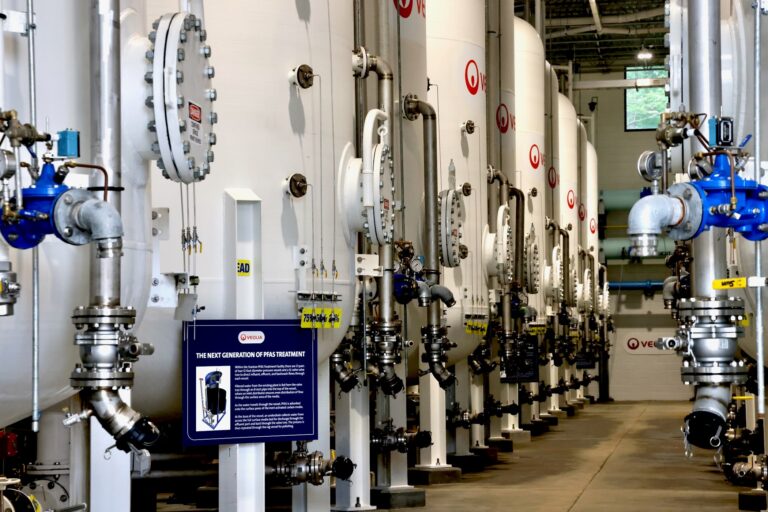
FILE - A line of tanks at a PFAS treatment plant in Stanton, Delaware. (Emma Lee/WHYY)
This story is part of the WHYY News Climate Desk, bringing you news and solutions for our changing region.
From the Poconos to the Jersey Shore to the mouth of the Delaware Bay, what do you want to know about climate change? What would you like us to cover? Get in touch.
Investor-owned drinking water supplier Veolia has filed a lawsuit against nine companies, alleging they are responsible for contaminating Delaware drinking water sources with toxic PFAS chemicals.
The so-called “forever chemicals” don’t break down in the environment and have been linked to serious health problems, including some cancers.
The lawsuit, filed in Delaware Superior Court, alleges the companies failed to take measures to prevent PFAS from entering the waterways that Veolia relies on to provide drinking water to 100,000 New Castle County residents.
“Each of the Defendants reasonably should have known that they were releasing potentially toxic PFAS into the environment through their operations and use of PFAS at several industrial sites throughout Delaware, but the Defendants failed to take any or sufficient actions to remedy such harm or to disclose the risks to regulators, Veolia, or the Delaware public,” the lawsuit reads.
Among the defendants is Syensqo Specialty Polymers, formerly known as Solvay Speciality Polymers. The company commonly known as “Solvay,” which produced PFAS to create products such as plastics and coatings, settled with New Jersey in 2023 over PFAS discharged from its industrial facility in West Deptford, Gloucester County. Syensqo did not immediately respond to a request for comment.
Solvay previously operated a manufacturing facility at Greenbank Road in New Castle County adjacent to the Red Clay Creek, upstream of Veolia’s plant in Stanton.
About a third of Veolia’s water supply is sourced from the Red Clay Creek, in addition to the White Clay Creek, which environmental regulators say is contaminated with high levels of “forever chemicals.”
Last year, Veolia announced a $35 million treatment system to remove PFAS chemicals from the drinking water for its ratepayers in New Castle County.
PFAS at the company’s Stanton plant were previously detected at levels as high as 29 parts per trillion on average, according to the company’s 2024 water quality report. Health officials say there is no safe level of PFAS in drinking water, and the U.S. Environmental Protection Agency restricts two types of the chemicals to 4 parts per trillion.
PFAS regulations force water providers to pay for treatment systems
The U.S. Environmental Protection Agency under President Joe Biden’s administration implemented regulations in 2024 requiring water providers to test and treat “forever chemicals” to levels of almost zero by 2029.
The agency under President Donald Trump’s second administration has given water providers an additional two years to meet regulations for two types of PFAS — PFOS and PFOA. The Trump administration has also rolled back restrictions for three other types of “forever chemicals.”
Water providers sued the EPA in 2024, arguing the treatments required to meet the regulations are too costly and would hit the pockets of ratepayers. While Biden set aside billions of dollars to address PFAS, water providers say more resources are needed.
Related Content
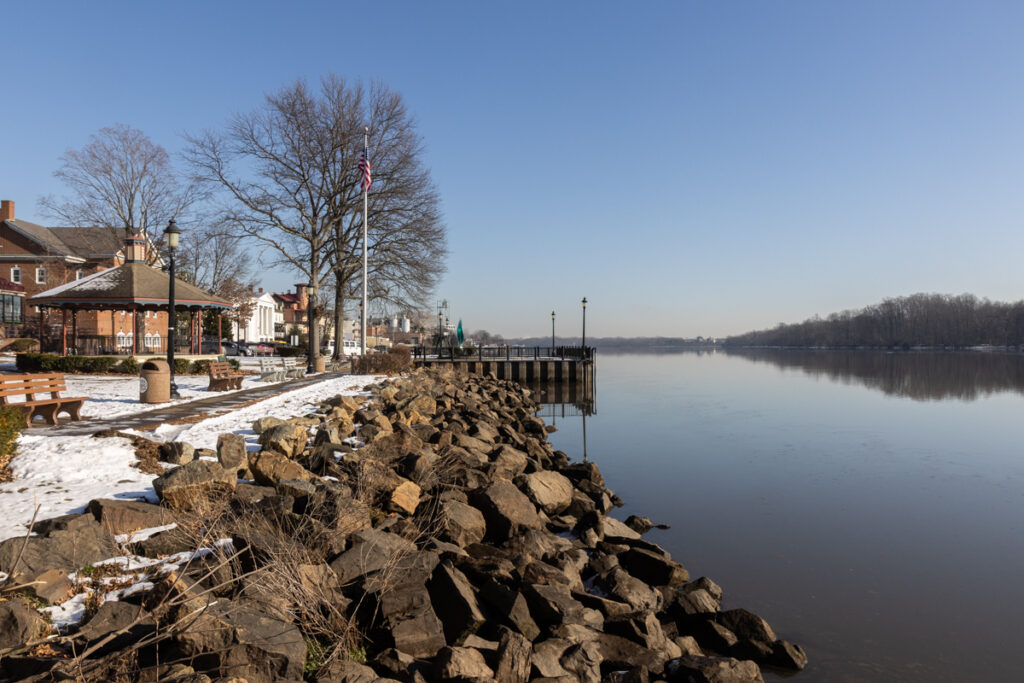
New tool shows toxic PFAS chemicals pervasive in Delaware River
The so-called “forever chemicals” were found at higher levels between Chester and Pea Patch Island.
5 months ago
Listen 1:15Veolia’s lawsuit seeks funds to clean up PFAS from drinking water
Veolia’s lawsuit seeks compensation for the new treatment system and associated operating costs to protect ratepayers from rising water bills.
“Veolia has been, and will continue to be, required to make significant and costly upgrades to the Stanton Plant and will incur significant maintenance and ongoing costs required to operate and maintain those upgrades, as well as to engage in the regular monitoring of PFAS levels,” the lawsuit states. “Veolia brings this action against Defendants in an effort to recover the costs to treat and remove PFAS from its drinking water system and to ensure that Veolia has the resources necessary to continue to provide its customers and members of the public with safe drinking water that meets federal and state drinking water standards, and federal and state law and regulations.”
PFAS — widely used in consumer products such as nonstick cookware and waterproof clothing, as well as in firefighting foam — have been linked to serious health problems, including some cancers, thyroid disease, developmental delays in children and other health conditions.
The health risks associated with PFAS, which can stay in the human bloodstream for years, have sparked numerous lawsuits against chemical manufacturers, such as DuPont and 3M.
The latest lawsuit is being applauded by environmentalists such as Tracy Carluccio of the Delaware Riverkeeper Network. She said it’s crucial that polluters are held responsible for paying for cleanup efforts.
“It is absolutely unfair that people who live and drink water in our nation are subjected to the pollution caused by companies because they are negligent in how they operate and discharge these highly toxic compounds into our drinking water sources,” Carluccio said. “So the people who are drinking this water really have to rely on the water companies and the government to make things right and not only make sure that their water is cleaned up to the proper standards, which the government requires, but also is done so in a way that does not tax them and force them to pay for something that they were not responsible for.”
The defendants in the lawsuit include:
Ametek, Inc.; Syensqo Speciality Polymers, USA, LLC (formally known as Solvay Speciality Polymers USA, LLC.); Solvay Solexis, Inc.; Niche Polymer LLC; Marshallton Reality Holdings LLC; Westchester Plastics, LLC; Coherent Corp.; FMC Corporation; and Edlon Inc.

Get daily updates from WHYY News!
WHYY is your source for fact-based, in-depth journalism and information. As a nonprofit organization, we rely on financial support from readers like you. Please give today.
Part of the series
Part of the series

Watershed
Preserving Our Water: How we use our Delaware Watershed.
The project is funded by The William Penn Foundation.
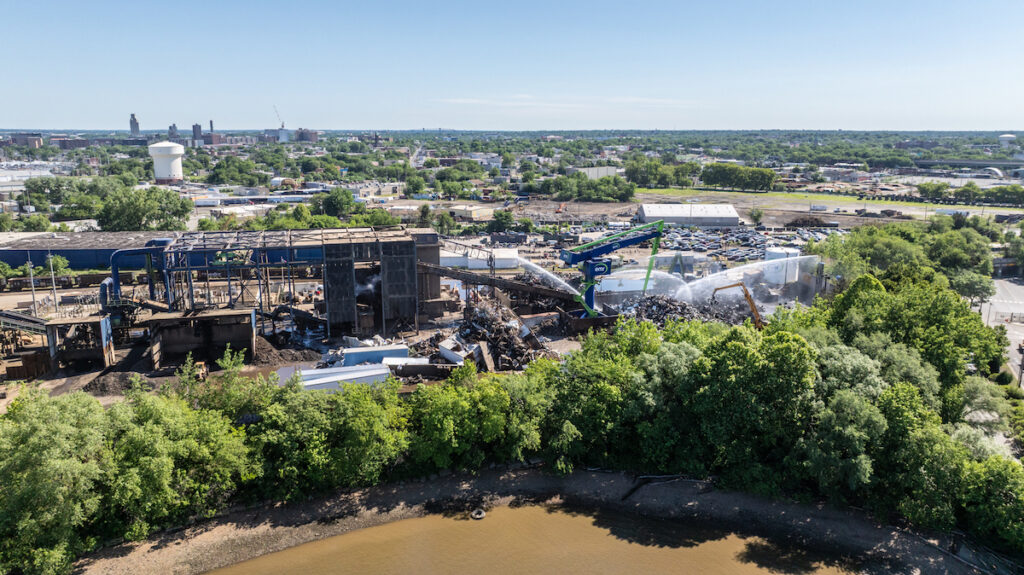
The lawsuit, filed by three Camden residents, claimed “noxious emissions” from EMR interfered with the use of their properties.
4 months ago
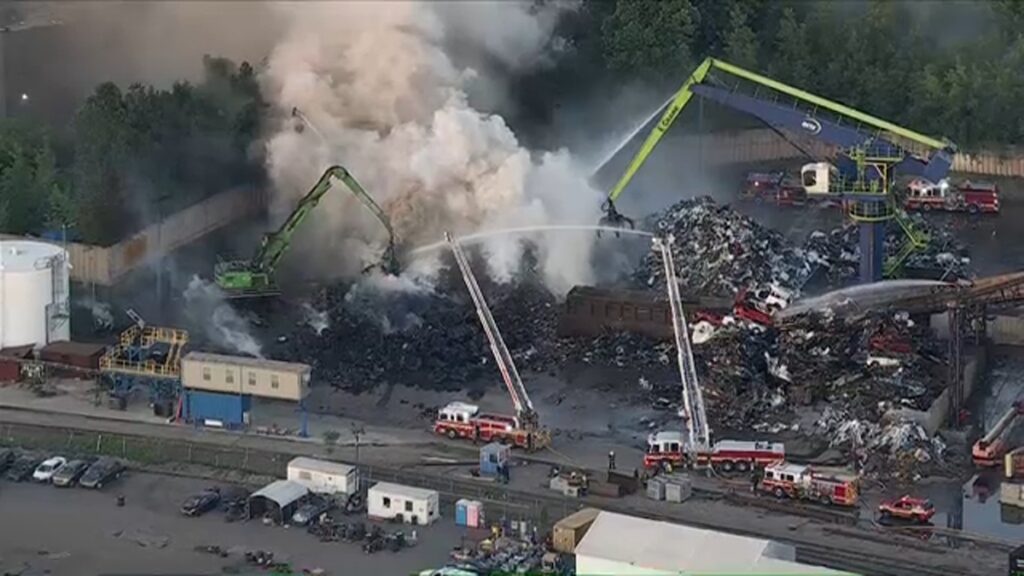
EMR sues city of Camden over junkyard license suspension after 2-alarm fire
The company said the order to pause its scrap metal shredder has cost it around $10 million and will lead to layoffs if it continues.
4 months ago
Listen 1:08
The lawsuit filed against PECO and the company operating the Bristol Health and Rehabilitation Center says both companies failed to evacuate residents, staff and visitors.
10 months ago
Listen 1:05