

50 large-scale outdoor sculptures by Steve Tobin are installed at Media’s Tyler Arboretum
“Steve Tobin: Into the Light” is the largest show the 82-year-old arboretum has ever attempted.
From Philly and the Pa. suburbs to South Jersey and Delaware, what would you like WHYY News to cover? Let us know!
The Tyler Arboretum, near Media, Delaware County, has installed 50 large-scale outdoor sculptures by the Quakertown-based artist Steve Tobin. The yearlong exhibition is the largest art show the 650-acre open green space has ever attempted.
Tobin is perhaps best known for “Trinity Root” in Manhattan, a bronze cast of the roots of a sycamore tree that protected St. Paul’s Chapel at Trinity Church from flying debris when the World Trade Center towers collapsed on Sept. 11, 2001. His 2024 solo exhibition “Earth to Sky” on Maui Island, commemorating the devastating 2023 Lahaina fire, was Hawaii’s largest sculpture show ever.
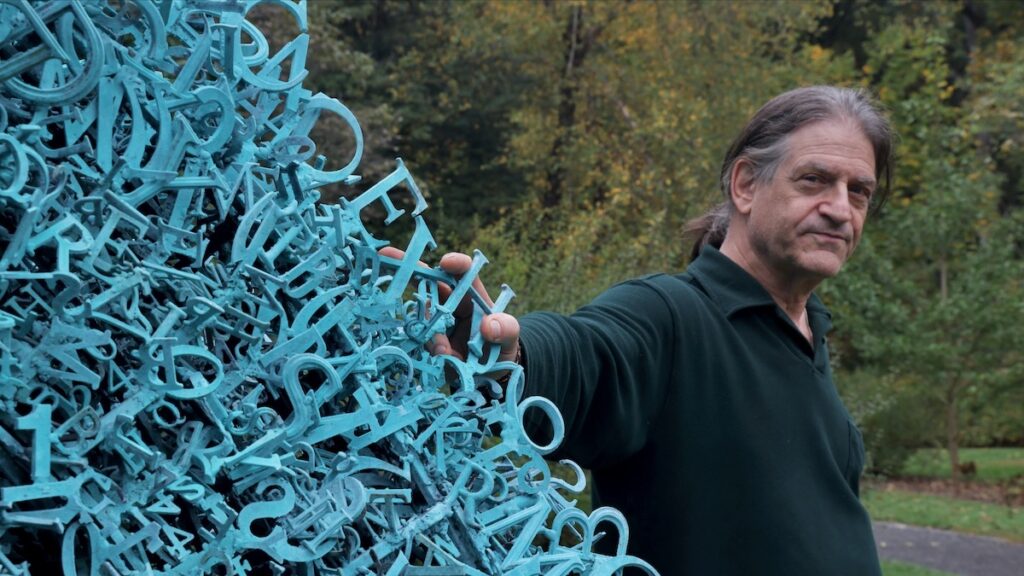
Tyler Arboretum’s “Steve Tobin: In the Light” is less about trauma and more about wonder. The temporary show is the most extensive the artist has ever installed, and the one closest to home.
“I grew up half an hour from here. I went to Haverford School,” Tobin said. “This is a real homecoming for me.”
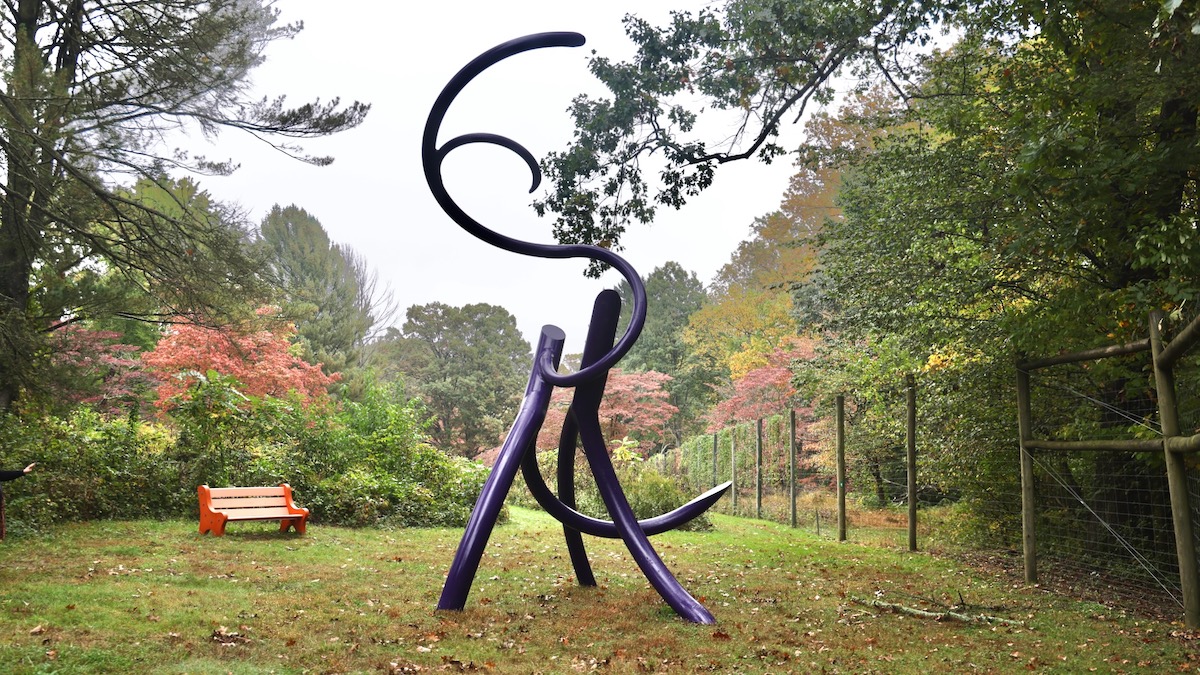
Tobin’s work is sited in 24 locations inside Tyler’s deer fence that protects the arboretum’s core of about 100 acres of cultivated trees and plants, paved pathways and historic structures. The remaining acreage outside the fence is a more wild, uncultivated space with 17 miles of hiking trails.
“The unique thing about Tyler, and I’ve shown in a lot of arboretums, is they’re vast, but broken down into these beautiful little vignettes,” Tobin said. “Some of the vignettes are just perfect, with a perfect tree and the perfect light. But there was room for a piece here and a piece there. The work placed itself. It was so obvious that this goes there and it completes the vignette.”
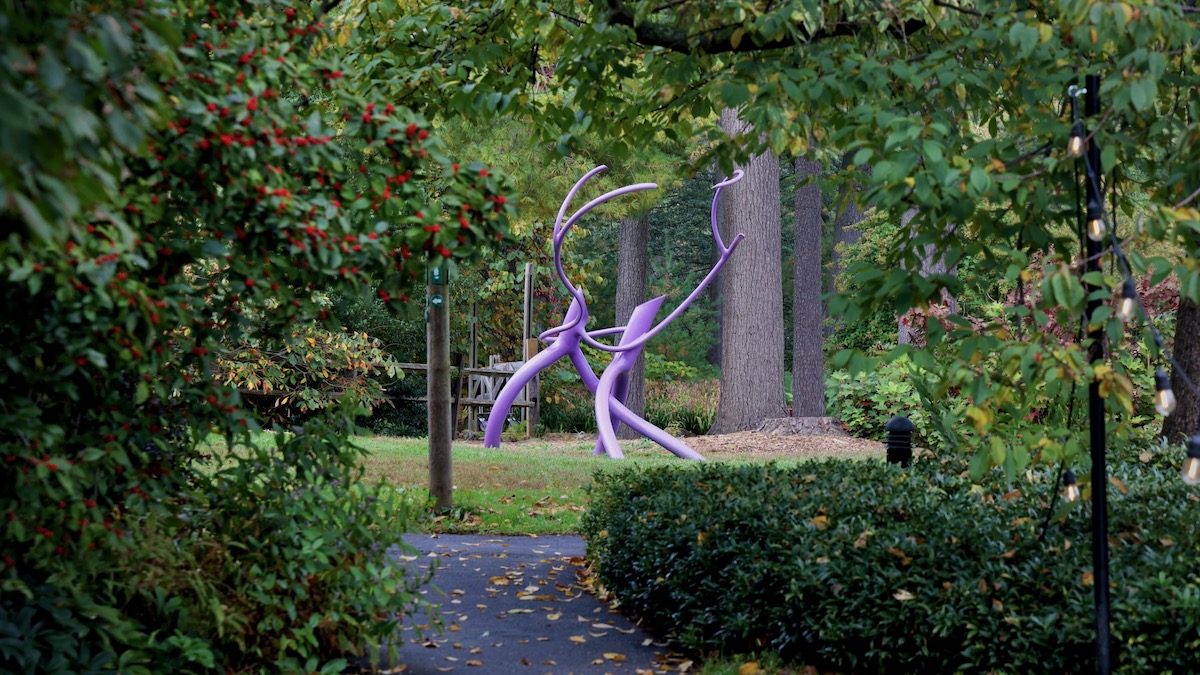
The sculptures are organic shapes, with steel, bronze and highly reflective stainless steel mimicking root styles, twisting tree branches, and cloud formations.
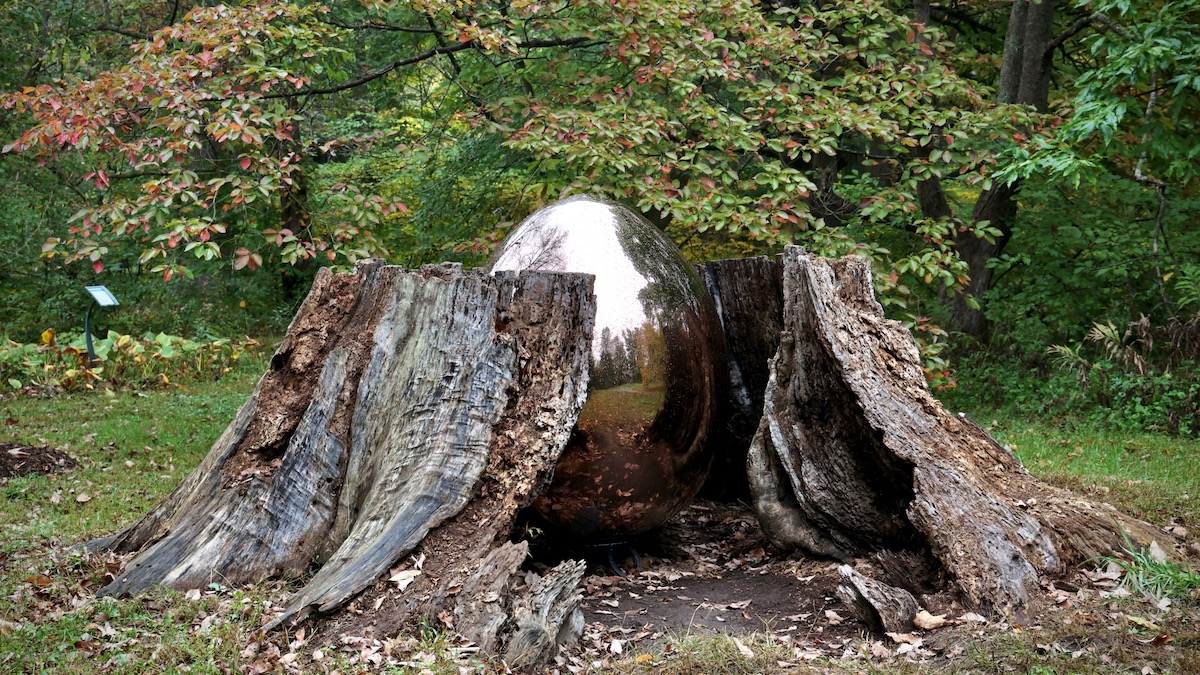
A giant, polished golden egg peeks out from the rotting stump of a recently fallen tulip poplar tree. A 25-foot tall cluster of intertwining steel inspired by the shape of root systems can be seen from a distance rising above a meadow, beckoning visitors toward a copse of conifers.
Related Content
The late designer’s estate gave hundreds of pieces of clothing to the Woodmere, which is now creating a fashion lending library.
1 month ago
Listen 1:20Kathryn Ombam, the arboretum’s interim executive director, said “In the Light” is by far the most ambitious art installation the center has ever attempted in its 82-year history. She said the arboretum is currently in a strategic planning phase, envisioning the organization’s future while seeking a permanent director. The yearlong installation of “In the Light” will test what is possible at the historic location.
“Steve believes so strongly in the power of nature and the way that nature evokes emotion in the viewer of the art,” Ombam said. “It just seems like it belonged here at Tyler.”
She added that the changing seasons will alter how the pieces are seen.
“We’ll be able to see them right now with fall color that is probably hitting peak this week and next week,” she said. “We’ll be able to see them as the meadow recedes and the views become longer and more attenuated. We’ll be able to see them with the fresh snow, with the spring bloom and the heat of the summer when the tree canopy is so forgiving.”
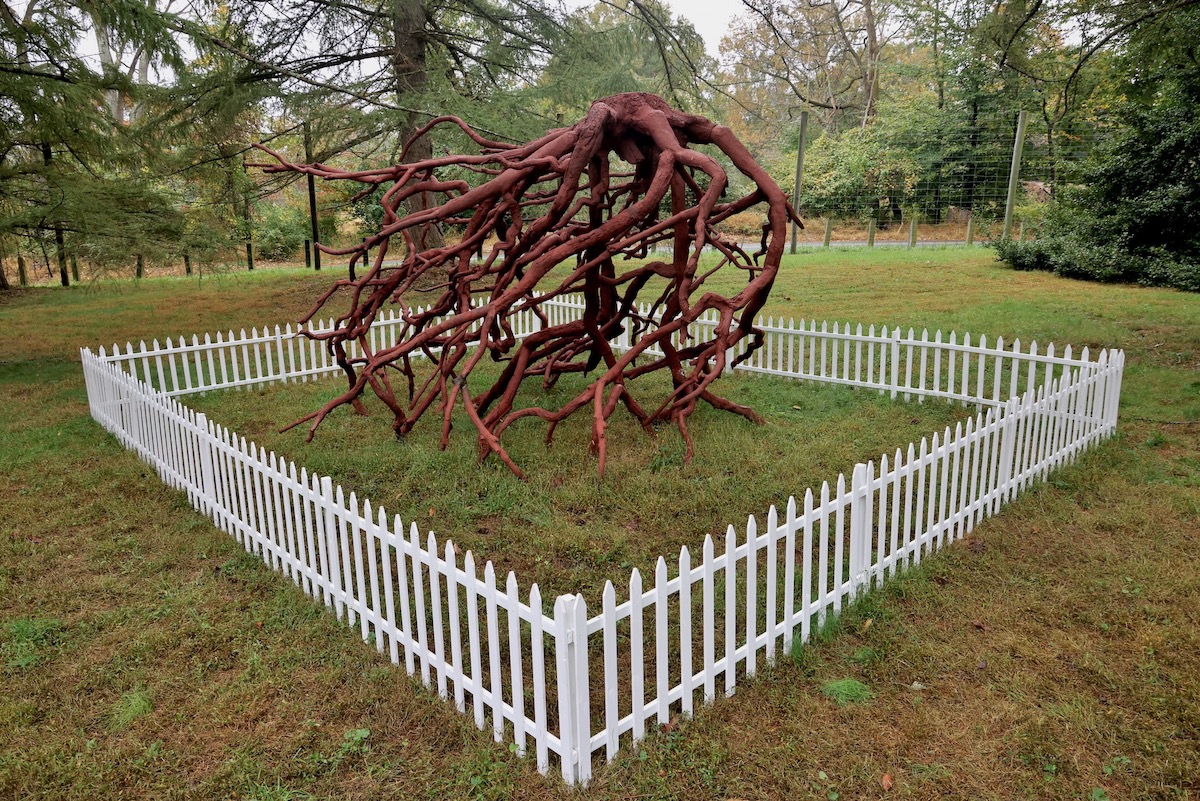
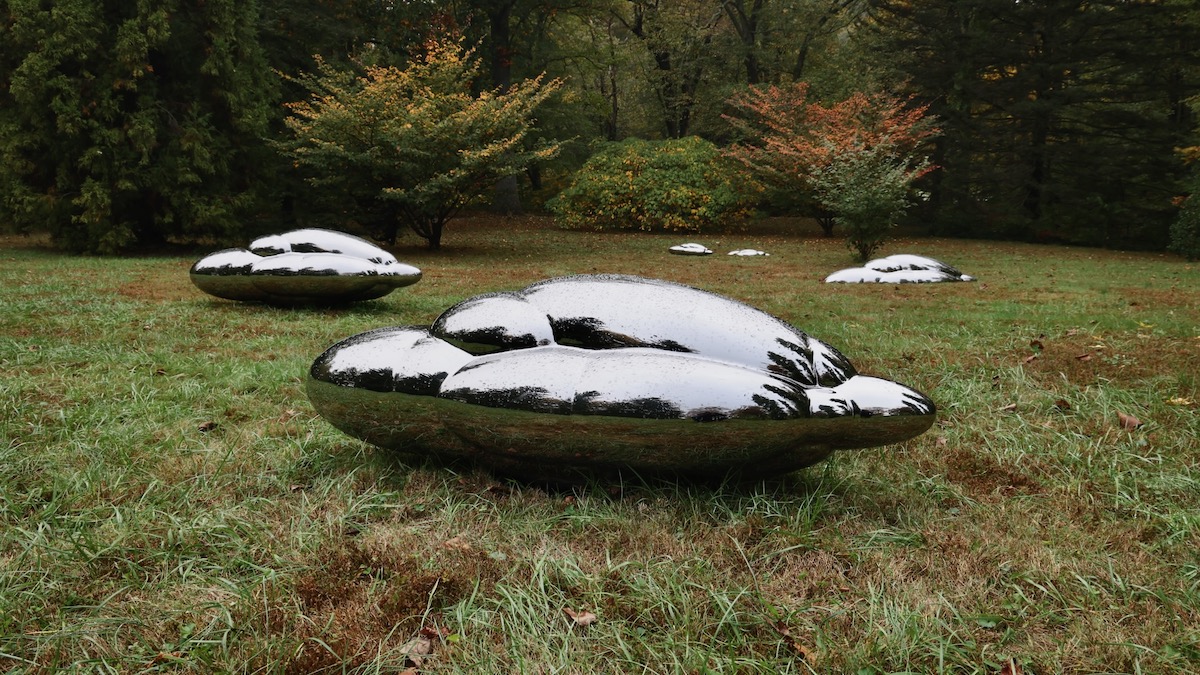
Tobin said he designed the works to interact with their environments. He often twists steel into shapes of Japanese calligraphy, so that on a bright day their shadows cast on the ground can be read. The twining branch structures create asymmetrical holes that can frame elements of the surrounding arboretum that a visitor might otherwise miss.
Chris Lauf, Tyler’s director of education, said visitors come to be immersed in nature, but a well-placed sculpture can accentuate it.
“We put frames around art for a reason,” he said. “There’s a famous artist Pierre [Bonnard] who had an expression that his favorite part of a museum are the windows.”
Tobin had no formal art training. His education was in theoretical mathematics, physics and materials science. He said many of his works explore existential transformation, altering perceptions of common shapes by putting them in new contexts.
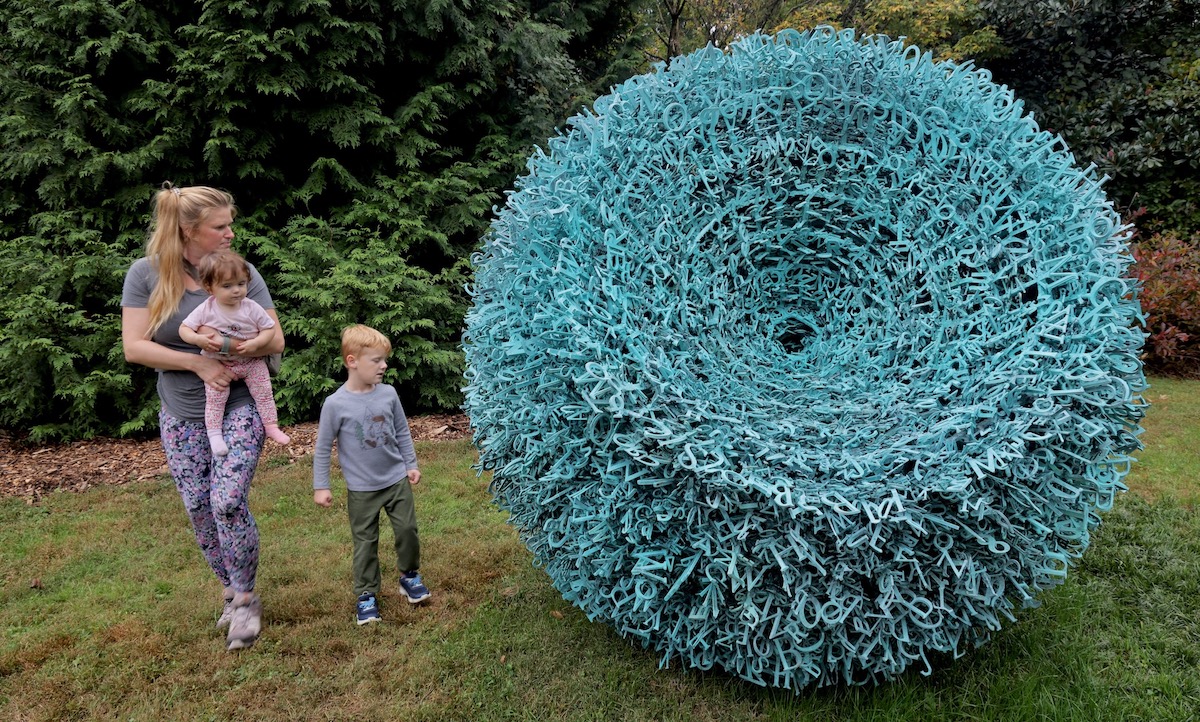
Tobin made a 6-foot ball by welding prefabricated bronze letters into the shape of a manicured shrub. Called “Syntax,” the letters are stacked on top of one another in layers, creating voids that he said attract nesting birds, but are impenetrable to the eye.
“Going back to my physics, one of the dimensions in string theory is dimensions rolled up inside each other. This is implying a much larger space, but it’s inward,” he said. “If you look inward, you can’t see the bottom. It’s all layer upon layer. In fact, you can’t see 90% of it. It creates a kind of infinity where you can’t get to the bottom within a relatively small sphere.”
“Steve Tobin: In the Light” will be on view until fall 2027.
-
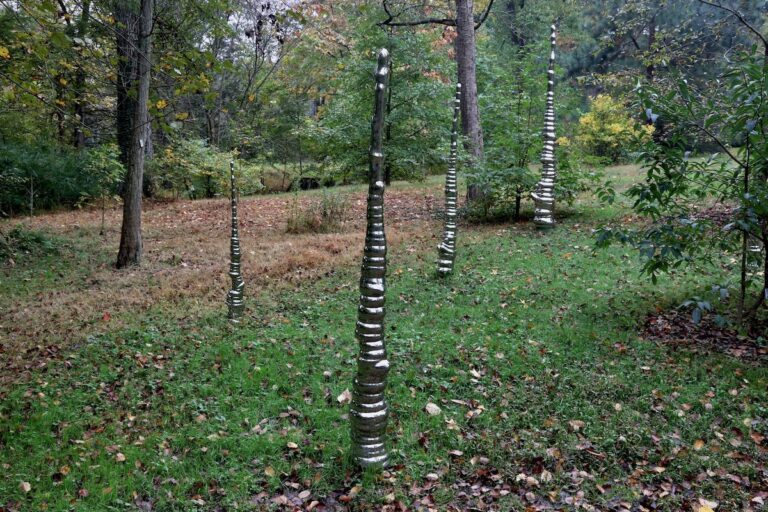
''Icicles,'' a group of polished stainless steel spires'' by Steve Tobin, rise from the ground, echoing the nearby Cypress knees at Tyler Arboretum. (Emma Lee/WHYY) -
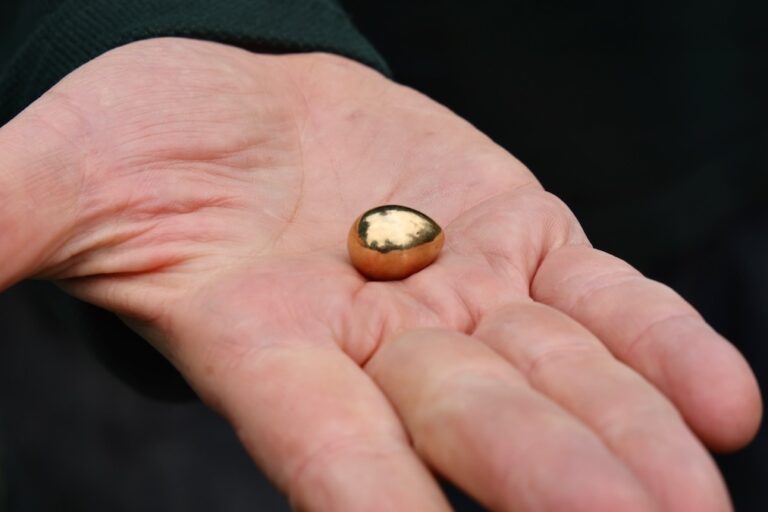
Steve Tobin holds a tiny bronze egg. He plans to hide the small sculptures around the grounds of Tyler Arboretum for visitors to find while his exhibit, ''Steve Tobin: In the Light'' is on display. (Emma Lee/WHYY) -
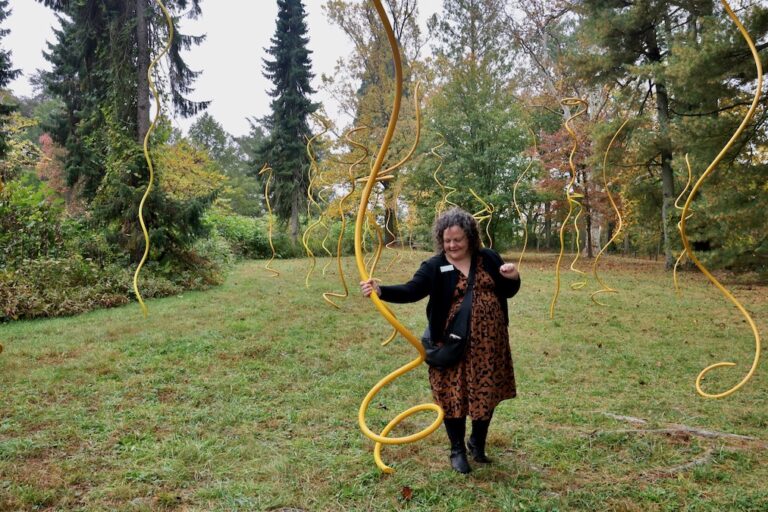
Kathryn Ombam, interim executive director of Tyler Arboretum, spins one of the ''Twisties,'' a collection of sculptures that are part of a sprawling installation, ''Steve Tobin: In the Light'' at Tyler Arboretum. (Emma Lee/WHYY) -
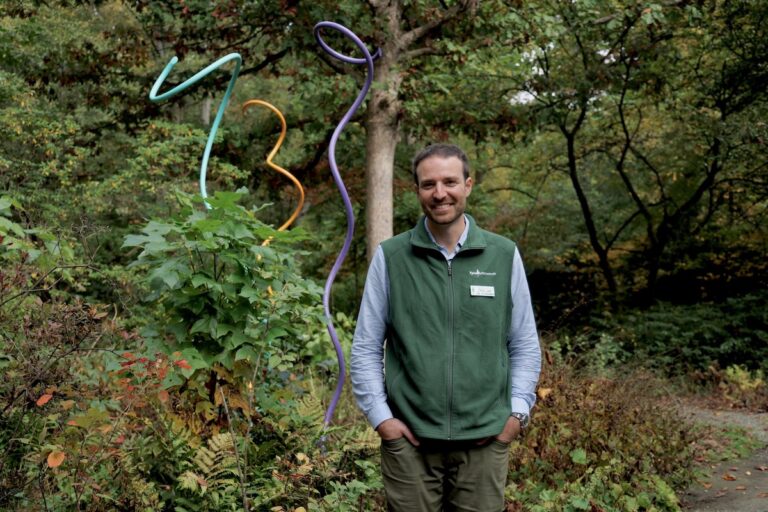
Chris Lauf is director of education at Tyler Arboretum. He is standing beside Steve Tobin's sculpture, ''Colorful Twisties.'' (Emma Lee/WHYY)

Get daily updates from WHYY News!
WHYY is your source for fact-based, in-depth journalism and information. As a nonprofit organization, we rely on financial support from readers like you. Please give today.
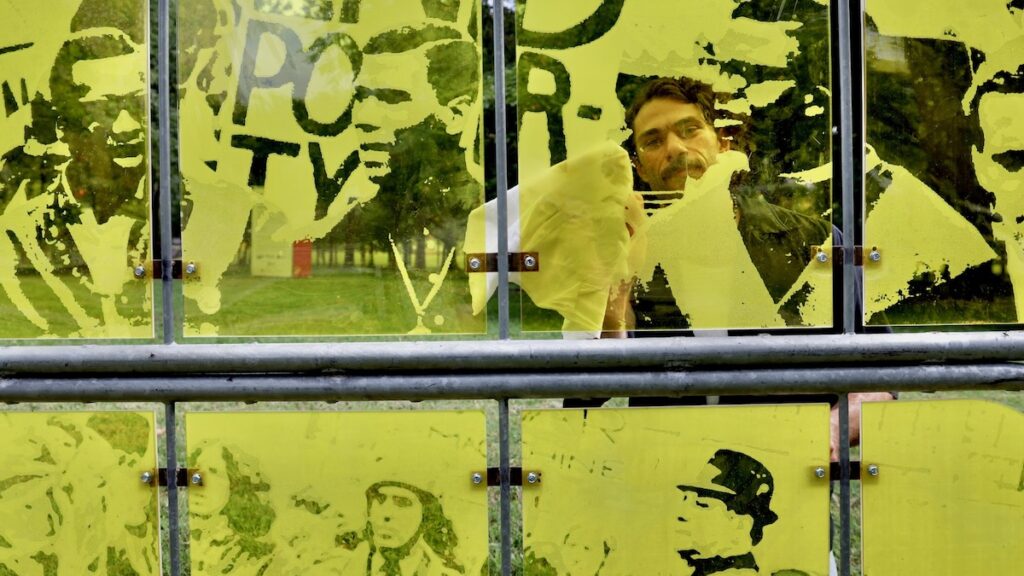
The Association for Public Art’s “Bar None” by Nicolo Gentile reflects on the history of the Parkway as a crucial site of public assembly.
1 year ago
Listen 1:16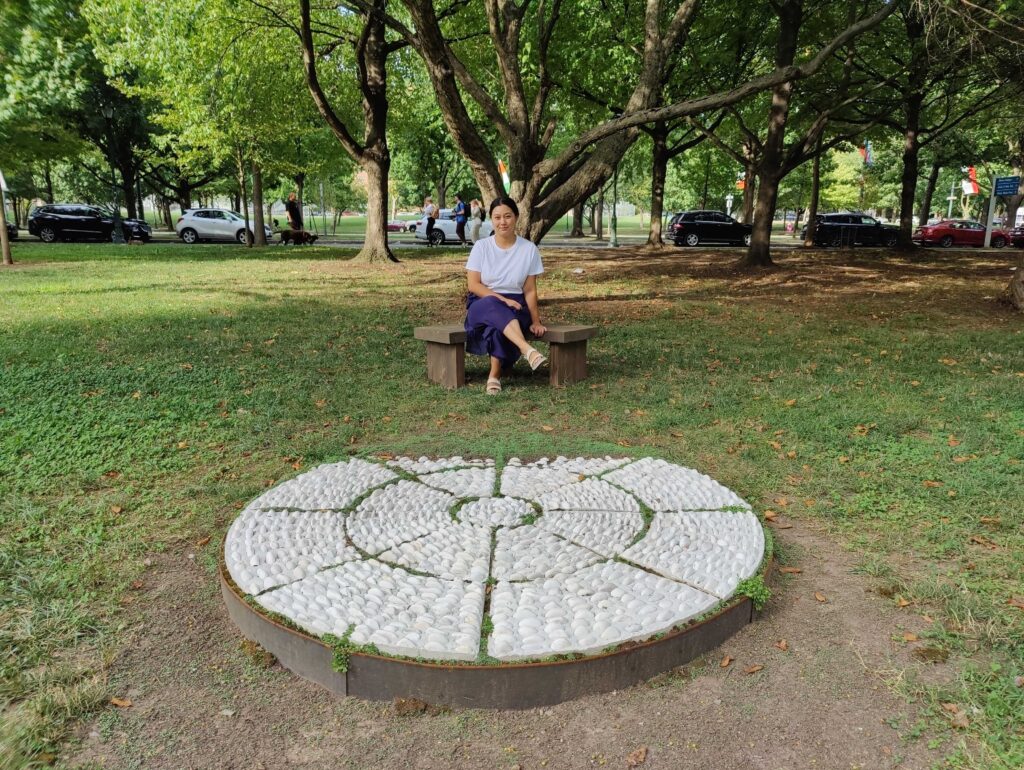
A sculpture that probes your sole: ‘The Weight of Our Living’ quietly arrives on the Parkway
Rachel Hsu’s “The Weight of Our Living” is the first piece in a new rotation of temporary sculptures to activate the Parkway.
2 years ago
Listen 1:01
The exhibition, which features artists with Latin American and Palestinian backgrounds, is on display through Aug. 3.
2 years ago
Listen 1:05