
Who are the future voters of Pennsylvania and what do they want from their legislators?
As Pennsylvania’s next generation prepares to vote, they are determined to make their voices heard.

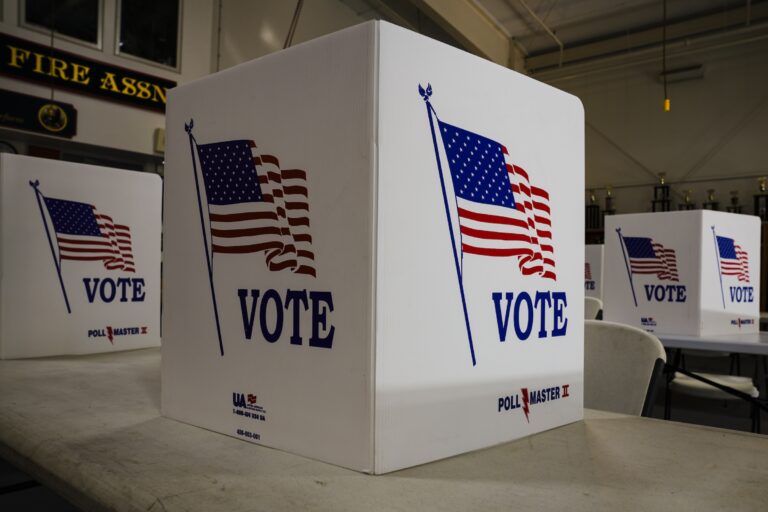
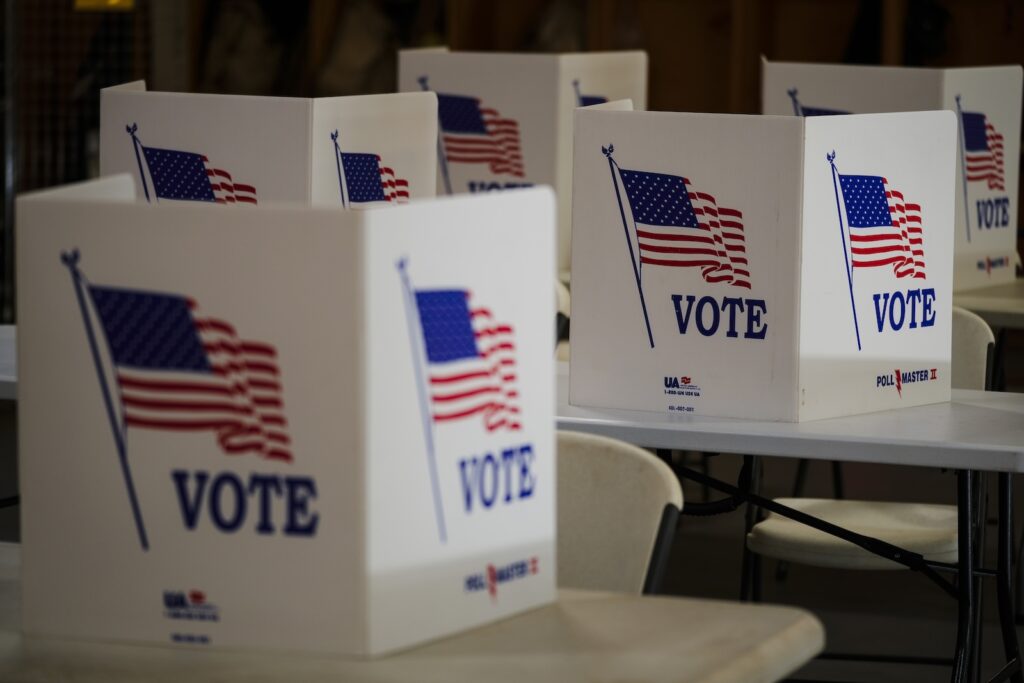
FILE - Voting booths are set up at a polling place in Newtown, Pa., Tuesday, April 23, 2024. (AP Photo/Matt Rourke, File)
What questions do you have about the 2026 elections? What major issues do you want candidates to address? Let us know.
At 17, Alessia Babouche can’t vote or run for office in Pennsylvania. But she has already found a way to make her voice heard in Harrisburg. While balancing her high school education, she worked on the congressional campaign for U.S. Rep. Chrissy Houlahan, D-Chester County, and served on the youth advisory council for state Sen. Katie Muth, D-Chester County. She’s also the co-founder and co-president of the Downingtown STEM Academy High School Democrats Chapter.
Babouche believes her generation is in charge of driving a change in American politics. Pennsylvania’s future voters may still be coming of age, but several who spoke to WHYY News said they already know what they want from their elected officials.
The issues that matter to young people
While working on Muth’s youth advisory council, Babouche attended a Senate hearing focusing on immigration. She said the discussion diverged to focus on transgender women and women’s sports. Republicans in the state Senate and House have advocated for the “Save Women’s Sports Act,” which would restrict transgender women from participating in women’s sports.
“That was the whole discussion the entire time. But in reality, nothing ends up coming out of it. I really got to see that a lot of … our money and our time is wasted on the issues that I believe are not our main priority,” Babouche said.
Babouche instead points to affordability as a top issue for young people. As a high school senior applying to colleges, she said she’s worried about the rising costs of higher education and how that will impact her future.
“I’m not making enough money to be able to afford all these insane prices,” she said. According to studies conducted by Harvard and CIRCLE, the economy is the top concern for the majority of young voters.
Babouche also wants to advocate against U.S. Immigration and Customs Enforcement’s presence in Pennsylvania communities.
“[ICE is] tearing apart families, targeting minorities and marginalized groups, and also this [is] blatant racism that exists in our politics,” she said.
Henry Betman, a college freshman and the fundraising director at Penn State University’s GOP, will be voting for the first time in the upcoming midterm elections. He also said immigration policies are a top concern for him.
“There’s definitely a lot of things that I think have gone wrong … pertaining to the border, especially open immigration policies, [which have led to] a lot of illegal migrants coming in,” he said. “I do think that the most important thing for America and that [President] Donald Trump is trying to [tackle] is the open border policies and trying to secure that for American sovereignty.”
Betman also cited men’s mental health and youth substance abuse as major election concerns.
“Politicians should absolutely work on cracking down on the drug problem. At the very least, if someone’s going to do that they should be educated on what the risks are,” he said.
Betman points to his own university, where 14 individuals were charged with running a large-scale cocaine trafficking ring from off-campus fraternity housing in August.
“I think men’s mental health is especially undervalued if you look at it enough. I think that it absolutely should be something the politicians focus on,” he said. “I think, at the very least, it should just be talked about more.”
“It should just be that men should have more access to private counselors.”
Betman said he is unsure if he would support Democratic policies such as “Medicare for All,” which would provide universal mental health care, because he does not know how it will impact the economy or taxes.
“That’s something I really aspire to know more about and to be able to formulate a better opinion on in the next coming years,” he said.
Related Content
The city office advocates for people in juvenile justice, child welfare and behavioral health care, teaching them their rights and helping turn their complaints into change.
1 month ago
Are young people afraid to speak up?
Maya Izzard, a high school senior from Philadelphia, said young people want to be more involved in politics and civics, but struggle to feel heard by elected officials.
“We want a voice we just don’t know how to exactly take that to our own hands. So … when we see different ways our voices are again taken away … I am more angry about that. I feel like people don’t really understand that in a way,” she said.
Betman, who grew up in a Democratic-leaning household, said many young Republicans are afraid of voicing their opinions. He said his parents are supportive of him, but he believes that young Republicans often face scrutiny for their political views.
“Young people are scared to stand out. Young voters are scared that they’re going to upset others, that they’re going to [be] alienated, especially Republican voters. I think that’s the real reason why people don’t vote,” he said.
However, Babouche said she has noticed a change in young people’s willingness to speak up about their opinions. She said that after Trump won the presidential election in 2024, young people are “openly speaking about politics and advocating for what they believe in.”
“People are no longer as afraid to talk about politics. At least, I’m not afraid to talk about politics. Because I think it’s a really necessary component of our society and as young people, we should use our voices,” she said. “I realize that young people are becoming more open to talk about politics and the issues that truly matter to them because, in the end, it is directly affecting them and their future.”
Civic education
For many young people, social media is a primary source of political news. An Associated Press poll found that 57% of teens ages 13 to 17 get news from social media daily, while a YouGov survey commissioned by SaySo found that 77% of Gen Z get information about the 2026 midterms from online content creators.
Babouche said she believes that social media provides young people with new avenues for education. She says that older voters often assume young people are not educated in politics or are being swayed by social media influencers, but she believes the “interpretation that younger generations are more uneducated or uninterested in politics is completely false because in reality … young people can become more educated through social media.”
Betman says joining the Penn State GOP was a way to remain politically engaged and informed.
“I don’t know enough about what’s going on and that’s probably the reason why I joined the Republican Party, [it] was to stay informed,” he said.
Izzard prioritizes civic education, saying that many young people feel intimidated or unprepared to cast their first ballots. She advocates for more classes on voter rights and politics. She said that voting is a “big part of our lives and being thrown into it at 18 is very harsh for young minds.”
For Betman, being able to cast his vote in November makes him feel heard.
“[It] makes me feel like a real American … I can cast my own vote and try to make a change, as little as one vote is, I can make that change,” he said.
While he’s still unsure how he will vote, Betman hopes to research the candidates and their policies.
“I don’t pay too much attention to smaller votes like for senator or things like that,” he said. “I’m assuming I would do research into each candidate to see which one you know best supports my values. I would presume I’d vote red.”
Izzard, too, believes her first vote is a way of taking her future into her own hands.
“It’s really stepping into that part of adulthood that is kind of held over your head like you’ve got to wait 18 years for all this. So, I do think I care about it a lot. Maybe more than the average 17-year-old would at this point, but I think it’s taking a hold of my own future, you know?” she said.
Related Content
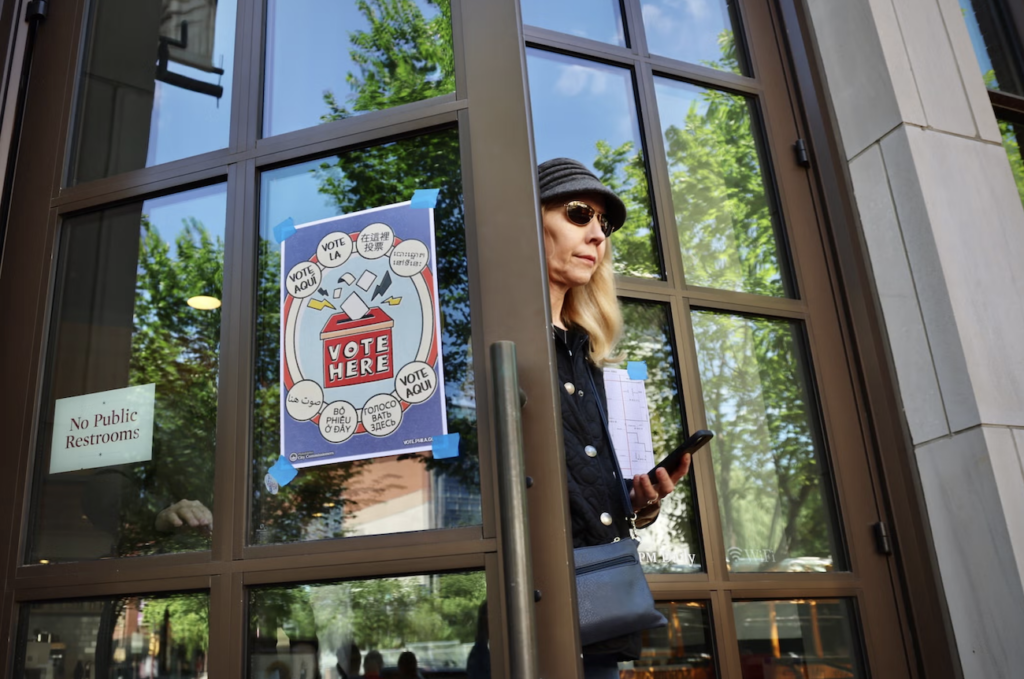
Pa. election 2026: Voter guides, key races and more
Election Day is Tuesday, Nov. 3. Here’s what you should know beforehand, from voter deadlines to who’s on the ballot in Philadelphia and statewide.
2 months ago
The America they will inherit
As a new generation prepares to vote, they are hopeful and scared for what the future holds.
Izzard feels that many young people are ignored by politicians and “actively getting pushed down … when we try to or try to acknowledge that we want to have a little more of a stance on what happens in our government.”
Despite this, she said she believes that Philadelphians will not give up on advocating for themselves.
“There are a bunch of kids out there that care about voting [and] want to get the message out and they really want to uplift not only their own voices, but others. [That] really gives me hope for what could be the future of politics, especially in Philadelphia,” she said.
Betman worries about the political divide in the nation, pointing to the assasination of conservative political commentator Charlie Kirk in September 2025.
“Look how normalized the killing of Charlie Kirk was and all he did was advocate for his beliefs in a peaceful, nonviolent manner where everyone can engage. I think that was the most beautiful thing ever,” he said.
Betman said he hopes that young voters can “come together and instead of viewing themselves as Republican [or] Democratic, view themselves as American, and you know, brothers in arms.”
For Babouche, the current political landscape is “dark [and], really dreary,” but indicates that a better future is on the horizon.
“I believe that there will be that sharp change and a huge growth in politics and improvement for the well-being of Americans,” she said.
“There has to be a dark time before there’s a bright time.”
Editor’s Note: This story is part of a series on Youth Civic Engagement funded by the William Penn Foundation. WHYY News produces independent, fact-based news content for audiences in Greater Philadelphia, Delaware and South Jersey.

Get daily updates from WHYY News!
WHYY is your source for fact-based, in-depth journalism and information. As a nonprofit organization, we rely on financial support from readers like you. Please give today.
Part of the series
Youth voting
WHYY News explores stories about youth voting as part of its civic dialogue work and to elevate awareness for our future generations.
Funded by William Penn Foundation.
Part of the series
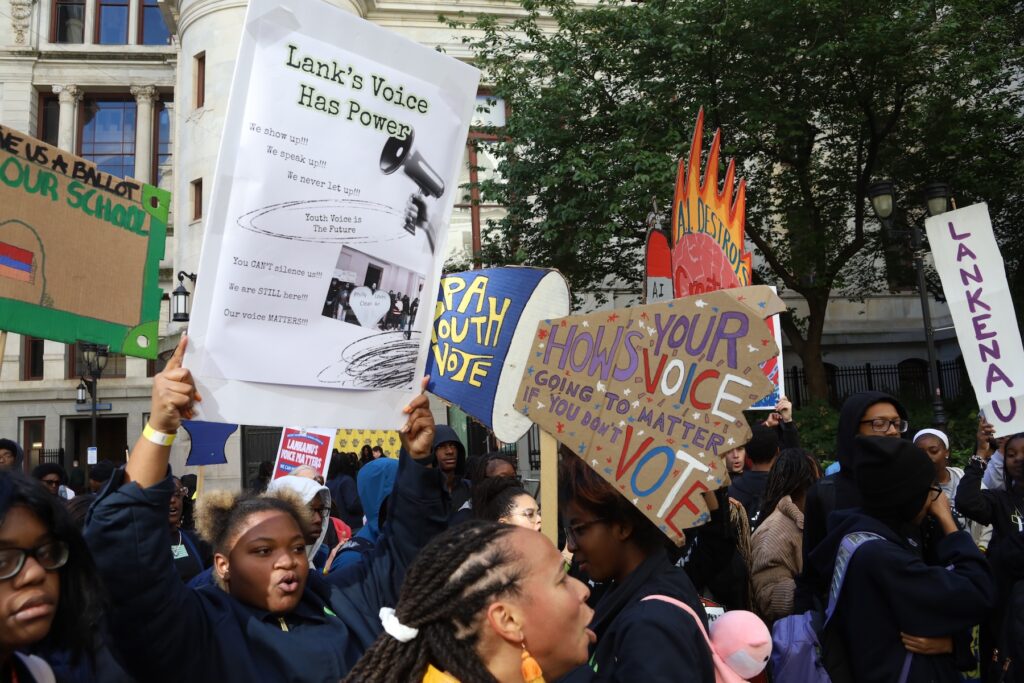
At ‘Give Us a Ballot’ march, Philadelphia students lead the fight for their futures
Hundreds of students marched from LOVE Park to City Hall last week in a march organized by PA Youth Vote to increase civic education and youth voter turnout.
2 days ago
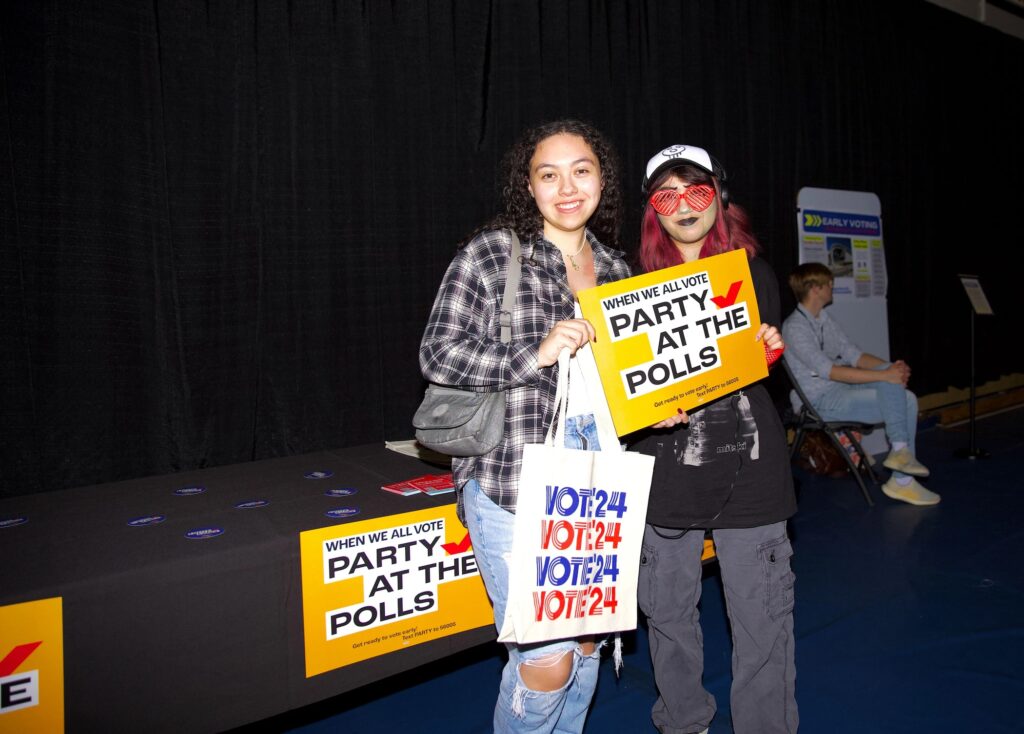
How campus voting initiatives in Pennsylvania aim to tackle barriers to youth voting
As the midterm elections near, universities across Pennsylvania are taking part in the ALL IN Campus Democracy Challenge to help young people navigate the voting process.
4 days ago
Young people face health care decisions shaped by policy. Vot-ER is working to connect health care experiences with civic engagement and voting.
1 month ago