Campaign to combine health care advocacy with civic engagement and voting comes to Philadelphia’s Point Breeze neighborhood
Young people face health care decisions shaped by policy. Vot-ER is working to connect health care experiences with civic engagement and voting.
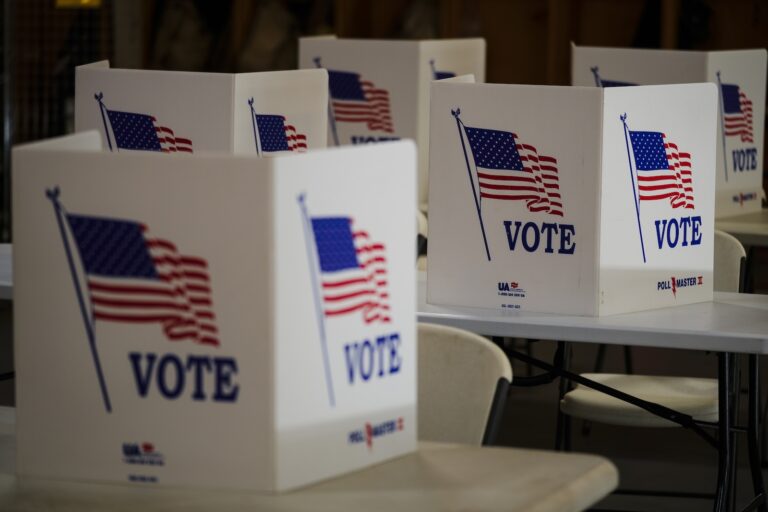
Voting booths are seen in a file photo. (AP Photo/Matt Rourke)
What questions do you have about the 2026 elections? What major issues do you want candidates to address? Let us know.
Young people consistently cite affordability and health care among the issues that shape their political views and voting decisions. But where do health care and civic engagement overlap in their day to day lives?
That’s the question Vot-ER is trying to bring into hospitals and doctors offices around the nation, where health care professionals are increasingly becoming messengers for civic engagement.
The nonpartisan organization founded by Dr. Alister Martin, New York City’s health commissioner, to integrate civic engagement into health care equips medical professionals with voter registration assistance and election reminders to pass onto patients. This includes specialized badges that allow eligible patients to register to vote, request a mail ballot or learn about upcoming elections on the platform.
On Tuesday, the organization set up a table in Philadelphia’s Point Breeze neighborhood to encourage residents to register to vote and learn more about Vot-ER.
The link between health care and policy can be easy to miss
For Jeff Mathwig, the connection between health and civic participation was made clear on the campaign trail. When working on Al Franken’s campaign for the U.S. Senate, he met a voter who was unable to leave her house due to severe back pain. After speaking with her for an hour about health policies, he was able to see the “intersection between health care and civic engagement.”
Today, Mathwig is the civic health fellow at Vot-ER where he wants young people to understand that legislation will impact them, especially their health care experiences.
“There’s always a group of people that are really engaged, and those are the people that you typically see in the news. But a lot of times young people, they’re just not as engaged,” he said. “So how do you get them more involved? You [have] to make them understand how this is going to impact them in the future.”
Adam Bilodeau, a public health nurse at the National Nurse Led Care Consortium, said that health care is heavily impacted by “who is making certain policies and who’s regulating those policies. And I think folks are a little bit removed from that.”
The Affordable Care Act allows young people to remain on their parents’ health insurance coverage until they turn 26 and Bilodeau notes that this may be part of the reason some young people are not thinking about health care when they vote.
However, Anthony Rumbos-Perez, a 22-year-old who works as a public benefits paralegal at AIDS Law Project of Pennsylvania, said “not every child has the privilege of having parents who are employed and have good health insurance coverage.”
For Rumbos-Perez, navigating the health care system has made the connection between policy and everyday life difficult to ignore.
“The system is built to not be easily understandable. It’s all incredibly difficult to navigate if you’re already dealing with the stress of being low income and the fear of losing health insurance,” he said.
Related Content
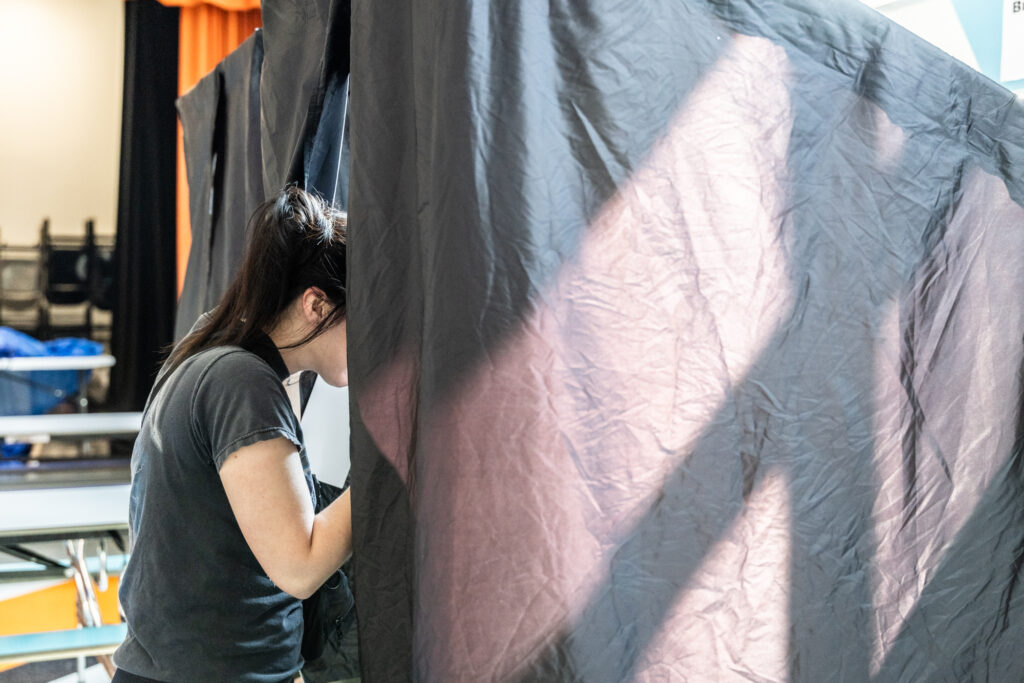
A young voter’s guide to Pennsylvania’s 2026 general election
From election deadlines to civic events and youth organizations, here’s what young and first-time voters should know.
4 weeks ago
Integrating voter education in health care offices
When you go to a doctor’s office, the intake form traditionally asks you to disclose if you drink, smoke, wear a seat belt, are sexually active and if you exercise. For Mallory Stanek, the Pennsylvania organizing manager at Vot-ER, civics can be integrated in a health care setting through the addition of one simple question: Are you registered to vote?
“It’s just that simple,” she said.
The American Medical Association adopted a policy in 2022 recognizing voting as a social determinant of health. Data from the Health & Democracy Index found that states with higher voter turnout and civic engagement have better health outcomes. Stanek said that states can increase civic participation by simply bringing civic resources into hospitals and doctors’ offices.
“If they’re never being asked anywhere else, then they’re probably not going to vote or know anything about it … Bringing these resources into the hospitals, having posters when you walk into waiting rooms,” she said, adding that could eliminate “the stigma and a lot of the barriers around voting and accessing that information.”
Anna Koopman is a public health nurse home visitor at the National Nurse-Led Care Consortium and offered information at a table alongside Vot-ER on Tuesday. When asked whether people have told her that voting education is “not a health care provider’s job,” she pointed to the broader role of health care in promoting well-being and empowering people to make decisions for themselves.
“It’s about [promoting] better health. It’s about empowering folks to be able to make decisions for themselves, to have autonomy,” she said.
In order to engage young people and increase voter education, Vot-ER connects with pediatric providers to ensure that young people are equipped with simple, straightforward information about how to register to vote and where to find information about elections. In addition, providers can ensure students who are getting ready to go to college know that they can register to vote at their college address, Stanek noted.
Related Content
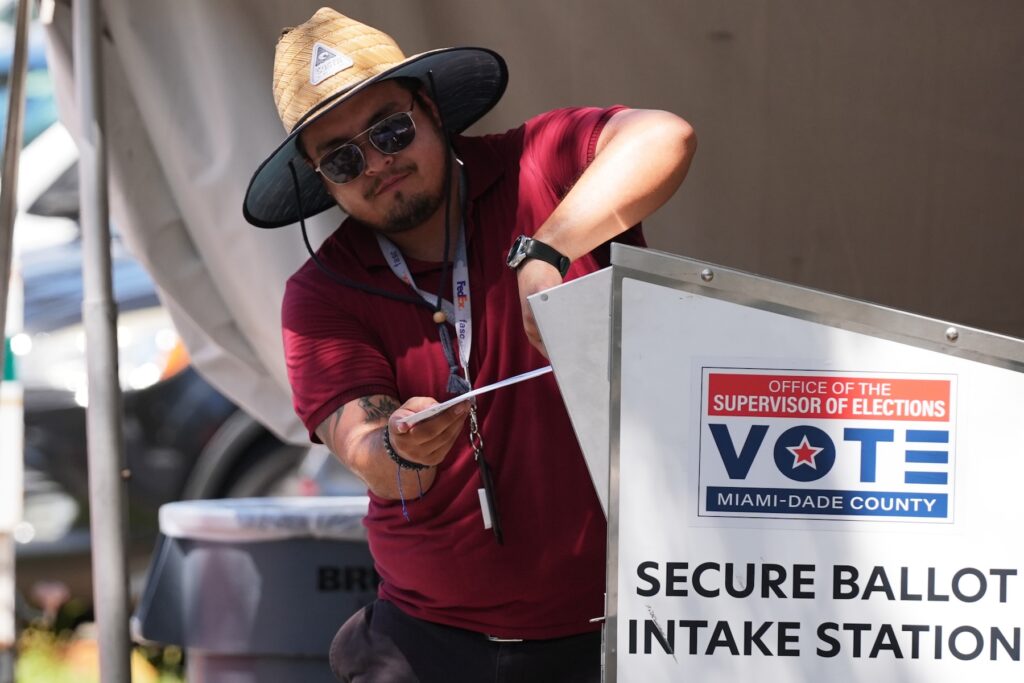
Trump’s push to restrict mail ballots has failed. Other efforts to reshape the midterms are ongoing
President Donald Trump's efforts to assert federal control over elections are marching on despite a recent loss in the Supreme Court.
4 weeks ago
What health care means to young voters
Bianca Little teaches a course called “peace and social change” for high school seniors. As a teacher, she said it is important that her pupils receive well-rounded civics education in order to “help them become critical thinkers, especially in [the] climate that we have right now, politically and socially, where there’s so much misinformation.”
She added that a civics education is undeniably tied to health care as it involves “understanding how to take care of yourself. If you’re gonna take care of your community, you have to have that foundation within yourself first.”
Many of her students have a strong understanding of the connection between health care and civics as they have experiences with family members who are sick or living with a disability and have encountered difficulties with accessibility services.
“All of these things are connected because I think civics teaches you when you see something wrong, how do you start to fix it? I think we live in a society that isn’t fully aware and cognizant of people who are disabled or people who aren’t able bodied. So the two are married,” Little said.
Sarah Weill-Jones, a disability justice advocate from Philadelphia, is currently on their mother’s insurance but is becoming increasingly worried about what they will do once they turn 26.
“Who knows what job I’ll have? Who knows what schooling I’ll be in during that time, and if I’ll have a job that gives me the benefits that I’ll need to access the same level of health care that I’m receiving now?” they said.
For them, health care is a priority when deciding how to vote.
“If your representative is not actively advocating for you to receive quality health care and providers that are invested in your well-being, then it’s not someone that you should be voting for,” they said.
Weill-Jones said that Vot-ER’s initiative to increase voter and civic education by integrating it with health care is “absolutely a no brainer.” However, they also believe that these civic projects should expand beyond doctors offices as many voters may not have the coverage required to see a provider.
In terms of public policy, Rumbos-Perez said that “Medicare for All” has been a “rallying cry for a lot of young people”. The proposed bill would establish a universal single-payer national health insurance system.
Many young people become deeply aware of the link between health care and civics “the second that you yourself are dealing with the bureaucracy of either private medical insurance or public health care,” Rumbos-Perez said.
“I hold on to the hope that in my lifetime we will pass something like ‘Medicare for All’ in the U.S., but that takes people to be civically engaged and to use whatever political voice they have to make that happen,” he said.
Editor’s Note: This story is part of a series on Youth Civic Engagement funded by the William Penn Foundation. WHYY News produces independent, fact-based news content for audiences in Greater Philadelphia, Delaware and South Jersey.

Get daily updates from WHYY News!
WHYY is your source for fact-based, in-depth journalism and information. As a nonprofit organization, we rely on financial support from readers like you. Please give today.
Part of the series
Part of the series

Youth voting
WHYY News explores stories about youth voting as part of its civic dialogue work and to elevate awareness for our future generations.
Funded by William Penn Foundation.
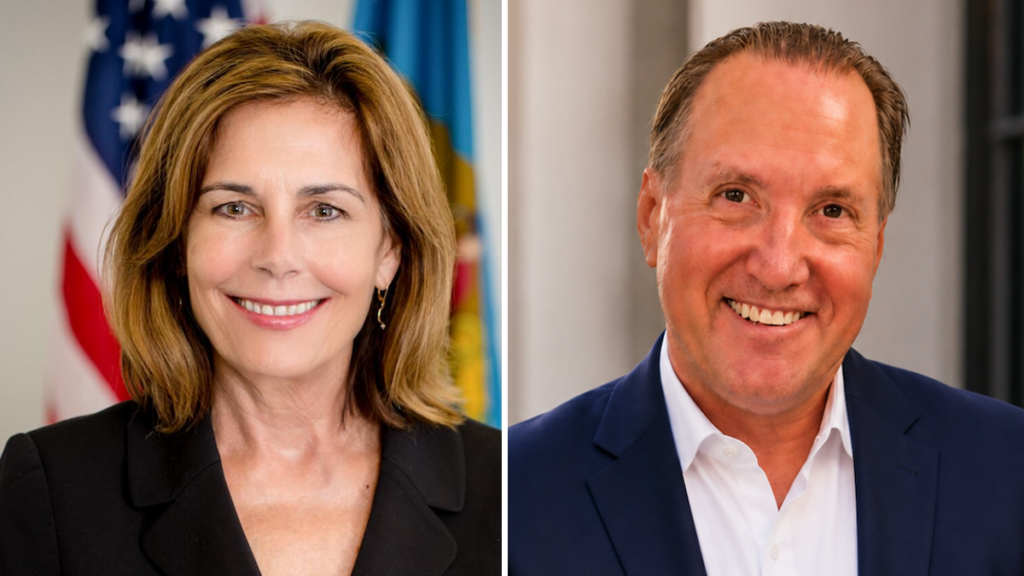
Delaware election 2026: What to know about the AG race between Kathy Jennings and David Graham
Graham is a Republican who is not an attorney but contends he can run the Department of Justice better than longtime prosecutor Jennings.
9 hours ago
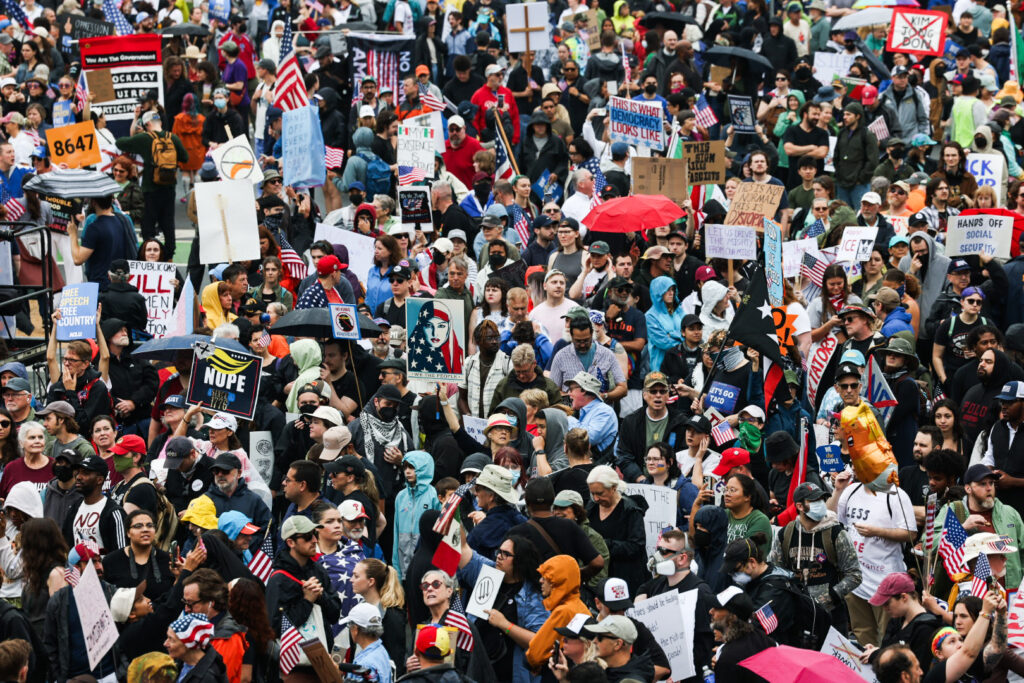
Philadelphia ‘No Kings’ protest 2026: What to know ahead of Oct. 17 early vote rallies
This time around, organizers are mobilizing early voters in November’s high-stakes midterm elections.
1 day ago
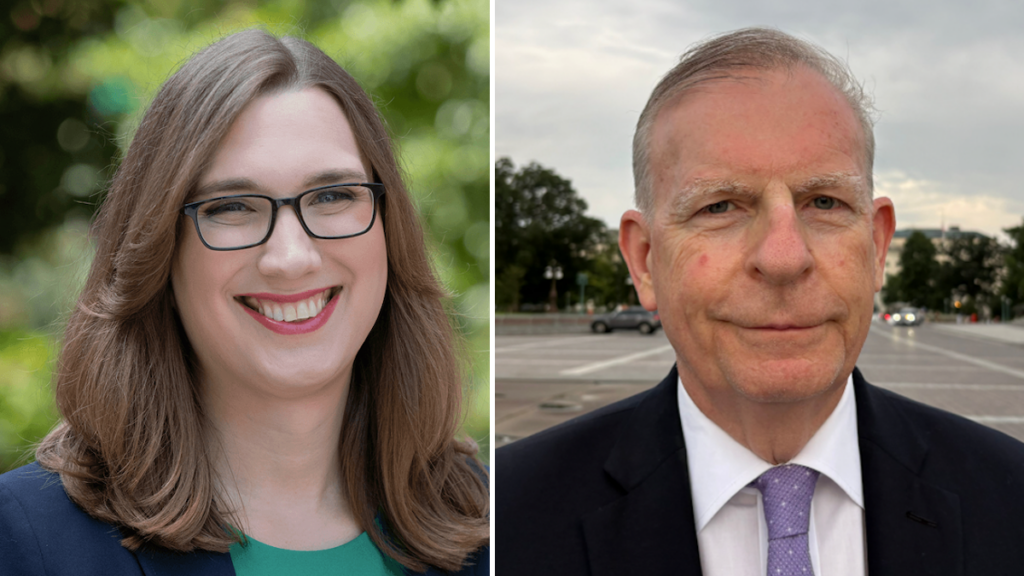
Democrat U.S. Rep. McBride and Republican Arminio outline their priorities on the economy, health care, immigration and foreign policy ahead of the Nov. 3 general election.
2 days ago