

How campus voting initiatives in Pennsylvania aim to tackle barriers to youth voting
As the midterm elections near, universities across Pennsylvania are taking part in the ALL IN Campus Democracy Challenge to help young people navigate the voting process.

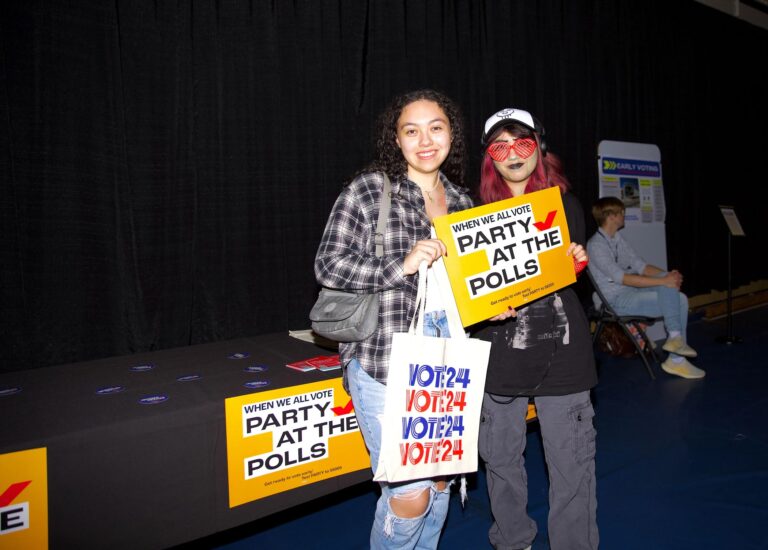
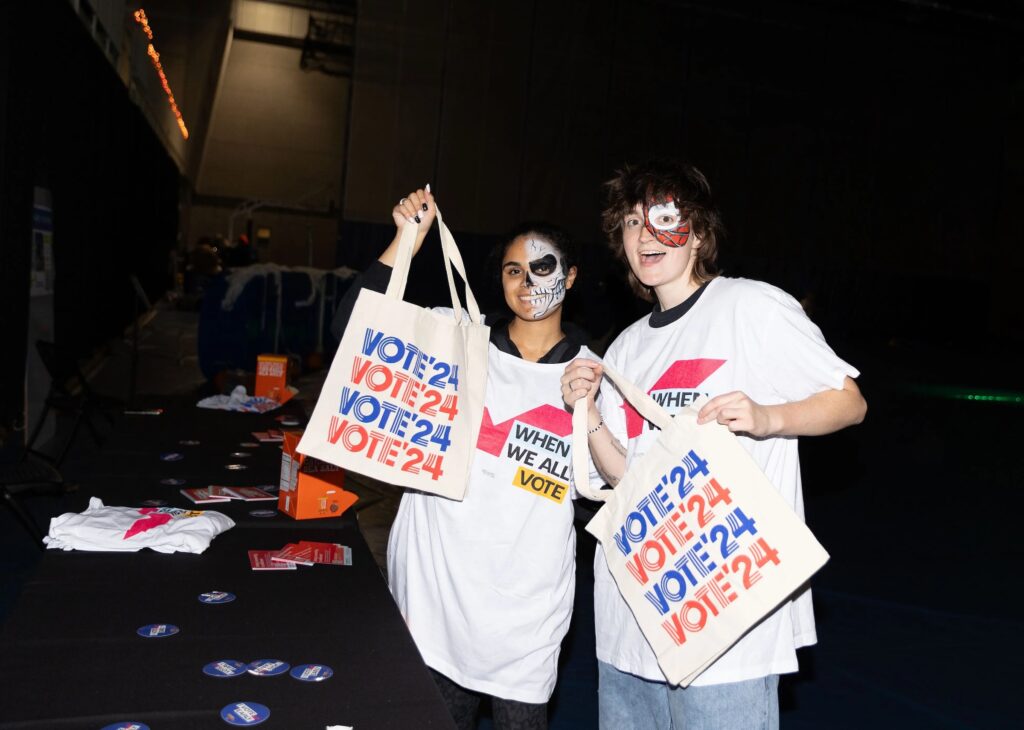
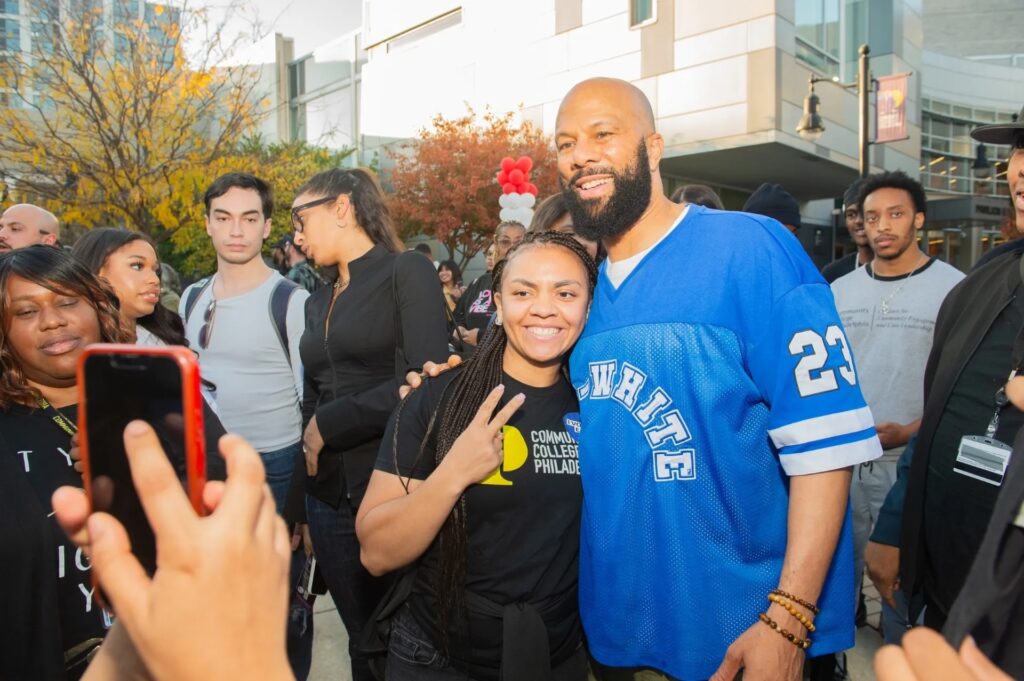
Students celebrate at Community College of Philadelphia’s Party at the Polls event. (Courtesy of Civic Nation ALL IN initiative)
What questions do you have about the 2026 elections? What major issues do you want candidates to address? Let us know.
A candy poll helped draw students at Swarthmore College into a conversation about voting and civic engagement on National Voter Registration Day. As students cast their votes for their favorite candy, they could also pick up voter registration forms and learn more about the November midterm elections.
Sydney Hankin, a student leader at SwatVotes who organized the event, said the initiative was about making voting less intimidating.
“The idea is to show that voting is something you do in your everyday life in non-political ways. You rank your favorite candies, you have preferences about so many things in your life and I think that’s the connection there,” she said.
Nearly 50 million people ages 18–29 are eligible to vote in the 2026 midterm elections and 56% are “extremely likely” to vote, according to research from the Center for Information & Research on Civic Learning and Engagement at Tufts University. Though Pennsylvania has consistently had a higher youth voter turnout than the national average, turnout in midterm elections remains significantly lower than presidential elections.
In order to combat low youth voter turnout, the ALL IN Campus Democracy Challenge, founded in 2016, works with universities nationwide to increase civic education and engagement. In Pennsylvania, the organization partners with the Secretary of State. As part of the initiative, each university adopts a campus-wide voting coalition and partners with local election officials or non-partisan organizations in the community to develop action plans for their campus.
Action plans detail each university’s civic habits and provide a comprehensive strategy that student representatives and faculty will use to institutionalize civic engagement on campus. Every two years, the action plans are given to the team at ALL IN, who provide feedback based on a rubric.
ALL IN’s executive director Jen Domagal-Goldman wants university representatives to “really think about who their students are” when creating the action plan. “There’s no one right way of doing this. You have to think about who your students are and how to reach them,” she said.
“If you think about the institutions in and around Philadelphia that we work with, those include campuses like the Community College of Philadelphia and UPenn and Drexel and Temple, right? And they serve very different students, so thinking about how you reach those students.”
Related Content
The city office advocates for people in juvenile justice, child welfare and behavioral health care, teaching them their rights and helping turn their complaints into change.
2 months ago
For Elliot Scott-Straight, a student at the Community College of Philadelphia, having a wide range of opinions on elections and voting is “what makes our community as strong as it is.” They are involved with the ALL IN challenge on their campus and have come across students who “just don’t trust that voting can make an impact.”
“While I disagree, I really understand the fears that people have and I understand how it’s very deep-rooted,” they said.
Scott-Straight said disengaging with the electoral process has “become the only way out for a lot of people,” due to economic hardship, educational inequalities and political strife.
Despite this, they said young people care deeply about their political futures.
“Some adults have an error of thinking that young people don’t know anything or aren’t connected enough to what’s going on in the world when a lot of times there are movements going on that older people might just not be seeing,” they said.
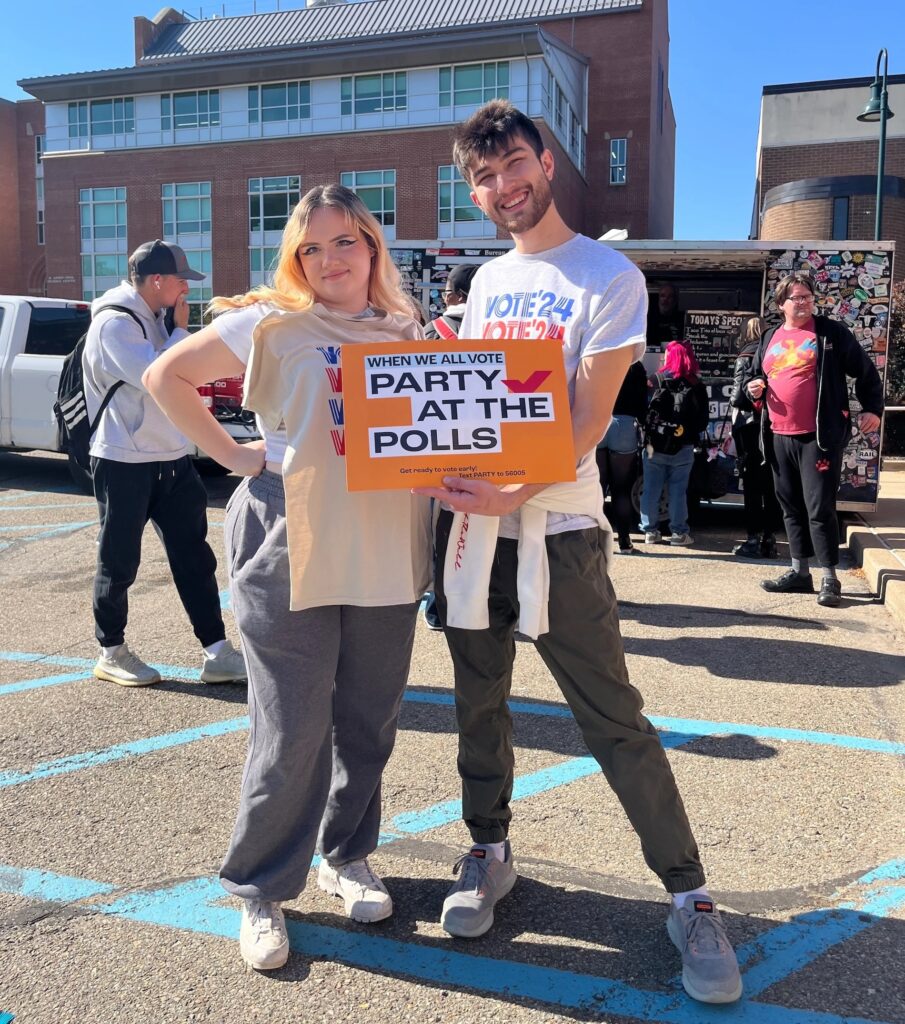
At Swarthmore, however, Hankin said most students are already registered to vote. “I think we just have a very tuned-in campus in general. We have students who are generally tuned into the news, who know a decent amount, maybe, about what’s happening in our local community and in Philadelphia,” she said.
In her role as a student leader at SwatVotes, Hankin uses the ALL IN challenge to make sure students are “finding a time to vote, making a plan, and all of the small things that, with so much else going on, can fall to the backside, especially if someone doesn’t perceive it as an ‘important’ election.”
On-campus activities include tabling at campus-wide events such as Garnet Days, hosting debate watch parties and hosting office hours. She said the aim is to make voting as “seamless as possible.”
“When students come [to college], they’re 18 and most of them have never voted before so it’s a new process. It might not be something you’re thinking about. So I think to some extent there’s just some discomfort and uncertainty about what the whole process entails,” she said.
A central focus of the challenge is to make voting and civic engagement a sustained campus habit. Domagal-Goldman said returning to the polls is much easier once a constituent has already navigated the first time successfully.
She said that students often process a large influx of information in their first year of college and struggle to maintain civic engagement.
“If my mom hadn’t been sending me messages about asking for my absentee ballot, I likely would have missed the election for president. Even though I knew who I wanted to vote for and I cared a great deal … I was busy. I was trying to figure out how to get along with my roommate. I was trying to pass the calculus class as someone who eventually majored in English,” she said.
Hankin said she hopes she and her fellow student leaders can help get students over the first hurdle by casting a ballot in their first elections.
“Voting [is] meant to take a little bit of effort and I think that’s what signals that it’s an important process, but there are ways to make it so that it’s not a very overwhelming process. I hope that’s what we’re able to support students to feel,” Hankin said.
With the midterm elections approaching, campus voting initiatives like the ALL IN Campus Democracy Challenge seek to connect students with registration resources and information about the process. For campuses that take part in the organization, that could look like a roundtable discussion about the candidates or voting for M&M’s as your favorite candy.

Get daily updates from WHYY News!
WHYY is your source for fact-based, in-depth journalism and information. As a nonprofit organization, we rely on financial support from readers like you. Please give today.
Part of the series

Youth voting
WHYY News explores stories about youth voting as part of its civic dialogue work and to elevate awareness for our future generations.
Funded by William Penn Foundation.
Part of the series

Blue wave in Bucks: How Bob Harvie defeated Republican Brian Fitzpatrick in Pa.’s 1st District
Fitzpatrick, a five-term incumbent, won by 13 percentage points in 2024. Two years later, the suburban battleground delivered Democrats their first victory since 2008.
2 days ago
Listen 1:38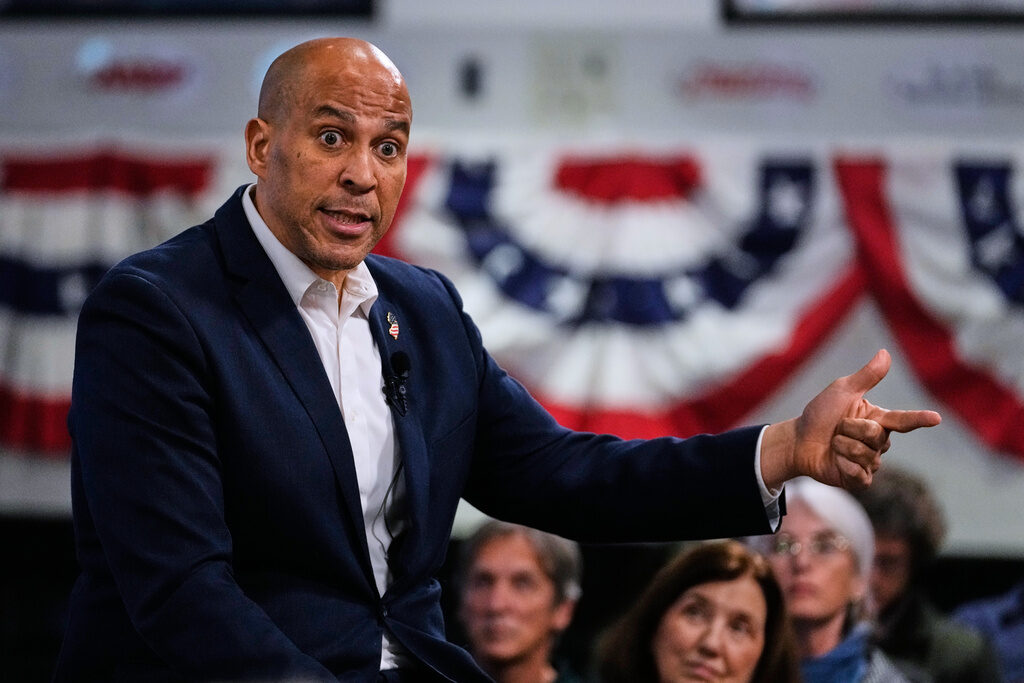
With Democrats set to take control of Congress, Booker is focusing on economic issues and rekindling the American Dream.
2 days ago
Listen 1:12
‘Blue tsunami’ leaves more questions to what it means to New Jersey
Analysts ponder on Democratic victories on Tuesday, Gov. Mikie Sherrill’s relationship with the Trump administration and state GOP’s future direction.
2 days ago
Listen 0:56