Federal election monitors are coming to polling places in Philly and other Pa. counties. Here’s what you need to know
The Department of Justice has deployed election monitors for decades, but this year, concerns about voter intimidation have abounded.

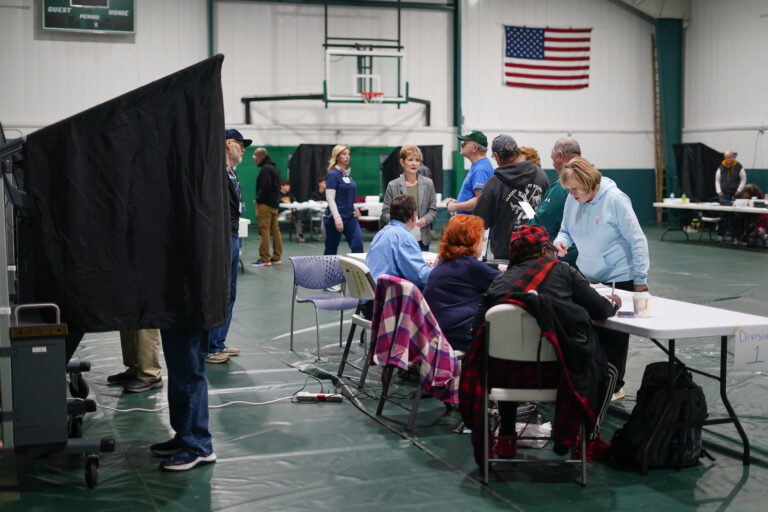
Voters check in at their polling place before casting their ballots on election day in Philadelphia, Tuesday, Nov. 7, 2023. (AP Photo/Matt Rourke)
What questions do you have about the 2026 elections? What major issues do you want candidates to address? Let us know.
The U.S. Department of Justice announced it will send election monitors to Philadelphia as well as Allegheny, Luzerne and Lehigh counties, according to a letter sent to state officials. The agency did not specify exact locations.
The letter said that the monitoring will be conducted “in the same way as in the past,” with monitors there only to “observe and take notes.”
The Trump administration previously sent monitors to several states during their primary elections and, in August, announced plans to send more than 1,000 monitors to jurisdictions across the country for the general election.
Pennsylvania Secretary of State Al Schmidt responded to questions about the federal poll monitors.
“The Pennsylvania Department of State expects everyone working in, voting in and observing polling places to follow all state and federal laws,” he said.
Pa. election 2026: What to know
- 🤔 Voter FAQs: WHYY News’ Pa. voter guide has the answers you need.
- 🗳️ Governor’s race: Here’s what to know about the race between Josh Shapiro and Stacy Garrity.
- 💰 On the issues: Here’s where Shapiro and Garrity stand on the economy, health care and more.
- 📬 Voting by mail: Here’s what to know about filling out and returning your ballot.
- 📱 Your go-to coverage: As election developments unfold, follow WHYY News on WHYY.org and the WHYY App.
Is this out of the ordinary?
It’s not uncommon for the federal government to deploy election monitors. Since the enactment of the Civil Rights Act of 1965, the DOJ has regularly sent election monitors, typically lawyers with the Civil Rights Division, to guard against voter suppression resulting from racial discrimination and other illegal activities.
Democratic and Republican administrations have since used monitors to assess compliance with federal voting rights laws. Monitors have also been deployed to ensure local districts adhere to provisions in the Help America Vote Act, which was passed in the wake of the 2000 presidential election and required them to modernize and update voting processes.
Under President Joe Biden, the department announced monitoring in 64 jurisdictions across 24 states for the 2022 midterms and 86 jurisdictions in 27 states for the 2024 presidential election. During President Donald Trump’s first administration, the department announced monitoring in 44 jurisdictions across 18 states for the 2020 election.
Other institutions, such as political parties and civil rights organizations, also regularly station election monitors to polling locations.
Although monitoring itself is routine, this year’s expansion has drawn concern from voting rights advocates and state officials about the program’s staffing and potential use. Part of that stems from comments by President Donald Trump that he could send agents with U.S. Immigrations and Customs Enforcement to polling locations.
The White House denied it had any plans to send uniformed agents to polling locations, but several civil rights groups have sued to ensure that the administration doesn’t send armed agents.
Related Content
Why American elections are so complicated — and secure
Most Americans by now have probably heard stories about voter fraud. When these incidents happen, they are often caught and prosecuted.
3 months ago
What do the laws say?
Federal monitors must comply with local, state and federal election laws. Pennsylvania law does not permit federal election monitors inside polling locations, unlike poll watchers who are deployed by political parties and civil society organizations.
“DOJ monitors are not legally entitled to any greater access to polling places than any member of the public,” Schmidt said.
Federal monitors, like anyone else, are also prohibited from trying to intimidate, threaten or coerce voters, and cannot attempt to physically block voters. They are also not allowed to question voters about voters’ citizenship, criminal record or other qualifications to vote or demand documentation.
The DOJ letter said the monitors will not “intrude or interfere in any way in the voting process.”
However, the Campaign Legal Center expressed concern over the DOJ’s recruitment of monitors.
“In an effort to reach 1,000 monitors nationwide, DOJ has expanded its recruitment beyond the typical pool of government attorneys in DOJ’s Civil Rights Division and others with voting rights and civil rights experience,” the voting rights organization said in a fact sheet for Pennsylvania officials and residents. “Attorneys from outside the department’s Civil Rights Division may lack knowledge and training on how to engage in election monitoring, raising the possibility that these monitors will run afoul of state laws or the monitoring program’s standard operating procedures.”
Schmidt said that voters who believe their rights may have been violated during Election Day can call the Department of State’s year-round voter hotline at 1-877-868-3772.
Related Content
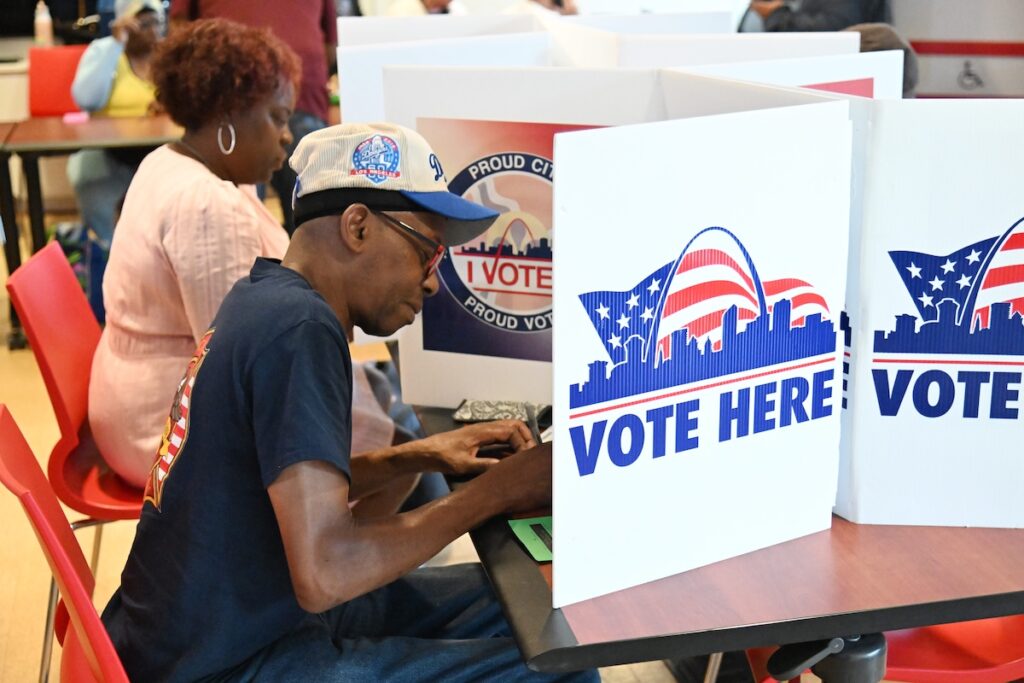
Election integrity in the 2026 midterms
We talk about threats to election security, the erosion of voter confidence and what it takes to keep our elections free and fair.
Air Date: August 4, 2026 12:00 pm
Listen 51:11
Get daily updates from WHYY News!
WHYY is your source for fact-based, in-depth journalism and information. As a nonprofit organization, we rely on financial support from readers like you. Please give today.
Part of the series
Part of the series
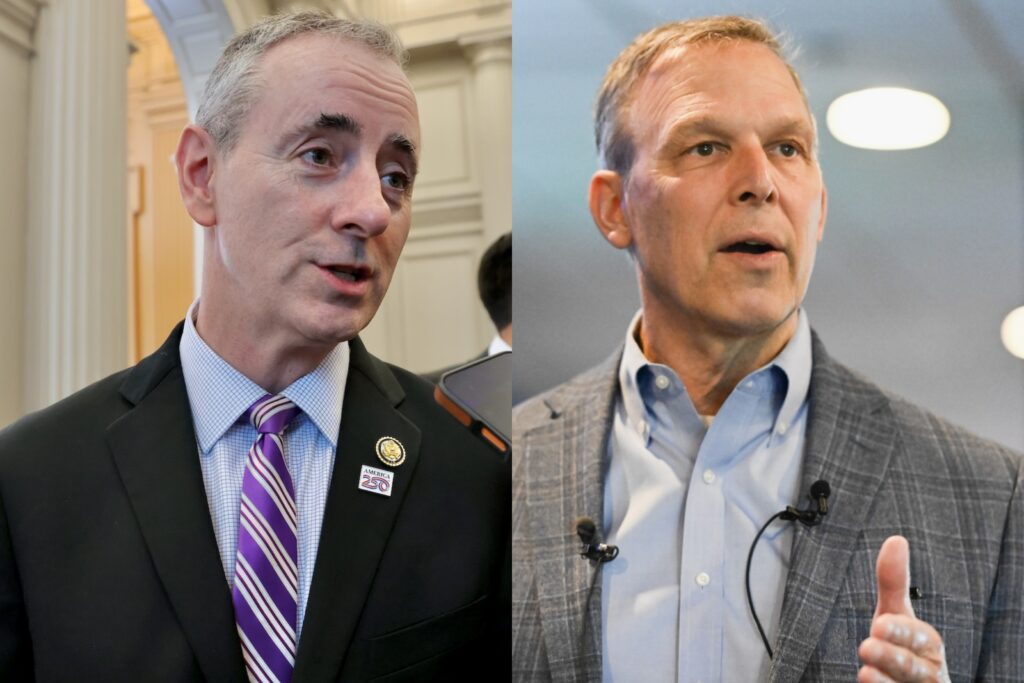
A tale of 2 campaigns: How a pair of Pa. Republican incumbents split on the ‘Trump effect’
While U.S. Rep. Brian Fitzpatrick, R-Bucks County, is keeping his distance from the president, U.S. Rep. Scott Perry, R-Dauphin County, is all in.
2 days ago
Listen 1:51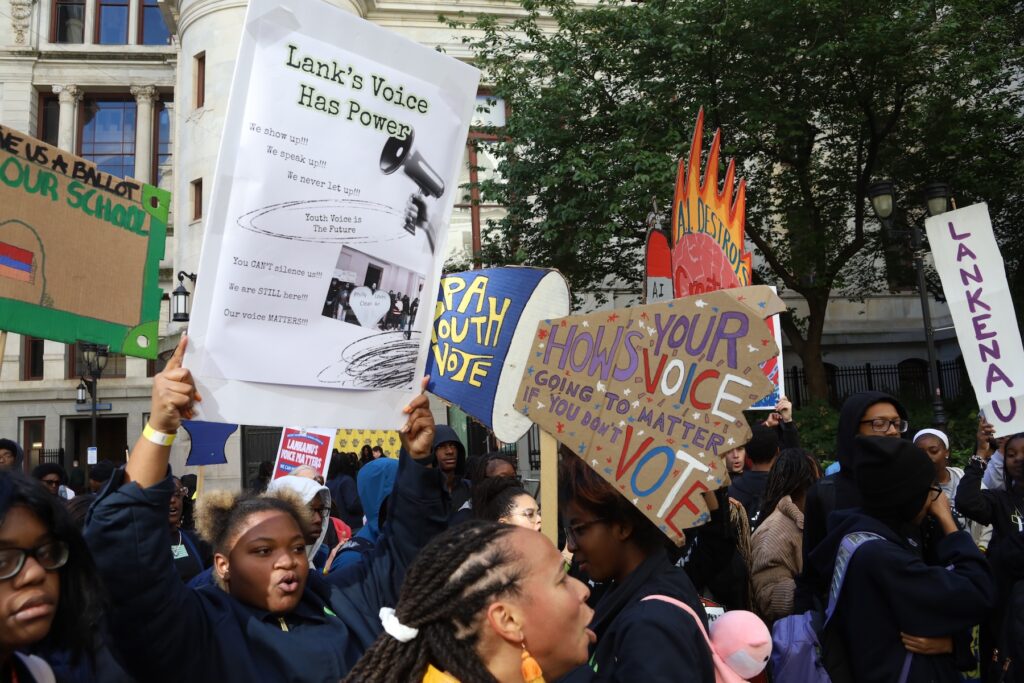
At ‘Give Us a Ballot’ march, Philadelphia students lead the fight for their futures
Hundreds of students marched from LOVE Park to City Hall last week in a march organized by PA Youth Vote to increase civic education and youth voter turnout.
2 days ago
Who are the future voters of Pennsylvania and what do they want from their legislators?
As Pennsylvania’s next generation prepares to vote, they are determined to make their voices heard.
4 days ago