

Did Pa. governor candidate Stacy Garrity need to register as a lobbyist? Her work for a defense contractor raises questions
Her work for a defense contractor involved influencing policy, but she never registered as a lobbyist. Critics say she may have met the legal threshold.
Listen 1:20

Stacy Garrity, the Republican state treasurer of Pennsylvania, speaks at a campaign event at the Beerded Goat Brewing Co., April 25, 2024, in Harrisburg, Pa. (AP Photo/Marc Levy, File)
What questions do you have about the 2026 elections? What major issues do you want candidates to address? Let us know.
Before taking office as Pennsylvania treasurer in January 2021, Stacy Garrity served in senior positions at a defense contractor, where a significant part of her last role focused heavily on influencing public policy tied to military manufacturing and global trade, an activity commonly known as “lobbying.”
As vice president of government affairs and industry liaison for Towanda-based Global Tungsten and Powders, she managed hundreds of thousands of lobbying dollars used to push policies that directly benefited the company, including tariffs on foreign competition and tariff exemptions for her employer.
She has publicly taken credit for successfully moving legislation forward and has met with legislators and otherwise pushed her company’s interests with government officials. And yet, she never registered as a lobbyist.
However, Garrity’s role and activities highly suggest she easily passed thresholds that would legally require her to do so, Craig Holman of the public interest nonprofit Public Citizen told WHYY News.
“Even the title she had as vice president of government affairs is a code name for lobbyists,” Holman, a registered lobbyist for his organization, said. And “judging from all the things that she has described herself as doing, I believe she should have registered as a lobbyist.”
He called the fact that she didn’t register “a big red flag” for someone running for higher office with significant ties to industry influence.
“As a lobbyist … you have to rely on building a network of relations with other lobbyists,” Holmand said. “She not only worked as a lobbyist, she worked with other lobbyists and has a rather unique relationship with the lobbying community.”
Garrity’s campaign refuted that assertion. In a statement sent to WHYY News, campaign spokesperson Matt Beynon said that she “never crossed the requisite threshold to register as lobbyist on behalf of the company.”
“Treasurer Garrity’s principal responsibility on behalf of the company was to serve as the company’s liaison to the Refractory Metals Association, International Tungsten Association, Munitions Industrial Base Task Force, and Metal Powder Industries Federation,” Beynon said.
The Munitions Industrial Base Task Force, a trade group made up of U.S. munitions companies and suppliers, also lobbied on aligned interests.
Related Content
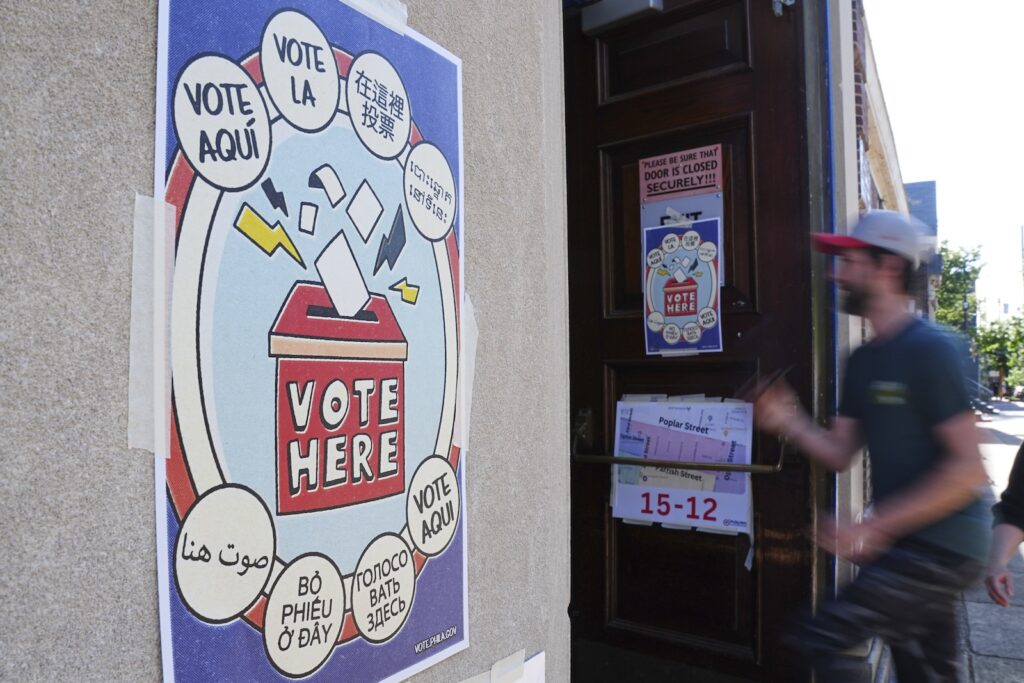
Pa. election 2026: Primary voter guides, key races and more
Primary elections will take place Tuesday, May 19. Here’s what you should know beforehand, from voter deadlines to who’s on the ballot in Philadelphia and statewide.
6 months ago
So, what is a lobbyist?
Lobbyists are professional advocates who attempt to influence government decisions and legislation on behalf of their employers or clients by cultivating relationships with politicians and other officials and presenting their points of view on given policies. In practice, that typically means meeting with lawmakers or their staff, providing research or policy arguments and trying to shape how a bill is written or whether it passes.
In addition to in-person meetings, lobbying can include phone calls, emails, events and informal conversations where ideas and priorities are pushed in a certain direction. For many, it’s a full-time job. This includes those who work for firms based in Washington, D.C., who focus on federal legislation and policy. Some companies also employ in-house lobbyists.
Influencers who lobby the federal government — whether Congress or the executive branch, including agencies — must register when they meet certain thresholds. For in-house lobbyists, those include spending more than 20% of one’s time on lobbying activities and spending more than $16,000 on those activities in a given quarter.
Both of those limits must be met to impel the need for registration, a requirement organizations from the American Bar Association to The New York Times have recommended making more stringent.
“The problem is the Lobby Disclosure Act relies on lobbyists to be honest and to actually recognize that they’ve passed that 20% threshold and should register,” said Holman, who has advocated for more transparency in the process. “The only remedy to that, if someone is not being honest, is for the Department of Justice to do an audit.”
He added that would be unlikely in this case.
The supply chain economics of tungsten
The use of the element tungsten is highly popular in the defense industry because of its extreme density and hardness and resistance to high temperatures, making it ideal for armor-piercing munitions and aerospace components. It is often used in bullets and missiles as a nontoxic, high-performance alternative to lead and depleted uranium.
The U.S. does not mine tungsten domestically, but China accounts for 80% of the world‘s supply, which has been a concern to aerospace and defense industries.
Global Tungsten and Powders describes itself as a “leading western supplier of high-quality tungsten & tungsten carbide powders.” The company, a subsidiary of Austria-based Plansee Group, also produces finished metal components for aerospace and defense.
Federal filings show the company lobbying the White House, Congress, the Department of Defense and the Defense Logistics Agency on issues related to tungsten procurement, the National Defense Stockpile, defense appropriations, energy and water appropriations and multiple versions of the National Defense Authorization Act.
Such efforts included imposing tariffs on tungsten imports from China, creating tariff exemptions on their own imports, prohibiting purchase of tungsten from some countries, and obtaining federal support for production activities.
Garrity touts her lobbying activity
According to her LinkedIn profile, Garrity joined Global Tungsten and Powders as an associate accountant in 1987 and worked her way up through the accounting and marketing departments before her promotion to vice president in 2019.
Garrity was also tied to a broader industry lobbying network. From 2010 through 2019, she was listed on IRS filings as a director of the Munitions Industrial Base Task Force. That group spent $1.09 million lobbying Congress and executive agencies on munitions issues, defense appropriations and authorizations, procurement and tax matters during that time.
It was as vice president that she engaged in the most direct lobbying activities. Garrity repeatedly described herself as someone who pushed legislation and worked directly with lawmakers to secure policy outcomes.
“My last assignment, I was vice president of government affairs and industry liaison, and what I did in that role is pushed legislation to help the U.S. industrial base,” she said in a 2023 interview for 2822 News’ show “Veterans Voices.”
During her first run for treasurer, she took credit for a provision in the 2019 National Defense Authorization Act that barred the Department of Defense from purchasing tungsten products from China, Russia, North Korea and Iran, an effort she called “Don’t Buy from the Bad Guys.” She also traveled to Washington to make sure tungsten was added to the bill.
“I actually got a piece of legislation passed in the National Defense Authorization Act in the fiscal year 2019,” she told WITF shortly before the 2020 election. “For about 20 years, we were incorporating Chinese tungsten into DoD munitions. Made my head explode.”
Around the same time, Garrity had a meeting with then-U.S. Rep. Fred Keller, during which she advocated for a 25% tariff on tungsten imports from China and sought an exemption on tariffs from other countries. While there are no records of meetings, she has also said that Global Tungsten and Powders garnered pledges of support in their demands for restrictions on Chinese tungsten from other members of Pennsylvania’s delegation to Congress, including former U.S. Sen. Bob Casey and former Rep. Tom Marino.
In 2020, Global Tungsten and Powders secured a $4.2 million grant through the Defense Department’s Industrial Base Analysis and Sustainment program to buy equipment and manufacture high-performance tungsten heavy alloys. Garrity later described it as one of her major accomplishments.
She also pushed for policy changes tied to another major corporate interest. Global Tungsten and Powders had invested more than $38 million in technology connected to Bloom Energy, a fuel-cell company. When fuel cells were left out of an investment tax credit, she asked then-Gov. Tom Wolf to “add leverage” to intervene, publicly pressed for a legislative fix and later praised U.S. House Speaker Paul Ryan and Marino for their help.
Related Content

A record quarter adds to the governor's $35 million cash edge over the likely GOP challenger.
6 months ago
Listen 1:05Exceeding the 20% threshold
Under current law, Garrity and Global Tungsten and Powders do not have to disclose specific information on meetings with officials or most other activities. WHYY News asked the Garrity campaign for her job description and a breakdown of duties to try determine whether her lobbying activities breached the 20% threshold.
Beynon referred WHYY News to a contact at Global Tungsten and Powders, who responded that “GTP does not provide internal job descriptions with detailed duties outside the organization as standard practice” and that information regarding lobbying activities, such as travel to Washington, “is not available.”
Holman says that the 20% doesn’t just include meeting with officials but “all the activity, preparation, discussions, time thinking of what it is you want to pursue and how to make the contacts.”
“She takes credit for passing a provision in [National Defense Authorization Act],” he said. “One does not do that without putting some good time into the effort.”
Beynon responded that Garrity had help.
“When it became clear the company needed government relations counsel, it was Stacy Garrity who recommended that the company hire a lobbyist for representation,” Benyon said.
That lobbyist is Jeff Green of J.A. Green and Co., which specializes in defense policy and includes several retired senior army officials on staff. According to lobbying disclosure reports, GTP contracted Green in 2012, while Garrity was director of sales and marketing.
Like Beynon, Green also disputed the idea that Garrity should have had to register.
“The head of Lockheed Martin Government Affairs traditionally is not a registered lobbyist,” he said. “It’s a pretty common thing to have somebody coordinating activity within the government within their job titles not registered as a lobbyist.”
While Lockheed Martin paid 57 firms more than $15 million in total to lobby the government, GTP paid Green a standard $10,000-per-month retainer, which he called on “the lower side,” saying that his firm pushes for “good national security policy because we believe very strongly in reshoring manufacturing, bringing working class jobs back to the United States.”
Green added that he would put his “stamp of approval” on Garrity taking credit for the NDAA provision but added that there are “other leaders in industry who’ve been kind of focused on this mission for a very long time.”
Beyond meetings and public statements, Garrity also personally signed and submitted several comments on proposed federal rules and trade actions on behalf of GTP. Those filings urged the federal government to impose or expand tariffs on Chinese tungsten, ensure favorable tariff treatment for GTP, redefine procurement rules, remove tungsten from exemptions under the Buy America Act and investigate China for what the company described as market manipulation.
One of those comments was submitted the day before she took office as treasurer, that one urging the incoming Biden administration to take remedial trade action on upstream tungsten. Holman said that it was surprising she continued such activities during her campaign but that by not registering, she was “avoiding saying that to the public.”
“When you launch a campaign, usually you don’t want to be working as a registered lobbyist,” he said. “If they’re planning on running for public office or even being appointed for public office, they tend to cancel their lobbying profession, for the time being anyway.”
Editor’s Note: This article has been updated to reflect the correct location of Plansee Group.

Get daily updates from WHYY News!
WHYY is your source for fact-based, in-depth journalism and information. As a nonprofit organization, we rely on financial support from readers like you. Please give today.
Part of the series


Democrat U.S. Rep. McBride and Republican Arminio outline their priorities on the economy, health care, immigration and foreign policy ahead of the Nov. 3 general election.
16 hours ago
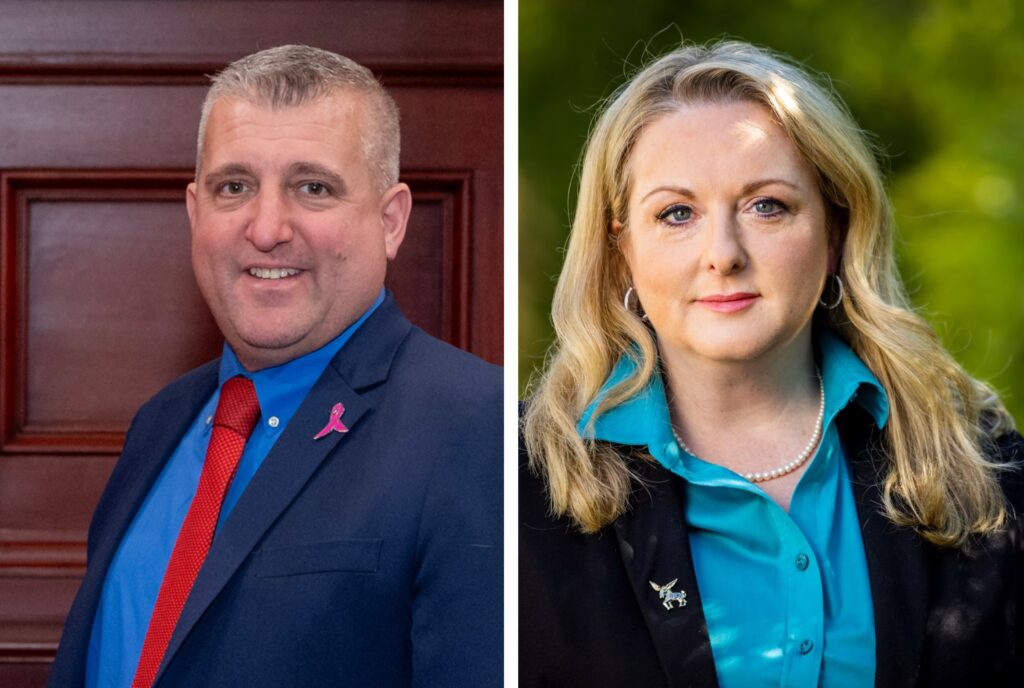
Democrats are defending a slim House majority and trying to flip the Senate after decades of GOP control. The key contests stretch from Bucks to Lancaster and western Pa.
17 hours ago
A record quarter adds to the governor's $35 million cash edge over the likely GOP challenger.
6 months ago
Listen 1:05