

SEPTA’s year in review — from its doomsday budget and train fires to equipment failures and World Cup prep
“Years of underinvestment revealed themselves” in 2025, SEPTA wrote in a social media post. Here’s a look back at the year that was.


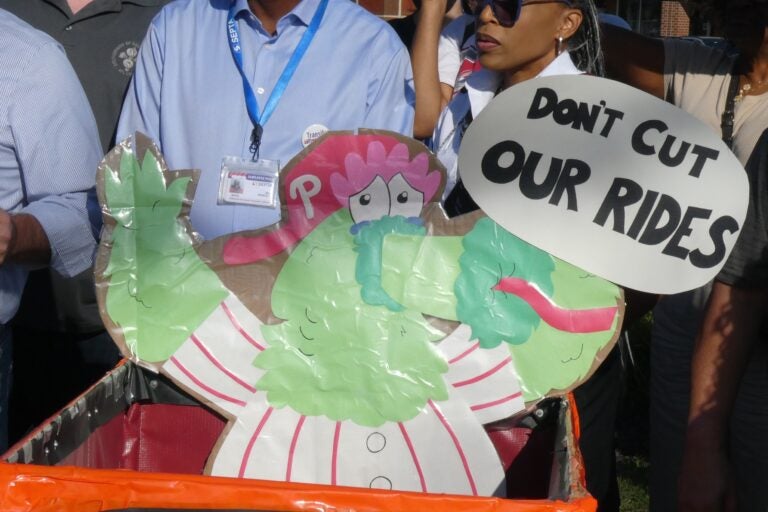
Public transit supporters rallied for SEPTA outside their headquarters on Market Street on May 19, 2025. (Kimberly Paynter/WHYY)
Have a question about Philly’s neighborhoods or the systems that shape them? PlanPhilly reporters want to hear from you! Ask us a question or send us a story idea you think we should cover.
SEPTA reported some positive changes over the past year, like the appointment of general manager Scott Sauer, a drop in major crimes, a new two-year contract with the Transport Workers Union and ridership that has recovered to about 80% of pre-pandemic levels.
But there was no shortage of bad news.
Several unexplained fires on aging Regional Rail trains. Weeks of train cancellations and delays. Sharp criticism from the federal government. A prolonged state budget battle that led to a fare hike, route cancellations and threats to discontinue several Regional Rail lines. And most recently, a maintenance snafu that shut down the Center City trolley tunnel for two months and counting.
As a tumultuous year finally comes to a close, here’s a review of some of the major developments and a peek at what lies ahead for SEPTA in 2026.
SEPTA’s ongoing budget battle
At the start of 2025, SEPTA faced a $240 million annual deficit due to rising costs, reduced fare revenue and the expiration of federal pandemic relief aid. The agency reduced the deficit to $213 million by freezing salaries, reducing hiring and making other cuts.
Pennsylvania Gov. Josh Shapiro renewed his proposal to boost spending for the state’s transit authorities by nearly $300 million, and Republicans again gave it the cold shoulder. The governor and some legislators expressed support for a new tax on skills games that could fund the spending bump, and there was talk of regulating and taxing marijuana, but both ideas faced major hurdles.
In response, Sauer presented a doomsday budget for 2025-26 that would boost fares by 21.5%, eliminate bus routes, reduce trip frequency throughout the system, end daily train service after 9 p.m., discontinue special trains for ballgames and eventually eliminate five Regional Rail lines in addition to other cuts.
“Given the dramatic impact that these measures will have on ridership, the reality is that we would start the dismantlement of public transit for our city and region as we know it today,” he said.
The funding battle became caught up in a broader fight over the state budget, which state Senate President Pro Tempore Kim Ward described as the “worst one” she’d seen in her career. Riders packed a public hearing on SEPTA’s budget in May, testifying about their dependence on the system and the devastating impact the cuts would have on them if they went through.
Feds order train fixes
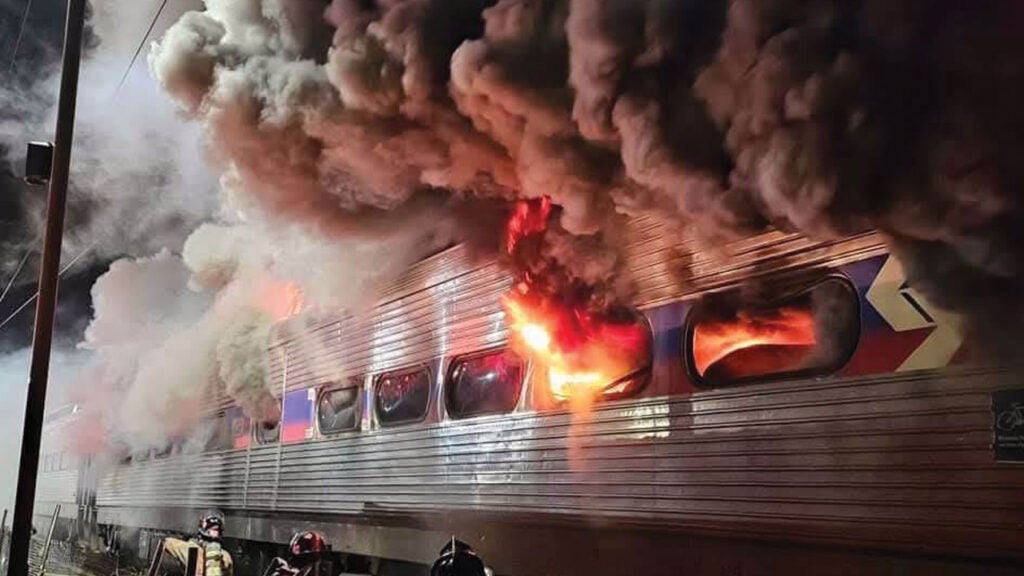
The five-county transit authority was also challenged by a series of fires that broke out in its fleet of Silverliner IV Regional Rail cars, all at least 50 years old.
The first occurred in February near Crum Lynne Station in Ridley Park, destroying a car, and was followed by four others in June, July and September. No one was seriously injured in the blazes.
In August, SEPTA inspected all the cars and took steps to improve crews’ responses to signs of railcar problems, such as the appearance of smoke or warning lights coming on. Removing cars for inspection led to shorter, more crowded trains and scores of cancellations. When two more fires occurred in September, the Federal Rail Administration issued an emergency order requiring a more robust response.
“The pattern of failures persuades FRA that reliance alone upon the prior assurances and cooperation of SEPTA is not possible, nor in the interest of public safety,” Robert Andrew Feely, FRA acting administrator, said in October.
U.S. Secretary of Transportation Sean Duffy sought to blame Shapiro for the lack of funding that he argued contributed to the fires, writing in a letter to the governor, “Your administration has failed to secure stable State funding, forcing SEPTA into a chronic spiral of service cuts and deferred repairs.”
Feely ordered the agency to do more worker training, inspect the older Silverliner IV cars and install heat-detection systems, which led to more service disruptions in October. Inspections wrapped up in November, but the repairs and the shortage of railcars have continued.
Shapiro provided SEPTA with $219.9 million in state discretionary funding to help pay for the work. The agency is leasing 10 railcars from Baltimore and has started the long process of commissioning new cars, which are expected to cost $2 billion and require federal funding.
Bus fires and stalled trolleys
In addition to the Regional Rail fires, SEPTA dealt with some other notable equipment challenges.
In June, a battery in a decommissioned electric bus sparked a fire in a North Philadelphia parking lot that burned at least 16 buses and caused a spike in air pollution levels. It was the second such fire in SEPTA’s troubled Proterra electric bus fleet, which it had used in 2019 and 2020 before pulling them out of service.
The Trump administration’s Federal Transit Administration demanded information on how the buses were being stored and criticized the federally funded program that had paid for them.
“This is not the first green deal initiative to backfire with serious long-term ramifications, bringing into question how safe and efficient these investments are,” FTA Administrator Marcus Molinaro said in August.
More recently, in November, SEPTA shut down the Center City trolley tunnel under the Schuylkill River after an attempted equipment upgrade damaged the overhead trolley wires and connecting points. The power poles that connect the trolleys to the wires started popping off, cutting power to the cars and stranding them mid-trip.
Maintenance workers have been trying to smooth out and lubricate the damaged wires, but said they will ultimately have to replace 5 miles of wires.
SEPTA has been waiting for the arrival of ordered materials, and meanwhile is directing riders to use the El, special shuttle buses that are running trolley routes or other bus lines. Officials have said they hope to reopen the tunnel in early January.
Related Content
PennDOT has nearly 150 road projects in Philadelphia and the surrounding suburbs, including major construction to I-95.
4 months ago
A legal challenge, and a resolution
The June 30 state budget deadline came and went without a deal, and in late August SEPTA started rolling out its first round of cuts, including eliminating 32 bus routes, shortening others and hiking fares. Those affected included students starting their new school year and lower-income residents who depend heavily on transit.
Shapiro said he could not plug the budget hole by “flexing” highway funding to transit, as he had done a year earlier. Senate Republicans wanted to shift hundreds of millions of dollars from a special transit fund for long-term projects like buying new trolleys, but Democrats rejected the idea, saying the money was already budgeted for needed upgrades and would not fix SEPTA’s structural funding gap.
The crisis came to a head in September, after Philadelphia consumer advocate Lance Haver and two other riders sued SEPTA. They argued the service cuts and fare hikes disproportionately burdened Black, Latino and low-income riders, while sparing Regional Rail routes that predominantly serve wealthier suburban commuters. They also contended SEPTA manufactured the crisis to pressure lawmakers.
SEPTA pointed out it had conducted a required equity analysis of its reduced budget, but a judge agreed with the plaintiffs and ordered the cuts reversed, while allowing the fare hikes.
Sauer finally brought the crisis to a close by asking the state Department of Transportation for permission to shift capital assistance funds to SEPTA’s operating budget, which didn’t need legislative approval. The solution put off a funding fix for two years but required the agency to defer a number of projects, like purchases of new buses. Its Bus Revolution Network plan, which aims to streamline the bus system and increase frequency on many routes, remains on indefinite hold.
-

Transit Forward Philadelphia organized a rally to demand the Pa. Senate vote to pass a budget that funds SEPTA and prevents cut outside City Hall on August 6, 2025. (Kimberly Paynter/WHYY) -
More than 100 SEPTA supporters rallied Tuesday, Aug. 19, 2025, at the Parkwood Shopping Center in Northeast Philadelphia demanding the state legislature get back to work to approve transit funding. (Cory Sharber/WHYY) -
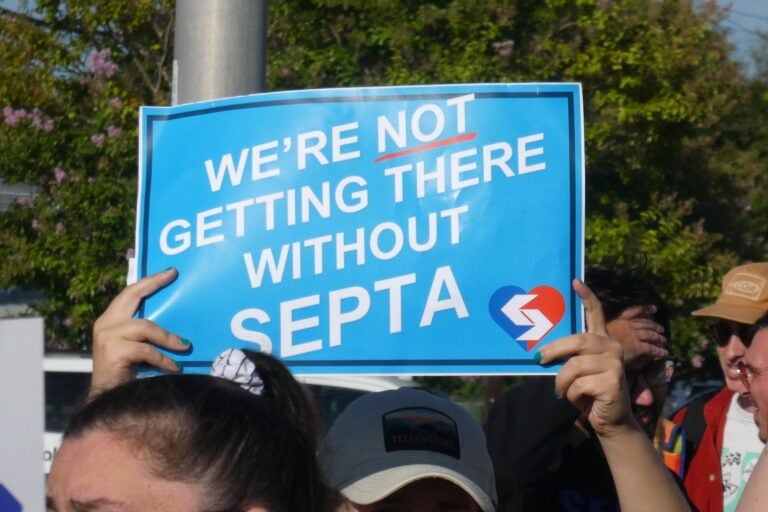
More than 100 SEPTA supporters rallied Tuesday, Aug. 19, 2025, at the Parkwood Shopping Center in Northeast Philadelphia demanding the state legislature get back to work to approve transit funding. (Cory Sharber/WHYY) -
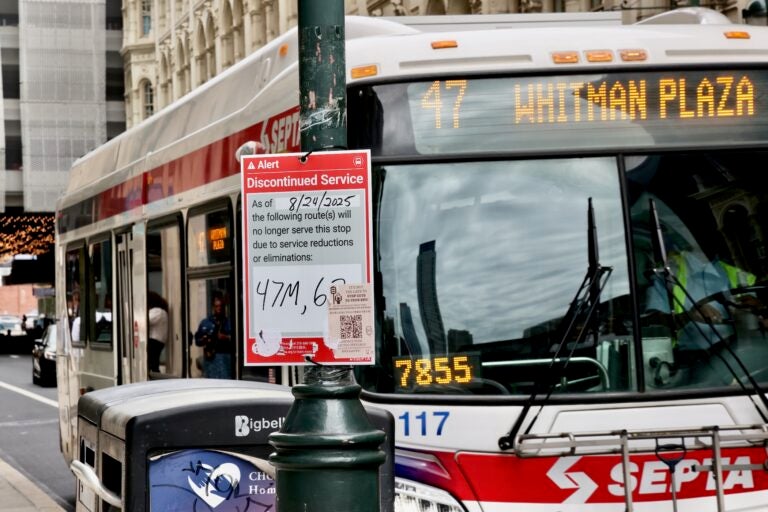
A notice at the bus stop at Eighth and Market streets warns of pending service reductions due to the SEPTA budget crisis. (Emma Lee/WHYY) -
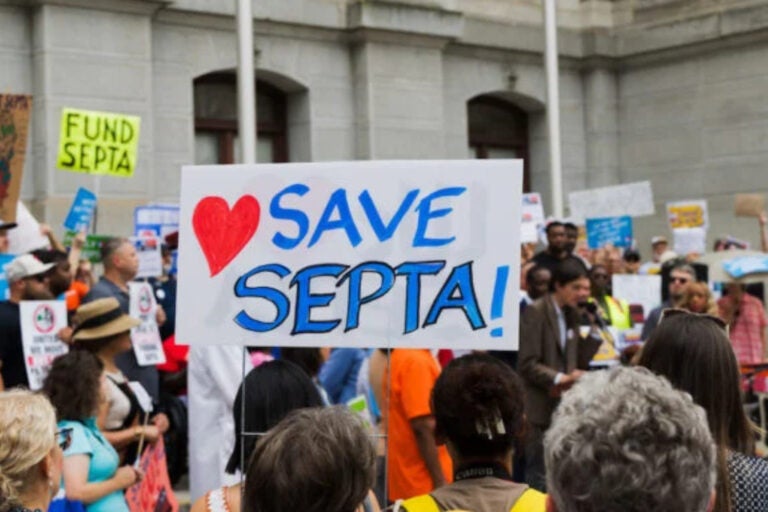
Transit riders at City Hall in Philadelphia, Aug. 6, 2025, demand SEPTA receive adequate funding ahead of service cuts. (Ryan Chi/WHYY) -
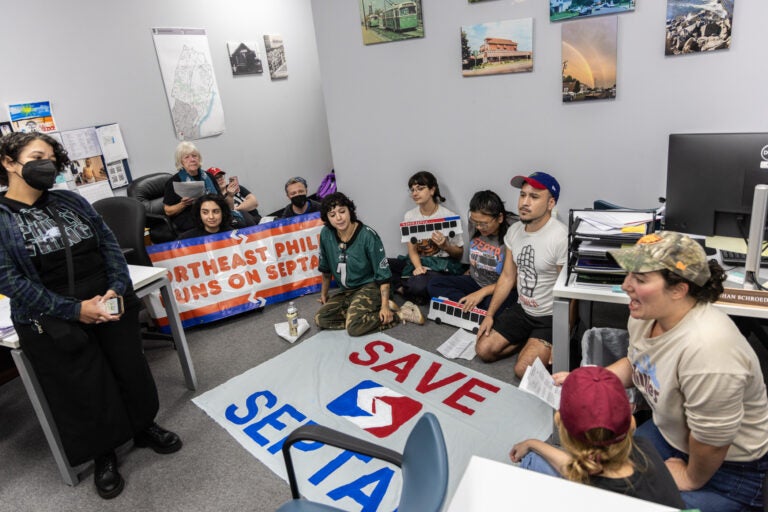
The 215 People Alliance organized a protest takeover of Republican state Sen. Joe Picozzi’s office in Philadelphia to demand full funding for SEPTA, Aug. 18, 2025. (Kimberly Paynter/WHYY) -
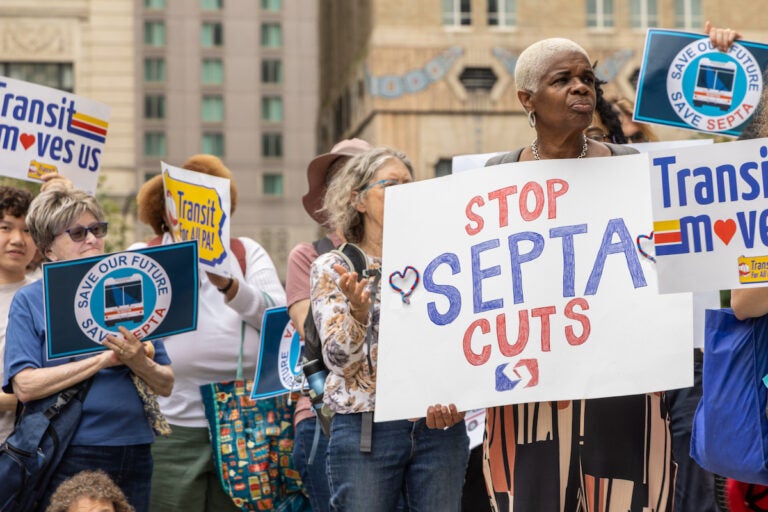
Transit Forward Philadelphia organized a rally to demand the Pa. Senate vote to pass a budget that funds SEPTA and prevents cut outside City Hall on August 6, 2025. (Kimberly Paynter/WHYY) -
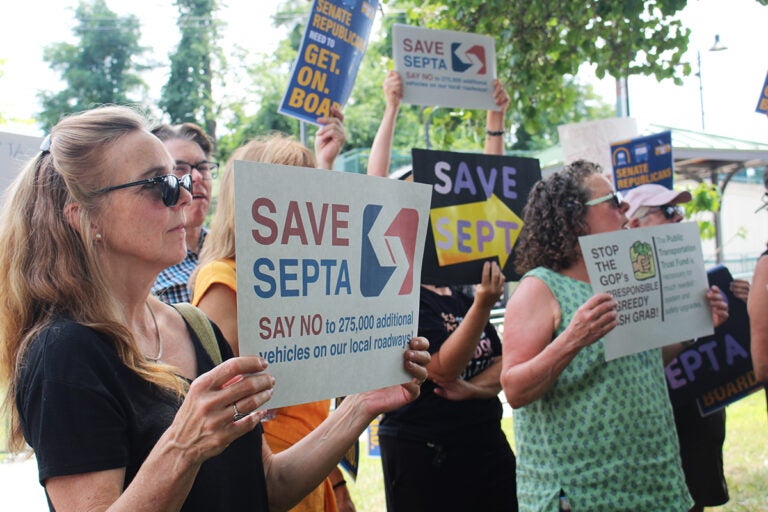
Residents held signs in support of funding for SEPTA as Democratic elected officials and residents spoke at a rally at the Yardley station, Aug. 14, 2025. (Emily Neil/WHYY)
Ridership up, crime down
SEPTA pointed to some bright spots over the past year as well.
Ridership has continued recovering from the lows of the pandemic, reaching about 733,000 average daily trips on weekdays. While the numbers took a hit late in the year due to the challenges described above, as of June, ridership had recovered to 86% of 2019 levels on buses and 77% on the Metro (El, subway and trolleys).
Following a 33% drop in major crime in 2024, incidents continued to fall. As of October, serious crime was down 10% compared to a year earlier. Citations for fare evasion were way up, and full-length fare gates were installed at several stations to discourage turnstile-jumping. The Transit Police hired 13 new officers in June and 9 more in December, and has 18 recruits at the academy, for a total of 258 officers.
The state’s controversial special prosecutor for SEPTA finally started prosecuting crimes that occurred at SEPTA stations and elsewhere on the system, Attorney General Dave Sunday said in April. It’s unclear how many cases prosecutor Michael Untermeyer has pursued so far or how many convictions he’s secured.
In April, the agency expanded contactless payment to Regional Rail, so now riders can pay by tapping their credit card or phone throughout SEPTA. It also announced plans to order up a new payment system to replace the glitchy SEPTA Key system. A major station-accessibility project at Tasker-Morris station was completed, adding an elevator.
Buses in Center City started carrying camera-mounted computer vision devices that can detect cars blocking bus lanes, bus stops, and trolley zones and send the information to the Philadelphia Parking Authority for ticketing. The goal is to improve customer safety, prevent road blockages and speed up buses.
Prepping for a surge of visitors in 2026
SEPTA has also been planning for 2026, when FIFA World Cup games, the MLB All-Star game and celebrations of the nation’s 250th birthday are expected to bring more than half a million visitors to the city during a 39-day window from mid-June through mid-July.
SEPTA staffers are “making sure that different parts of our system, like our interlockings and our signals have all of the readiness available to them, that they’re being inspected at a heightened level, that we have a maintenance plan going through the summer of ’26, that we are completing important capital projects that will make our infrastructure more resilient,” said MaryAnn Tierney, chief officer for SEPTA’s control center, in an interview this week.
The authority has been making sure its systems and equipment are working well and accelerating upgrades, she said. That includes maintaining the interlockings — where trains are moved from track to track — as well as creating a more open fare-gate layout at City Hall station and installing signage with SEPTA’s new route names at many stations, among other projects.
The agency cut the ribbon this month on its new, $500 million Wissahickon Transit Center in northwest Philadelphia, which offers bus shelters and other amenities for passengers transferring between buses and the nearby Regional Rail station, she said.
Tierney noted that while World Cup games will take place at Lincoln Financial Field in South Philadelphia, visitors will also be looking for other things to do around the region.
“They will be going to watch parties. They’ll be going to Fan Fest at Lemon Hill. They’ll be taking in all of the tourist attractions that make the Philly metro area an amazing place to visit with your family,” she said. “We’re expecting heavy usage of our system, not just on the B, but on Regional Rail, on the L, on our trolleys, and our bus network, especially our bus network near Lemon Hill. We expect those to be heavily used.”

Subscribe to PlanPhilly
WHYY is your source for fact-based, in-depth journalism and information. As a nonprofit organization, we rely on financial support from readers like you. Please give today.
Brought to you by PlanPhilly

PlanPhilly
In-depth, original reporting on housing, transportation, and development.
‘Going to make my life much better’: SEPTA trolley riders react to tunnel reopening
The trolley tunnel has been closed since November. It reopened Monday, but will close again for shorter periods in January and February.
2 months ago
SEPTA says trolley wire replacements are done, estimates tunnel will reopen in ‘weeks’
With the trolley tunnel from West Philly to Center City closed the past two months, roughly 60,000 trolley riders have relied on the El or a shuttle.
2 months ago
Listen 0:50
Can SEPTA’s infrastructure counter transit anxiety?
Transit systems like SEPTA aren’t absent from urban planners’ guise of how public infrastructure impacts users physically and emotionally.
2 years ago
Listen 4:30