

Philadelphia tenants may gain new protections from retaliation, eviction and more. Here’s what to know
The proposed City Council bills could benefit renters afraid of speaking out about their living conditions, fair housing advocates say.
Listen 1:21
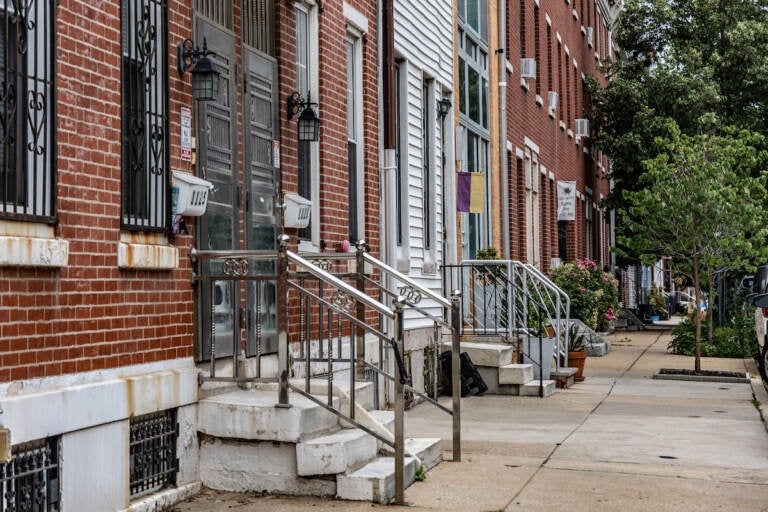
File photo: Rowhomes in Philadelphia’s Spring Garden neighborhood. (Kimberly Paynter/WHYY)
Have a question about Philly’s neighborhoods or the systems that shape them? PlanPhilly reporters want to hear from you! Ask us a question or send us a story idea you think we should cover.
City Council’s housing committee will reconsider two bills on Wednesday that aim to strengthen protections for Philadelphia renters — and empower them to speak out about their hazardous living conditions.
The bills, crafted in partnership with OnePA Renters United Philadelphia, are part of a legislative package guided by three rights — the right to safety, the right to repairs and the right to relocation — which advocates say are essential amid an affordable housing crisis, particularly for low-income renters who often lack the means to move.
“We want to make sure that the housing that’s being provided is humane in the first place,” said City Councilmember Nicolas O’Rourke, who introduced the legislation in April. “And I think when humans are allowed to speak out without fear of retaliation or harassment for speaking out, then I think we’re only creating that level of safety.”
HAPCO Philadelphia, the city’s largest landlord advocacy group, strongly opposes the bills and has pushed to amend them. Members argue the legislation will disproportionately harm them while doing little to deter bad actors.
Those concerns likely delayed the legislative process, but lawmakers are expected to advance the bills to the full Council.
O’Rourke has said he has the votes to send them to the mayor’s desk.
Here’s what to know about the tenant protections the bills would provide, including setting up regular property inspections, expanding “good cause” lease-termination provisions, and clarifying tenants’ right to organize — as well as what landlords want to change in the bills.
Regular, proactive city inspections
The bills are part of the Safe Healthy Homes Act.
If approved, the city would be authorized to create a program to conduct proactive inspections of rental units on a “regular cycle.”
Right now, rental properties are inspected only if a complaint is filed with the city’s Department of Licenses and Inspections, which enforces the city’s rental and property maintenance codes.
Fair housing advocates say launching a proactive program would directly benefit tenants who fear their landlords will retaliate against them for speaking out about poor living conditions. They also argue that such a program would help hold landlords accountable by making it harder for them to defer maintenance on their properties.
Philadelphia is one of only a few big cities in the country that do not perform proactive inspections.
L&I told lawmakers in March that it is working to launch a pilot program for proactive rental inspections. A spokesperson for the department said this month that there are “no additional details to share at this time.”
Related Content

Independent landlords argue the measure removes a critical tool for evicting problematic tenants, but housing advocates aren’t buying it.
6 months ago
Listen 1:31‘Good cause’ protections against landlord retaliation
O’Rourke’s legislation seeks to further reduce instances of landlord retaliation by expanding so-called “good cause” protections to every renter, a central provision of the legislative package.
City law requires landlords to tell tenants why they want to terminate or not renew their lease — only if that tenant has a month-to-month lease or a lease that runs less than a year. The list of justifications includes habitually not paying rent or paying late, nuisance activity reported by other tenants, or causing “substantial” property damage.
Housing advocates say this unusual exemption gives unscrupulous landlords cover to retaliate against renters with longer leases — because they could displace them without having to explain why. It also makes it difficult for a renter to dispute the decision if they suspect retaliation.
“Retaliation is difficult to prove because retaliation requires you to prove a state of mind,” said Jackie Zaneri, supervising attorney at SeniorLAW Center. “The best protection against retaliation … are baseline standards that everyone has to follow.”
Related Content

A new study shows the PHLHousing+ program is reducing evictions and homelessness among participating families. It’s unclear if the pilot will become permanent.
12 months ago
The right to join tenants associations
Additionally, O’Rourke’s legislation expressly bars landlords from ending or modifying a tenant’s lease simply because that tenant is cooperating with a city investigation, has discussed their living conditions with a council member or reporter, or has joined a tenants association.
The city’s rental code prohibits landlords from terminating a lease in retaliation for “joining any lawful organization, or any other exercise of a legal right.” That includes tenants associations, but that fact is not spelled out specifically.
Lastly, the legislation clarifies when a tenant can potentially receive a rental rebate. Under the proposal, a tenant could sue for relief if a landlord collected monthly rent without having an active rental license or certificate of rental suitability. Both are required for landlords to legally collect rent.
As it stands, the law is not definitive on whether a tenant can recoup rent they’ve paid if they find their landlord is in violation.
Related Content

Mt. Airy renters say their landlord illegally collected rent. Now they’re suing
The lawsuit proposes class-action status and seeks repairs and the return of rent payments.
10 months ago
What landlords don’t like about the legislation
HAPCO Philadelphia is most troubled by O’Rourke’s push to expand “good cause” protections to all city renters.
Paul Cohen, general counsel for the group, argues it would make it even harder for landlords to remove problem tenants, particularly if their conduct doesn’t warrant filing for an eviction or if it would be difficult to demonstrate the need for one.
Cohen said it is exceedingly difficult to get tenants to testify against other tenants who are creating issues in their building, typically because they’re afraid of the repercussions if their neighbor finds out. This is especially true in cases where a tenant is harassing other tenants.
“Without their testimony, we can’t win in court,” Cohen said. “So the landlord’s hands are tied. The landlord can’t terminate the lease with a ‘good cause’ requirement.”
Cohen’s group argues it could be financially disastrous for a landlord if they’re stuck with a problem tenant who causes other residents to leave the building.
Housing advocates are skeptical based on how “good cause” protections have played out in other cities. They also argue these laws are beneficial to tenants and landlords because they clearly spell out what is legally permitted for both parties, making it easier to resolve disputes out of court.
They hope that deters landlords from trying to evict without cause. Zaneri said expanding these protections would also dissuade tenants from fighting to stay — because they can see if they have violated the law.
“They’re able to look at it, evaluate it and say, ‘This is a valid cause for eviction. I’m going to move out. I don’t want to have to go to court,’” Zaneri said.
In Albany, New York, tenant organizers say the city’s “good cause” protections have also reduced instances of landlord retaliation, simply because they require landlords to give a reason for not renewing a tenant’s lease. In the past, it was much easier for landlords to target tenants, especially those leading tenants’ associations.
“Now tenants know they can’t be kicked out for no reason,” said Canyon Ryan, executive director of United Tenants of Albany.
He said that has enabled more families to stay together and, anecdotally, forced landlords to make repairs they had tried to avoid by not renewing their tenant’s lease.
“Things still aren’t good for tenants … but they are so much better now,” Ryan said.
In Philadelphia, housing advocates say those outcomes would provide considerable relief to tenants.
Mary Laughlin, who rents a one-bedroom in Holmesburg, said O’Rourke’s bills would make her less fearful of trying to hold her landlord accountable. In the meantime, the 70-year-old worries her yearlong lease won’t be renewed because she’s been vocal about the conditions at her apartment complex and is working with tenant organizers to improve them.
Laughlin, a retired postal worker, has the money to move, but she said she doesn’t want to. She’s lived in Northeast Philadelphia for decades and her place is close to family.
“I’d sleep a lot better at night knowing that [I was protected],” Laughlin said. “I’m very nervous right now.”

Subscribe to PlanPhilly
WHYY is your source for fact-based, in-depth journalism and information. As a nonprofit organization, we rely on financial support from readers like you. Please give today.
Brought to you by PlanPhilly

PlanPhilly
In-depth, original reporting on housing, transportation, and development.

North Philly development will bring 129 affordable rentals to Temple University area
The six-story project represents the final phase of a yearslong effort to redevelop Norris Homes, a traditional public housing site that was demolished between 2011 and 2019.
2 days ago
Listen 1:04
Philly’s for-profit eviction system shut down a year ago. Are things any better?
After a string of shootings, the Philadelphia Sheriff’s Office is now the only entity performing evictions in the city.
10 months ago

A free program in Philly continues to limit the number of eviction filings in the city
The Eviction Diversion Program started as a temporary initiative to keep rental disputes out of court. Three years on, it’s having a lasting impact few cities have realized.
3 years ago
Listen 1:29