

Philadelphia heat wave: City emergency in effect amid ‘dangerous’ conditions. Here’s what to know
“This is not the kind of heat event we see every year,” the National Weather Service reported, adding it may be the hottest period the region has experienced since 2011.

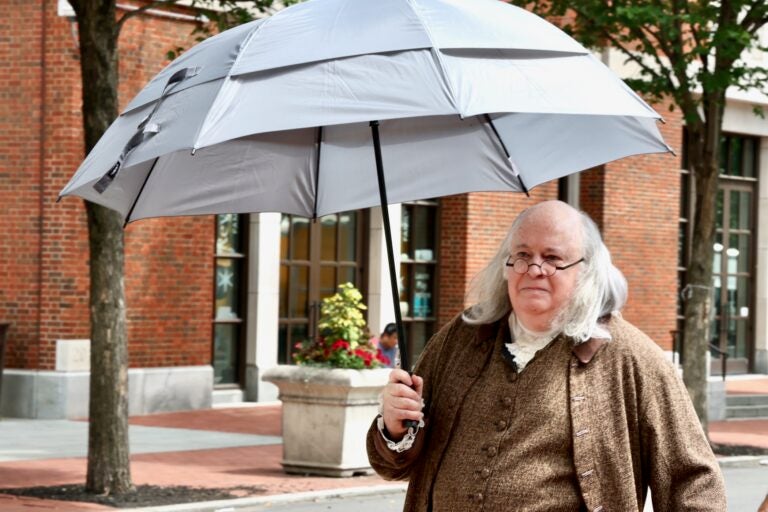
A Benjamin Franklin impersonator uses an umbrella to stay out of the sun in Philadelphia's Old City neighborhood on Tuesday, June 30, 2026. (Emma Lee/WHYY)
Millions of Americans — including residents across the Delaware Valley — face dangerously hot temperatures ahead of the Fourth of July holiday.
Forecasters anticipate prolonged periods of dangerous heat through this weekend. Temperatures are expected to reach the triple digits Friday, with even higher heat indices, or what temperatures feel like to the human body.
“This is not the kind of heat event we see every year,” the National Weather Service said in a weather briefing, “and could be the hottest period of weather the area has experienced since July 2011.”
The heat will be especially dangerous to the young, the elderly and other vulnerable populations, the NWS said.
With scorching temperatures across the region, electricity demand could reach record levels.
Here’s what you need to know about the forecast, how the city is responding and more.
Jump to a section
- 🥵 Weather conditions: Latest forecast | Heat Health Emergency | Extreme Heat Warning | Code Red | Code Orange
- 🚇 Transit impact: SEPTA
- 🇺🇸 Fourth of July impact: 250th events | FIFA World Cup
- ⚠️ Safety info: Extreme heat risks | How to protect yourself | How to help
What’s the latest forecast?
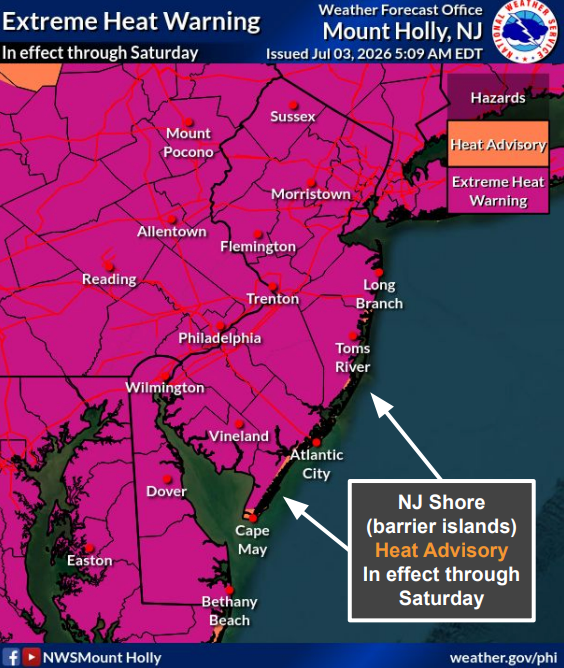
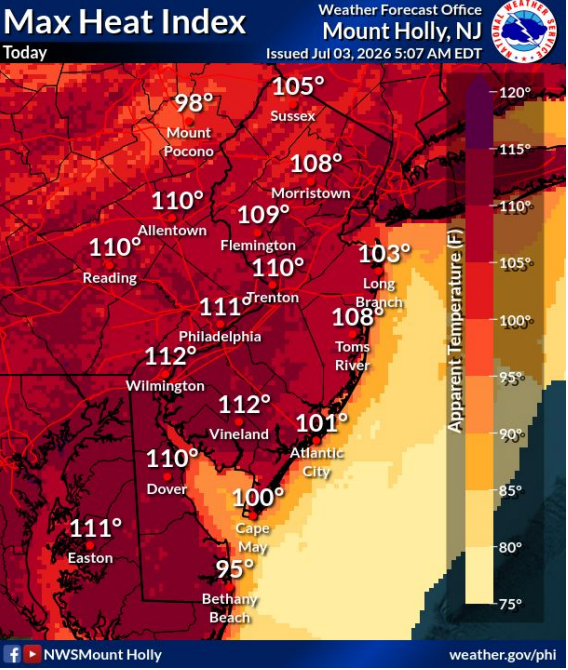
Dangerously hot conditions, with heat index values between 100 and 115 degrees, are expected through Saturday, per the National Weather Service.
A heat dome — when a massive area of high pressure and warm air “parks” itself over a region, trapping heat and humidity — is driving the heat wave.
High temperatures of 95 to 105 degrees are expected for most areas through Saturday, followed by gradual cooling Sunday through Tuesday.
The high for Friday will be near 104 degrees, with heat index values as high as 111 degrees. Isolated showers and thunderstorms are possible, per the NWS.
The Fourth of July will be similarly sunny and hot, with a high near 101 degrees and heat index values as high as 105 degrees. Scattered showers and thunderstorms are expected, mostly after 4 p.m.
Philadelphia hasn’t seen three consecutive days of 100-degree heat since July 1993. The city’s most recent two-day stretch of 100-degree weather was in July 2011.
How is SEPTA impacted?
SEPTA’s Regional Rail lines may experience delays due to excessive heat and signal issues, as operating speeds have been reduced for safety.
How are Fourth of July and World Cup festivities impacted?
Loading...
Understanding extreme heat risks
Heat-related illnesses, such as heatstroke and heat exhaustion, increase significantly during periods of high heat and humidity.
Older adults, infants, people taking certain medications, people with pre-existing conditions like diabetes, cardiovascular disease and asthma, people who are pregnant, people without access to air conditioning or shelter and people working outdoors face a higher risk of heat-related illnesses. Heat is also the top weather-related cause of death in the United States.
So far in 2026, one person has died due to the heat in Philadelphia, according to Philadelphia Department of Public Health spokesperson James Garrow. Five people died from heat-related illnesses in 2025.
Here are heat-related symptoms to watch out for:
- Dizziness or lightheadedness
- Headache
- Intense sweating
- In severe cases, no sweating
- High internal body temperature
- Blurred vision
- Fast pulse
- Confusion
- Nausea
- Fainting
- Seizures
Extreme heat can also cause kidney, heart and lung issues, particularly for people with pre-existing conditions like cardiovascular disease.
How to protect yourself and loved ones during extreme heat
The best way to beat the heat is to stay in an air-conditioned space, Philadelphia Department of Public Health spokesperson James Garrow told WHYY News previously.
Residents are also encouraged to keep blinds and curtains closed during the day, open windows to let in a breeze if it cools down at night, and take cold showers or baths to help stay cool.
If you’re looking to cool off in Philly, here’s where you can find pools and spraygrounds.
Residents and visitors may also access “Quench Buggies,” where they can fill their water bottles with tap water. They are stationed at the Philly250 Hospitality Hubs in Lemon Hill, Logan Square, Eakins Oval and LOVE Park. The hubs are open every day between 10 a.m. and 8 p.m.
Here’s how you can keep your pet(s) safe — and comfortable — in extreme heat.
Plus, learn what happens to the body in extreme temperatures and how heat becomes deadly.
WHYY News Climate Desk reporter Sophia Schmidt has more on how to stay safe from extreme heat, including hydration reminders and indoor fan precautions.
How to help
During extreme heat, residents are encouraged to check in on elderly neighbors and relatives. If you see someone experiencing symptoms of heatstroke, like rapid heartbeat, difficulty breathing or chest pain, call 911.
Residents, regardless of age, may call the Philadelphia Corporation for Aging’s free HeatLine (215-765-9040) during Heat Health Emergencies for health and safety tips or to speak with nurses about heat-related medical issues.
If you see someone who appears to be unhoused during a Code Red, you are urged to request a street outreach team by contacting the city’s Homeless Outreach hotline at 215-232-1984.
Residents who see a pet outside during a Code Red are urged to contact Philadelphia’s Animal Care and Control Team (ACCT) at 267-385-3800 and dial 1 to speak with the dispatcher. Residents may also file a report online with all of the available information.
Philadelphia advocates also recommend stocking community fridges with water bottles, sports drinks and popsicles to help others stay cool.
WHYY News’ Sophia Schmidt contributed reporting.
-
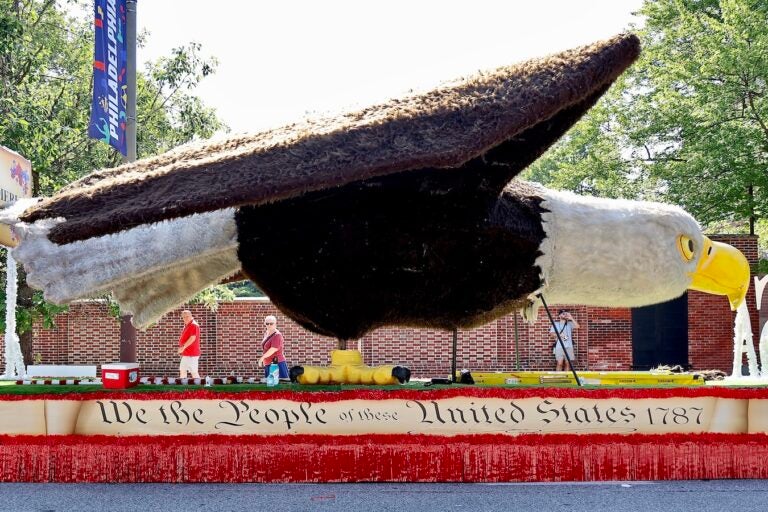
A float on Sixth Street stands idle after Philadelphia’s Fourth of July parade was canceled due to the heat. (Emma Lee/Whyy) -
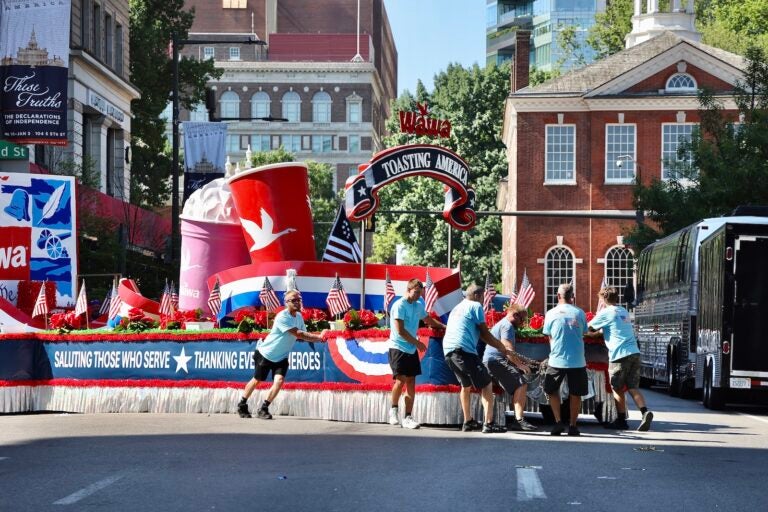
Workers turn a float around on Fifth Street after Philadelphia’s Fourth of July parade was cancelled due to dangerously high temperatures. (Emma Lee/WHYY) -
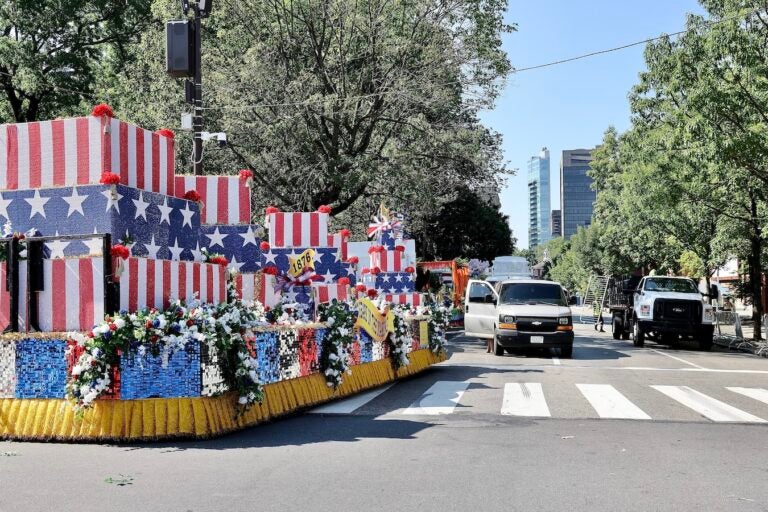
Workers take down temporary fencing on Fifth Street near the semiquincentennial float representing 250 years since the signing of the Declaration of Independence, after Philadelphia’s Fourth of Jul parade was canceled due to dangerously high temperatures. (Emma Lee/WHYY) -
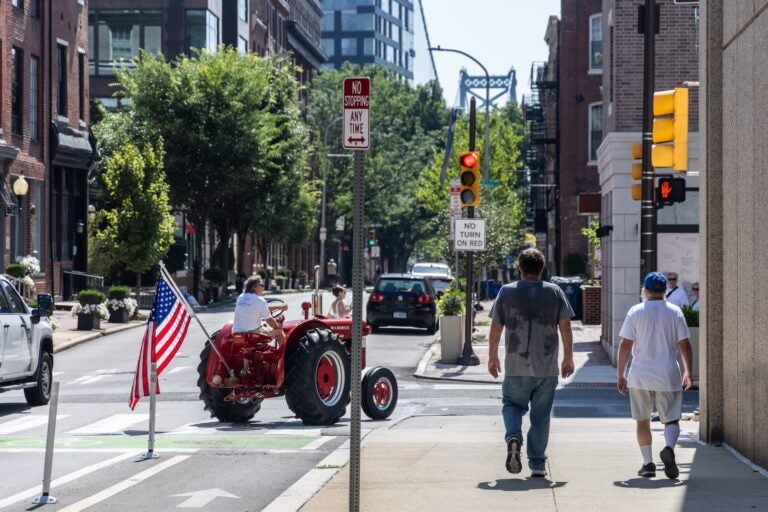
Philadelphia’s Fourth of July parade was canceled, but the extreme heat didn’t prevent celebratory tractor riding near Independence Mall on July 3, 2026. (Kimberly Paynter/WHYY) -
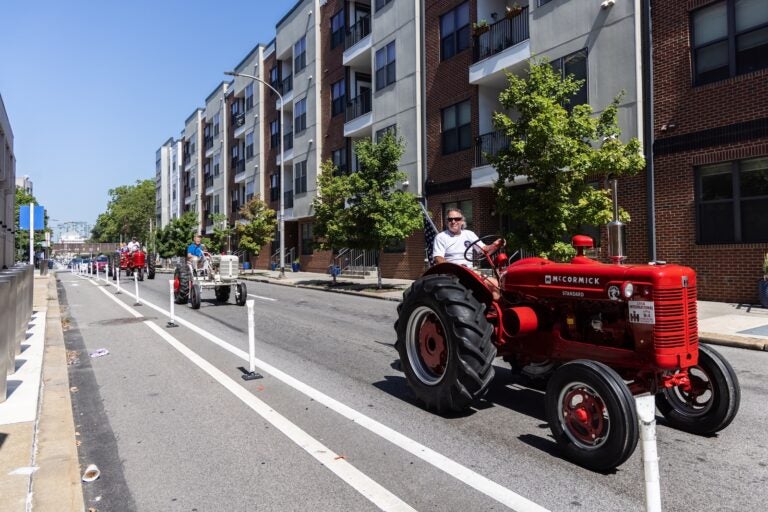
Philadelphia’s Fourth of July parade was cancelled but the extreme heat didn’t prevent celebratory tractor riding near Independence Mall on July 3, 2026. (Kimberly Paynter/WHYY) -
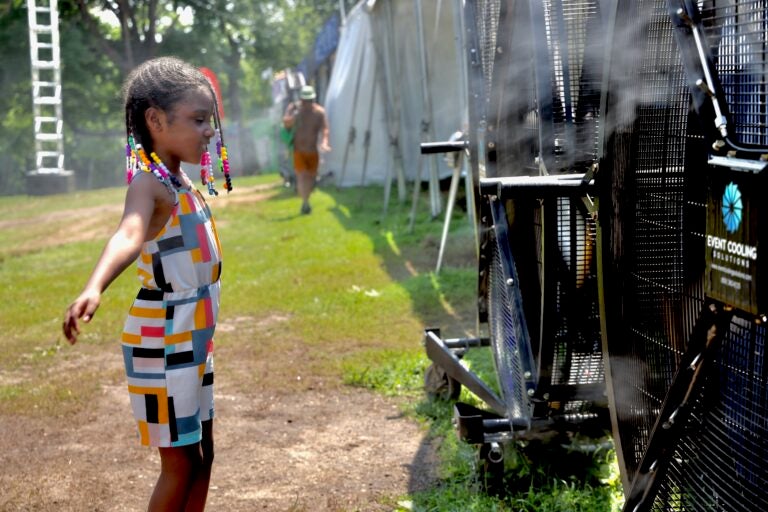
Liyana Mendez, 7, of Philadelphia cools off in the mist fans at FIFA Fan Fest at Lemon Hill. (Emma Lee/WHYY) -
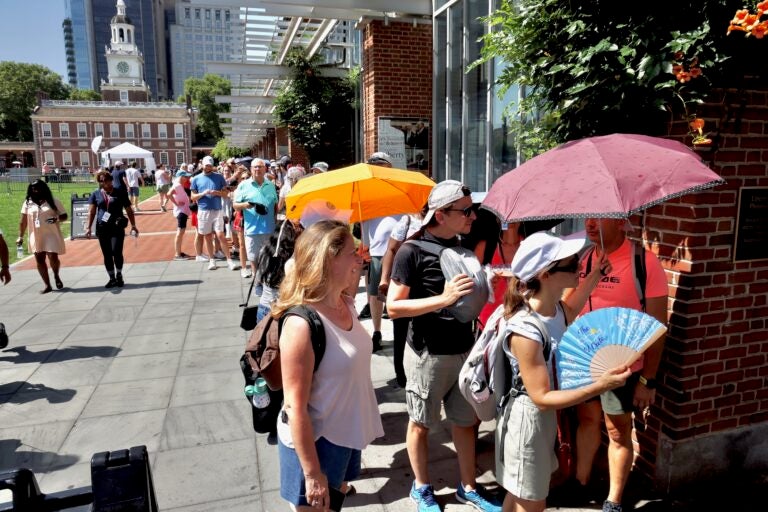
Visitors wait in line on Independence Mall to see the Liberty Bell on Thursday, July 2, 2026. (Emma Lee/WHYY) -
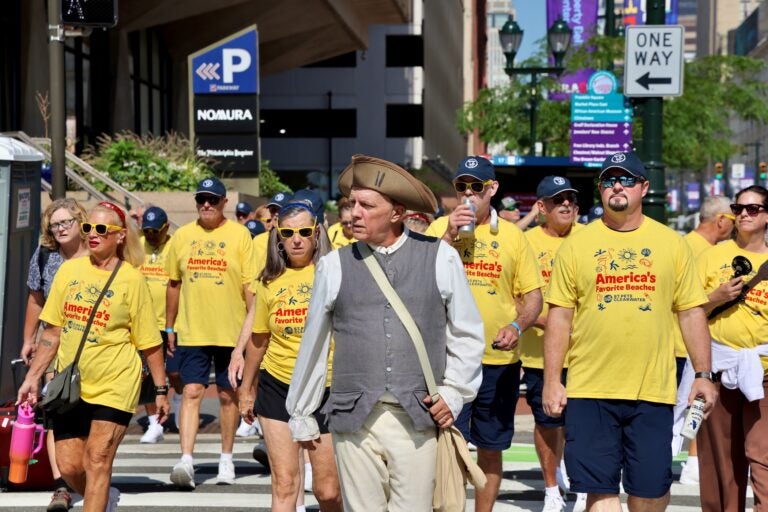
A historic reenactor leads a tour group across Sixth Street at Market to Independence Mall. (Emma Lee/WHYY) -
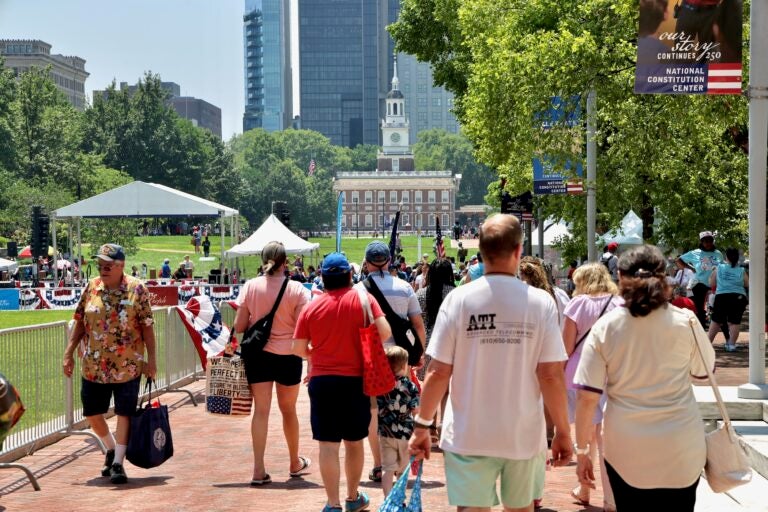
A view of Independence Mall looking south from the National Constitution Center on July 1, 2026. (Emma Lee/WHYY -

A historic reenactor leads a tour group through the President's House slavery exhibit at Sixth and Market streets. (Emma Lee/WHYY) -
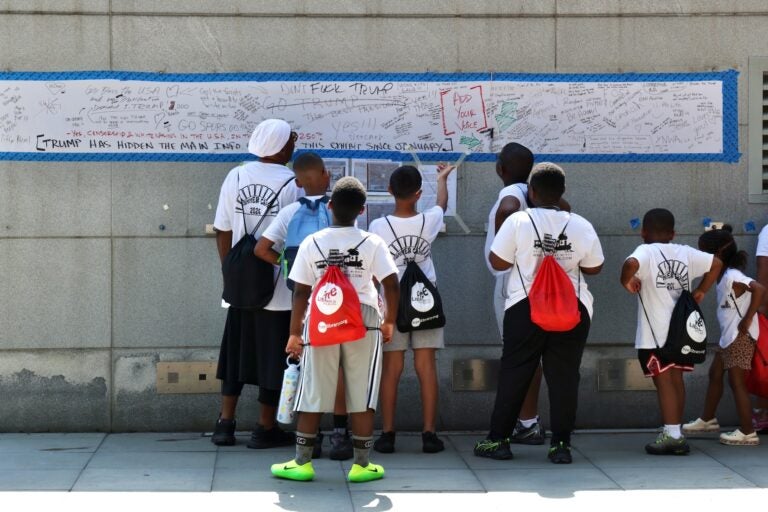
A summer camp group visits the President's House slavery exhibit at Sixth and Market streets in Independence National Historical Park. (Emma Lee/WHYY) -

Staffing the medical tent at the FIFA Fan Fest at Lemon Hill are (from left) registered nurse Rebecca Dunedin, physician Nicole Tyczynska and physician assistant Catherine Lee. (Emma Lee/WHYY) -
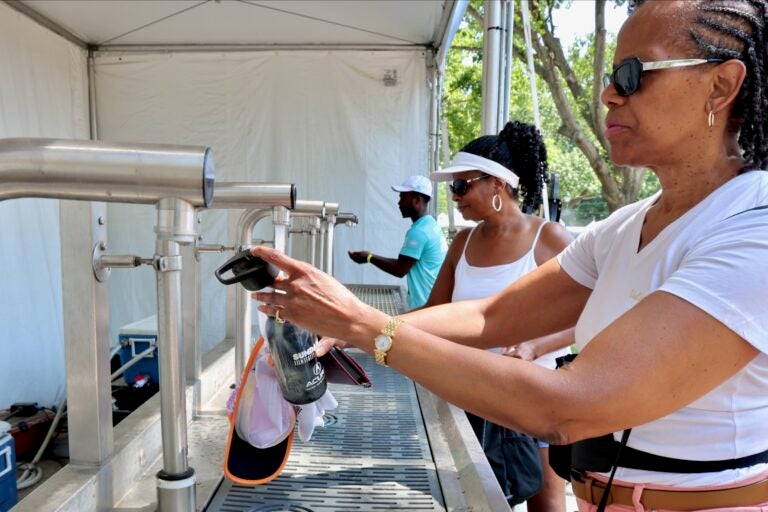
Visitors to FIFA Fan Fest at Lemon Hill fill their water bottles at one of several hydration stations. (Emma Lee/WHYY) -

Dr. Jonathan Bar, director of emergency preparedness at Penn Medicine, prepares for a day in the medical services tent at FIFA Fan Fest at Lemon Hill. (Emma Lee/WHYY) -
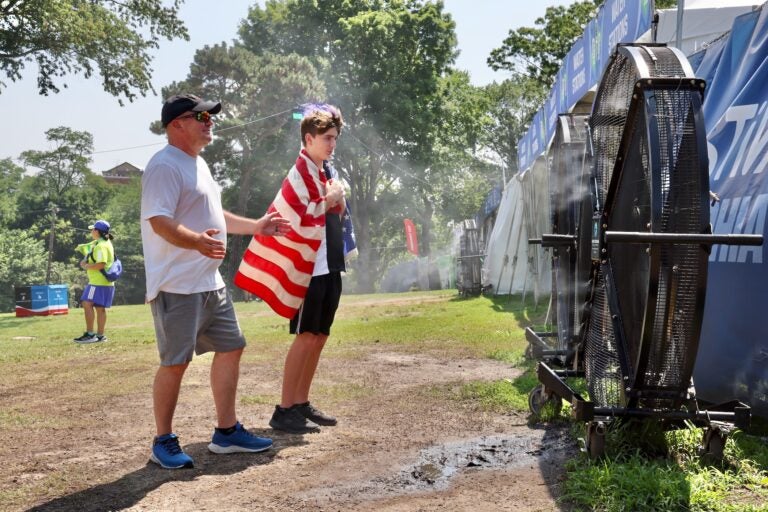
Patrick Ullman of Pottstown and his son, Tanner, 14, cool off in the mist fans at the FIFA Fan Fest at Lemon Hill. (Emma Lee/WHYY) -
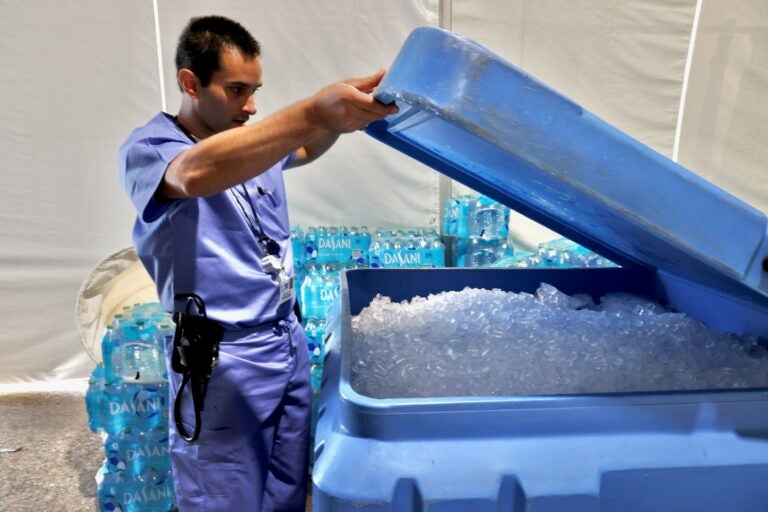
Emergency physician Jonathan Bar lifts the lid on a large tub of ice in the medical services tent at the FIFA Fan Fest at Lemon Hill. (Emma Lee/WHYY) -
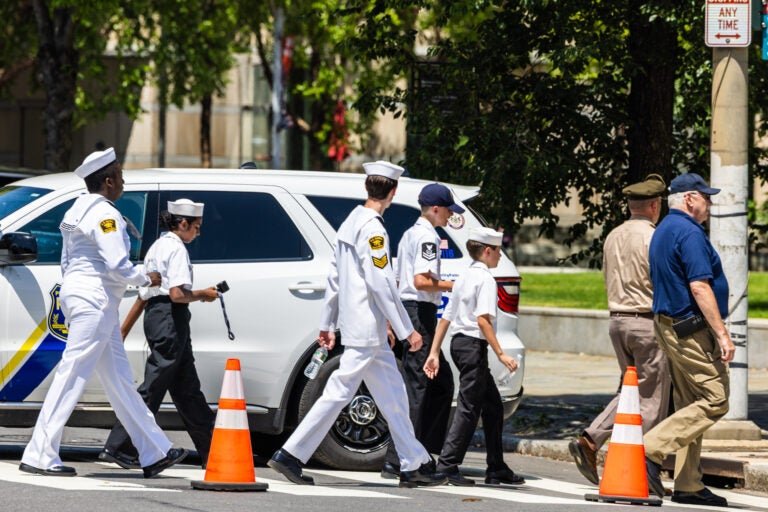
Members of America’s Sea Cadets carry water bottles on Independence Mall in Philadelphia, July 2, 2206. (Kimberly Paynter/WHYY) -
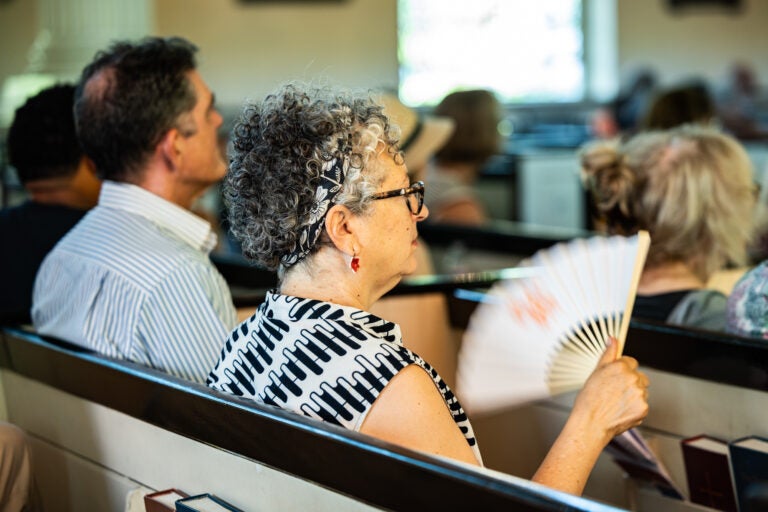
A visitor to Philadelphia’s historic Christ Church fans themselves to keep cool on July 2, 2026. (Kimberly Paynter/WHYY)
Related Content

How Philly is celebrating Juneteenth, the Fourth of July and the 250th in 2026
Block parties, fireworks and a star-studded concert on the Ben Franklin Parkway are on the calendar for a celebratory summer.
2 months ago

Get daily updates from WHYY News!
WHYY is your source for fact-based, in-depth journalism and information. As a nonprofit organization, we rely on financial support from readers like you. Please give today.
Part of the series

Philadelphia 250
The United States is marking its semiquincentennial — or its 250th anniversary — in and around the City of Brotherly Love.
Part of the series

Philly-area heat wave could push electricity demand to record levels
The dangerous heat is accelerating air conditioner use. Data centers could be directed to use their own backup power.
1 month ago
Forecasters cite ‘dangerous’ conditions as heat scorches Midwest while on its way to the East
Norristown, Pennsylvania, 20 miles (32 kilometers) from Philadelphia, canceled a Saturday parade because of the weather.
1 month ago
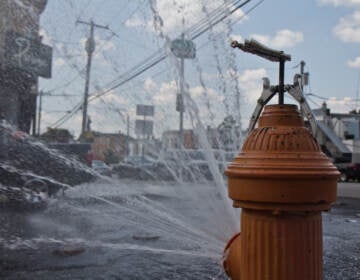
Dangerous heat and a few thunderstorms are possible around Philadelphia on the Fourth of July
Feels-like temperatures could reach as high as 110 degrees Wednesday through Friday. Storms could dampen July Fourth fireworks shows.
1 month ago