

Philly medical teams at outdoor FIFA Fan Festival prepare for cases of heat illness as temperatures soar in the region
Temperatures in Greater Philadelphia are expected to reach over 100 degrees during World Cup games and America’s semiquincentennial events.
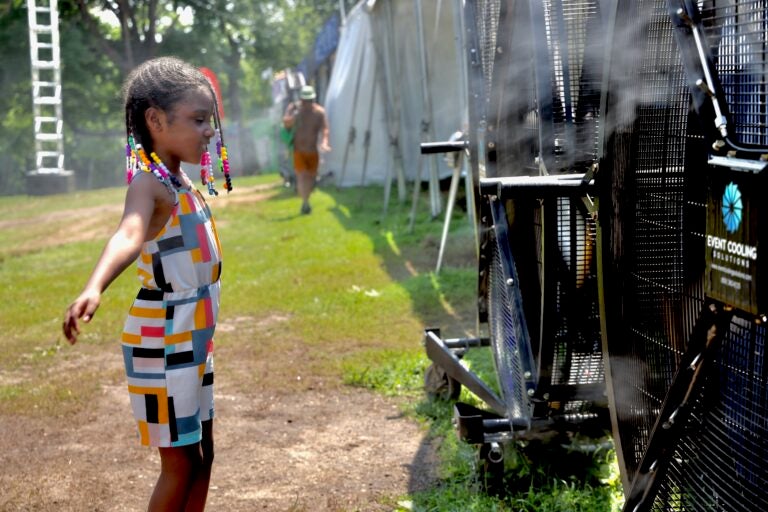
Liyana Mendez, 7, of Philadelphia cools off in the mist fans at FIFA Fan Fest at Lemon Hill. (Emma Lee/WHYY)
From Philly and the Pa. suburbs to South Jersey and Delaware, what would you like WHYY News to cover? Let us know!
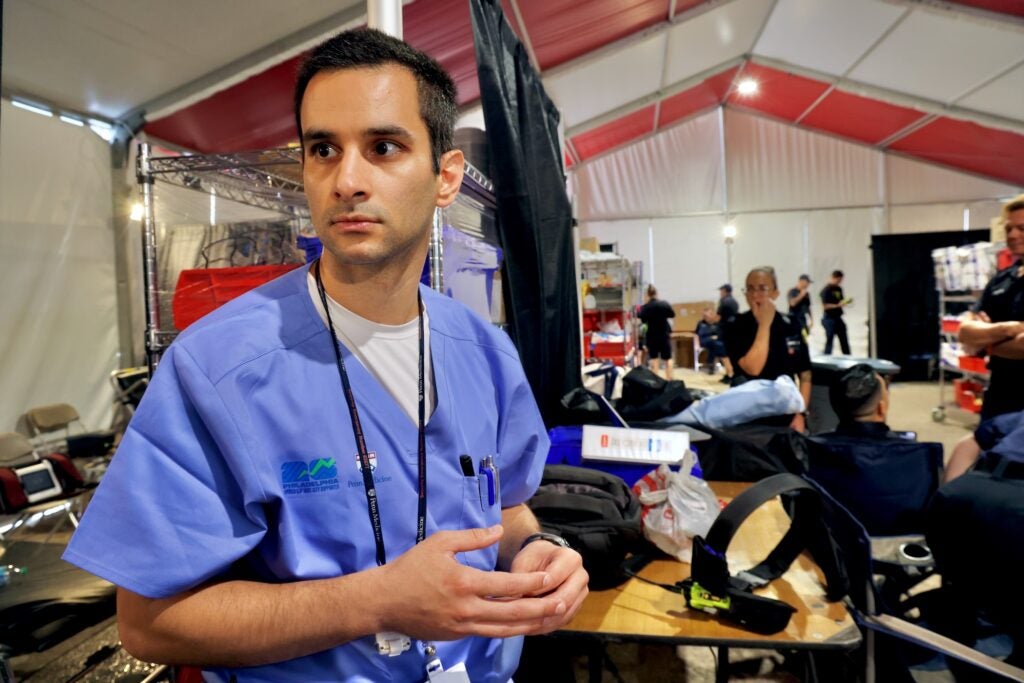
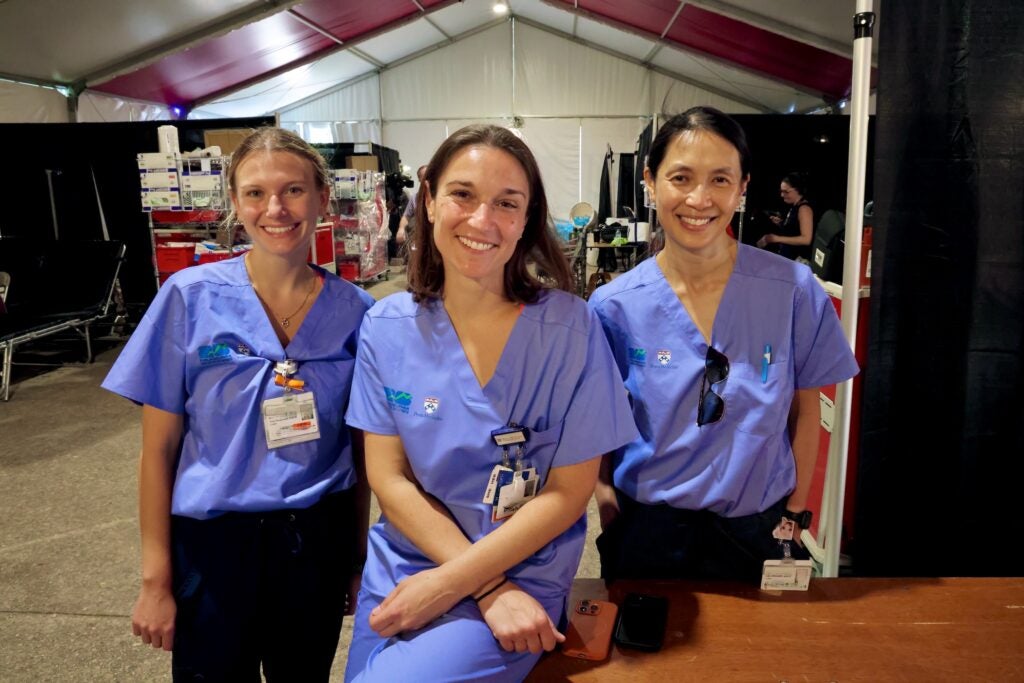
As Philadelphia temperatures on Wednesday morning climbed toward a 105-degree heat index, doctors, nurses and paramedics formed a huddle inside the red-and-white candy cane striped medical tent at the FIFA Fan Festival at Lemon Hill to get their daily assignments and updates.
The region’s latest heat wave has health workers on high alert for heat-related illnesses and complications among World Cup fans and visitors to the outdoor festival. But medical teams say they have been preparing for a potential spike in patients since long before the festival opened.
“Does anybody know how many medic units I have today?” one coordinator yelled over the sounds of fans and generators powering air conditioning units to cool down the space.
Outside, temperatures had already surpassed 90 degrees. Weather reports predicted even higher, dangerous triple-digit temperatures through the rest of the week.
Penn Medicine health workers and Philadelphia Fire Department paramedics staffing the festival’s medical operation say extreme heat was a top concern through months of World Cup preparation.
“In preplanning, we did something called a hazard vulnerability analysis, which weighs the risk of different threats,” said Dr. Jonathan Bar, director of emergency preparedness at Penn Medicine. “And at the top of the list was heat-related illness, so the infrastructure to manage that was here from the start, because we were anticipating this problem.”
Treating heat illness at outdoor events in Philly
Heat waves have become more frequent and intense in recent years because of human-driven climate change, making the summer months in Philadelphia increasingly brutal for residents and the thousands of visitors in town for the World Cup, America’s semiquincentennial celebration and other major events.
The medical tent at the FIFA Fan Festival was designed to triage patients for all kinds of injuries and illnesses, including heat sickness.
In minor cases, Bar said his team can swiftly treat people with heat rash from sweat-clogged pores, cramps from dehydration and salt loss, and mild leg swelling by offering a cool space, cold compresses and drinks with electrolytes.
Another treatment area in the tent is set up for people with heat exhaustion, a moderate type of heat illness that can include lightheadedness, dizziness and nausea. People with underlying medical conditions may be at risk for other complications, Bar said.
And then there’s the possibility of heat stroke, the most severe kind of heat-related illness.
“That means either confusion, altered mental status, seizures or even coma,” Bar said.
In the deepest part of the medical tent, a treatment area is sectioned off with privacy walls. The space contained a wheeled stretcher and a deep gray tub, just big enough for a single person and used to treat heat stroke.
A massive square cooler the size and height of a small hot tub was filled to the brim with ice just a few feet away. A half-dozen smaller coolers were also stocked with ice, ready to be mixed with water to quickly fill the gray tub.
“The heat stroke patients need to be dunked,” Bar said. “You’ll get put in here … and the goal is to cool you to a core temperature of 102 and then take you to a hospital.”
The rapid cooling technique is effective in preventing heat fatalities, but patients usually need to go to the hospital afterward to be monitored for downstream effects like organ damage, he said.
The medical teams at Lemon Hill have not had to use the tub for heat stroke cases since the fan festival opened June 11, and staff said they hope it stays that way.
People can be proactive by staying hydrated and drinking enough water throughout the day. The exact amount of water an individual should drink can vary greatly from person to person, Bar said.
-
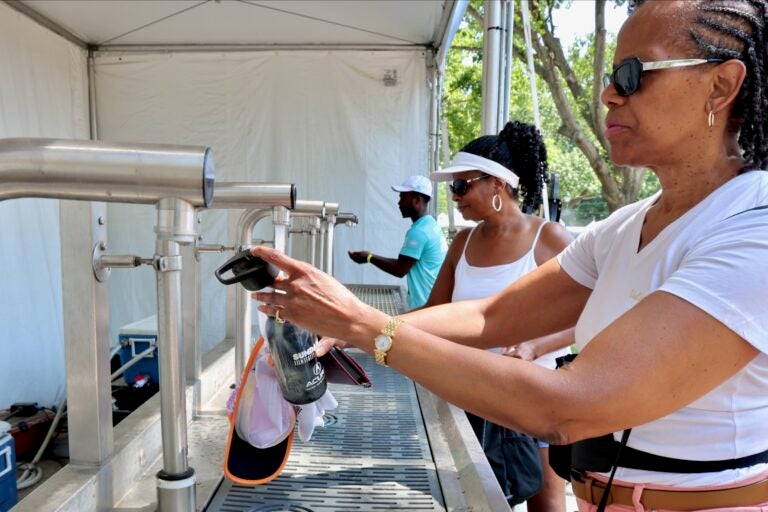
Visitors to FIFA Fan Fest at Lemon Hill fill their water bottles at one of several hydration stations. (Emma Lee/WHYY) -
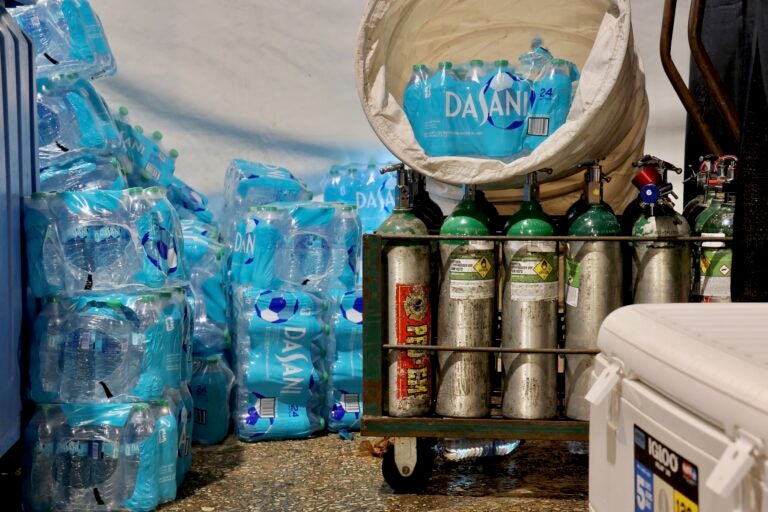
Emergency medical supplies at the FIFA Fan Fest medical services tent include lots of water in anticipation of heat related conditions. (Emma Lee/WHYY) -
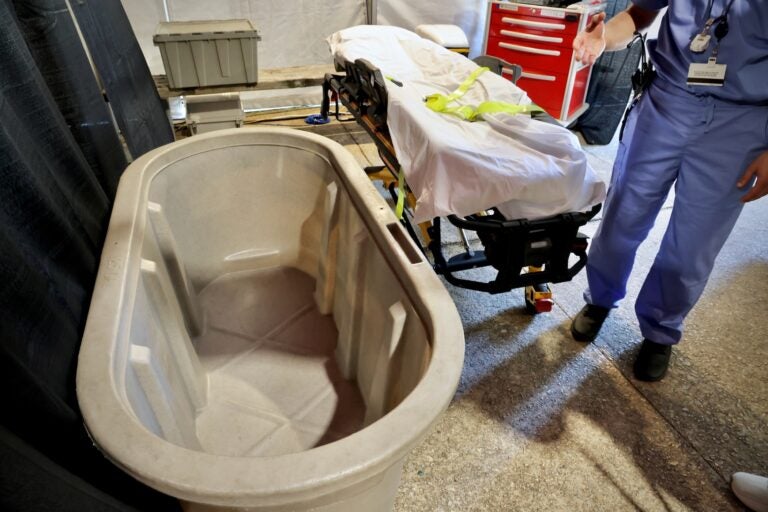
In the medical tent at FIFA Fan Fest at Lemon Hill, a large plastic tub can be filled with ice to treat victims of heat stroke. (Emma Lee/WHYY) -
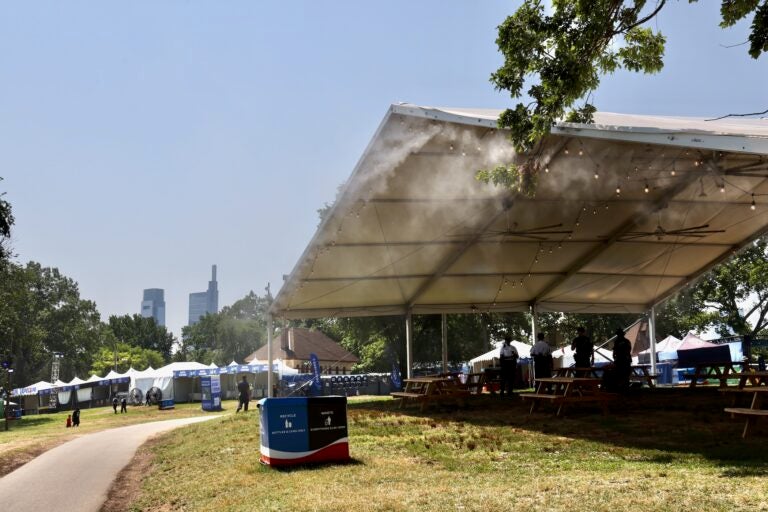
A fine mist falls from the ceiling of a tent at FIFA Fan Fest at Lemon Hill, designed to keep visitors from overheating. (Emma Lee/WHYY) -
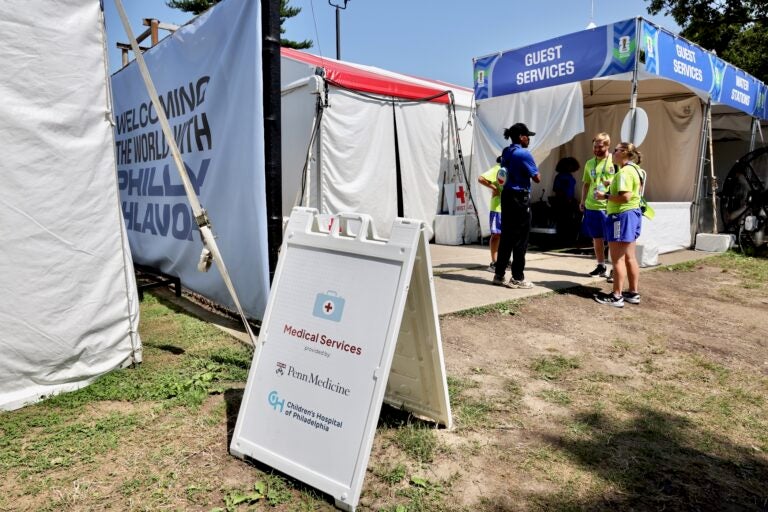
Medical services tents at the FIFA Fan Fest at Lemon Hill are preparing for heat related health problems. (Emma Lee/WHYY) -
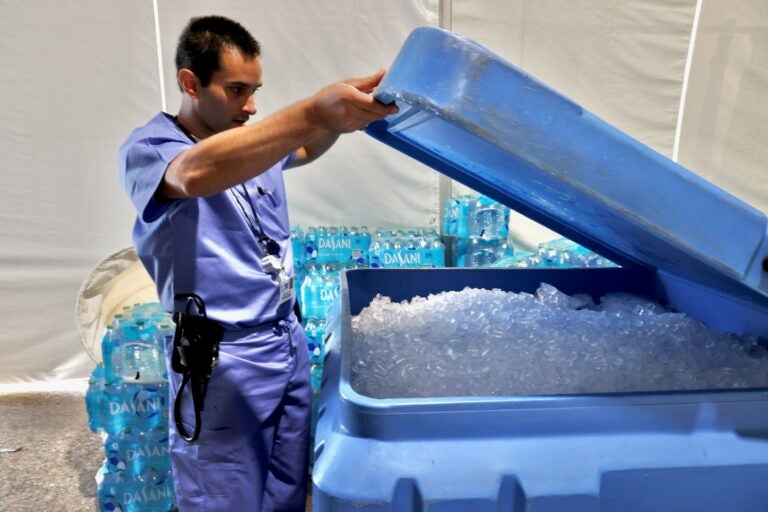
Emergency physician Jonathan Bar lifts the lid on a large tub of ice in the medical services tent at the FIFA Fan Fest at Lemon Hill. (Emma Lee/WHYY)
Coping with extreme heat
- Heat emergency in Philly: Here’s what the declaration means and how the city is impacted by the extreme heat.
- Stay cool: Looking to beat the heat? Here’s where you can find pools and spraygrounds in Philly.
- Know the facts: Learn how to protect yourself and loved ones, what happens to the body in extreme temperatures and how heat becomes deadly.
- Going outside?: If you’re going out in the heat, here are eight mistakes to avoid.
A better way to keep track of personal hydration levels is to monitor urine output, he said.
“If you’re going to the bathroom, that means your body’s got enough water,” Bar said. “If you haven’t peed in a while — or, when you pee, it’s very, very dark yellow — your body is telling you to drink more.”
People may also need more electrolytes, or essential minerals like sodium, potassium and magnesium, which the human body loses through sweating.
“If you’re only going to be outside for an hour or two, water is OK,” Bar said. “If it’s a very hot environment — like we’re going to have temperatures in the hundreds — after the first hour, you’re going to probably want some form of electrolyte replacement. Most commercial sports drinks have the right amount you need.”
Determined fans beat the heat at the FIFA Fan Festival
The beginning of the heat wave Wednesday did not deter visitors from coming out to Lemon Hill to watch World Cup matches on the big screens, but they did take advantage of industrial-sized misting fans and misting tents stationed throughout the festival grounds.
People coming into the area quickly headed over to water bottle refill stations and shaded areas with picnic tables. Many came armed with tiny electric handheld fans and neck fans, towels and wide-brimmed hats.
“As you know, you gotta hydrate a day or two before the event,” said Patrick Ullman, who drove into the city from Pottstown with his 14-year-old son Tanner to support England in their match against the Democratic Republic of the Congo. “So, I’ve been pumping in water the past two days, eating the fruits and vegetables.”
They were also planning to join a crowd of others to watch Team USA play Bosnia and Herzegovina Wednesday night, when temperatures were expected to drop, but only slightly.
“It’s summer. [We] expect the heat,” Ullman said.
Felicita Mendez and her 7-year-old daughter, Liyana, both of Philadelphia, spent several minutes standing in front of misting fans just to cool down.
“I’m here every maybe 20 minutes,” said Mendez, a coordinator with the American Heart Association at the festival. “We keep our coolers filled with ice, a lot of water. Just mainly staying hydrated and staying out of the sun.”
FIFA officials have shifted the opening hours at the fan festival for the next several days to keep people away from the outdoor venue during the hottest hours of the afternoon.
Health providers said they hope this will help to prevent serious cases of heat illness and keep World Cup spectators safe.

Get daily updates from WHYY News!
WHYY is your source for fact-based, in-depth journalism and information. As a nonprofit organization, we rely on financial support from readers like you. Please give today.
Part of the series

Philadelphia 250
The United States is marking its semiquincentennial — or its 250th anniversary — in and around the City of Brotherly Love.
Part of the series


Meet the Philly couple who had their wedding photos crashed by Croatian World Cup fans
Ashton and Zach Smith just wanted the quintessential photos outside City Hall. Now the newlyweds are one of the viral fan moments of soccer’s biggest celebration.
2 days ago

What Thomas Jefferson meant by "the pursuit of happiness" may be very different from what Americans mean today.
1 week ago
Listen 1:18
PPA says 181 tickets were canceled after being issued in error to residents with valid parking permits.
2 weeks ago
Listen 1:03