
3 decades in the making, Delaware lawmakers pass measure to protect state’s wetlands
The legislation will create a tiered permitting system for development based on how critical a nontidal wetland is.

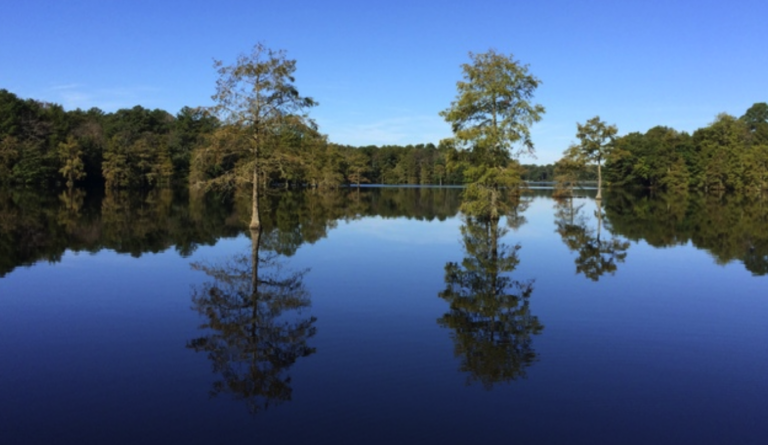
Nontidal wetlands in Delaware. (Courtesy of DNREC)
This story is part of the WHYY News Climate Desk, bringing you news and solutions for our changing region.
From the Poconos to the Jersey Shore to the mouth of the Delaware Bay, what do you want to know about climate change? What would you like us to cover? Get in touch.
Delaware lawmakers passed legislation this week that aims to protect the state’s nontidal wetlands, also referred to as freshwater wetlands.
The move, more than three decades in the making, comes after President Donald Trump’s administration proposed to rescind Clean Water Act protections for certain waterways in favor of landowner rights last year.
The legislation, sponsored by state Sen. Stephanie Hansen, D-Middletown, will create a tiered permitting system for development based on how critical a nontidal wetland is.
There have been six failed legislative attempts to protect nontidal wetlands in Delaware since the late ‘80s. The latest move, previously met with skepticism from developers and farmers, now has support from environmentalists and landowners.
The measure, known as the Wetlands Stewardship Act, passed almost unanimously around 3 a.m. Wednesday during the last day of session at Legislative Hall in Dover.
“This morning marked a historic victory for the collective health of the approximately 300,000 acres of wetlands throughout the First State,” Hansen said in a statement. “As federal protections for our nontidal wetlands have waned, SB 9 will cover those gaps by expanding our existing regulatory framework to protect all of our wetlands – tidal and nontidal – and the wildlife that inhabit them.”
The legislation awaits a signature from Gov. Matt Meyer.
Hansen introduced similar legislation in 2024, after a U.S. Supreme Court decision in 2023 removed federal protections for wetlands that are either seasonal or aren’t connected to streams, lakes, rivers and oceans.
The Environmental Protection Agency has since proposed changes to the definition of “waters of the United States,” or WOTUS, which would codify the Supreme Court decision.
The move was a blow to Delaware, where more than half of wetlands are nontidal, meaning freshwater is found inland. Located near inland areas without tidal influxes of saltwater, nontidal wetlands can be found in several forms, like depressions, rivers and swamps.
Builders, developers and farming organizations said the federal decision would alleviate permitting and construction delays, and make the definition of WOTUS more clear and predictable.
Related Content
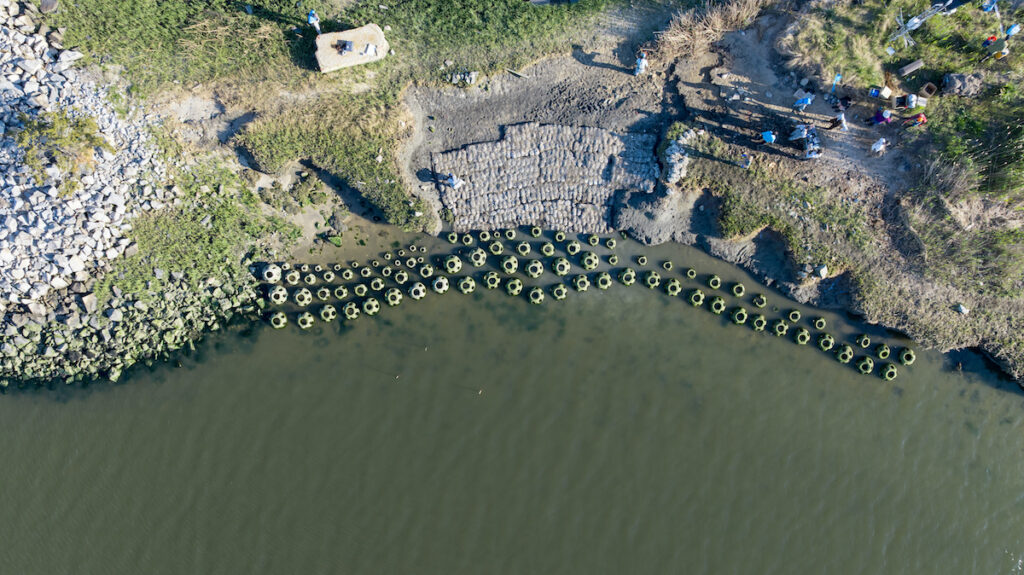
Living shoreline aims to mitigate flooding, erosion in Lewes, Delaware
The project aims to reduce the risk of infrastructure damage while supporting marine habitats and recreational fishing.
4 months ago
Listen 1:01However, environmentalists argued it would impact critical habitats that endangered species rely on, and increase the risk of flooding in areas like coastal Delaware, which are vulnerable to sea-level rise and storms worsened by climate change.
“The Wetlands Stewardship Act signals our continued commitment to mitigating the negative effects of climate change here in Delaware,” Hansen said in a statement. “By further protecting and regulating our tidal and nontidal wetlands, we bolster water quality, flood prevention, carbon sequestration, and the health of our plant and animal species.”
Hansen’s original effort to protect nontidal wetlands saw pushback from farmers who feared the bill would prevent them from draining their fields, and developers who voiced concerns that the permitting process would be unfair and bureaucratic.
Hansen responded to the criticism by holding stakeholder meetings with environmentalists, farmers and developers to help amend and reintroduce the legislation. Emily Knearl, director of government relations for the Nature Conservancy in Delaware, was one of the environmentalists who participated in the meetings.
“The reason we got this done is because everybody came to the table and negotiated in good faith, from environmental organizations to [environmental regulators] to home developers, to large landowners, to farmers, to realtors and business community interests. It’s incredibly thrilling,” she said.
The bill will provide certain permit exemptions, including for farming activities that have been ongoing for the past 10 years, federal and state conservation practices, and the construction of drain ditches.
Wetlands that are equal to or less than one contiguous half acre, and aren’t “unique” or “high functioning,” would also be exempt under certain conditions.
Delaware is the only state in the mid-Atlantic region without a state-level nontidal wetland regulatory program. While the state protects saltwater wetlands, as well as freshwater wetlands that are larger than 400 acres, it has relied on federal regulations to manage freshwater wetlands of fewer acreage.
Federal regulations have declined over the past 20 years. Between 2007 and 2017, Delaware lost 3,011 acres of wetlands, most of which were nontidal.
Knearl said it’s critical to protect these ecosystems, which provide homes for rare and endangered frogs, salamanders, plants and birds. Often called “nature’s kidneys,” they also help to filter water and mitigate against flooding.
“Wetlands help protect clean water, they actually filter pollutants in water. They address flooding, and the reason why that’s so critical, of course, with the challenges of climate change and increased precipitation, we’re seeing more and more intense rainstorms,” she said. “They also capture carbon. So, in an era of climate change, when we’re trying to address and reduce greenhouse gasses in the atmosphere, wetlands are wonderful at capturing carbon.”

Get daily updates from WHYY News!
WHYY is your source for fact-based, in-depth journalism and information. As a nonprofit organization, we rely on financial support from readers like you. Please give today.
Part of the series
Part of the series
Watershed
Preserving Our Water: How we use our Delaware Watershed.
The project is funded by The William Penn Foundation.
EPA announces rollback of climate pollution rules for power plants
The announcement is the latest in a back-and-forth between Democratic and Republican administrations over whether or not to limit power plants’ greenhouse gas pollution.
3 weeks ago

Pennsylvania’s first congressional race pits five-term incumbent Republican Brian Fitzpatrick against Democratic County Commissioner Bob Harvie.
3 weeks ago
Listen 1:15
Delaware governor signs legislation that aims to make data centers ‘pay their fair share’
The legislation would prevent data centers from passing the costs of running data centers onto ratepayers.
1 month ago
Listen 1:03