

Living shoreline aims to mitigate flooding, erosion in Lewes, Delaware
The project aims to reduce the risk of infrastructure damage while supporting marine habitats and recreational fishing.
Listen 1:01
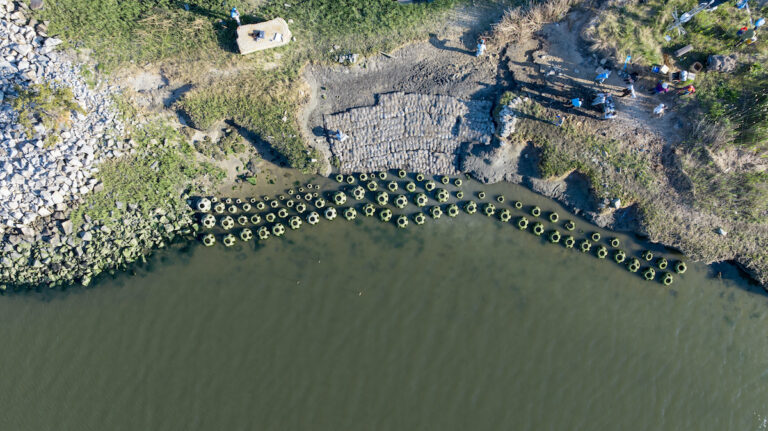
The living shoreline combines materials like native marsh grasses, oyster shells and man-made domes that mimic natural reef systems. (Courtesy Evan Krape/ University of Delaware)
This story is part of the WHYY News Climate Desk, bringing you news and solutions for our changing region.
From the Poconos to the Jersey Shore to the mouth of the Delaware Bay, what do you want to know about climate change? What would you like us to cover? Get in touch.
As climate change threatens rising seas and stronger storms, the popular vacation destination of Lewes, Delaware, faces frequent tidal flooding.
Floods in the low-lying beach town have led to road closures, high flood insurance costs and lost revenue for small businesses.
University of Delaware researchers are working to mitigate flooding and reduce saltmarsh erosion with a new “hybrid” living shoreline. The series of nature-based structures designed to protect coastlines and attract marine life combines materials like native marsh grasses, oyster shells and manmade domes that mimic natural reef systems.
The researchers, who partnered with the U.S. Army Corps of Engineers, say the project aims to reduce the risk of infrastructure damage while supporting marine habitats and recreational fishing.
“We are losing a lot of marsh habitat associated with sea level rise, and we’re seeing as a consequence of that, higher flooding risk for roads, wastewater systems and homes,” said researcher Edward Hale, a professor at the University of Delaware’s College of Earth, Ocean, and Environment.
“You can travel down Pilottown Road or Cedar Road in Lewes and experience nuisance flooding on a daily pattern. As these seasonal weather average events are happening we can actually witness that in real time, so it’s very much a threat that people interact with, if not daily, on a seasonal basis.”
The living shoreline is located at the University of Delaware’s Lewes Boat Basin near the Roosevelt Inlet — where the Broadkill River, the Lewes and Rehoboth Canal, and the Delaware Bay converge.
During heavy storms, winds push water from the Delaware Bay to the river and canal, causing water levels to rise from both sides. The confluence, which is funnel-shaped and located in a low-lying area, regularly spills water onto local roads.
The Canary Creek Bridge, which crosses Pilottown Road, is at risk of severe damage from storms because of surface water runoff and structural issues. Hale said it’s critical to protect the roadway because it leads to small businesses and a recreational boat ramp.
Flooding in Lewes has also eroded the area’s salt marshes, which would typically act as a natural buffer against floods.
Coastal tidal marshes are like “big sponges,” said Will Helt, director of oceans and coasts at The Nature Conservancy in Delaware.
“They absorb storm impacts both coming from the ocean and from the bay, but they also absorb storm impacts from the interior,” he said. “As we lose that, we lose that natural protection, and so we feel those impacts more strongly as residents and in our infrastructure.”
Related Content
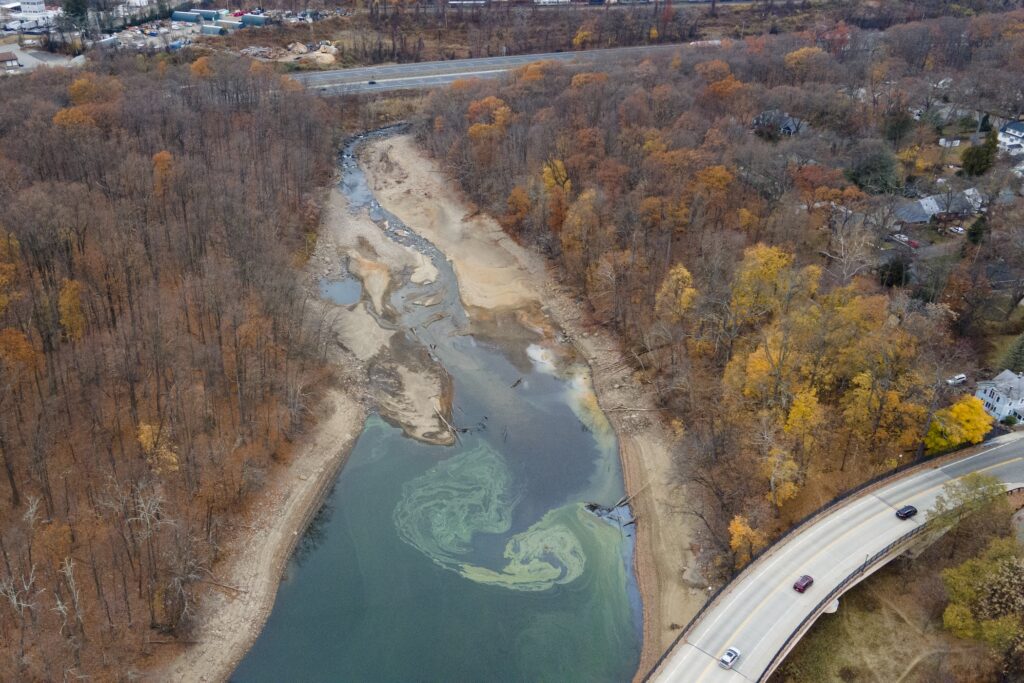
New Jersey drought warning persists into summer months as residents are urged to conserve water
Despite a snowy winter, New Jersey has not seen enough precipitation to bring streams and groundwater sources back to normal levels.
5 months ago
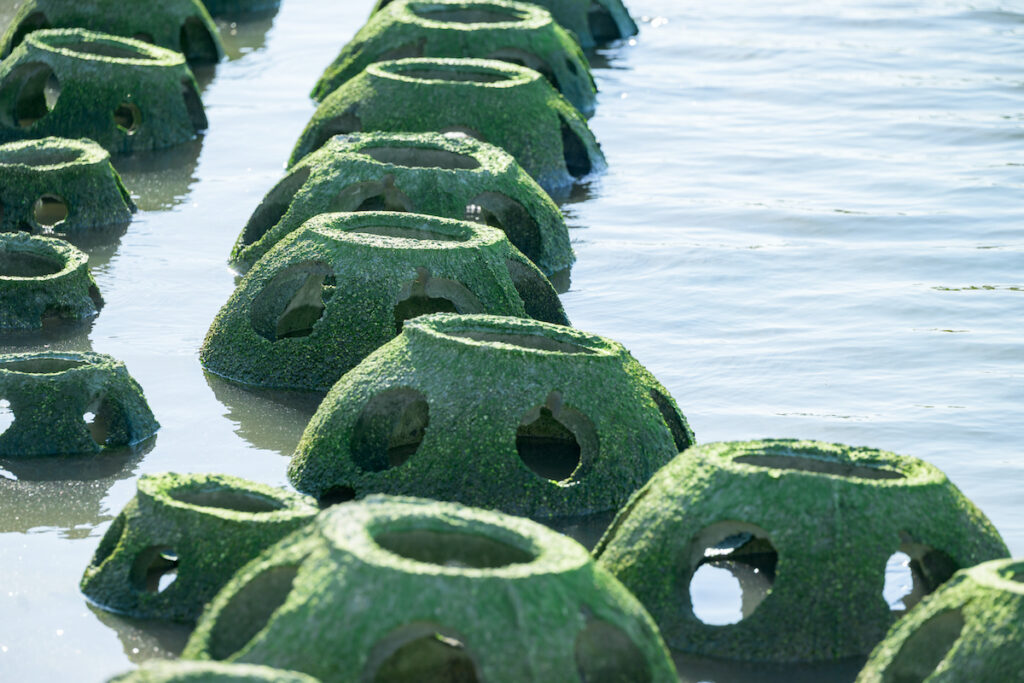
Listen 1:07The University of Delaware’s living shoreline acts as a “series of stacked layers of defense,” Hale said. The reef balls — dome-shaped structures that mimic natural reef structures and attract marine life — attempt to slow down waves and minimize erosion. Live plantings aim to restore the salt marsh area that’s been lost to erosion.
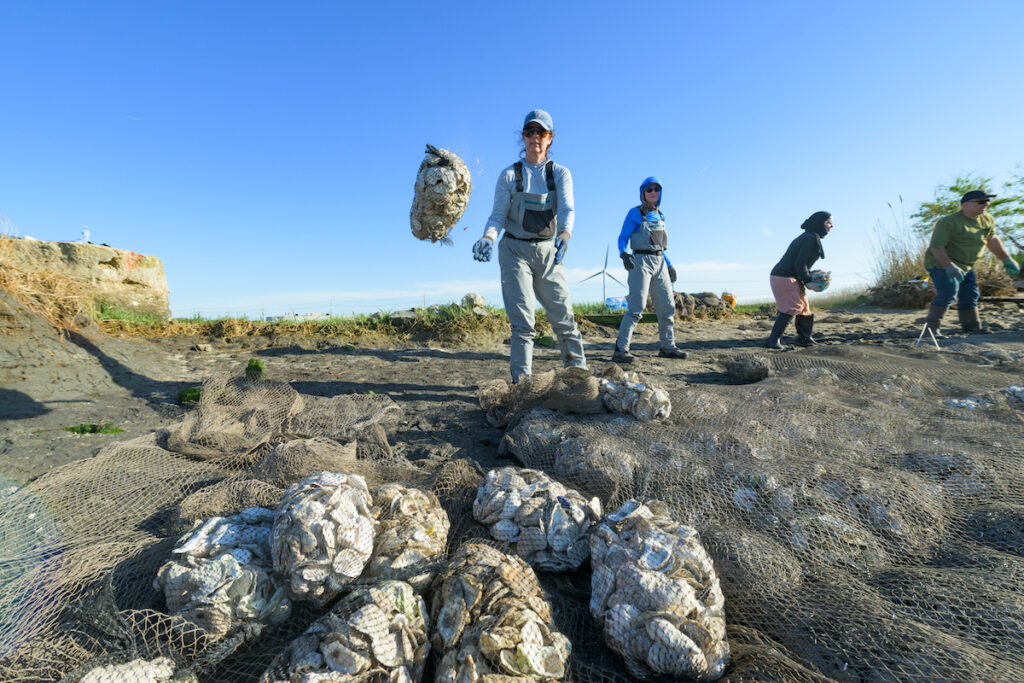
Oyster shell bags tied together into the shape of mattresses will create intertidal oyster reefs, and a biodegradable lattice structure made out of potato starch is designed to recruit oysters, create a reef and dissolve.
The structure also aims to attract species like black sea bass, American eels and other forage fish species that export carbon and nitrogen to deeper waters. The researchers have already started to witness fish colonizing some of the structures.
“It’s a really big interdisciplinary project trying to understand how we attenuate waves, how we reduce the threat of sea level rise on a parcel of land that we know is eroding right now, and how we generate ecological benefit, both in the form of oyster reef formation, but also in the form of habitat creation through some of our juvenile fishes,” Hale said.
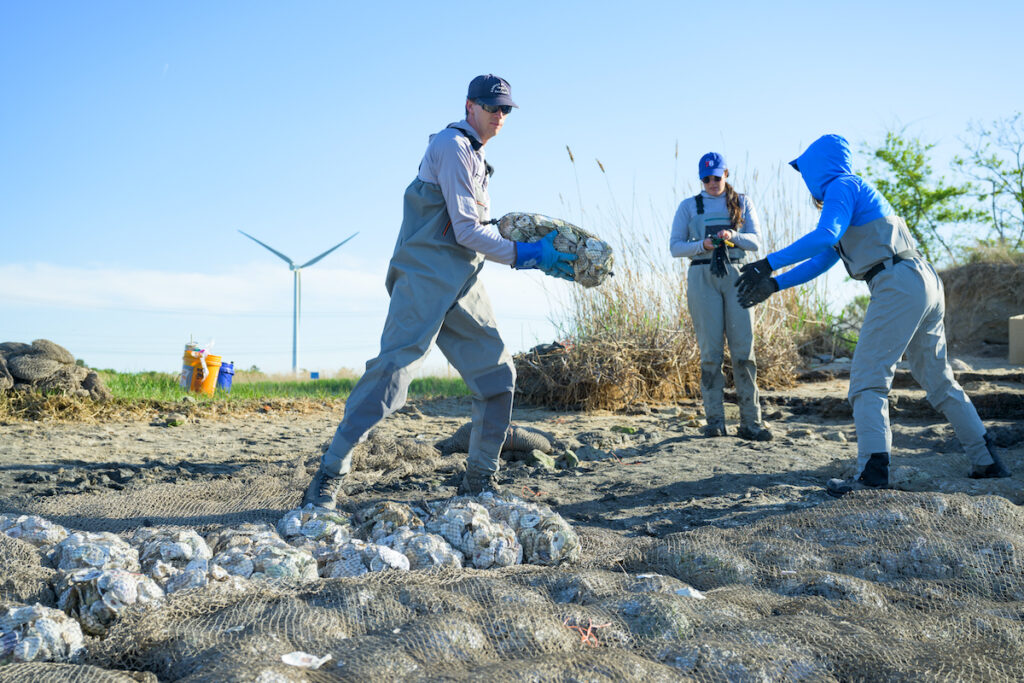
Helt of The Nature Conservancy said living shorelines are beneficial tools to adapt to climate change because they not only protect eroded shorelines and infrastructure, but they also benefit fish and the environment.
“Most of Delaware is coastal, whether you’re on the bay, on a tidal river, or on the ocean,” he said. “So, it’s important to demonstrate the success and effectiveness of these types of living shorelines and other nature-based solutions so that they’re adopted more broadly to help more Delawareans adapt to climate change.”

Get daily updates from WHYY News!
WHYY is your source for fact-based, in-depth journalism and information. As a nonprofit organization, we rely on financial support from readers like you. Please give today.
Part of the series
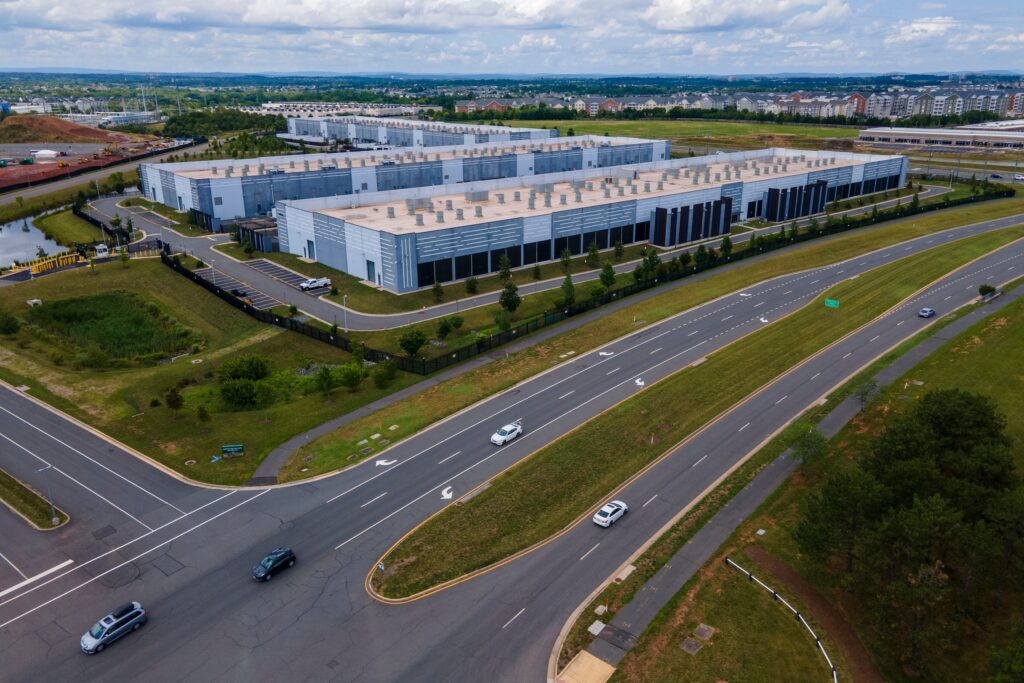
Delaware lawmakers aim to make data centers pay higher rates
The legislation would require data centers to take financial responsibility for their impact on the grid.
5 months ago
Listen 1:15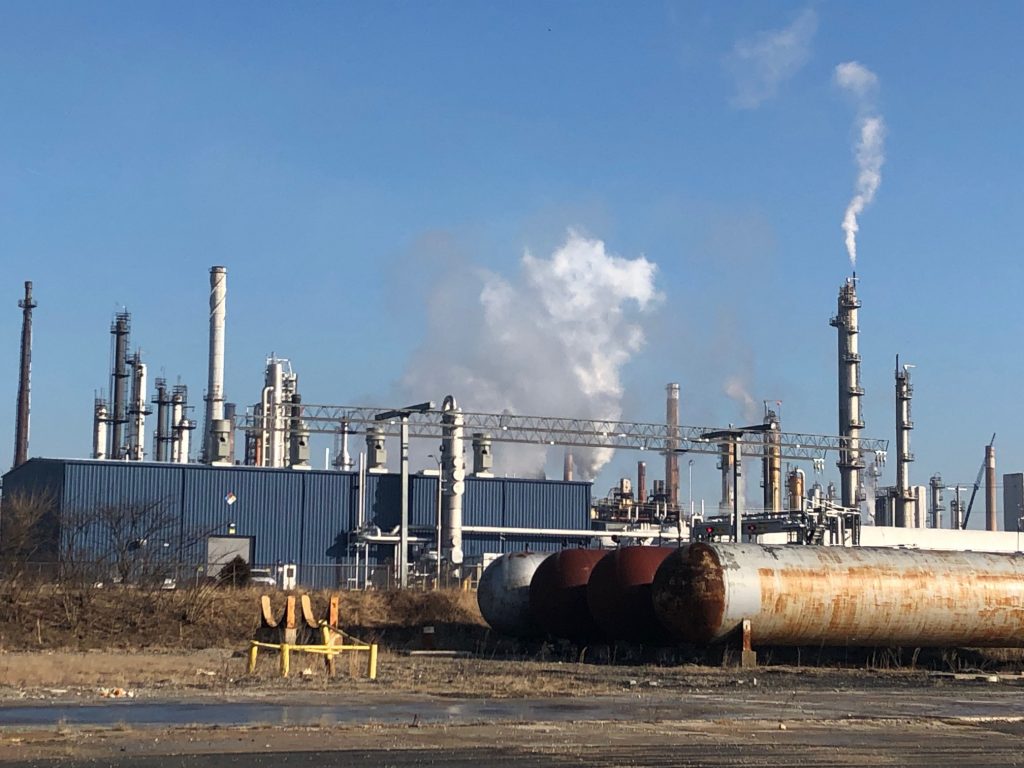
Delaware City Refinery to emit toxic gas as it repairs machinery
The Delaware City Refinery has a history of releasing sulfur dioxide while fixing equipment issues.
5 months ago
Listen 0:57
Proposed Delaware City data center hits major setback from environmental regulators
Environmental regulators in Delaware say the proposed data center, known as Project Washington, would be one of the state’s top polluters.
9 months ago
Listen 1:13