
New Jersey drought warning persists into summer months as residents are urged to conserve water
Despite a snowy winter, New Jersey has not seen enough precipitation to bring streams and groundwater sources back to normal levels.
Listen 1:07
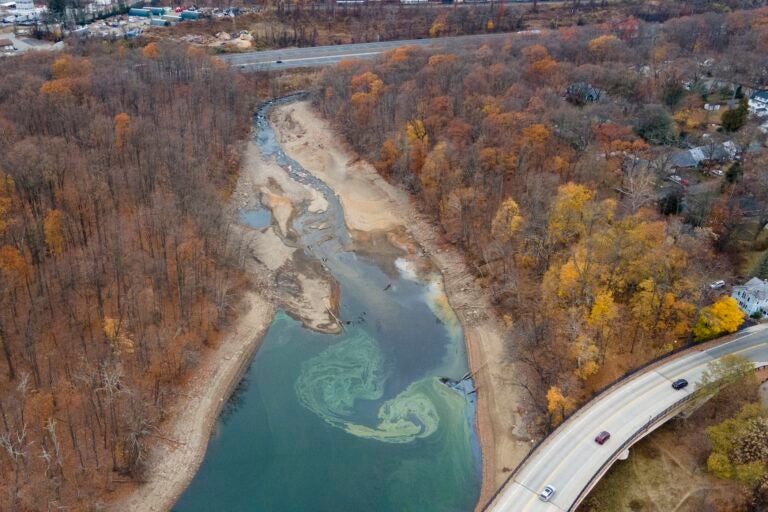
File: The Boonton Reservoir that provides water to Jersey City is in Parsippany, New Jersey, on Wednesday, November 20, 2024, as the U.S. Northeast is experiencing an unusually severe and widespread drought during months that are typically the wettest. (AP Photo/Ted Shaffrey)
This story is part of the WHYY News Climate Desk, bringing you news and solutions for our changing region.
From the Poconos to the Jersey Shore to the mouth of the Delaware Bay, what do you want to know about climate change? What would you like us to cover? Get in touch.
As summer begins, New Jersey Gov. Mikie Sherrill is urging residents to limit lawn watering, and hand water flowers and shrubs as a drought warning continues. The warning, in place since December 2025, could turn into a drought emergency if conditions do not improve. The state has suffered eight consecutive months of below-normal rainfall, according to officials.
“New Jersey is experiencing a chronic water supply drought, the scale of which we haven’t seen in more than twenty years,” state geologist Steven Domber said in a statement issued earlier this month. “The indicators that we track closely are showing persistently dry conditions. With uncertainty for rainfall in the coming months, we need residents to conserve water today, to ensure we have enough to sustain our needs over the summer.”
The Department of Environmental Protection uses a variety of indicators to determine drought levels, including precipitation, stream flows, reservoir levels, ground water levels and demand.
In addition to the last two months, officials say, the state “experienced below normal precipitation for 20 of the last 24 months since September 2024,” despite heavy snowfall events this past winter that helped restore reservoirs in North Jersey.
“While we saw a little relief over the winter, New Jersey is feeling the effects of nearly two years of below-normal precipitation,” Sherrill said in a statement earlier this month. She urged residents to voluntarily conserve water.
New Jersey state climatologist David Robinson said that since precipitation has been below normal for most of the last 24 months, the recent winter weather did not provide enough water to help restore streams and groundwater.
Should a drought emergency be declared, mandatory water restrictions would be put in place. The last drought emergency lasted almost a year, between March 2002 and January 2003.
Related Content

Early heat wave in Philadelphia region sparks concerns about heat-related illness
Heat is the top weather-related cause of death in the U.S.
3 months ago
Listen 1:03How New Jersey residents can conserve water
The state offers a number of tips to help conserve water during the hottest months of the year, including growing native plants that require less water, taking care to water only the roots and not the leaves, and using a car wash that recycles its water.
New Jersey American Water utility is also encouraging “smart irrigation and landscaping practices” along with indoor conservation tips like turning the faucet off while brushing teeth, shaving or washing dishes, taking shorter showers, and running appliances like dishwashers and washing machines only when they are full.

Never miss a moment with the WHYY Listen App!


WHYY is your source for fact-based, in-depth journalism and information. As a nonprofit organization, we rely on financial support from readers like you. Please give today.
Part of the series

Reprieve from wildfire smoke expected to come over the weekend, meteorologists say
Rainfall and a change in wind direction are expected to push the smoky air away from Philadelphia.
3 weeks ago
New Jersey and Delaware residents urged to conserve water, prevent fires as region faces drought
New Jersey has been facing an unseasonably high number of wildfires. Delaware officials also warn residents of wildfire risks.
1 year ago
Listen 1:00
Recent rainfall not enough to pull Philly region out of drought, climatologists say
The region faces about a 10-inch deficit in rainfall. Three to four inches of rain a month are typical during the winter.
2 years ago