
BlackStar Film Festival marks 15 years of championing filmmakers of color
A national study highlights the Philadelphia festival as a model for helping community-centered arts organizations thrive.
Listen 1:06
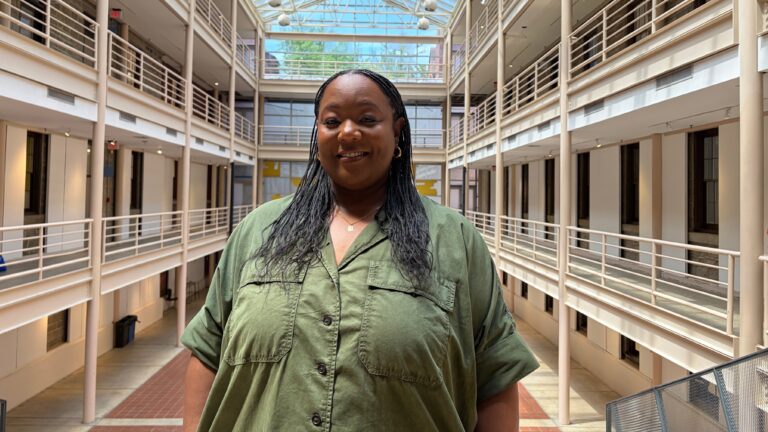
BlackStar Film Festival founder Maori Karmael Holmes at the organization's new headquarters inside Philadelphia's Village of Industry and Art building. (Peter Crimmins/WHYY)
From Philly and the Pa. suburbs to South Jersey and Delaware, what would you like WHYY News to cover? Let us know!
The BlackStar Film Festival, marking its 15th anniversary this week, has grown from an experiment in the filmmaker community into a national model for arts organizations serving communities of color.
Across four days, this year’s festival will screen 91 films at 10 venues, including a feature about a journey on foot through Haiti by a returning son and a local boy who tags along; a 10-hour documentary cycle by the renowned filmmaker Haile Gerima about the Italian occupation of Ethiopia; and an experimental film about religious experience set in South Africa.
The full list of films is available online, but what has made BlackStar a uniquely essential festival for 15 years is not visible on the schedule.
“BlackStar is not just a screening venue. It’s really people coming together,” said Louis Massiah, founder of Philadelphia’s Scribe Video Center.
“Yes, we’re going there to see films, but the conversations that happen after the film are as important as the screening,” he said. “Not just the conversations that happen within the theater, but the conversations that happen in the lobby and on the street.”
The festival will include the theatrical premiere of his film “Tenants of Lenapehoking in the Age of Magnets,” an experimental film based on oral histories of North Philadelphia residents.
BlackStar founder Maori Karmael Holmes, a former filmmaker herself, built the festival with filmmakers’ needs in mind. In 2005, Holmes took her debut feature documentary “Scene Not Heard,” about Philadelphia women hip-hop artists, on the festival circuit and forged relationships with other filmmakers.
“This was around the same time that Facebook had opened up to nonstudents,” she said. “Relationships you make on the road, you’re actually carrying with you because you’re keeping up with people online.”
Holmes thought: Why can’t there be a festival specifically designed to foster relationships among artists?
“Many of our team are filmmakers, and we’ve always said filmmakers are our audience first,” Holmes said. “In concentric circles, it’s filmmakers, and then we go out to the wider audience. We made this festival for us, so we continue to think about: What is it that we’re interested in seeing?”
Related Content
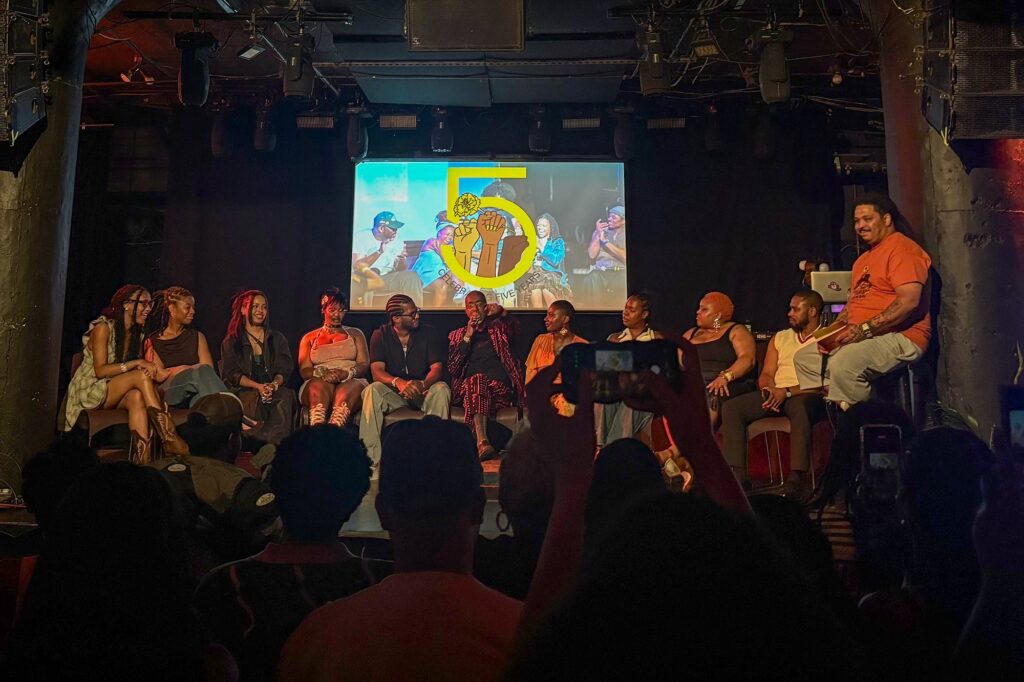
United We Heal celebrates Juneteenth with sold-out film festival amplifying Black and brown voices
The fifth annual festival showcased 11 films, including documentaries and a horror flick set in Philly’s Washington Square Park.
4 months ago
A model for championing community arts
After 15 years, BlackStar has become a model for supporting independent filmmakers. A recent report by the Wallace Foundation studied 18 American arts organizations centered on communities of color and included BlackStar as part of the study.
“Building Trust, Sustaining Art” describes how the BlackStar festival has had to find its place between the standards of the larger filmmaking industry and those of the artists it supports.
“Negotiating excellence means simultaneously building credibility within the film industry and remaining accountable to the Black and diasporic filmmaking communities that its mission centers on,” the report states.
The report says BlackStar must compete with other, better resourced festivals for film premieres, even by filmmakers whose work was championed by BlackStar in the past.
“I don’t fault someone who decides to do their world premiere at a market-based festival. We’re not a market. If you need to sell your film, you’re going to go to [Toronto International Film Festival] or Berlin or Cannes, if you can,” Holmes said. “What’s interesting for me are the films that are already sold and still choose to premiere somewhere else. That sometimes is frustrating because it feels like, well, you could have made a political decision to premiere at BlackStar, which would say a lot to the world.”
Related Content
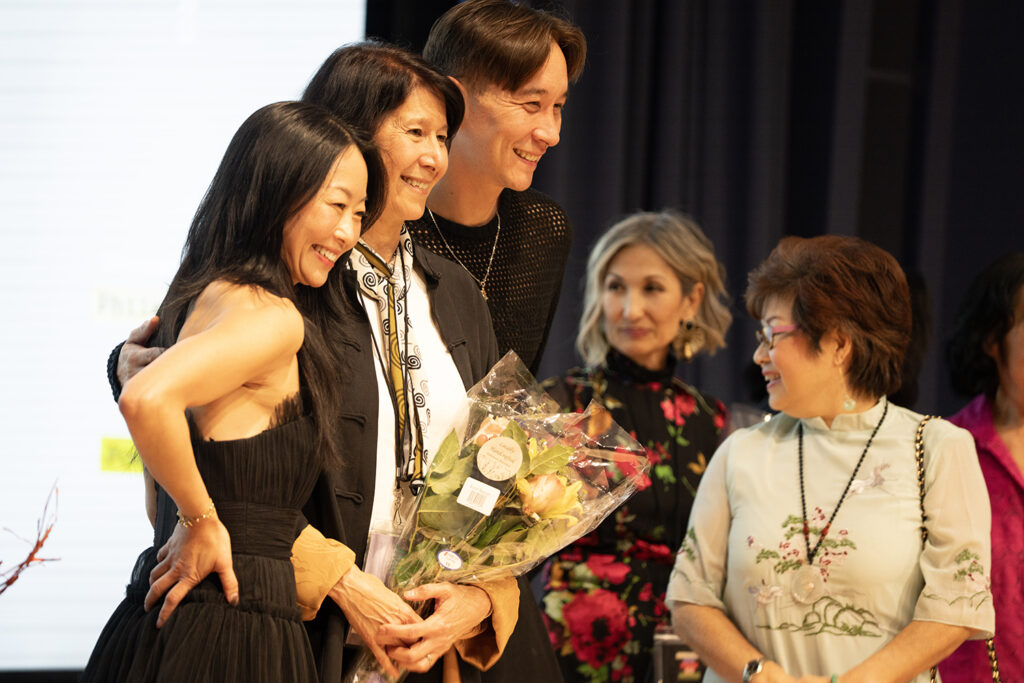
Philadelphia Asian American Film Festival in a ‘critical’ financial position
The film festival is feeling the pinch after cuts in federal funding, particularly in areas focused on diversity.
9 months ago
‘Not everything has to be … Netflix’
The opening night film is “West Side Familia,” a documentary about Puerto Ricans on New York City’s Upper West Side. It is the first feature film by Taylor Hosking, who grew up in that part of Manhattan in the 1990s and, despite her Puerto Rican background, had known very little about the history of street gang-based community building and housing activism in her neighborhood.
“I didn’t know about the local squatter rights movement that helped prevent this area from being completely leveled and remade,” Hosking said. “I didn’t know about the number of people that were a part of the Young Lords and the Black Panthers being so active in this neighborhood and inspiring people to take care of their neighbors.”
“West Side Familia” is, in part, a personal journey of Hosking discovering elderly members of the La West Side Familia gang who still walk the streets proudly wearing their leather vests emblazoned with insignia.
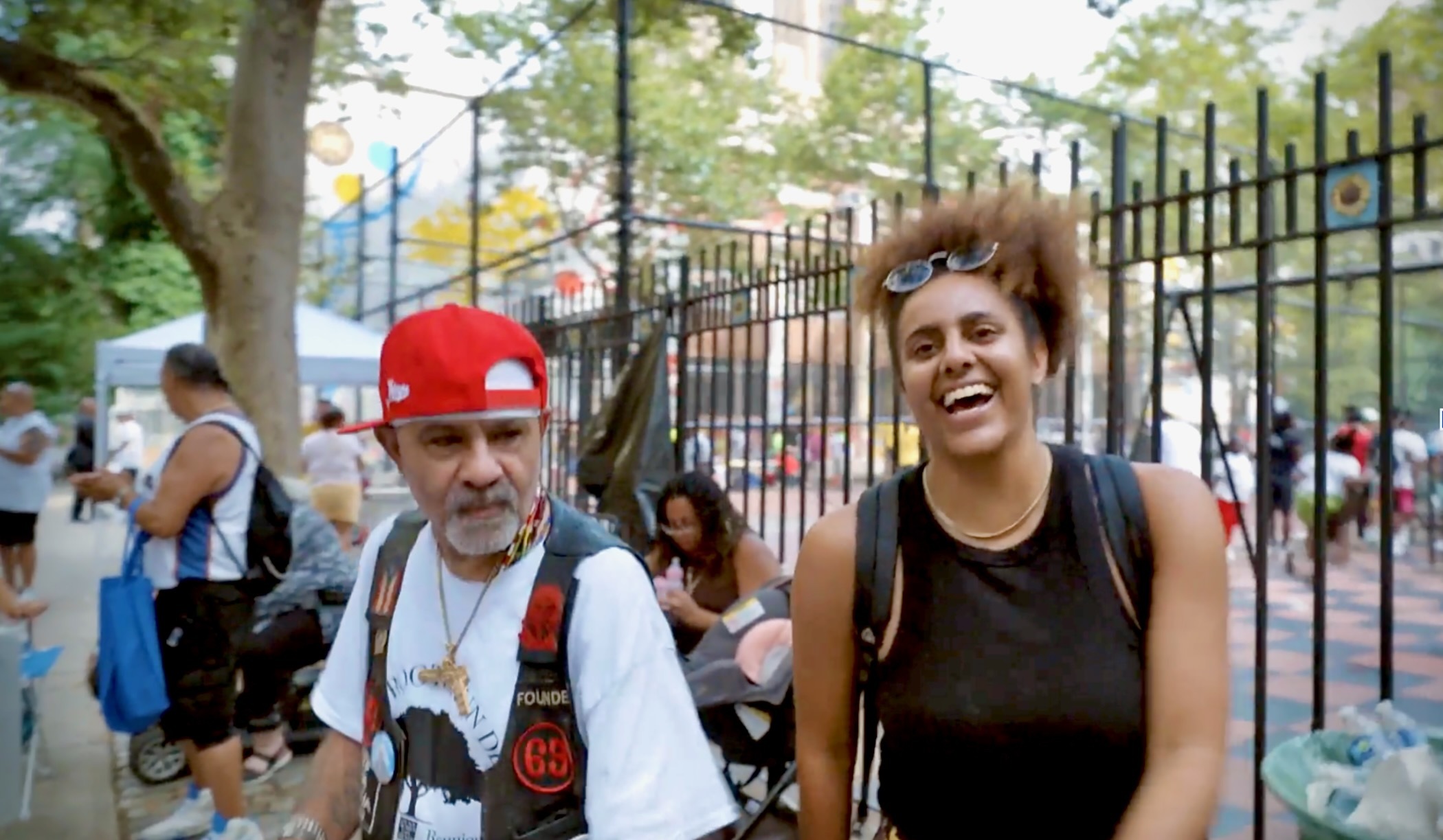
The film celebrates the Upper West Side’s hip-hop dance heroes of the 1980s and the devastation of its crack epidemic, which was a revelation for Hosking.
“I just assumed that it wasn’t a big element of my friends’ and family’s lives in this particular pocket as I’m growing up in this mega-gentrified, preppy version of the area,” said Hosking, who inherited the rent-controlled apartment her family has owned for three generations. “What I learned was that people had been avoiding talking about it because it was really painful.”
Hosking said she jumped at the chance to premiere her debut film there, having been a regular attendee for years.
“It inspired me to see people who were making things that were really elevated and exciting, but at the same time not always going to be on HBO afterwards,” she said. “It was an exposure to other ways of distributing that can still be an exciting experience. Not everything has to be with the Netflix goal in mind.”
Some festivals are industry showcases that make news with bidding wars. Massiah said BlackStar has a different agenda.
“Film is not only a commodity. There are many, many, many, many people making films and many people seeing films where the film is part of an effort at strengthening communities,” he said. “It’s a social, cultural and political act to make a film.”
The BlackStar Film Festival runs Aug. 6-9. The full schedule is on BlackStar’s website.

Get daily updates from WHYY News!
WHYY is your source for fact-based, in-depth journalism and information. As a nonprofit organization, we rely on financial support from readers like you. Please give today.
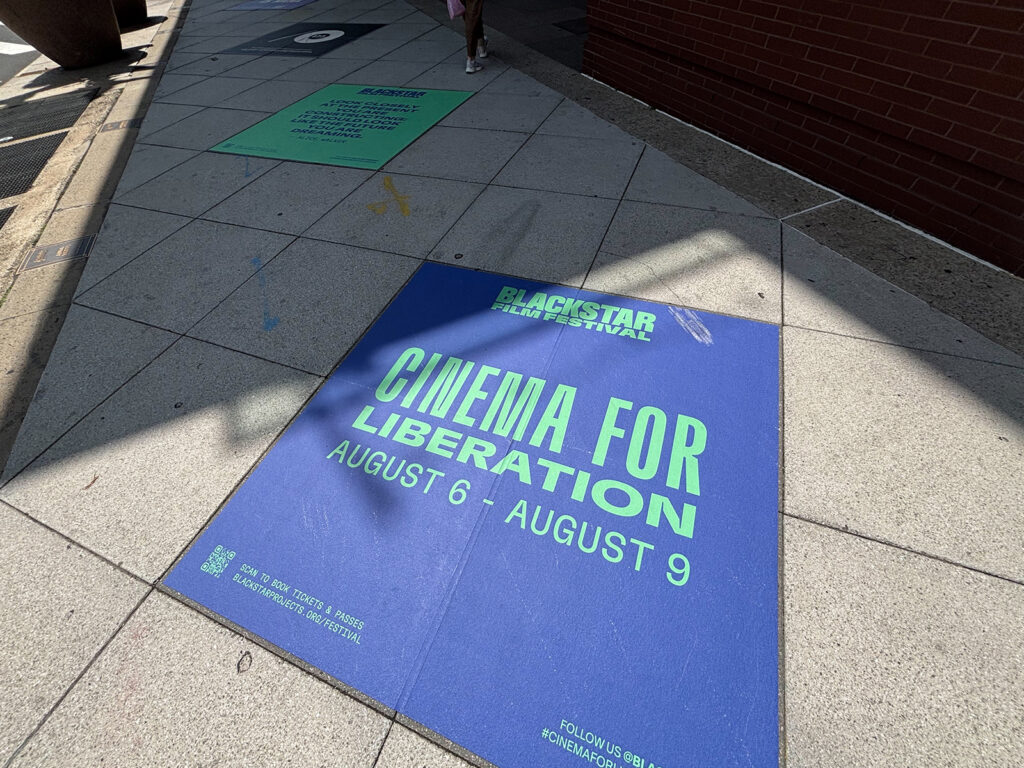
A trio of BlackStar documentaries connects communities from Southwest Philly to Northwest London
From a community garden to Pan-African rumba and public housing, the film festival's opening-day program explored the power of telling one's own story.
3 months ago
Story of poverty activism in Las Vegas premieres at Philly’s BlackStar festival
“Storming Caesars Palace” tells a “forgotten” story of mothers on welfare shutting down a Las Vegas casino in the name of poverty activism.
4 years ago
BlackStar Film festival returns for its 10th year
The mostly online festival of Black, brown, and Indigenous filmmakers will feature a one-day mini-festival of in-person screenings at the Mann Center.
5 years ago
Listen 5:40