
Delaware allocates funding to bring new health centers to 4 middle schools in rural Sussex County
The effort expands health care access for schools located in provider deserts and brings the model directly to middle schools, which have historically been ignored statewide.
Listen 0:53
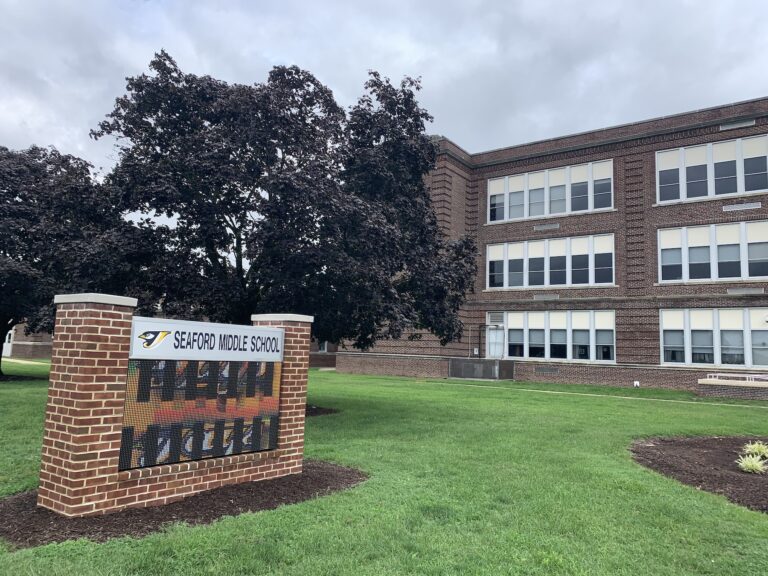
Seaford Middle School is one of the four campuses receiving a new school-based health center in Sussex County. (Sarina Grossi/WHYY)
What are journalists missing from the state of Delaware? What would you most like WHYY News to cover? Let us know.
Middle schoolers in rural Sussex County will soon have more access to medical care on campus. The Delaware Department of Health and Social Services announced last week that four schools received funding to establish school-based health centers.
The funding comes from the state’s Rural Health Transformation Program. It’s supported by more than $157 million from the Centers for Medicare and Medicaid Services. DHSS Secretary Christen Linke Young said that the state anticipates receiving about $700 million in federal financial assistance for the program in the coming years.
One of the primary goals of the program is to expand access to health care in Kent and Sussex counties. Young said it’s often difficult in these areas to receive primary care.
“In Sussex County, there is one primary care physician for every 2,000 residents,” Young told WHYY News. “That makes it one of the hardest places to access primary care in the Northeast, and we know that needs to change.”
The centers have been active for decades in Delaware. There are 40 active school-based health centers in the state, however, most are located in New Castle County. Additionally, most of these centers are stationed in high schools and elementary schools. While some also serve middle schoolers, Su Chafin, administrator for Beebe Healthcare’s school-based health center program, said there is a gap.
“The centers in high schools have serviced kids that were in the middle school grade range, but it was a lot more difficult to do that and then have that many grades to do. These [new centers] would be free standing in middle schools themselves and no shared services,” Chafin told WHYY News.
Chafin said that alongside being in a provider desert, families can have difficulty seeing a doctor depending on their transportation needs and parents’ work schedules. And taking kids out of school for appointments can impact attendance.
“If a child would have a behavioral health appointment for maybe an hour, 45 minutes, then you’ve got the time the parent would have to take the child out of school and then go to the organization,” Chafin said. “A lot of times that’s a half day or sometimes even a full day of missed school, and when you’re talking about mental health, that can be once a week. So that can be very impactful to a student’s success in school.”
School-based health centers are establishments on campuses where students can be treated by medical professionals. Chafin said they can help bridge gaps in health care where students are at.
Beebe Healthcare will be partnering with the Indian River School District to open school-based health centers in Sussex Central Middle School and Georgetown Middle School. TidalHealth will also be working in Selbyville Middle School, while Nemours Children’s Health will be establishing a center at Seaford Middle School.
Before funding was awarded to the four middle schools, the only middle school to have a health center in Sussex County was Delmar Middle School.
“What we’re doing here is really bringing that model down to the middle school level in communities where we know primary care can be incredibly hard for families to access,” Young said. “It really just ensures that connection to care and to services and to wellness for some of our youngest brains and bodies.”
Related Content
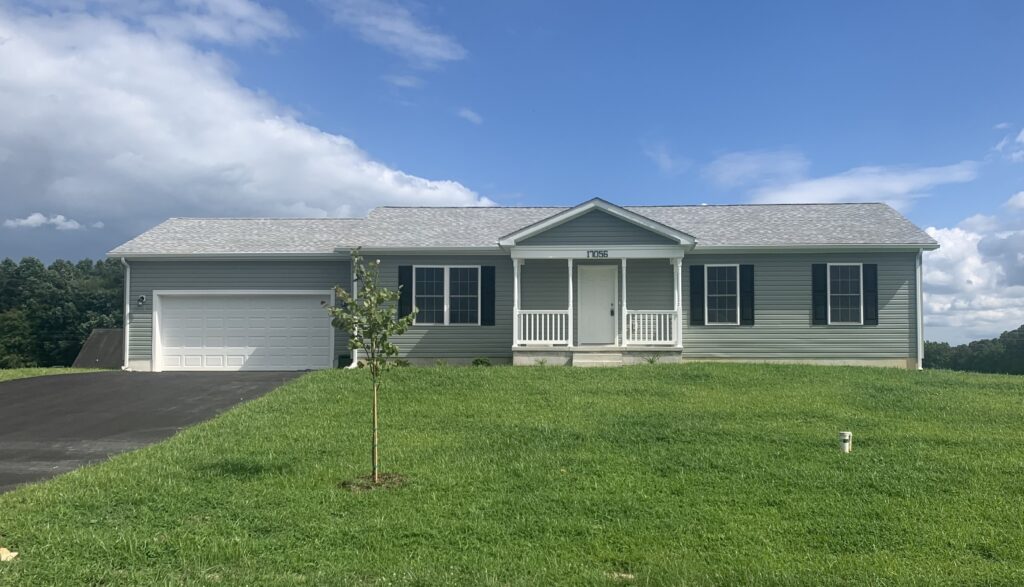
The grant was awarded to Milford Housing Development Corporation, a nonprofit developer that assists low-income families in building their own homes.
2 months ago
Listen 0:59What the centers offer
Katherine McDaniel, the medical director of Nemours’ school‑based health centers, said that centers typically have pediatric nurse practitioners, medical assistants and behavioral health therapists on hand.
“The physical health is modeled after our primary care offices, so you can receive the exact same services that you would at a primary care office,” McDaniel said.
McDaniel noted that the offered services do not replace primary care doctors. If students do not have a primary care provider, the centers can also help connect families with a physician.
The centers do not collect copays or deductibles, but do charge insurance. McDaniel said families can also be connected with insurance providers, if need be. Parents are required to enroll in the health center before their child can access its services.
Chafin said that often students are referred to the centers by school nurses and other staff on campus, but students and families can also make their own appointments. Walk-ins also can be accepted depending on availability.
“We can treat anything from strep throat to behavioral health problems or managing nutrition for diabetes. A lot of times we try to refer to specialists for specialist care,” she said.
The centers offer sports physicals as well, which students are required to have every year if they want to participate in athletics.
Kathryn Fiddler, the vice president of Population Health at TidalHealth, said that the centers can also provide comfort to middle school students during an uncertain time in their lives.
“There’s a lot going on in middle school,” Fiddler said. “There’s so much going on with their bodies, with the way that they perceive their bodies as they’re growing, changing and all those things. And having access to someone that they trust, somebody that they can talk to, something that they can pop in and just see is really helpful.”
Fiddler said that depending on the school, centers can also offer reproductive health services to students.
Student impact
McDaniel said that numbers for Nemours school-based health centers have been growing. Enrollment numbers for health services jumped from less than 150 in the 2023-24 school year to more than 450 in the 2025-26 school year. Appointments have also increased from less than 200 to almost 1,500.
Gary Zoll, the director of student services with the Seaford School District, said they hope to open the new center with Nemours by September. After the center opens, Seaford School District will be the only district in the state to have a school-based health center open in an elementary, middle and high school.
Zoll said that many students served within the district are on Medicaid and sometimes don’t have insurance. According to the McCourt School of Public Policy at Georgetown University, about 43% of children in Sussex County were covered by Medicaid in 2023.
“Just the ability for our students to have true doctor’s offices in their schools is going to be huge,” he said.
Zoll said the already established centers in the district have been a success. He pointed to a specific success story where a student attending Frederick Douglass Elementary School didn’t have insurance and was able to be treated. After going to the hospital following his visit to the center, doctors found that the child had a brain tumor.
“Otherwise probably [he] would not have been able to get those health services, and who knows what would have happened,” Zoll said. “That’s a story I always tell just about a kid who was not getting proper care just because of where we live that was able to get lifesaving procedures done because our health center helped diagnose him.”
Jay Owens, the superintendent for Indian River School District, told WHYY that the three centers opening in the district should be opening in early 2027.

Get daily updates from WHYY News!
WHYY is your source for fact-based, in-depth journalism and information. As a nonprofit organization, we rely on financial support from readers like you. Please give today.
Cape Henlopen School District in Delaware is one of five districts that previously reached an anti-discrimination agreement with the Biden and Obama administrations.
6 months ago

Funding delays push back opening of bilingual ASPIRA charter school in Georgetown to 2027
Funding setbacks and the federal shutdown have delayed the opening of ASPIRA’s new bilingual charter school in Georgetown until 2027.
11 months ago
Listen 1:09
El sur de Delaware afronta una creciente escasez de médicos. Los líderes están considerando si una nueva Facultad de Medicina podría ayudar a cubrir esta carencia.
1 year ago