

Federal grant aids Delaware families in building their own affordable homes in Sussex and Kent counties
The grant was awarded to Milford Housing Development Corporation, a nonprofit developer that assists low-income families in building their own homes.
Listen 0:59
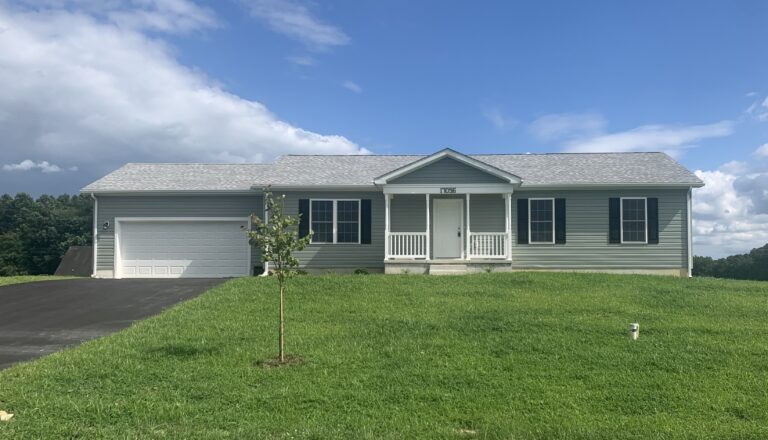
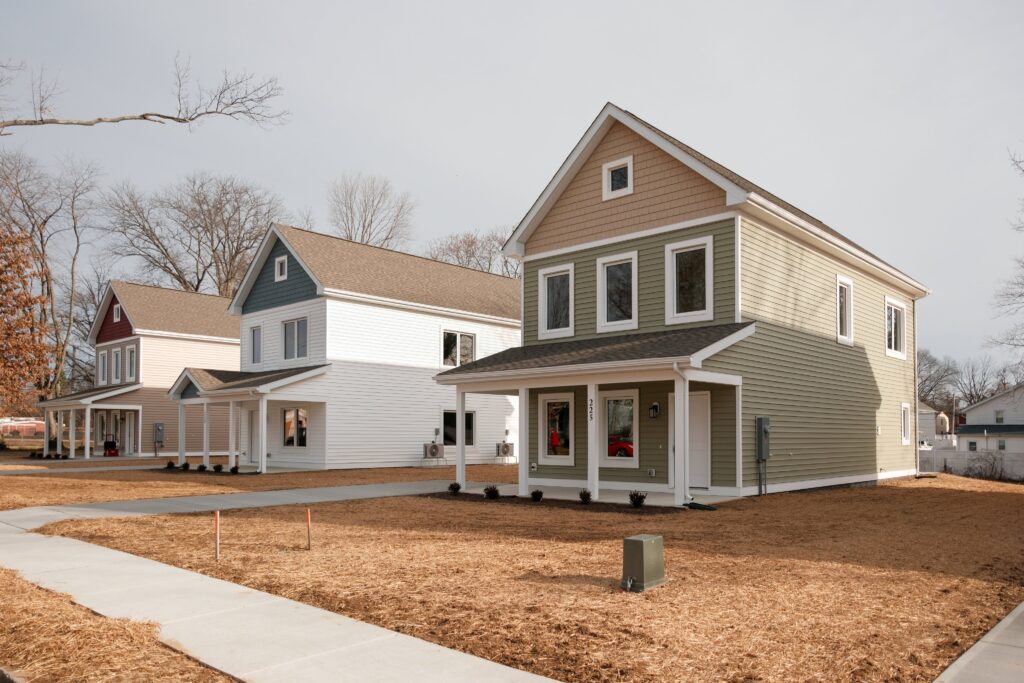
A home built through Milford Housing Development Corporation's self-help housing program, located in Lincoln, Del. (Sarina Grossi/WHYY)
What are journalists missing from the state of Delaware? What would you most like WHYY News to cover? Let us know.
More affordable homes are coming to Kent and Sussex counties in Delaware, and they’ll be built by the people that will eventually move into them.
In a press release, the state’s congressional delegation announced last month that a nearly $1 million grant will help fund the construction of two dozen homes for low-income families in rural communities throughout both counties.
The grant was awarded to Milford Housing Development Corporation, a nonprofit affordable housing developer. It will go towards the organization’s Self-Help Housing program.
“Good homes are the foundation of strong communities — because without a roof over your head, the promise of good-paying jobs and high-quality education are out of reach,” U.S. Sen. Lisa Blunt Rochester said in the press release.
Homes are usually built in groups, with families helping build their neighbors homes alongside their own. The program uses the idea of “sweat equity,” labor that is used as a form of payment.
“It reduces the cost of the house because there’s less labor in it that one would have to pay for,” Andrew Dinsmore, U.S. Sen. Chris Coons’ senior advisor for outreach and appropriations, told WHYY News. “It also helps them learn how the house is built if it needs to be fixed in the future.”
Dinsmore also said that the sweat equity allows the federal government to “stretch their dollars further.”
The funding comes from the U.S. Department of Agriculture’s Rural Development’s Mutual Self-Help Housing Technical Assistance Grant program. According to David Moore, president and CEO of Milford Housing Development Corporation, the nonprofit has been working with the USDA for more than 30 years on the program.
“This is a great example of how the federal government can give a family and an organization the ingredients or the building components to help solve housing challenges community by community,” Dinsmore said. “It’s not too prescriptive and allows different nonprofits to tailor the projects differently.”
Related Content
Sussex County pulls land use applications from review after Delaware adopts affordable housing law
Senate Bill 23 allows certain residential development applications to forego public hearings. Sussex County officials said they’re working to adjust approval processes.
2 months ago
Listen 1:03The process of building a new home
Interested families contact Moore’s corporation and are enrolled in one of their homeowner orientations to learn more about how the programs work. From there, if they want to move forward with building a home, they are connected with a counselor that verifies they are eligible to participate.
For families to qualify, they must have good credit standing, stable income from employment and other sources of income, ability to meet labor requirements, and be a permanent resident of the U.S.
“It’s really a holistic program. It’s not just: ‘Go get your letter from the bank saying this is what you can afford.’ It’s really walking them through the process so that they’re well informed,” Moore said.
It’s expected for families to contribute at least 25 hours a week to building the homes. Work is conducted over weekends and on a few weeknights. Construction could take anywhere from six months to a year to complete. That labor works as a down payment on the home.
Moore said families do not move in until each home in the group is completed and they are properly inspected by the county to determine if it is up to building code. The homes are also inspected for electrical, plumbing and heating and air conditioning.
Monthly mortgage payments and interest rates are determined based on a family’s income. The developers also help applicants secure loans needed to participate in the program.
Once construction is completed, families also receive homeownership counseling. That helps educate them on budgeting, home owner responsibilities, maintenance, credit scores and navigating tax and insurance escrows, among other things.
Homes are also constructed to be energy-efficient, using less energy than a typical dwelling. Moore also said they’re built to easily have solar power installed, if desired. Most homes built under the program have three bedrooms, two baths and two-car garage dwellings, though four-bedroom, two-bath and one-garage homes are also commonly built.
Related Content
What Delaware lawmakers passed — and what failed — before the legislative session ended
Lawmakers passed dozens of bills, addressing property tax rates, gun dealer regulations, affordable housing and more.
3 months ago
Listen 1:04Need outpaces resource
Moore said the Self-Help Housing program mostly serves families below 80% of the median income level, with a lot of them making less than $50,000 in dual income.
“Families can’t afford $350,000, $400,000 homes,” Moore said. “So that creates a huge burden when you’re talking about how they shouldn’t spend more than 30% of their income for their principal interest taxes and insurance.”
The Delaware State Housing Authority’s Housing Needs Assessment found that to keep up with growth in the state through 2030, more than 24,000 affordable units will need to be built. The assessment states that many of those homes will need to be affordable homes for the workforce and permanent residents.
“This is a great option for someone that doesn’t need a house right now and is having a hard time finding a home in an area where there might not be much housing supply or quality housing supply for their family,” Dinsmore said.
Moore said outside of the USDA grants, the Milford Housing Development Corporation usually has to secure multiple streams of funding to get the home costs to the point where they are affordable for their clients. Especially as more people are considered cost-burdened, or have to pay more than 30% of their income on housing.
“Barriers to affordable housing are endless, but price is the top thing. So, it’s pricing our service industry, which is huge in Delaware, it’s pricing them right out of the market,” he said.
According to Moore, the state has put more emphasis on increasing affordable housing in recent years, which he views as a positive change. However, he said there is still a gap in housing, and “we need the resources to go along with it. So if we don’t have the resources, we can’t serve the demand.”
The group has built 250 self-help homes since 1998, with seven currently in construction. Moore also said they will break ground on a group of four homes using the grant funding.
The current projects are all located in Sussex County, but Moore said there are plans to start building Kent County homes down the line.

Get daily updates from WHYY News!
WHYY is your source for fact-based, in-depth journalism and information. As a nonprofit organization, we rely on financial support from readers like you. Please give today.
Part of the series

El gobernador de Delaware, Matt Meyer, afirma que la factura anual promedio de Delmarva aumentó casi $400 en los últimos cinco años.
5 days ago
Delaware necesita unas 24,400 viviendas adicionales para el año 2030 a fin de satisfacer la demanda prevista, según un informe estatal.
5 days ago

The total is more than half of the plan’s 30,000-unit goal. The milestone comes as the administration prepares to submit its first report on the plan.
6 days ago
Listen 1:02