

Sussex County pulls land use applications from review after Delaware adopts affordable housing law
Senate Bill 23 allows certain residential development applications to forego public hearings. Sussex County officials said they’re working to adjust approval processes.
Listen 1:03
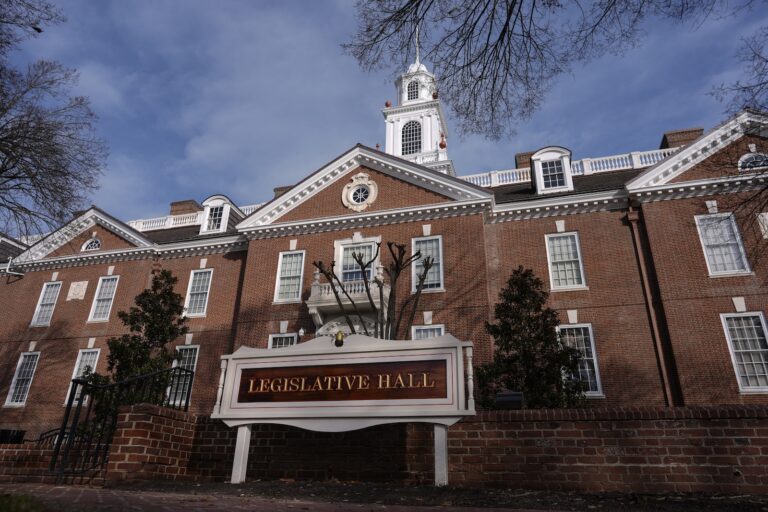
The Delaware Legislative Hall, the state capitol building of Delaware, is seen in Dover, Del., Tuesday, Dec. 17, 2024. (AP Photo/Carolyn Kaster)
What are journalists missing from the state of Delaware? What would you most like WHYY News to cover? Let us know.
Ahead of a Sussex County Planning and Zoning Commission meeting last week, public hearings for two residential developments scheduled on the agenda were canceled. County officials said it was due to a newly adopted affordable housing law that changed the land use approval process in Delaware.
Senate Bill 23, or the “Housing for Every Delawarean Act,” was signed into law by Gov. Matt Meyer a day before Sussex County officials announced the land use applications were pulled.
The bill aims to increase the supply of affordable housing throughout the state by updating land use processes. Part of the effort includes allowing certain proposed residential developments to be approved “by-right.” That means if the application meets local zoning standards, it can be approved without a public hearing.
In a statement, Sussex County Council President Doug Hudson said that the new law raised “serious, fundamental concerns” over local authority in the state.
“There are numerous questions about how we, and all local governments, are to proceed when it comes to the land use development process,” Hudson said.
One type of residential application that falls into the by-right category is those for major subdivisions, which are developments that include more than five lots.
According to the county, the two applications slated for review were major subdivisions that could have been approved. One of the applications was for a development in Millsboro to build 64 single-family homes. The other application was for a Harbeson project with plans to build 70 single-family homes, according to the commission’s July 15 agenda.
County Administrator Todd Lawson said that according to the law, the county can still host public meetings regarding by-right applications. However, he said they can only receive written comments and only discuss if the application meets objective standards for zoning.
“Development is what generates the most attention at any County Council meeting. People show up, they wait hours to have their attempt at raising their concerns and having their voices heard. And this is their only opportunity,” Lawson told WHYY News.
Counties can develop their own standards for public meetings to review by-right applications, according to SB 23. However, Lawson said the county does not have an established standard, which led to officials pausing reviews on residential plans.
“We’re going to push the pause button on by-right residential applications until we better understand the implications of this bill,” he said.
The county can pass regulations that establish new parameters to a public meeting while complying with the law, Lawson said. Yet, that process could take months, leaving applications at a standstill.
Related Content

New mobile mammography unit aims to address barriers to receiving care in Sussex County, Delaware
TidalHealth Mobile Mammography launched this month. Its goal is to bring screenings to neighborhoods in Sussex County with limited preventive care.
3 months ago
Listen 0:58Local vs. state control
Prior to its adoption, local governments were apprehensive about SB 23. Lawson said that Sussex County officials didn’t see the bill until it circulated in the General Assembly. Upon reading it, Lawson said the county voiced concerns that were not addressed.
“If we are misinterpreting the bill, then that further justifies why we were so upset that it got pushed forward in the first place and all these questions were not answered before it got passed,” Lawson said.
Sarah Fulton, the communications director for Delaware Senate Democrats, issued the following statement to WHYY, regarding the bill and its purpose:
“The legislative intent for Senate Bill 23 has been clear since the day it was introduced: this bill is designed to increase the stock of affordable housing in communities across Delaware. After hearing feedback on the initial bill draft, the final version that has been passed by the General Assembly gives even more flexibility to local jurisdictions regarding their comprehensive plans.”
In a report released last year, the Affordable Housing Production Task Force identified local zoning practices as a barrier to building affordable housing in the state. The group, which was co-chaired by the sponsor of the bill, state Sen. Russell Huxtable, D-Lewes, recommended local zoning reform as one of the ways to increase housing supply.
Zoning and land-use decisions are governed by the local jurisdiction’s comprehensive plan. Part of SB 23 requires affordable housing plans to be implemented into the larger framework of county and municipal comprehensive plans.
“What this bill attempts to do is better align the comprehensive plans and the zoning together. It’s important to understand that the zoning is not being dictated by the bill or by the state,” said Mike Riemann, former president of the Home Builders Association of Delaware.
The association supported the bill. Riemann said that zoning is still controlled by local governments, but the state is working to hold them accountable to the comprehensive plans they adopted.
“What the bill did, and I think why I think it’s a good bill, is that it did not go nearly as far as what a lot of other states have done,” Riemann said. “Other states throughout the country have mandated densities, have mandated housing types and zoning, etc. This bill doesn’t do that. This bill is really a bill that focuses on the local jurisdictions and then, ultimately, following through.”
Riemann also said that applications are written with comprehensive plans and zoning policy in mind, which the public still has a say in.
Related Content
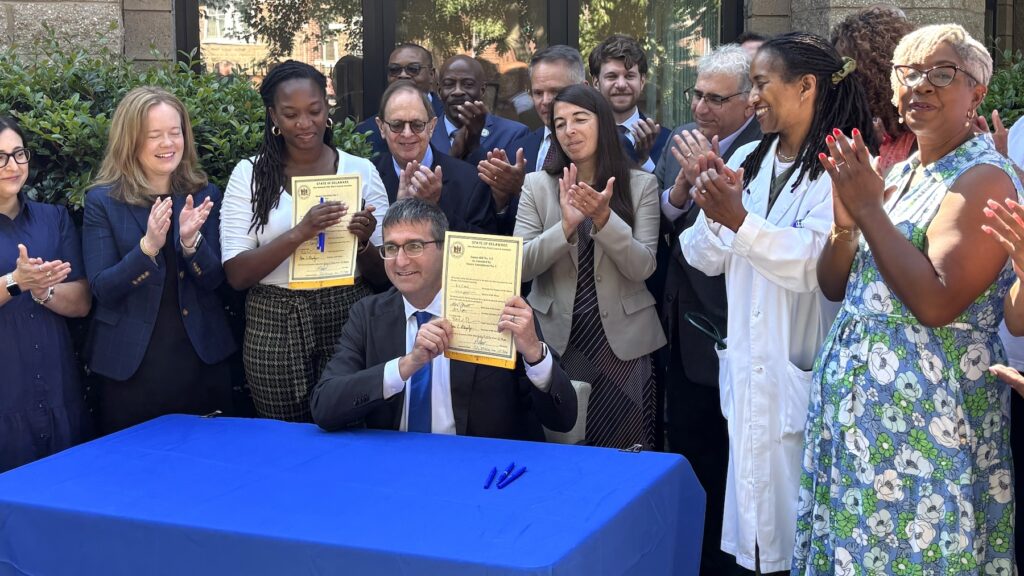
Delaware bans private equity hospital purchases, expands health care access
Senate Majority Leader Bryan Townsend says his legislation phases in price caps on hospitals and strengthens primary care access.
3 months ago
Listen 0:57Unclear language in bill
Despite emphasis on adding affordable housing, Lawson said that in the bill text, by-right approval does not appear to be exclusive to those projects. The bill states “a residential development application for a use that is permitted by-right under the zoning ordinance of a local jurisdiction shall be reviewed through an administrative review and approval process.”
“That’s the key part in this concern that Sussex County has,” Lawson said. “You could be talking about million dollar single-family homes outside of the coastal area as much as you could be talking about starter homes in areas outside the coastal area.”
Lawson said that there is a need for more affordable housing in Sussex County, and that leaders have made efforts to address the gap.
“We are not burying our heads in the sand. However, we thought SB 23 went too far,” he said.
According to Lawson, SB 23 is now in effect as state code. However, it’s unclear as to if that is the case, as the bill text does not directly indicate when it is enacted.
A member of Meyer’s policy team told WHYY that they are currently meeting with legal counsel to clarify the language around the bill and when it will actually be enacted. They said that based on how the bill is written, it could be interpreted to start now, or after new comprehensive plans are adopted. For Sussex County, that’s not until 2028.
In the issued statement from Senate Democrats, Fulton wrote that they are “waiting on formal guidance from the Meyer Administration about the timing and next steps for implementation.”
Sussex County Council is set to discuss the implementation of SB 23 at their meeting, Tuesday, July 28, at 10 a.m.

Never miss a moment with the WHYY Listen App!


WHYY is your source for fact-based, in-depth journalism and information. As a nonprofit organization, we rely on financial support from readers like you. Please give today.
Delaware recently implemented 2 land-use laws. Here’s what they mean for affordable housing
House Bill 450 and Senate Bill 23 both require Delaware counties and local governments to make changes in the way they approve developments.
2 weeks ago
Listen 1:02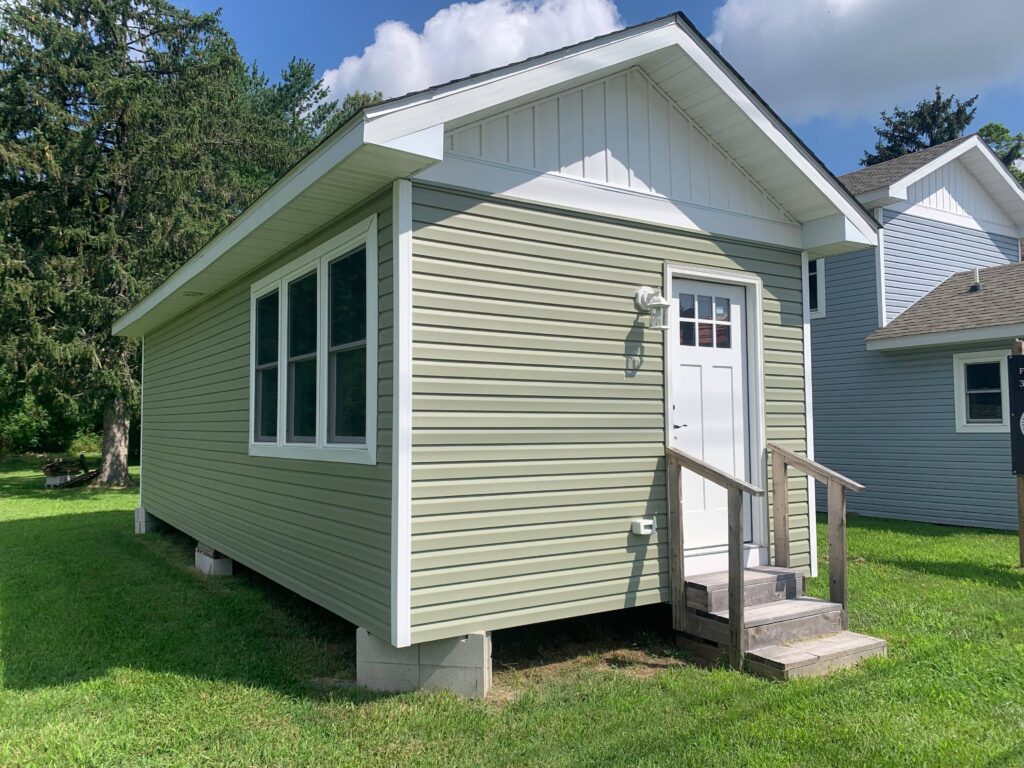
The town council voted in favor of starting a repeal process for the divisive ordinance last month. The planning commission says there’s not enough evidence to support it.
3 weeks ago
Listen 1:06
The proposed moratorium would last until the end of 2027, or until the city approves a comprehensive plan.
4 weeks ago
Listen 1:05