

Bayhealth’s ‘Next Wave’ aims to further expand care in Sussex and Kent counties
Officials with the hospital system say that they are planning for “responsible growth” to prepare for a growing population in central and southern Delaware.
Listen 1:02
File - Bayhealth Hospital, Kent Campus, in Dover, Delaware (Google Maps)
What are journalists missing from the state of Delaware? What would you most like WHYY News to cover? Let us know.
As Delaware sees a growing population of senior residents who require more medical attention, Bayhealth will be investing more in their care region. The hospital system announced its plans for a multiyear investment strategy, focusing on facilities in Sussex and Kent counties.
“As you think about the population over the age of 65 going from 56 million in the country to 80 million in the country by 2040, that’s a pretty significant increase, and it’s just as big of an increase for those over the age of 85,” Bayhealth CEO Terry Murphy said at a press conference Wednesday. “As a health system, we have to really be prepared and do significant planning so that we’re ready when that hits us in 2040.”
Murphy said about 18% of New Castle County’s population is over the age of 65. In Kent, he said that number is about 19%, and in Sussex, about 32%.
Kyle Benoit, the chief operating officer of Bayhealth, said that the health system is looking at opportunities in increasing care to older populations, particularly in figuring out ways to “meet them where they’re at.”
“[The] 65 and older population is the highest utilizers of health care, and so that’s why we’re doing a lot of these advances,” Benoit told WHYY News.
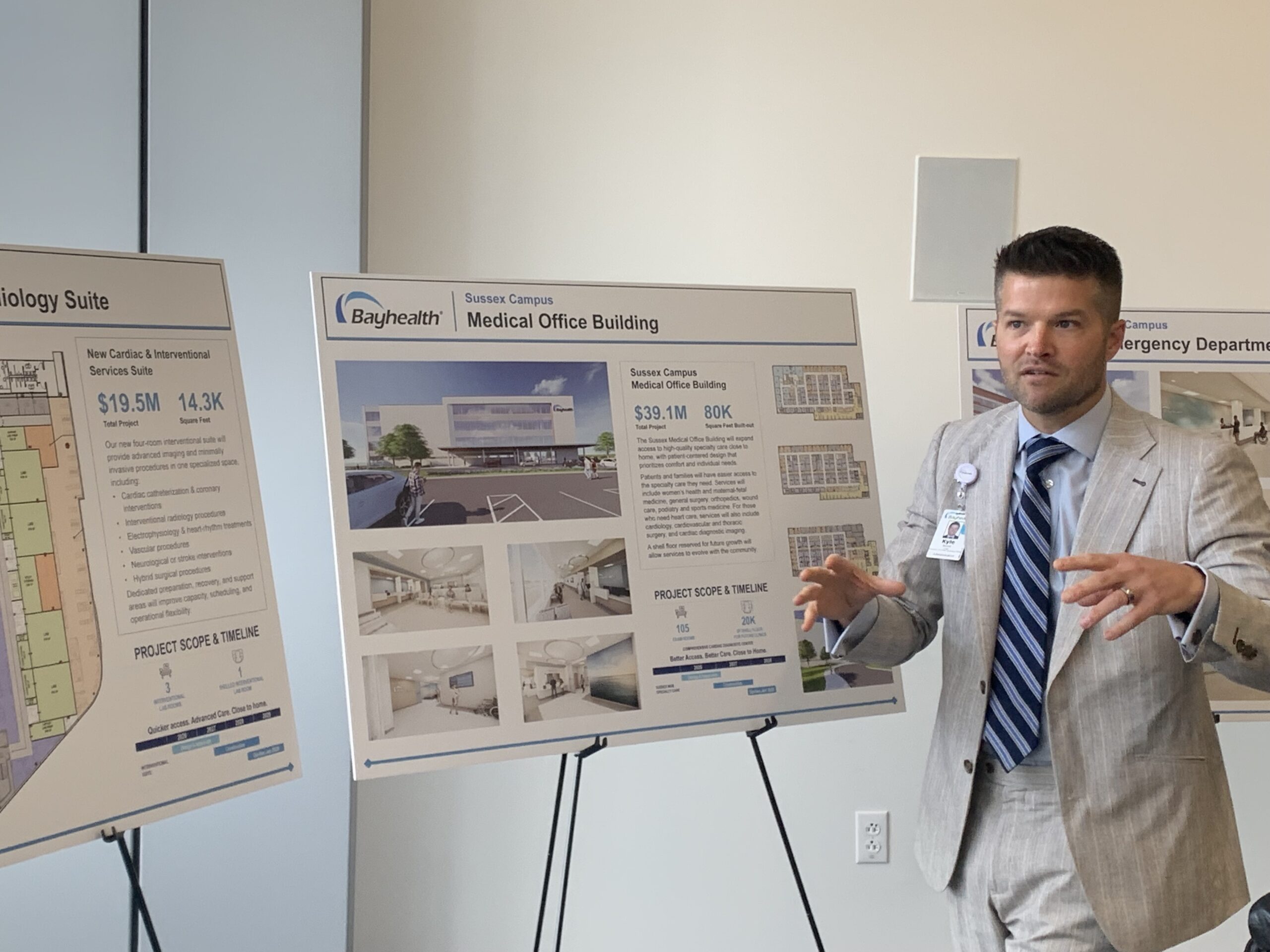
Bayhealth is dubbing the investment “The Next Wave,” with seven projects outlined that will extend through 2029.
Benoit said some of the projects will focus on outpatient services, mainly through what he describes as “responsible growth” amid the state’s increasing population.
“The worst thing we could do is overexpand, overextend and then we cannot deliver on the care that we want to provide,” Benoit said.
Benoit also said that outpatient service centers are often more cost effective for patients compared to traditional inpatient care, and are typically more accessible.
“We’ve got to make sure we have the professionals to recruit, the facilities that they can access and provide excellent care, and that’s what we’re committed to do,” Benoit said at the conference.
Related Content
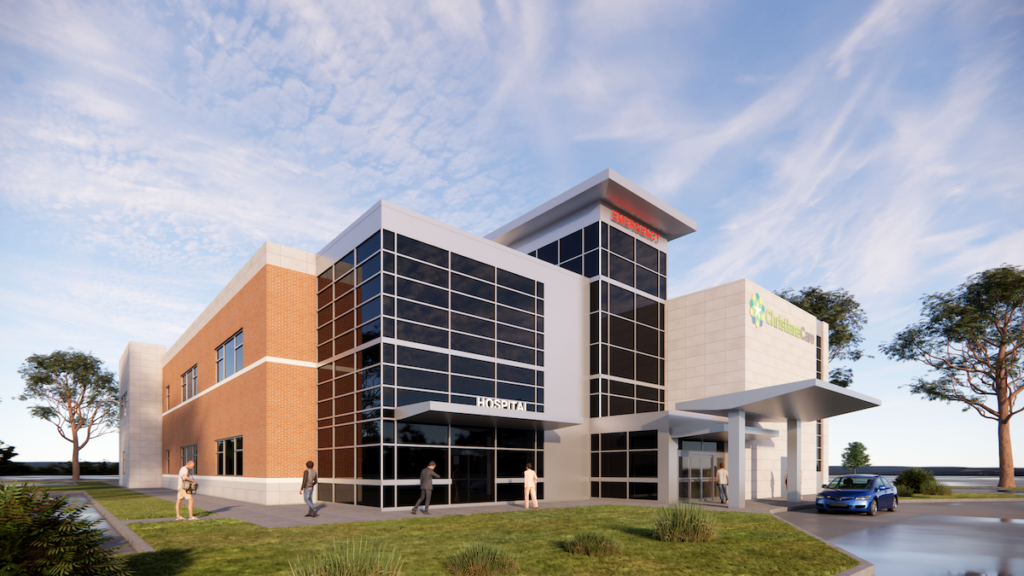
If approved, the two “neighborhood hospitals” proposed for Camden and Georgetown would open in 2028. Other hospital systems question if they actually comply with state law.
2 months ago
Listen 0:45Growing need in Sussex
In southern Delaware, Bayhealth plans to add a 80,000-square-foot medical office building to its Sussex campus in Milford. The office will go in between the campus’s hospital and outpatient center, and the PAM Rehabilitation Hospital building. Benoit said they will be breaking ground on the project in the coming weeks, and that it should be complete by January 2028.
The office will have four floors, with one floor being built as a “shell floor.” That’s a space that is constructed, but will not have a completed interior so that it can be reserved for future growth.
Additionally, the nearly $40 million project will host specialty practices, including cardiology, orthopedics, general surgery, women’s health and maternal-fetal medicine, and more.
“We are recruiting more physicians to that market down in Sussex County because of the growing need, especially around the areas of cardiology, general surgery [and] primary care. And so, we need more facility space for them, for our patients,” Benoit said.
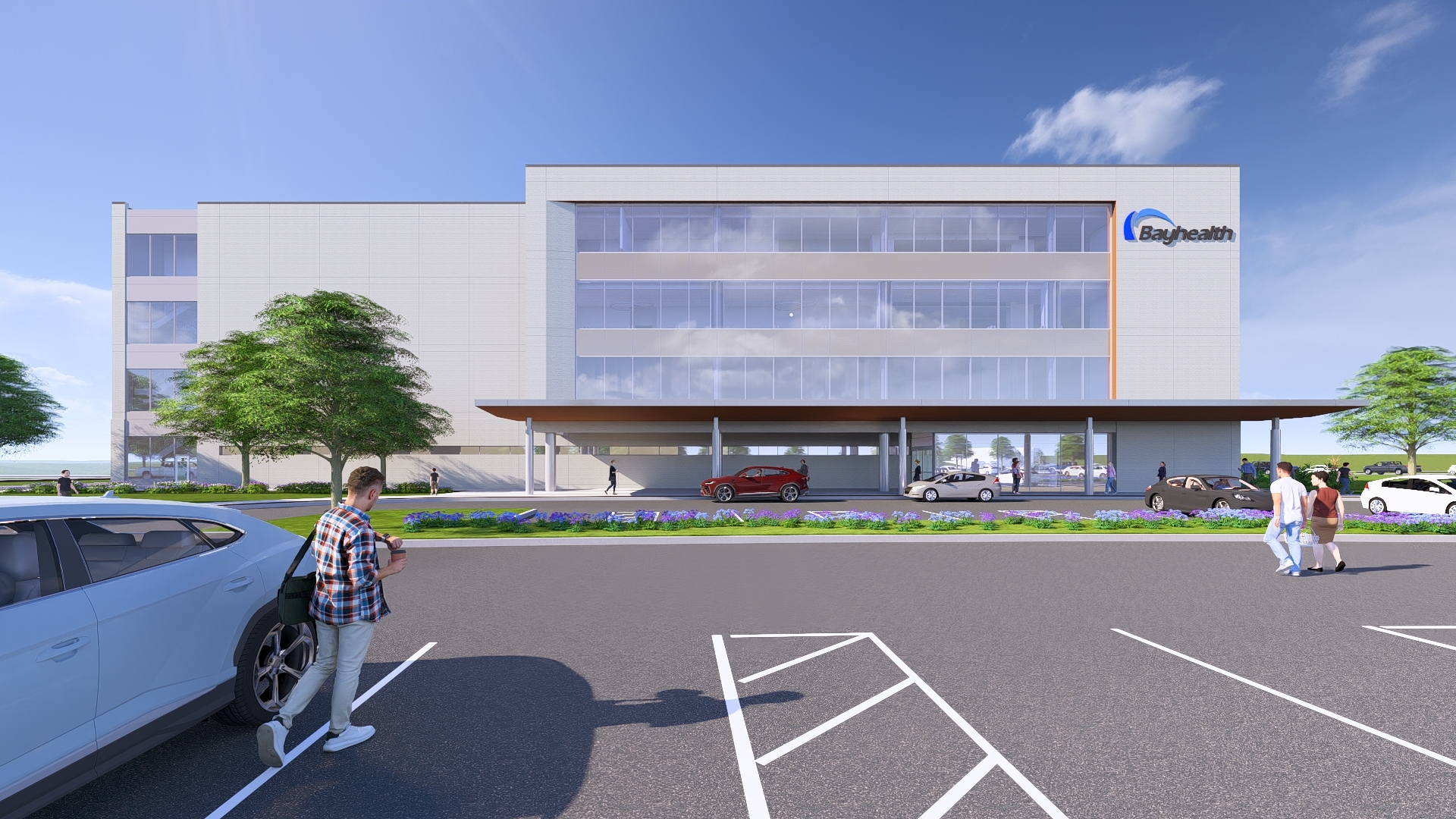
According to Benoit, a lot of patients currently use services at the Sussex campus’s outpatient center, and they will be using the medical office instead once it is complete. The office will also have more than 100 exam rooms. The goal is for the office to also open in January 2028.
Bayhealth also is adding an interventional radiation suite to the Sussex campus. People would be able to receive less invasive procedures at the suite, and would be able to go home that same day or within 24 hours. These procedures also pose a smaller risk of complications.
The Sussex campus does offer interventional services, but through a hybrid model in the campus’s operating rooms. Benoit said there is a growing need for the services in southern Delaware.
The suite would include four rooms, and provide advanced imaging. The suite is expected to open in January 2029.
Expansions are also coming to Bayhealth’s Total Care facility in Milton along the Lewes-Georgetown Highway. The facility is a hybrid emergency room, and is the first of its kind in the state. While other facilities have separate, free standing emergency rooms, the Milton facility has its emergency department integrated in its building.
Patients who walk into the facility pay based on the level of care they receive, which Benoit said is a part of Bayhealth’s responsible growth effort to control costs.
“Since we’ve opened, two-thirds of our patients that go to our facility get billed at a walk-in care rate,” Benoit said “If it was just a free sitting ER, they would all get ER care, ER bills, and ER is charged probably at a 10-fold price of what a walk-in patient would get.”
Bayhealth will spend $3.5 million to add 10 additional beds to the facility, doubling its current capacity. It also plans to build out an imaging suite within the facility. Benoit said that they will break ground on that project in November or December, and that it will be open by fall 2027.
“We’re really excited to advance this, double this volume down there. It has been incredibly successful and patients coming, really are traveling in from a farther distance than we would have expected since we opened that facility,” Benoit said.
Related Content

Delaware allocates funding to bring new health centers to 4 middle schools in rural Sussex County
The effort expands health care access for schools located in provider deserts and brings the model directly to middle schools, which have historically been ignored statewide.
3 months ago
Listen 0:53Kent expansions
Bayhealth is also taking the Milton model to Smyrna, and will build a Total Care facility there. That project is expected to cost more than $50 million. It would relocate their current emergency department in the town.
The new facility would host four operating rooms, advanced imaging, laboratory services and a multispecialty clinic. The building would also have six fast-track rooms, 14 emergency department bays and eight observation beds.
Benoit said that Bayhealth would be submitting a letter of intent to apply to the state’s hospital review board Wednesday afternoon. He said due to approvals and planning, the project likely won’t be live until fall 2029.
Bayhealth’s services located at the former Blue Hen Mall in Dover will also get an upgrade. The health care provider plans to create a “medical neighborhood” in the area, which Benoit said could become “a really significant ambulatory hub” for Kent County residents.
The location currently has a walk-in clinic, orthopedic clinic, imaging services and offers primary care and specialty services. Bayhealth only operates out of a portion of the property, and plans to purchase the rest of the facility. Benoit said the front-facing side of the building could house all patient care and facing activities.
“There’s nothing definitive in writing now, what this will look like, but we just are really excited [about] what this could become over time for the patients that we serve in and around Kent County,” Benoit said.
Bayhealth is also planning a vertical integration project for its Kent campus in Dover. The inpatient facility currently has four floors, but by the end of the project is expected to have 10 floors total, and will be expanded by about 225,000 square feet.
The first phase will replace an existing 32-bed medical-surgical unit, and add two more units, equaling 64 new private patient rooms.
“That has a big impact on reducing holds in the emergency room, and just being prepared for the growth in the population,” Murphy said.
The Dover location will also have shell floors, which will later transition to be private rooms. The location will also get a new expanded laboratory and cafeteria. The project should be complete by January 2029, and is expected to cost $250 million.
In addition, Bayhealth will invest $9 million into its Kent campus’s emergency department. That investment will prioritize adding 10 low-acuity ED bays, or emergency room bays for nonemergent patients.
“About two-thirds of our patients that come to the emergency room are nonemergent,” Murphy said. “This allows us to be able to treat them and discharge them from the emergency room quicker.”
The expansion will also add five behavioral health beds, and expand the department’s reception area. The new emergency department is expected to go live October 2027.
According to Benoit, the emergency department project is already underway, and the vertical integration will be breaking ground soon.

Get daily updates from WHYY News!
WHYY is your source for fact-based, in-depth journalism and information. As a nonprofit organization, we rely on financial support from readers like you. Please give today.
Part of the series

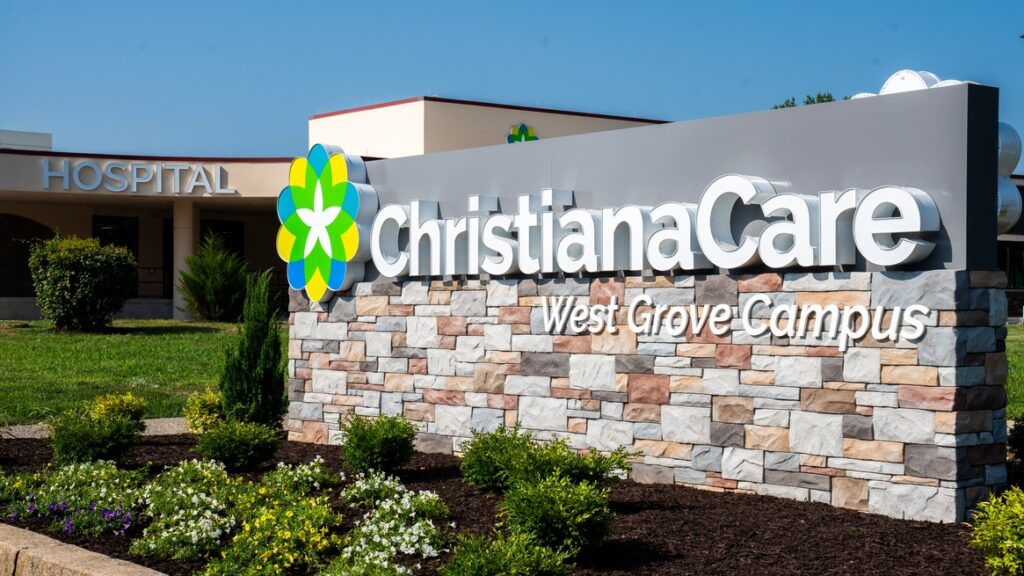
Southern Delaware hospitals say proposed ChristianaCare campuses will negatively impact region
Leaders from Bayhealth, Beebe Healthcare and TidalHealth argued to the state’s regulators that the campuses slated for Camden and Georgetown should be denied.
2 weeks ago
Listen 1:06
Delaware invests more than $1.3 million to build health care workforce in Kent, Sussex counties
The funding comes from the Rural Health Transformation Program, and aims to address the two medically underserved counties.
3 weeks ago
Listen 1:08
If approved, the two “neighborhood hospitals” proposed for Camden and Georgetown would open in 2028. Other hospital systems question if they actually comply with state law.
2 months ago
Listen 0:45