
Philadelphia ‘ICE Out’ legislation: Here’s what you need to know
Six of the seven bills restricting federal immigration enforcement activities in the city went into effect July 7.

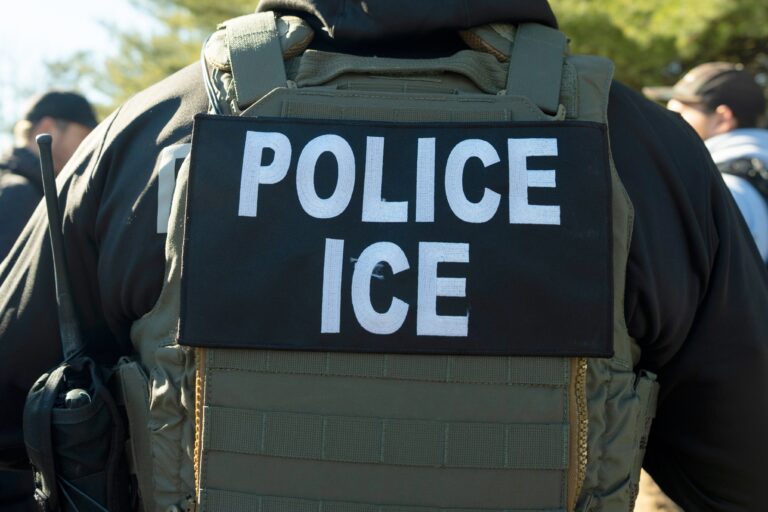
File: A U.S. Immigration and Customs Enforcement officer listens during a briefing, Monday, Jan. 27, 2025, in Silver Spring, Md. (AP Photo/Alex Brandon, File)
ICE latest: What to know
- ‘STOP ICE’: Philly Council members want to enshrine “sanctuary” status and ban ICE masking.
- ICE cooperation: WHYY News explores what immigration agreements are in place in Philly, the suburbs, New Jersey and Delaware.
- Legal protections: Here’s what to know if you’re an immigrant living in Philly. Plus, advocacy groups share what to know if you are stopped by federal immigration agents.
Philadelphia City Council passed a legislative package of seven bills that restrict federal immigration enforcement activities in the city on April 23.
Six of the seven bills went into effect July 7. A federal judge’s ruling in early July put the brakes on an ordinance that restricts U.S. Immigration and Customs Enforcement agents, as well as other law enforcement officers, from using masks and face coverings. The legislation will not be in effect pending the outcome of the Trump administration’s lawsuit against the city over the measure.
In late August, the Trump administration expanded the lawsuit to include a challenge to another piece of the legislation. An ordinance that codifies the city’s past practice of not honoring ICE administrative warrants, or requests to detain people on suspected civil immigration violations, amounts to a “blanket refusal” to cooperate with the federal government, and is therefore “unlawful,” the administration argues.
Meanwhile, immigrant rights groups are calling on Mayor Cherelle Parker’s administration to improve enforcement and implementation of the ‘ICE Out’ legislation. Advocates say they’ve had to fill in the gaps to educate residents about the new laws. Following a news conference on Aug. 25, Parker agreed to meet with advocates, according to the Pennsylvania Immigration Coalition.
Here is everything you need to know about the bills.
What does Philadelphia’s ‘ICE Out’ legislation entail?
The measures:
- Prohibit ICE agents and all other law enforcement officers from wearing masks or using unmarked vehicles, and require them to display badges, with exceptions for undercover work, SWAT teams and medical purposes.
- Codify the city’s longstanding commitment to not participating in collaboration agreements with ICE under its 287(g) program.
- Prohibit city agencies, including police, from collaborating with ICE and other federal civil immigration enforcement agents absent a judicial warrant.
- Prohibit city agencies from collecting information on people’s citizenship or immigration status and sharing that information or other personal data with ICE.
- Prohibit discrimination based on citizenship or immigration status by city agencies, employers, housing providers or businesses.
- Bar ICE from conducting raids on city-owned properties.
- Ban ICE access, absent a judicial warrant, to city-owned spaces, including libraries, health centers, shelters and rec centers.
Which members of Philadelphia City Council supported the bills?
At-large Councilmembers Kendra Brooks, Working Families Party, and Rue Landau, Democratic Party, introduced the legislation in January. All seven of the bills passed with a veto-proof majority of the 17-member Council.
“Philly is now on the map,” said Landau following the final vote on April 23. “The entire country and possibly the world, is watching us as having some of the strongest ‘ICE out’ protections in the entire country. We stood together and we told them what the community wants.”
Related Content
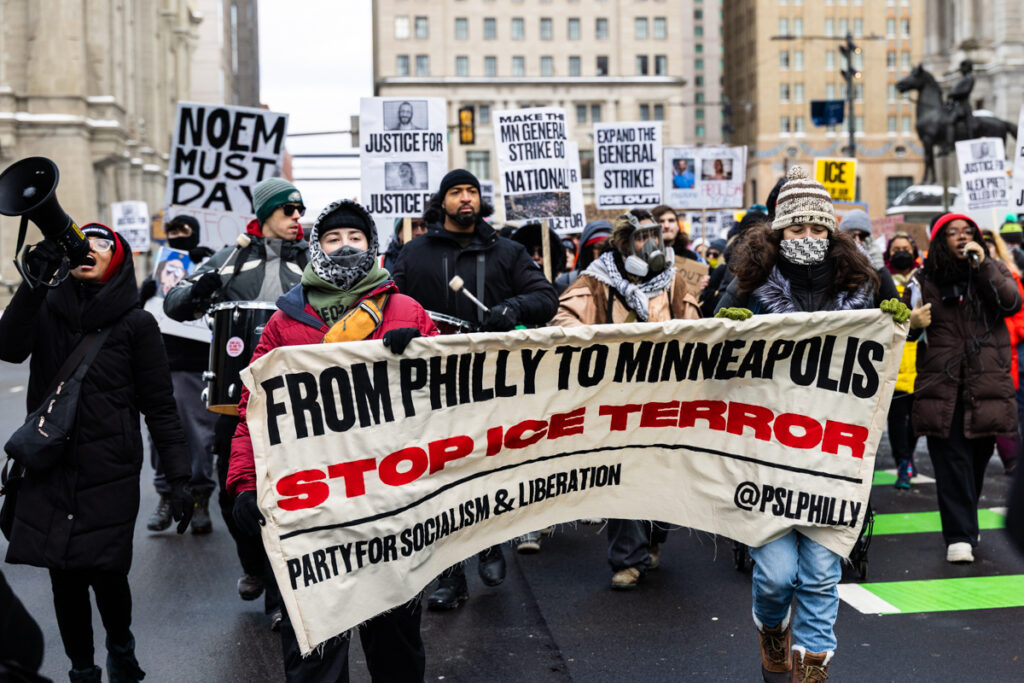
Some local law enforcement agencies have signed 287(g) agreements with ICE. Others are doubling down on limiting cooperation with federal agents amid a nationwide crackdown.
8 months ago
What is Mayor Cherelle Parker’s position on the ‘ICE Out’ legislation?
Parker signed all but one of the bills into law May 7. She declined to sign the measure restricting ICE agents and other law enforcement officers from using face coverings and concealing their identities.
The federal judge who issued the preliminary injunction order halting the bill wrote that by not signing the bill, Parker “acted with civic wisdom and courage to stand up for the Constitution and follow the rule of law to where it led.”
Backed by a veto-proof vote in Council, the bill was passed without Parker’s signature.
Brooks said in a statement on X on July 2 that the ruling was a “bad decision.”
“It’s unfortunate the Parker administration’s own doubts were used against the bill in this injunction,” she said. “No one else is dealing with that dynamic in their lawsuits.”
The Parker administration did not respond to WHYY News’ request for comment.
The U.S. 9th Circuit Court of Appeals recently blocked similar legislation passed in California that banned ICE agents from wearing masks. The administration is also suing New Jersey over a similar state law.
In late August, the Trump administration expanded the lawsuit to include a challenge to another piece of the legislation. An ordinance that codifies the city’s past practice of not honoring ICE administrative warrants, or requests to detain people on suspected civil immigration violations, amounts to a “blanket refusal” to cooperate with the federal government, and is therefore “unlawful,” the administration argues.
Immigrant rights groups and advocates have criticized Parker for not speaking out against President Donald Trump’s mass deportation campaign.
Parker has maintained an executive order dating to 2016 that limits police cooperation with ICE. She suggested that her strategy is to maintain federal funding and protect against retaliation of the kind Trump has previously threatened against so-called “sanctuary” jurisdictions.
Related Content
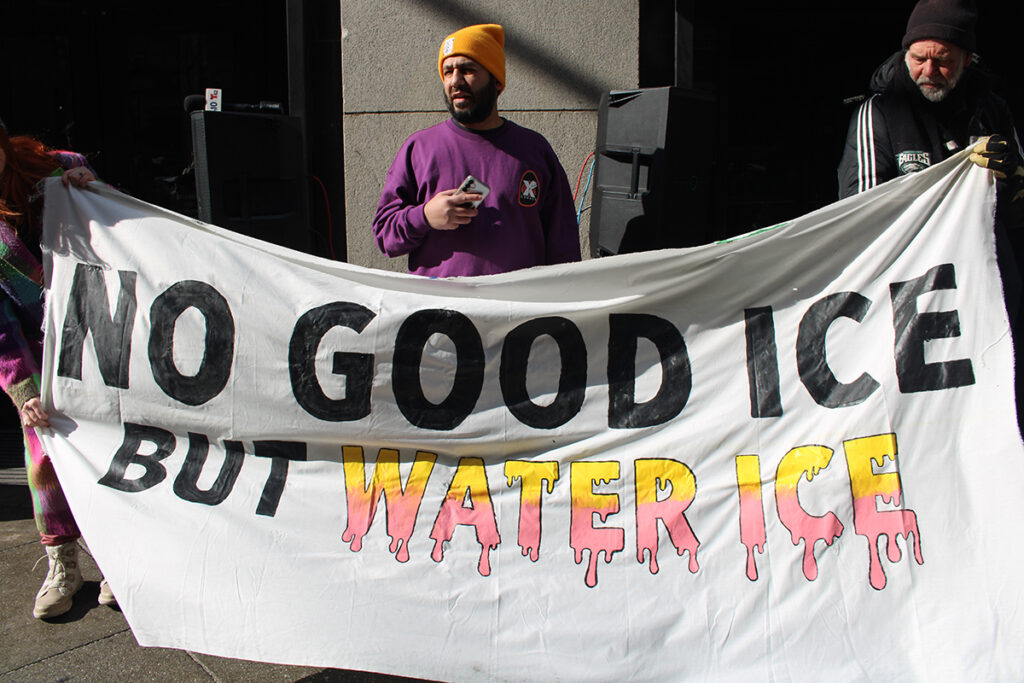
Philadelphia advocates call on Sheriff Rochelle Bilal to keep ICE out of courthouse
Bilal said her office does not cooperate with immigration enforcement officers, and said she has no authority over what happens outside of the Criminal Justice Center.
8 months ago
Listen 1:24What do immigrant rights groups and other stakeholders say about the legislation?
More than 70 organizations endorsed the legislation:
- The American Civil Liberties Union of Pennsylvania
- New Sanctuary Movement of Philadelphia
- Make the Road Pennsylvania
- Woori Center
- Asian Americans United
- Council on American-Islamic Relations-Philadelphia
- Victim/Witness Services of South Philadelphia
- National Domestic Workers Alliance
- OnePA
- Philly UNITE HERE
- Pennsylvania Working Families Party
- Hebrew Immigrant Aid Society Pennsylvania
- VietLead
- Philly Democratic Socialists of America
- Abolitionist Law Center
- Service Employees International Union 32BJ
- American Federation of State, County and Municipal Employees District Council 47
- The Philadelphia Federation of Teachers
- The Defender Association of Philadelphia
- UNITE HERE Local 274
More than 1,000 Philadelphians have signed a petition in support of the legislation.
Since the legislation took effect July 7, immigrant rights groups have called on Mayor Cherelle Parker’s administration to improve enforcement and implementation of the ‘ICE Out’ legislation. Advocates say they’ve had to fill in the gaps to educate residents about the new laws. Following a press conference on Aug. 25, Parker agreed to meet with advocates, per Pennsylvania Immigration Coalition.
Who opposed the legislation?
Some residents defended ICE and the Trump administration’s federal immigration enforcement operation at Council hearings and meetings.
The Philadelphia ICE Field Office and the U.S. Department of Homeland Security did not respond to requests for comment following the bills’ passage and after the federal judge ruled on the measure restricting federal agents from using face coverings.
How does Philly’s ‘ICE Out’ package compare to other ICE-related laws in the region?
Other counties and municipalities throughout Pennsylvania, including Allentown, Reading and neighboring Montgomery County, have passed similar legislation restricting cooperation with ICE, except in cases of obligations under federal law.
Most so-called “welcoming” ordinances or policies bar cooperation with ICE absent a judicial warrant, and prohibit law enforcement agencies from honoring ICE administrative detainers, which are not signed by a judge. Many such policies also restrict local government agencies and law enforcement from collecting information regarding a person’s immigration status unless required by law, and prohibit leasing municipal property to ICE.
Delaware and New Jersey have passed legislation at the state level limiting or restricting local law enforcement collaboration with ICE.
Related Content
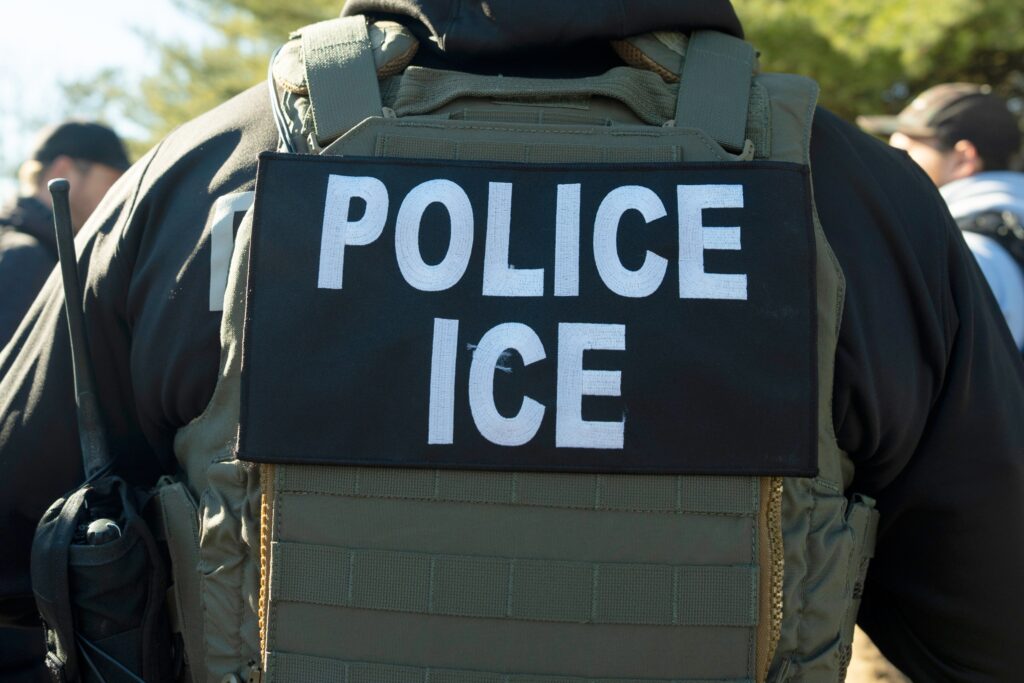
Advocacy groups offer guidance on your rights for documenting, interacting with ICE
Fears of an intensified crackdown in Philadelphia have sparked increased interest about how to interact with immigration enforcement agents and document ICE activity.
8 months ago

Get daily updates from WHYY News!
WHYY is your source for fact-based, in-depth journalism and information. As a nonprofit organization, we rely on financial support from readers like you. Please give today.
Part of the series
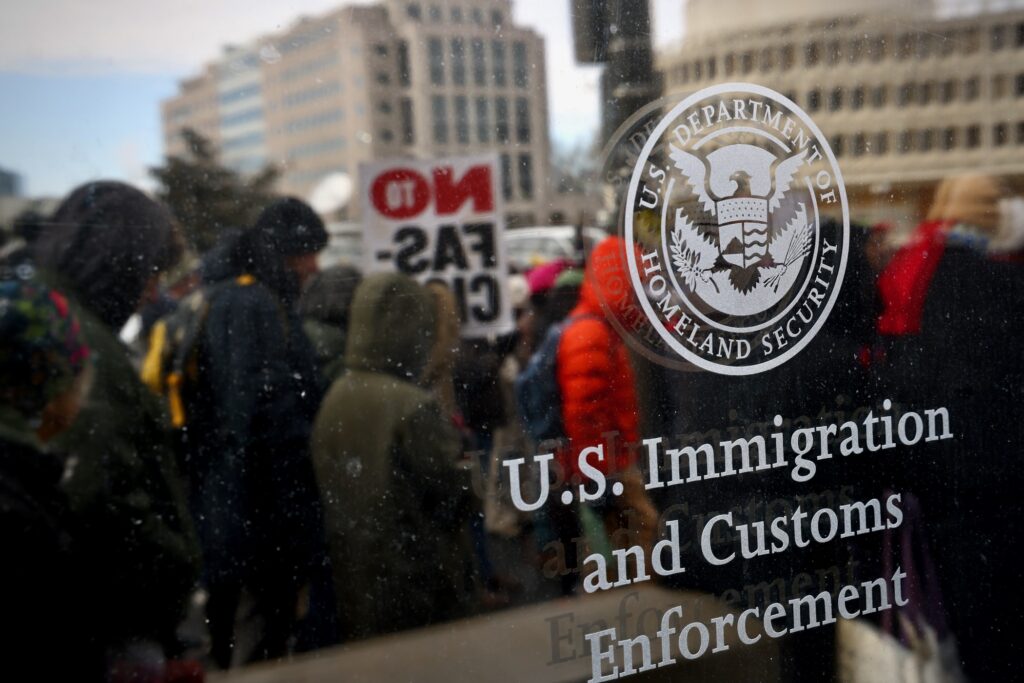
ICE abandons plans to convert 2 rural Pennsylvania warehouses into detention centers
The Pennsylvania Department of Environmental Protection said doubling the population of the rural communities would tax the sewage system and drain drinking water supplies.
2 months ago
Listen 1:00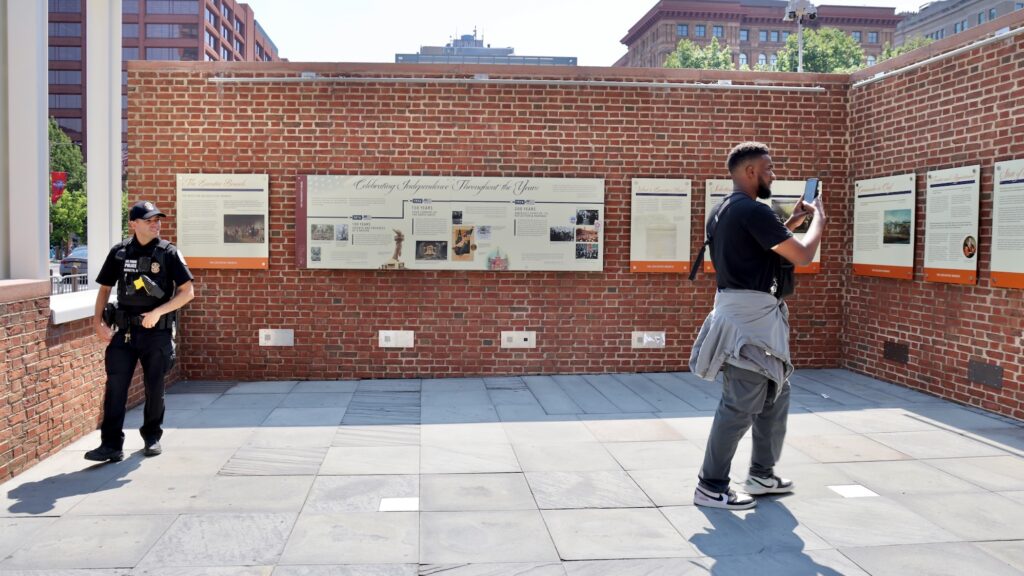
The city and activists have vowed to continue the legal fight to restore the original panels that focused on the nine enslaved people held by George Washington at the site.
2 months ago
Listen 1:08
Under Trump, immigration arrests surge in Pennsylvania, Delaware and New Jersey
New Jersey and Pennsylvania rank among the 10 states with the most immigration arrests during the first 14 months of President Donald Trump’s second term.
3 months ago
Listen 1:43