

WHYY, Penn’s 250th anniversary series: How the French and Haitian Revolutions intersect with American Independence
The latest event in the series recounted Haiti’s fight for independence and how Haitian immigrants led to Philly’s role as capital of the catering industry.
Listen 1:28
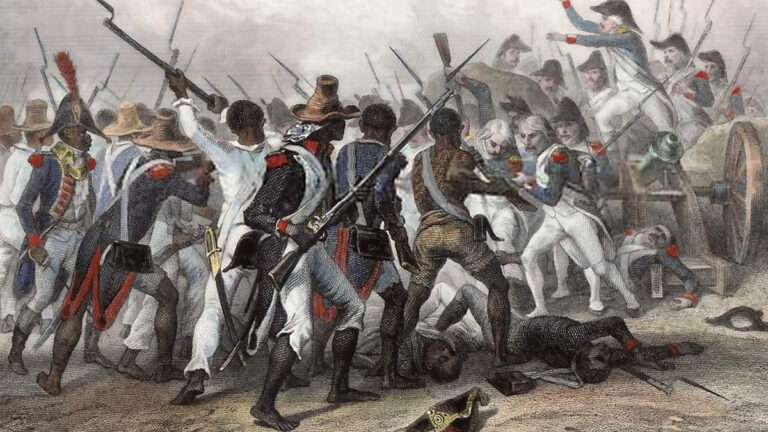
Images like these, depicting the Battle of Vertières, a major battle of the Second War of Haitian Independence, fueled fears of slave rebellion in the United States. (Wikimedia Commons)
From Philly and the Pa. suburbs to South Jersey and Delaware, what would you like WHYY News to cover? Let us know!
WHYY joined the University of Pennsylvania’s McNeil Center for Early American Studies to present “We the People: Revolutions for Everyone,” a unique series that uses the 250th anniversary of the signing of the Declaration of Independence as a starting point to examine how ideas about democracy, freedom, citizenship and belonging have evolved in Philadelphia and across the United States.
Through five distinct community conversations across the city, the program explores themes embedded in the declaration, such as liberty, belonging, exclusion and immigration.
The latest in the series focused on the French and Haitian revolutions, the former of which profoundly impacted the latter, and the latter of which influenced the diverse makeup of Philadelphia.
That focus is also the theme of a temporary exhibit at Penn Libraries’ Kislak Center, where the event took place on March 23. The temporary exhibit will run through Sept. 4.
“We are celebrating Philadelphia as the birthplace of America, being a pivotal place for the roots of the American Revolution, including a vibrant immigrant existence then and today,” Sarah Glover, WHYY’s vice president of news, said at the event. “And in that vein, it is important to acknowledge the complexities and similarities from different revolutions over time.”
Vive la révolution and Viv revolisyon an
Historian John Davies, one of the panelists, described the Haitian Revolution as being deeply intertwined with the French Revolution, which began in 1789. According to Davies, the upheaval in France created an opening in the French colony of Saint-Domingue, as Haiti was then known, where different groups began competing for greater rights and autonomy.
White plantation owners debated whether to break from French control, while free people of color sought expanded political and civil rights from the French government. At the same time, enslaved Africans in the colony saw an opportunity to fight for their own freedom.
“It was largely, at first, a slave revolt that took advantage of the opportunities that the French Revolution created,” Davies said.
As France descended into the Reign of Terror era of the revolution, French commissioners sent to Saint-Domingue struggled to maintain control. Eventually, they realized they could not defeat the uprising without the support of formerly enslaved people. In 1793, French authorities abolished slavery in the colony for those willing to fight for France, transforming the conflict from a slave revolt into a broader revolutionary war.
Davies said figures like Toussaint Louverture emerged during this period by navigating both the ideals and contradictions of the French Revolution. Louverture aligned himself with revolutionary France after slavery was abolished and declared himself governor-general of Saint-Domingue.
But tensions with Napoleon Bonaparte later pushed the colony toward full independence and led to a “resurgence of insurgence,” as Davies called it. By the end of 1803, after defeating French forces, Haiti became the first Black republic in the Western Hemisphere and the first nation founded through a successful slave revolution.
“On Jan. 1, 1804, we can say the Haitian Revolution end[ed],” Davies said. “The new state of Haiti has been established.”
Related Content
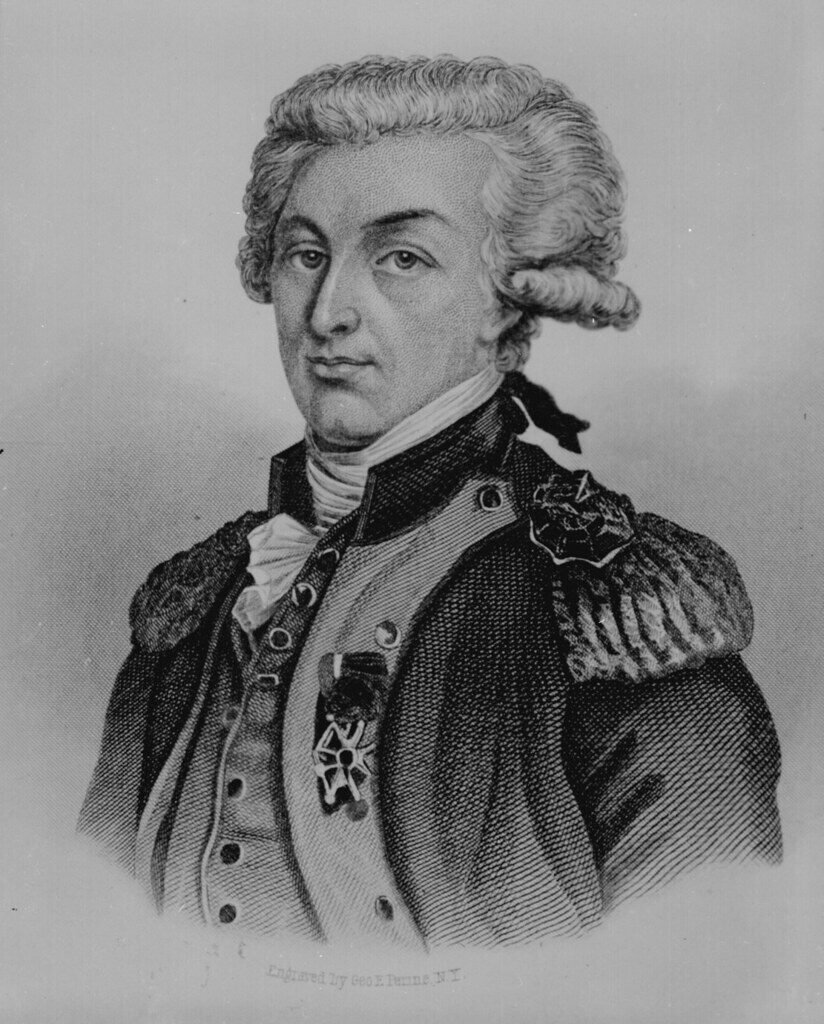
Tavern Tour 250: How a French aristocrat became a hero of the American Revolution
We’re talking about France's role in America’s quest for independence, and the impact of one of George Washington’s right-hand-men: the Marquis de Lafayette.
Air Date: February 16, 2026 1:00 pm
Listen 50:43To Philadelphia
During the years of conflict, thousands fled to the U.S., which had only recently gone through its own revolution. Several hundred enslaved or formerly enslaved Haitian refugees landed in Philadelphia, Pennsylvania, the first state in the nation to pass an abolition law, the “Act for the Gradual Abolition of Slavery,” in 1780.
The law did not immediately grant freedom, but gave it to children born into slavery when they turned 28 years old. As a result many young Black Philadelphians — Haitian and otherwise — started gaining their freedom later in the 1800s.
Many soon became barbers, hairdressers, carpenters, cabinet makers and entrepreneurs.
“A lot of these formerly enslaved Saint-Dominguens, they stick with what they know and they sort of fill these niches, but some of them are very successful,” Davies said. “They have a definite presence in the community and … this is how they make a living.”
Some also became successful caterers, as W.E.B. Du Bois had written about in his study, “The Guild of the Caterers, 1840–1870,” published in “The Philadelphia Negro: A Social Study.”
Du Bois recognized that while most Black Americans were confined to menial labor, a distinct class of caterers attained high social status and economic success. Among them was Haitian-born Peter Augustin, who is credited with helping establish Philadelphia as “the center of American catering.”
Filadèlfi jodi a
At least 12,000 people who identify as Haitian now live in Philadelphia, though there are likely more residents of Haitian descent. Most live in North Philadelphia areas, such as the Olney and Mt. Airy neighborhoods.
The Haitian population also holds a greater variety of jobs and careers, according to Alain Joinville, deputy director at the Office of Immigrant Affairs, who joined the “We the People” panel. Haitians are doctors, nurses, entrepreneurs, performers, civic organizers and artists, he said, as he pointed to the husband and wife team who own and operate Honeysuckle Restaurant in North Philly.
“The wife is Haitian American and all of the food is infused with Haitian spices and Haitian soul, and it’s won many national awards,” Joinville said.
While some of the city’s Haitian population are descendents of those earlier Haitians, others came in as refugees over the years, fleeing from the civil strife or environmental disasters Haiti often finds itself suffering from. Some joined the Philadelphia community in 2010, fleeing the 7.0 magnitude earthquake that flattened entire cities in Haiti.
In addition, the Obama administration granted refugees temporary protective status — a visa designation that gives recipients the ability to live and work in the U.S. while their country is in turmoil. The Trump administration is trying to universally revoke that status and the U.S. Supreme Court is expected to weigh in on the issue.
Related Content
Philadelphia gave America its first major musical oratorio in 1781. Then it got buried in poop
Tempesta di Mare is presenting a fully orchestrated “America Independent, or The Temple of Minerva” as it has never been done before.
5 months ago
Local Haitian-American artist Alain Jean-Baptiste and his family fled to Philadelphia in 2010, following the earthquake. He has since gone to college in Philadelphia and built a career in art and graphic design.
“After the earthquake happened, there wasn’t really a life for us in Port-au-Prince anymore,” he said.
Since then, more earthquakes and other natural disasters as well as regular civil unrest have continued to deter Haitians from returning, even those that would like to.
“Haiti is constantly experiencing a lot all the time,” Jean-Baptiste said.
Coming up next…
The next event in the series, “Youth Voices and Perspectives on the American Revolution,” will be held at the National Constitution Center on Wednesday, May 27.
An expert panel will discuss the perspectives of youth on the American Revolution and the systems that it later influenced — such as elections, institutions and the pursuit of happiness as an experience shaped by ethnicity, gender, class and access to power.
Then on June 9, the conversation will center around dissent: How Americans have challenged power across history — from petitions and protests to journalism and organizing. That event will be hosted by the Stenton Family Manor, and reflect on the role of a free press in informing the public, amplifying debate and sustaining civic dialogue in moments of uncertainty.
Then later in June, WHYY will host the series finale, a conversation about the promise of happiness, exploring how Americans have engaged their constitutional rights and pursued, challenged and redefined the ideals of life, liberty and opportunity over time. From immigration and labor to race and reform, participants will consider how opportunity has been created, denied and fought for — and how the pursuit of happiness continues today.
To access the latest information and register for these semiquincentennial conversations, visit the WHYY events page.
The WHYY, Penn 250th series of community conversations is made possible due to support from the Philadelphia Funder Collaborative for the Semiquincentennial.

Never miss a moment with the WHYY Listen App!


WHYY is your source for fact-based, in-depth journalism and information. As a nonprofit organization, we rely on financial support from readers like you. Please give today.
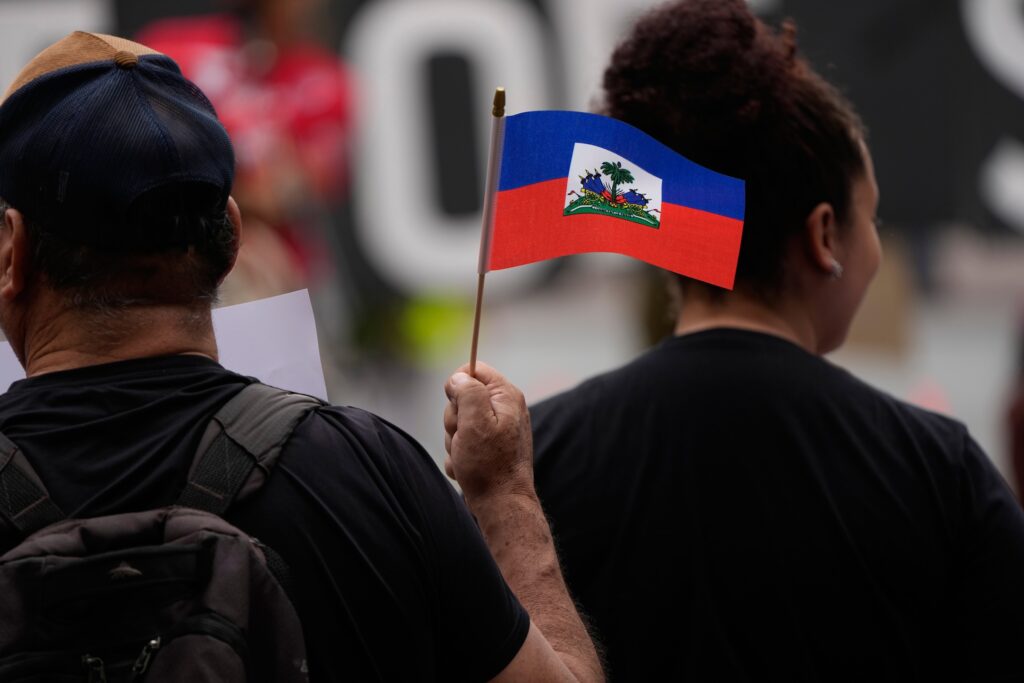
The end of the Obama-era policy could mean an imminent deportation threat for Haitians who have been living in the U.S. for over 15 years.
2 months ago
‘I’ve been pretty scared’: Philadelphia’s Haitians react to home country’s turmoil
Political turmoil, natural disasters, gang violence, a prison breakout and an exiled former prime minister have Haiti on edge.
3 years ago

Philly Haitian community reacts to assassination and chaos
Haitian President Jovenel Moïse was killed during a raid of his home on Wednesday. He had continued to rule Haiti by decree after his term ended in February.
5 years ago