
At Pennsylvania 3rd Congressional District forum, primary candidates share policy goals but split on approach to power
Democratic candidates agreed on restoring health care subsidies and abolishing ICE but differed on who was most qualified to take Philly’s interests to Congress.

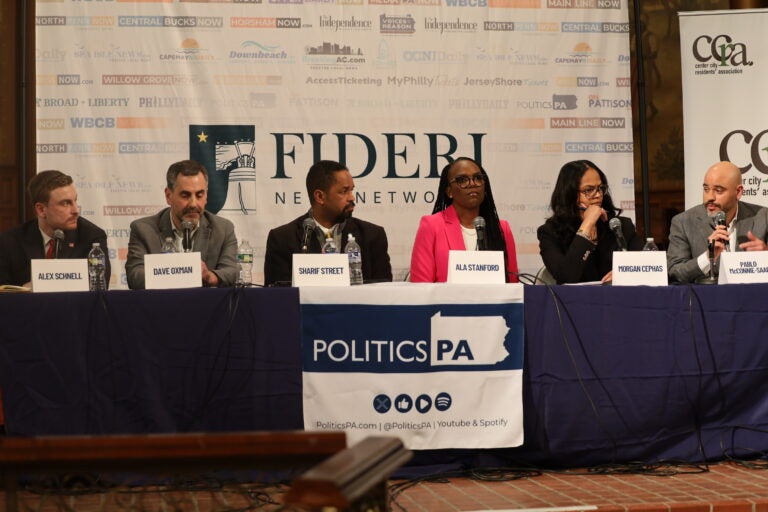
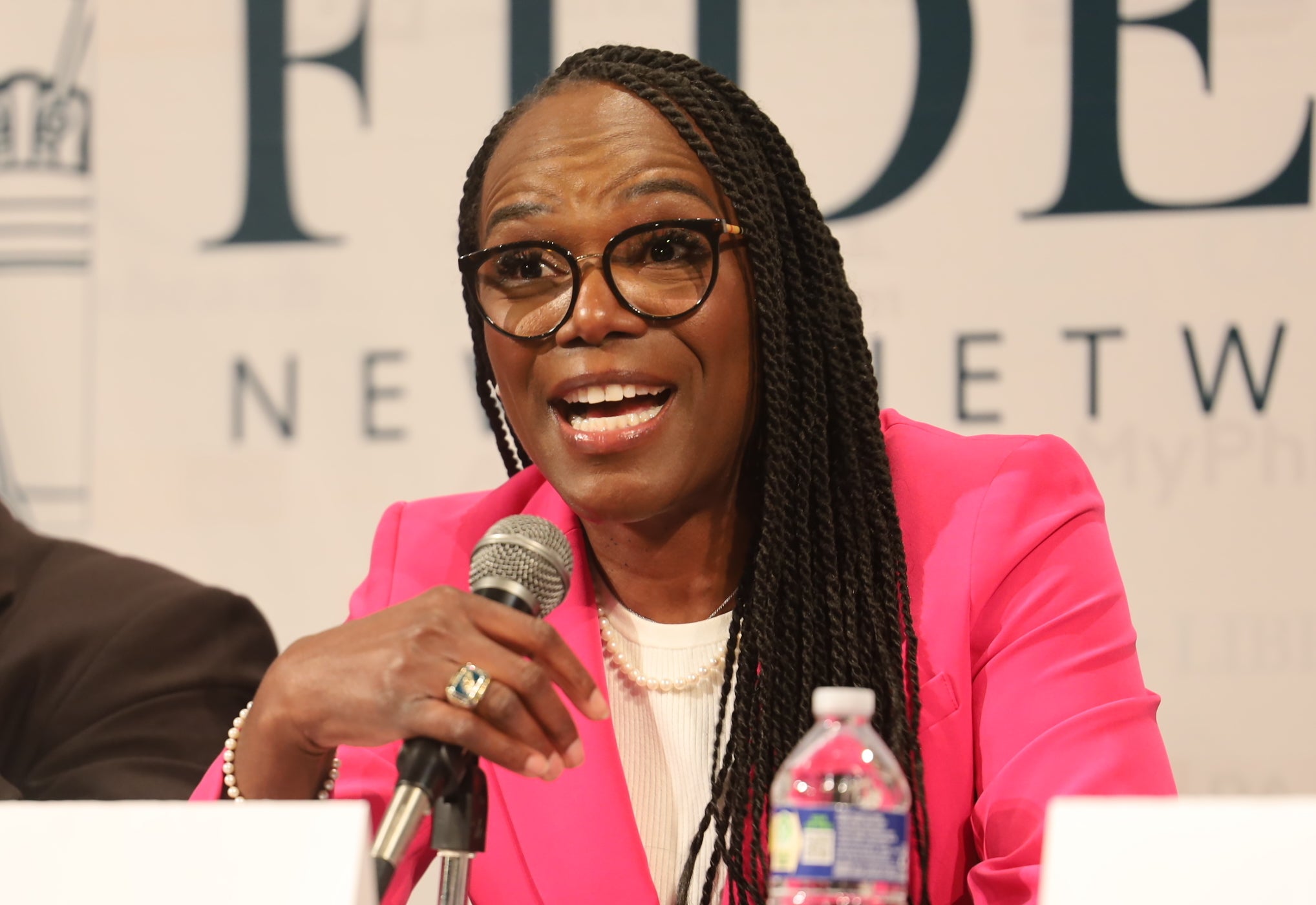
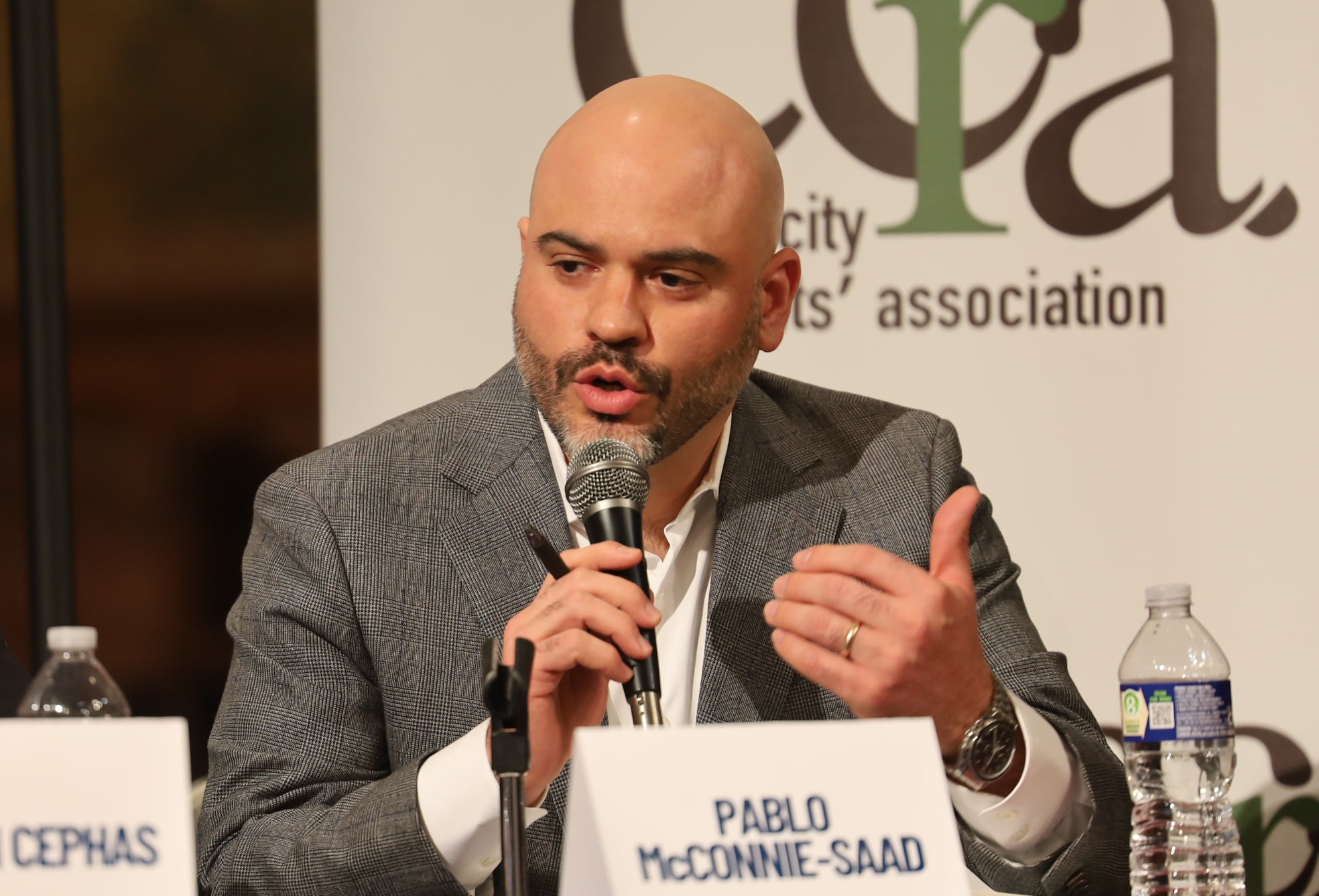
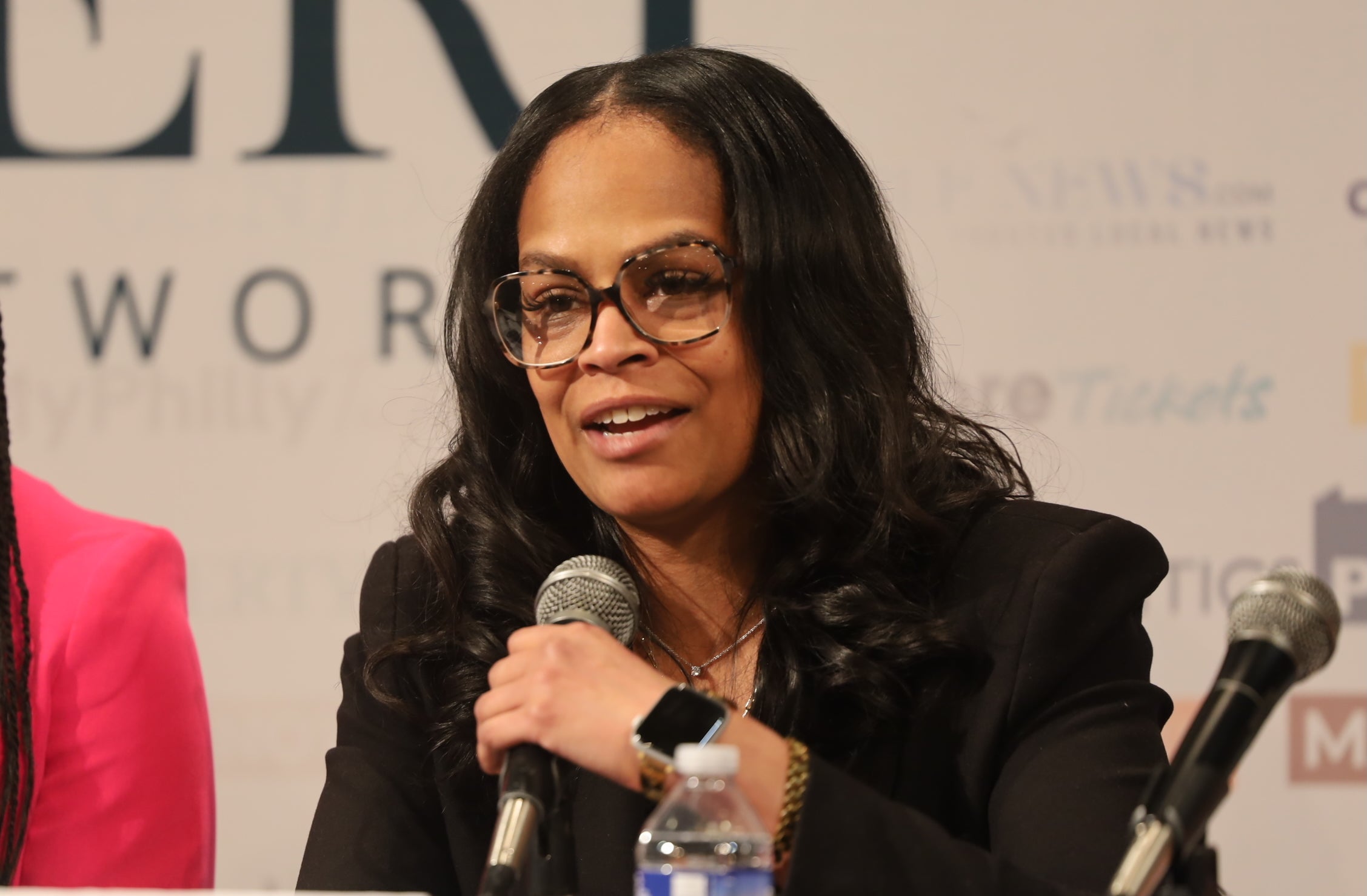
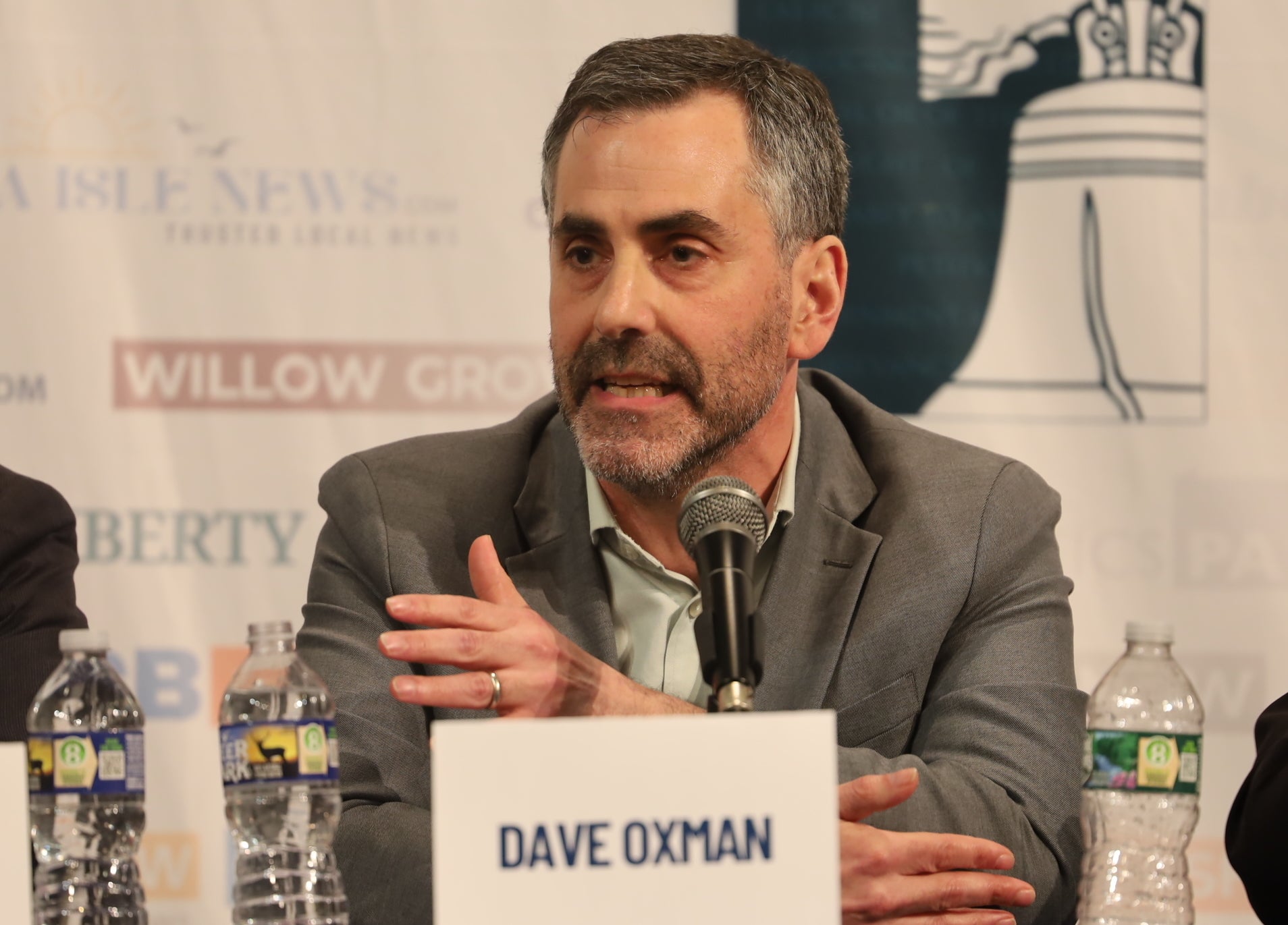
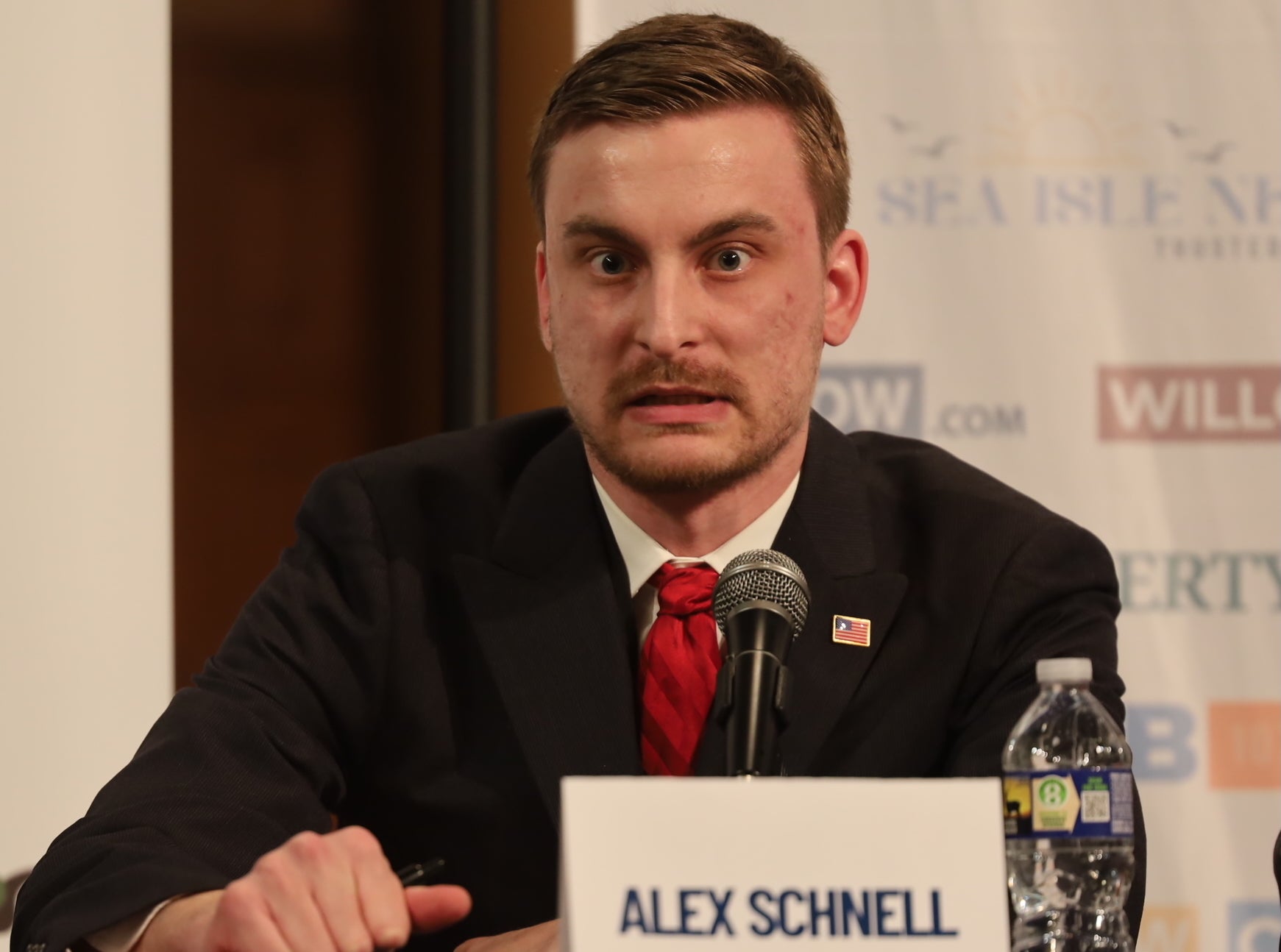
Candidates for Pennsylvania’s 3rd Congressional District discuss the issues at a forum in Center City Monday night, Feb. 9, 2026. (Carmen Russell-Sluchansky/WHYY)
From Philly and the Pa. suburbs to South Jersey and Delaware, what would you like WHYY News to cover? Let us know!
Voters in Philadelphia got a side-by-side look at several of the candidates for Pennsylvania’s 3rd Congressional District as six of the 13 candidates currently in the race participated in a public forum that was polite and cordial and which delved into expansive policy questions.
The event, organized by the Center City Residents’ Association, PhillyDaily and Politics PA, drew many dozens of people, nearly filling the pews of the Church of the Holy Trinity in Rittenhouse.
The lone Republican in the race, Alex Schnell, joined five Democrats: state Rep. Morgan Cephus; Pablo McConnie-Saad, a climate advisor under President Joe Biden; Dr. Dave Oxman; Dr. Ala Stanford and state Sen. Sharif Street, as they delved into concerns over U.S. Immigration and Customs Enforcement, housing, health care, SEPTA and the war in Gaza. State Rep. Chris Rabb, a Democrat, had a personal emergency and was unable to join the panel.
The questions and answers reflected the unusual dynamics of the race: a deeply Democratic district, no shortage of qualified contenders and a primary that will almost certainly decide who goes to Washington, D.C.
Related Content
Sharif Street pulls ahead in fundraising for 3rd District congressional race
Candidates Dave Oxman and Ala Stanford loaned to their campaigns ahead of the May 19 primary, which now includes 13 candidates.
1 week ago
Experience vs. ‘innovation’
The five Democrats present agreed on most policy prescriptions and mostly competed on the question of who was best qualified to take the district’s interests to Washington, D.C.
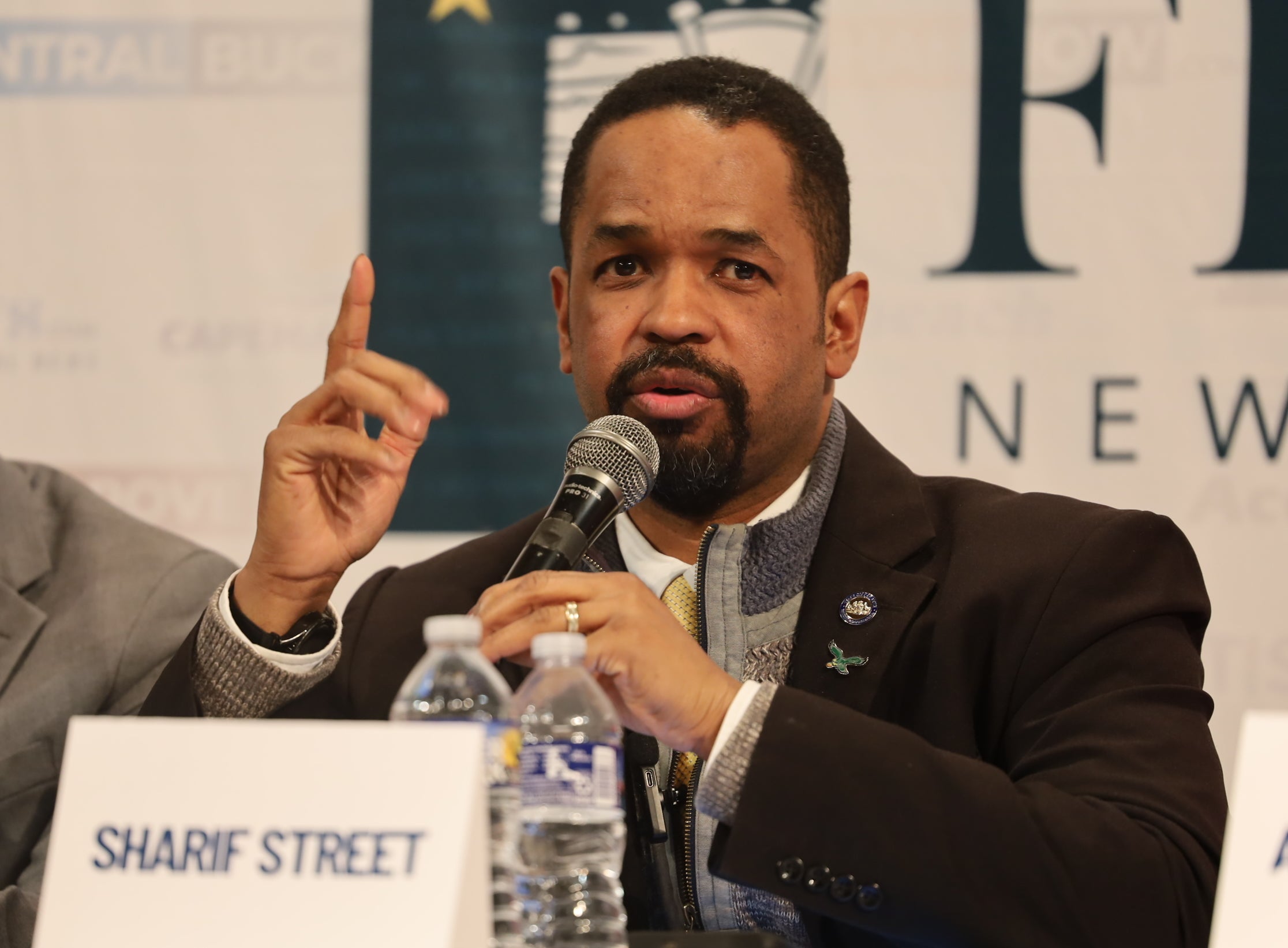
Street and Cephas repeatedly pointed to their legislative experience, arguing that time spent navigating Harrisburg’s power dynamics has prepared them to deliver results in Congress. Street cited his role passing bipartisan legislation in a Republican-controlled Senate, saying every bill he advanced required “understanding the legislative process to get things done.”
Cephas emphasized her record as Philadelphia Delegation Chair, noting that she had already “gotten bills to the governor’s desk” and framed experience as essential in a moment of political instability.
“It’s not about just talking about big ideas, it’s about delivering,” she said.
By contrast, Stanford and McConnie-Saad leaned into outsider narratives, arguing that the system itself is broken. Stanford described herself as “not part of the system” and pointed to her leadership during the COVID-19 pandemic, founding the Black Doctors Consortium to get vaccines to underserved communities, as proof she could act decisively.
“It was not my responsibility. You did not elect me to do it,” she said. “You did elect some of the people here, and I filled the gap. And in times like these, we need innovation.”
McConnie-Saad similarly argued that Philadelphia has been “voting for the same sort of politician over and over again with less and less to show for it,” presenting his background in federal policy and urban affairs as a break from traditional political pathways.
“This was the poorest big city in the country when I was growing up. It’s 2026. It’s still the poorest big city in the country after Houston,” he said. “And it’s not because things are getting better here. It’s because things are that bad in Houston.”
Affordability, health care and SEPTA
When asked to identify the most pressing issues facing Center City residents, candidates largely converged around affordability, health care and transportation.
Cephas pointed to the recent expiration of enhanced Affordable Care Act tax credits, noting that “we’ve seen 80,000 people in one month alone drop their health care as a direct result.”
Street echoed that concern, saying that restoring the credits would help stabilize premiums across the state and pointed to his role in creating Pennie, the commonwealth’s online health insurance marketplace.
“I certainly, as a congressman, will fight for restoring those federal tax credits that we used to create Pennie,” he said.
Oxman, a physician at Jefferson Health, connected health outcomes to general affordability issues.
“You cannot be healthy if you don’t have a job that pays a living wage,” he said. “You cannot be healthy or your kids can’t be healthy if their school is overcrowded and underfunded. And you certainly cannot be healthy if you are kicked off your health insurance or you can’t afford to buy your medications.”
Housing affordability emerged as another major area of agreement. Candidates cited a shortage of affordable units and the growing influence of real estate investment firms in the housing market.
Cephas said Philadelphia is “70,000 affordable housing units short to meet the demand” and warned that thousands of federally subsidized units could soon expire. “We want to ensure that Philadelphians can afford Philadelphia,” she said.
Oxman framed the issue as economic and moral.
“There are people tonight who are choosing between buying their groceries, paying for their medications or paying for their rent,” he said, adding that “the largest growing segment of the homeless population is children.”
McConnie-Saad argued that private equity firms are “manufacturing an increase in cost of housing” and called for federal action to increase supply and ensure new units remain affordable.
Several candidates also stressed the importance of federal investment in SEPTA.
“We need to make sure that the federal government does its part to deal with the deferred maintenance that SEPTA has,” Street said, calling for a transit system that is “solvent” and affordable.
Cephas agreed but added she would like to see it “free and accessible to every single person across the city of Philadelphia” by stopping the system from being “nickeled and dimed.”
Schnell criticized SEPTA’s reliability, citing recent delays and cancellations.
“I think we were up to like 70%, if not more, of these delays going on,” he said, arguing for reforms modeled on European rail systems with more frequent and predictable service.
Street added gun violence as another issue that he would prioritize in Congress.
“I walk past people every day who deal with gun violence,” he said. “Some days I have to tell my wife not to come home right now because it’s not safe. I have prioritized making sure that we do whatever we can to stop gun violence in a way that I think is a little different than others.”
ICE and Gaza
Some of the sharpest discussion of the evening came during exchanges on ICE and the war in Gaza and related protests. Democrats in Washington, D.C., have been calling for reforming ICE as they negotiate a federal budget with Republicans, but all of the Democrats at the forum said ICE should simply be “abolished.”
Street said the agency’s culture was beyond reform.
“The culture of ICE has been corrupted at a level where it’s not redeemable,” he said. “We should not have an agency that has been corrupted with neo-Nazis.”
Stanford called ICE a “paramilitary force” and said its funding comes at the expense of basic services.
“It’s taking money away from our schools and away from our infrastructure and away from our health care so we can terrorize cities,” she said.
McConnie-Saad noted that ICE was created after 9/11 and argued there was “no reason to maintain an agency that was created for part of the weaponization of the federal government.”
Oxman recounted watching the video of the shooting of Renee Good, a protester who was killed by an ICE officer in Minneapolis.
“I don’t like the idea of a federal shutdown any more than anyone else does, but if this is not an issue we’re standing up for, I really don’t know what is,” he said.
Schnell said ICE had “gone way too far” and violated constitutional protections, but stopped short of supporting abolition.
“I wouldn’t go as far as actually abolishing them,” he said, instead calling for reforms that would narrow the agency’s focus to serious crimes.
Candidates were also asked about protests related to the war in Gaza, including a recent demonstration in Center City that some Jewish organizations said crossed into incitement. Street and some other Democratic Party lawmakers denounced the rally as “pro-Hamas,” referencing the Palestinian militant group that has been the de facto governing authority in Gaza for nearly two decades.
“As an American Muslim, I feel compelled to say that Hamas is a terrorist organization and should be condemned — not glorified,” Street said in a post on social media.
“We got to stand up against this hate so we don’t have violence right here where we live,” he said at the forum, referencing antisemitic attacks in Pennsylvania.
Oxman thanked Street for publicly condemning violence, but also denounced the sustained assault on Gaza.
“Oct. 7 was the worst massacre of Jews since the Holocaust,” Oxman said. “At the same time, there is nothing complex about calling out the horror that is happening in Gaza, the indiscriminate killing of civilians and food being used as a weapon of war.”
Stanford said she opposed violence and dehumanization on all sides.
“I believe that the Israeli people have a right to live with freedom and dignity and safety, and I believe that the Palestinian people have a right to live with freedom and dignity and safety,” she said.
Campaign finance and corporate influence
Campaign finance emerged as one of the clearer dividing lines among the candidates, particularly among the Democrats.
Oxman and McConnie-Saad both emphasized that they do not accept money from corporate political action committees, arguing that such contributions distort representation.
“You cannot represent the people of this district if you’re also trying to represent health insurance PACs, gaming industry PACs, nursing home networks,” Oxman said, possibly in a veiled attack on Stanford’s campaign. Her donors include the PAC for Select Medical Corp., a Mechanicsburg firm that owns rehab hospitals and physical therapy clinics.
McConnie-Saad echoed that view, saying he had rejected both corporate PAC and American Israel Public Affairs Committee, or AIPAC, donations.
“I don’t believe in being influenced by those forces,” he said, arguing that corporate interests have contributed to rising housing costs and economic stagnation in Philadelphia.
Cephas later aligned herself with that position, pledging during the forum to reject corporate PAC money as well.
Street pushed back on the idea that accepting limited corporate PAC donations necessarily compromises independence.
“I’ve not taken any pledges on rejecting corporate PAC money,” he said, adding that “almost all my money has come locally.”
He noted that individual contribution limits cap donations at $5,000 and argued that wealthier candidates who self-fund may wield disproportionate influence of their own.
“It’s easy if you spent your life making a lot of money and you can put your own money in the race to say, ‘I’m not taking corporate money,’” Street said, likely a reference to Stanford and Oxman, who both “loaned” substantial sums to their campaigns.
“I’ve lived my life in North Philly on a public servant salary,” Street added.
Related Content
Congresswoman Houlahan talks AI data centers, ICE and federal shutdown in annual address
“ICE is vastly, vastly overfunded,” said U.S. Rep. Chrissy Houlahan of Chester County. “They have a budget that is larger than many countries' entire defense budgets.”
6 hours ago
The undecided
Several attendees said the forum was helpful but underscored how difficult the choice may be in a crowded Democratic primary.
Rashawn Smarr, a Fairmount resident who has lived in Philadelphia for five years, said he appreciated the opportunity to hear the candidates directly but left without a clear favorite.
“I thought they all had similar positions,” Smarr said. “I probably need to listen more or do some more research and understand what differentiates each of them.”
He added that, given the candidates’ similarities, he may base his decision on who he believes has the strongest principles rather than on their relative level of experience.
“I think it’s more about the individual and their conviction and being able to stand up and stand firm in whatever position that they have, and take that to D.C. and represent this district,” he said.
Asked what issues matter most to him, Smarr cited affordability, public transit and the city’s cleanliness.
Debra Schwartz, who moved to Center City from Ann Arbor, Michigan, in 2023, said she attended the forum because she was unfamiliar with most of the candidates.
“I was struck by the emphasis on health care,” she said. Schwartz also said she wished homelessness had received more attention, calling it “the problem that I see on a daily basis here.”
Like Smarr, Schwartz said she was open to candidates without traditional political resumes.
“What you need are good, smart people who have a way with words and can speak forcefully about important issues that matter to us,” she said.
The primary is May 19.

Get daily updates from WHYY News!
WHYY is your source for fact-based, in-depth journalism and information. As a nonprofit organization, we rely on financial support from readers like you. Please give today.
Pennsylvania’s legislative redistricting is done. But its local impacts are still unfolding
Legislative redistricting has reshaped Pennsylvania's House of representatives. Here's how two communities are grappling with the changes.
4 years ago
Listen 6:03
Pa. Supreme Court picks new congressional map designed to cause ‘least change’
The map draws two Republican congressmen into the same district, preserves the voter base of most other incumbents, and offers three toss-up districts.
4 years ago
Pa. Supreme Court to decide congressional map, with conservative judge as special master
Pennsylvania’s Supreme Court is appointing a conservative Commonwealth Court judge to pick the state’s new congressional map.
4 years ago