

Delaware proposes plan to eliminate carbon emissions by 2050
Delaware environmental regulators are calling for increased access to electric vehicles, and the protection of natural resources.
Listen 1:12
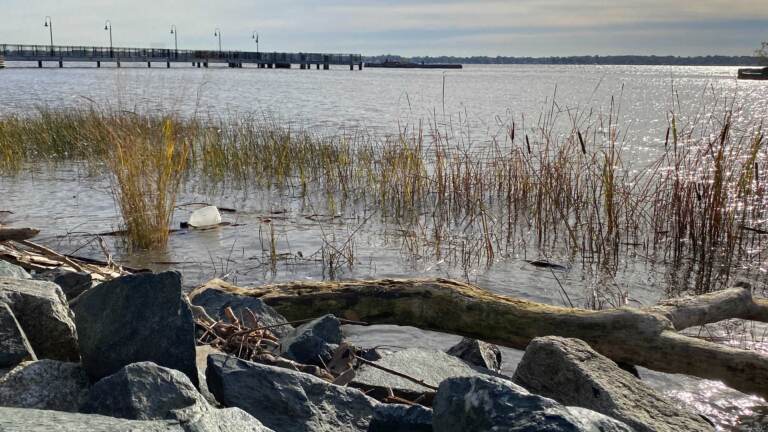
The Delaware River near New Castle, Del. (Mark Eichmann/WHYY)
This story is part of the WHYY News Climate Desk, bringing you news and solutions for our changing region.
From the Poconos to the Jersey Shore to the mouth of the Delaware Bay, what do you want to know about climate change? What would you like us to cover? Get in touch.
Delaware’s top environmental regulators have proposed steps to reduce climate-warming fossil fuel pollution, while protecting residents from threats like extreme heat and floods.
The state’s Department of Natural Resources and Environmental Control on Wednesday released its 2025 Climate Action Plan. The nonbinding proposal outlines a path to achieve net zero emissions by 2050, as required by the state’s Climate Change Solutions Act.
Officials said Delaware residents continue to experience the impacts of climate change including severe storms like the 2021 Hurricane Ida, which forced people out of their homes, with some remaining unhoused a year later. In addition, sea level rise and beach erosion has flooded coastal communities and damaged critical infrastructure.
“Flooding, extreme storms and heat damage infrastructure that wasn’t built to withstand these conditions, including our energy systems,” said Susan Love, the agency’s climate and sustainability section administrator. “Sea level rise is drowning wetlands and uplands, and impacting water quality and availability. Damage from storms has increased costs for infrastructure and insurance coverage, and all of these impacts can negatively impact human health as well.”
Recommendations include strategies to reduce emissions from vehicles, industrial activities and electricity production — the state’s top climate emission sources.
The plan, which builds on similar goals set in 2021, comes as President Donald Trump’s administration has cut clean energy funding and prioritized U.S. reliance on fossil fuels.
“There is no doubt that the reduced funding in a lot of these areas from the federal government makes these goals and strategies harder to implement,” said DNREC Secretary Greg Patterson. “It is up to us to keep trying to work towards them, even knowing that it’s going to be a little harder to do without the federal resources that even a year ago we thought we could count on.”
Delaware officials plan to promote public transit, electric vehicles and clean hydrogen
The plan calls for increased bus and train ridership while improving access to electric vehicles and charging stations. Though lawmakers repealed a mandate that would have required manufacturers to produce a set number of electric vehicles, DNREC wants to expand programs that incentivize the optional sale of electric vehicles.
However, Love emphasized the state “can’t EV our way out of transportation emission.”
“A lot of work needs to be done as well to reduce the amount that we drive vehicles, by good land use choices, mass transit and making it easier for people to walk, bike and roll to their destinations,” she said.
Related Content
Delaware’s wetlands at risk as Trump administration seeks to remove protections
Delaware is the only state in the mid-Atlantic that does not have a nontidal wetland protection program that exceeds federal baseline standards.
9 months ago
Among the recommendations outlined in the plan, DNREC has proposed decarbonization efforts at industrial facilities, while stressing the importance of preparing for potential clean hydrogen programs.
Delaware has been a key partner in the proposed Philadelphia area Mid-Atlantic Clean Hydrogen Hub, or MACH2. The public-private partnership would fast-track the use of renewable energy to produce hydrogen rather than fossil fuels. However, the plan has faced criticism from environmental groups who say the benefits of clean hydrogen are uncertain. And it’s unclear if the Trump administration will follow up on the promise of funding established by former President Joe Biden.
Trump administration policies make it more difficult for Delaware to reach climate goals
The Clean Action Plan also calls for increased solar capacity, the advancement of offshore wind and the modernization of transmission infrastructure.
The proposal provides additional steps to protect residents from extreme heat, such as installing heat reflective roofs on homes, and the building of structures with elevated foundations in flood zones.
“Our Climate Action Plan puts people first by protecting clean air and water for every Delawarean, creating good-paying clean energy jobs, and making our communities safer and more equitable,” said Gov. Matt Meyer, D-Delaware, in a statement. “We’ve seen real progress towards ambitious targets to cut pollution and strengthen resilience, but now we accelerate — because protecting our environment means protecting our families, our economy, and our future.”
Republican lawmakers, on the other hand, say they believe the plan is overly ambitious and too narrowly focused. The minority party asserts that Delaware’s role in global climate change is small, said House Republican Caucus spokesperson Joseph Fulgham.
“Approximately one million cars, light trucks, and SUVs are registered in Delaware. Compare that to 370 million such vehicles currently operated in the U.S., and 1.65 billion worldwide,” he said in an email. “While there are many valid reasons to curtail air pollution, and we should always seek these opportunities, believing our state will have any measurable impact on the Earth’s climate is operational hubris.”
He added that Republicans support pollution reduction as long as they don’t burden taxpayers or create impediments to job creation.
DNREC is also urging the conservation of the state’s natural resources, including wetlands and forested areas that sequester carbon and protect communities from flooding.
The Environmental Protection Agency has proposed changes to the definition of “waters of the United States” that would limit the types of waterways protected under the Clean Water Act.
The change would codify a 2023 U.S. Supreme Court decision that removed federal protections for wetlands that are either seasonal or aren’t connected to streams, lakes, rivers and oceans.
Lawmakers in Delaware have responded by working to draft legislation that would develop regulations for the state’s freshwater wetlands and protect critical waterways from development.
“The natural ability of these lands to capture and store carbon from the atmosphere is necessary to meet those long-term goals,” Love said.
Environmentalists say they’re pleased by the state’s inclusion of wetland protections in the plan. Emily Knearl, Delaware director of government relations and external affairs at the Nature Conservancy, called the role of conservation and land use policy “critical to building a more resilient Delaware.”

Get daily updates from WHYY News!
WHYY is your source for fact-based, in-depth journalism and information. As a nonprofit organization, we rely on financial support from readers like you. Please give today.
Part of the series
Vineland data center accused of operating natural gas generators without permit
The 300-megawatt AI data center is being developed by DataOne for the Nebius Group.
6 days ago
Listen 1:11
Researchers find microplastics in insects from Schuylkill River watershed
The researchers found that microplastics were as prevalent in forested parts of the watershed as they were in urban areas.
2 weeks ago
Listen 1:21
Pennsylvania Gov. Shapiro signs wide-ranging executive order reining in data center development
While stopping short of issuing a moratorium on new data centers, Shapiro’s executive order accuses developers of “predatory” behavior against local communities.
2 weeks ago
Listen 1:20