

West Philly tenants are racing to save 925 affordable rentals to prevent mass displacement
The subsidized units are among 12% of properties in the city that could lose their affordability restrictions over the next decade.

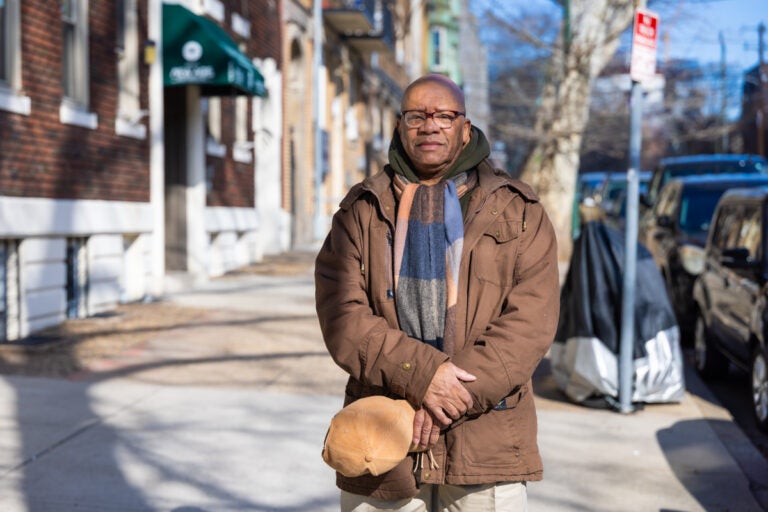
Carlos Boothe lives in an apartment building for older adults and hopes the city will work to keep housing affordable. (Kimbelry Paynter/WHYY)
Have a question about Philly’s neighborhoods or the systems that shape them? PlanPhilly reporters want to hear from you! Ask us a question or send us a story idea you think we should cover.
Tenant organizers in West Philadelphia are spreading the word about a July deadline that they say has the power to destabilize thousands of longtime residents and the communities they call home.
The effort concerns 925 rental units scattered across more than a dozen neighborhoods, including several gentrifying areas. The private developer who owns them wants to sell the portfolio to the city so these homes remain affordable. And housing advocates want to make sure that happens.
They say education is the first step.
“Tenants are confused about what’s happening,” said Eric Braxton, project director with OnePA West/Southwest Rising.
In late June, letters went out informing tenants that Neighborhood Restorations planned to sell its government-backed properties, a requirement under city law. The same attorney-drafted notice was sent to the city, community groups, housing attorneys and Councilmember Jaime Gauthier, whose district includes the vast majority of these properties, many of which were built or rehabilitated in the early 1990s and 2000s.
Gauthier expected the letter. Receiving it, however, meant there was essentially a year for the city to put together a priority bid to buy the properties. After that, Neighborhood Restorations could start marketing them to the general public, a move the council member and her constituents worry could result in the displacement of about 3,000 tenants amid an ongoing affordable housing crisis.
It’s why they hope the city and other stakeholders will seize the opportunity to solve what they consider a citywide problem — before the clock runs out on July 4.
The portfolio represents about 12% of the subsidized units in Philadelphia that could lose their affordability restrictions over the next decade. It was forged with Low-Income Housing Tax Credits that will expire in batches on a rolling basis beginning this year.
“This is our opportunity to solidify affordability for decades to come in some of the most desirable neighborhoods in the city,” Gauthier said.
Gauthier’s office has convened multiple meetings around a potential bid. That work is now in the hands of Local Initiatives Support Corporation Philadelphia, a community development organization.
“LISC has agreed to convene a project management team and a small group of city and state government representatives to develop feasible acquisition and preservation strategies for the Neighborhood Restorations homes over the next few months,” Executive Director Andrew Frishkoff said in a statement.
Members of the Parker administration will participate in those talks, Frishkoff said. A mayoral spokesperson did not respond to a request for comment.
Related Content
Germantown residents are mobilizing against displacement: ‘People power is real’
With a nod to King's vision for America, grassroots organizers aim to empower residents to "fight for their neighborhoods" amid mounting affordability pressures.
2 months ago
Listen 1:17A grassroots movement
As that work continues, OnePA is planning a series of public actions aimed at convincing the city to invest in these properties. There will be rallies, visits to City Hall and likely a large town hall event in May.
The group has previously gone door to door to engage with every Neighborhood Restorations tenant. More recently, they’ve started holding informational meetings to educate residents about their rights and to potentially mobilize them around the potential sale.
Braxton said tenants and homeowners are deeply concerned about the prospect of these properties — mostly a mix of single-family homes, duplexes and triplexes — going to a buyer who wants to turn them market-rate. Most, if not all, of these renters would be unable to stay if that happened, forcing them to relocate.
“These aren’t just transient folks that are coming and going. They are part of these neighborhoods,” Braxton said.
The average tenancy for these renters is roughly 11 years, according to Neighborhood Restorations.
Their monthly rents are price-restricted, affordable to households earning between 20% to 60% of the area median income. That translates to between $23,880 and $95,520 for a family of four.
Fredrica Lightfoot lives in a duplex near Cobbs Creek with her 29-year-old son. While her experience hasn’t been perfect, the retiree said, particularly when it comes to response times for maintenance requests, her apartment was a “breath of fresh air” compared to her last rental in South Philadelphia, where the landlord refused to make needed repairs.
When she moved in six years ago, the unit was essentially new. The whole building had been renovated following a fire.
“You take the good with the bad, and you kind of flow with it,” said Lightfoot, who pays about $1,000 in rent each month.
She lives on a fixed income, relying on monthly Social Security and disability checks. She said she’s joining the fight to preserve these homes because she doesn’t want her or other tenants to lose their housing simply because they are low-income. She’s also been displaced before and doesn’t want to go through it again.
“It’s very devastating to have to regroup all over again,” Lightfoot said. “Just leave on a good note, and try to keep the properties affordable.”
To Carlos Boothe, who lives nearby in a building for older adults, the city owes it to him and his neighbors to buy Levin’s units, keep them permanently affordable and avoid mass displacement.
“If you have 3,000 extra people coming into the marketplace that’s already overcrowded and there are not enough places for the people that are looking … that’s going to make things extremely difficult,” Boothe said.
A ‘rare’ investment opportunity
The grassroots push comes as the city prepares to borrow $400 million to support Mayor Cherelle Parker’s $2 billion housing plan. The multifaceted effort, known as the Housing Opportunities Made Easy, or H.O.M.E., initiative, is aimed at creating and preserving 30,000 units.
Housing advocates argue some of that funding should be used to help purchase the Neighborhood Restorations properties. Funding for the first phase of the H.O.M.E. initiative includes $46.1 million for affordable housing preservation.
Jim Levin, who co-founded the company, would tend to agree. Like his tenants, he wants these properties to go to the city. And he views Parker’s housing plan as a potential vehicle for achieving that goal.
“If the mayor wants to maintain and add to the affordable housing stock, this is a project she should be serious about,” said Levin, calling his offer to the city an “incredible opportunity.”
His business partner, George Bantel, said these units are also “extremely unlikely to ever return to the affordable housing inventory” if they end up losing their affordability restrictions — because they’re now located in high-demand neighborhoods that could easily fetch more lucrative rents. The list includes Powelton Village, Cedar Park, Walnut Hill and Overbrook.
“This portfolio is rare,” Bantel said in an email. “It allows residents to live alongside homeowners and market-rate renters, blending naturally into neighborhoods and reducing the stigma sometimes associated with subsidized housing.”
Levin declined to share the specific dollar amount, but said the per unit price is based on what he paid nearly 20 years ago. Over the past year, the median sale price for a single-family rental property in West Philadelphia, excluding University City, was $160,000, according to data prepared by Drexel University economist Kevin Gillen.
Levin declined to share the specific dollar amount, but said the per unit price is a fraction of what developers are paying these days.
If a deal with the city doesn’t materialize, Levin said he would either sit on the properties for some years or sell them on the open market at some point.
Either way, nothing is likely to happen in the immediate future.
“I’m in no hurry,” Levin said.
A spokesperson for Parker did not respond to a request for comment.

Subscribe to PlanPhilly
WHYY is your source for fact-based, in-depth journalism and information. As a nonprofit organization, we rely on financial support from readers like you. Please give today.
Brought to you by PlanPhilly

PlanPhilly
In-depth, original reporting on housing, transportation, and development.

Lawmakers were expected to pass the bills Thursday, but two landlords sued the body’s housing committee, alleging a violation of open meeting laws.
12 hours ago
No new Philly anti-dumping initiatives in Parker’s third budget proposal
Parker’s $7 billion budget proposal would continue existing efforts to combat litter and illegal dumping and add funding for 125 cameras.
6 days ago
Listen 1:05
The investments are meant to bolster the mayor’s plan to create and preserve 30,000 housing units amid an affordable housing crisis.
7 days ago
Listen 0:59