


Philadelphia is poised to expand tenant protection from retaliatory evictions, launch proactive inspections program
City Council’s housing committee advanced the legislation after months of negotiations with the mayor’s administration and landlord advocates.
Listen 1:17

Philadelphia City Councilmember Nicolas O'Rourke in Philadelphia City Hall's Council chambers. (Emma Lee/WHYY)
Have a question about Philly’s neighborhoods or the systems that shape them? PlanPhilly reporters want to hear from you! Ask us a question or send us a story idea you think we should cover.
Philadelphia City Council is on track to pass legislation aimed at protecting renters against retaliatory evictions and empowering them to speak out about dangerous living conditions.
Lawmakers on Wednesday advanced two bills, part of the Safe Healthy Homes Act, a legislative package introduced by Councilmember Nicolas O’Rourke last April. The housing committee vote followed a public hearing and drew raucous applause from tenant organizers, who helped craft the legislation.
“For the first time in years, this City Council is focusing on often-overlooked individuals,” said Theresa Howell, a member of OnePA Renters United Philadelphia.
Nearly half of Philadelphia residents are renters. If the bills pass the full Council, the city’s “good cause” protections will expand to cover all of them, regardless of the term of their lease.
Currently, the law applies only to month-to-month renters or those with leases that run less than a year. Landlords must provide written notice stating why they want to terminate or not renew these leases. Acceptable reasons include “habitually” not paying rent or paying late, nuisance activity reported by other tenants or causing “substantial” property damage.
Fair housing advocates say the exemption has provided cover for unscrupulous landlords to use this form of eviction to retaliate against tenants with longer leases — because they aren’t required to justify their decision or even give renters advanced notice. Last year, roughly 90% of eviction filings were tied to leases of a year or more, according to Municipal Court data provided by Philadelphia Legal Assistance.
“Nationally, I’m not aware of any other jurisdiction that has that exemption that the bill would remove,” said Jackie Zaneri, supervising attorney at SeniorLAW Center in Philadelphia.
The exemption also makes Philadelphia a national outlier. It is exceedingly rare for a city to exclude tenants from “good cause” protections based on the term of their lease.
Related Content
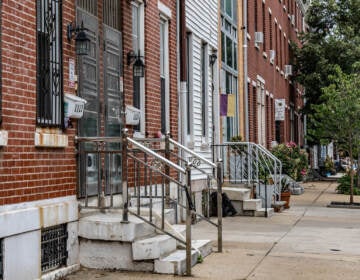
The proposed City Council bills could benefit renters afraid of speaking out about their living conditions, fair housing advocates say.
6 months ago
Listen 1:21Spelling out the specifics
O’Rourke’s legislation seeks to further reduce instances of landlord retaliation by authorizing the city to create a program to proactively inspect rental units on a “regular cycle.” Advocates say such a program would directly benefit tenants who fear they will be evicted if they push for needed repairs their landlord refuses to make. They also argue the program would help hold landlords accountable while mitigating consequences of living in hazardous conditions.
Right now, rental properties are inspected only if a complaint is filed with the city’s Department of Licenses and Inspections, which enforces the city’s rental and property maintenance codes.
Philadelphia is one of only a few big cities in the country that do not perform proactive inspections.
Bridget Collins-Greenwald, who leads L&I’s Quality of Life Division, told lawmakers Wednesday that negotiations had yielded changes that would enable her department to implement a proactive inspections program.
During a hearing last summer, she noted the agency was in the process of crafting a pilot program with help from researchers at the Pew Charitable Trusts. A department spokesperson said there are “no additional details to share” about the effort, which will likely require additional funding.
It’s unclear how much.
“Since we’re in the midst of the budget process right now, I’d like to discuss that with the finance department and then get back to you through that process,” Collins-Greenwald said during the hearing.
Lastly, the legislation expressly bars landlords from ending or modifying a tenant’s lease simply because a tenant is cooperating with a city investigation, has discussed their living conditions with a council member or reporter, or has joined a tenants association.
The city’s rental code prohibits landlords from terminating a lease in retaliation for “joining any lawful organization, or any other exercise of a legal right.” That includes tenant associations, but that fact is not spelled out.
Related Content

Independent landlords argue the measure removes a critical tool for evicting problematic tenants, but housing advocates aren’t buying it.
7 months ago
Listen 1:31Landlord advocates want more tweaks
HAPCO Philadelphia, the city’s largest advocacy group for landlords and property owners, opposes O’Rourke’s legislation. While members support their intent, they argue the bills will disproportionately harm them while doing little to deter bad actors.
Paul Cohen, the group’s general counsel, has said that expanding “good-cause” protections would make it even harder for landlords to remove problematic tenants, particularly if their conduct doesn’t warrant pursuing an eviction in court or if it would be difficult to demonstrate the need for one.
He has also raised concerns about a provision that clarifies when a tenant can receive a rental rebate. Under the legislation, a tenant could sue for relief if a landlord collected rent without having an active rental license or certificate of rental suitability. Both are required for landlords to legally collect rent.
On Wednesday, he urged the committee to hold off on voting.
“We’re not saying not to pass a bill. We’re saying not to pass the bill until it’s done properly. We need to make sure this bill is right,” Cohen said.
These bills were previously considered by the housing committee during a public hearing in June. Following pushback from Mayor Cherelle Parker’s administration, O’Rourke agreed to hold the legislation to allow time for negotiations.
A spokesperson for O’Rourke said the bills are slated to come up for a final vote on March 19.
Lawmakers previously passed a third part of the Safe Healthy Homes Act. The legislation would authorize the city to create an anti-displacement fund for tenants forced to move because their property has been designated uninhabitable.
Under the program, tenants would be eligible to receive a one-time payment through the fund if they must move because of a negligent property owner or landlord. Specifically, the property must be the target of a cease-operations order from L&I.
The order is considered an extreme measure and is issued for properties that pose an “immediate danger to life or property.”
The fund is set to receive dollars from Parker’s Housing Opportunities Made Easy, or H.O.M.E., initiative. The multifaceted effort is backed by $800 million in bonds and seeks to create and preserve 30,000 units of housing.

Get daily updates from WHYY News!
WHYY is your source for fact-based, in-depth journalism and information. As a nonprofit organization, we rely on financial support from readers like you. Please give today.
Brought to you by PlanPhilly

PlanPhilly
In-depth, original reporting on housing, transportation, and development.
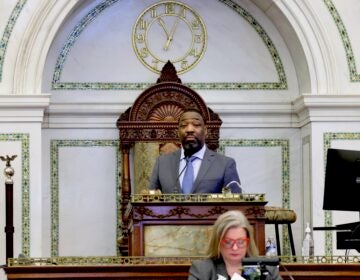
The mayor strongly opposed prioritizing the city's lowest-income households. Now, the H.O.M.E. initiative is set to add millions for repairs and preservation efforts.
9 months ago
Listen 1:06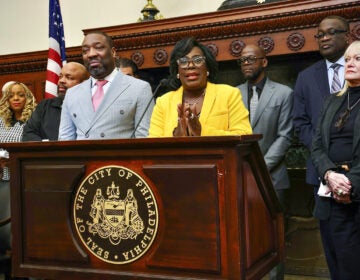
What Philly Mayor Parker’s first housing plan budget could mean for renters and homeowners
Some advocates say the proposed H.O.M.E budget doesn't go far enough in prioritizing low-income residents.
11 months ago
Listen 4:56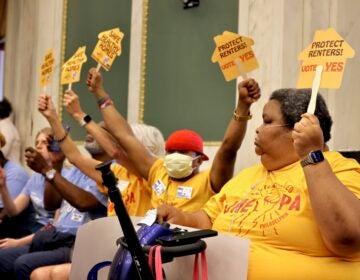
Philadelphia can now create an anti-displacement fund for tenants. Will it happen?
For now, there is no dedicated funding, but that could change if the bill’s sponsor gets his way.
1 year ago