‘We are culture’: How immigrant communities in Philadelphia are cultivating identity and creativity through dance
From Aztec to Indonesian traditions, dance groups offer immigrant children a space for culture, belonging and resilience as families navigate fear and uncertainty.

From Philly and the Pa. suburbs to South Jersey and Delaware, what would you like WHYY News to cover? Let us know!
Growing up, Sharis Luna-Cruz wasn’t always connected with the cultural traditions of Mexico, her parents’ home country.
The 16-year-old said her Spanish “wasn’t great,” and she identified as American more than anything else, because she was born in Pennsylvania.
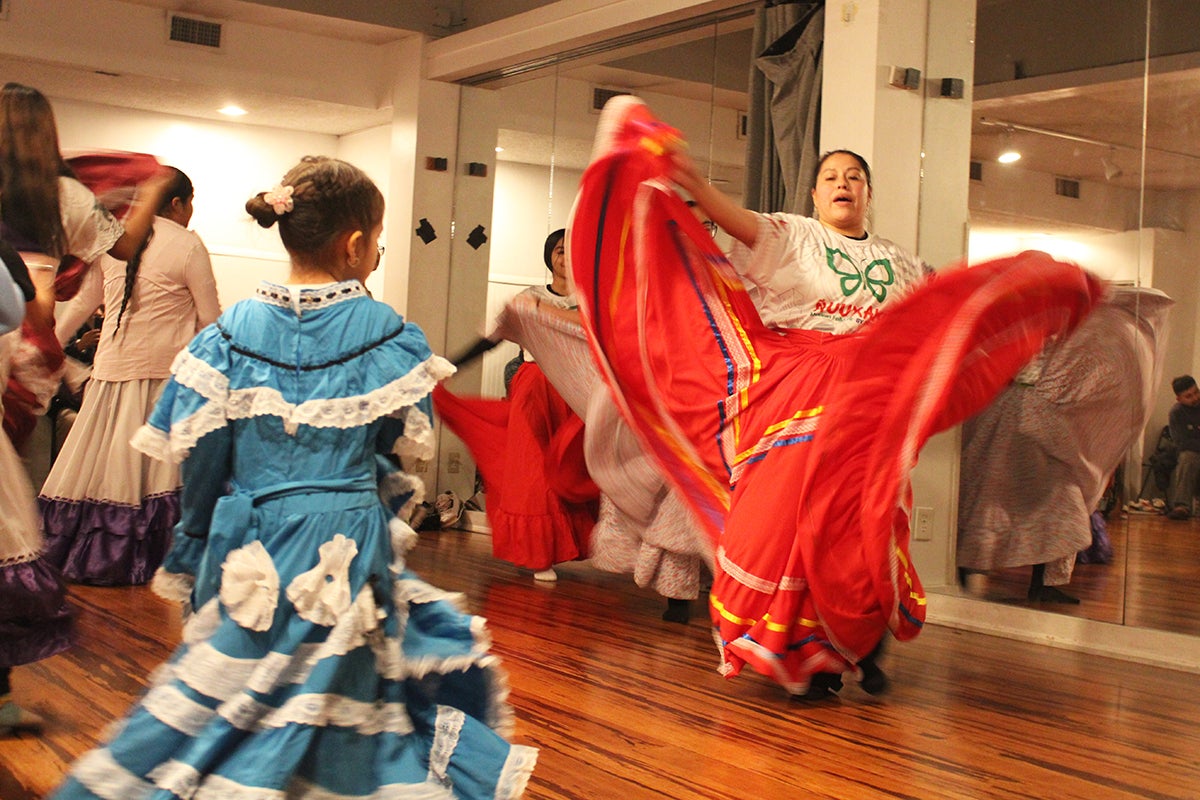
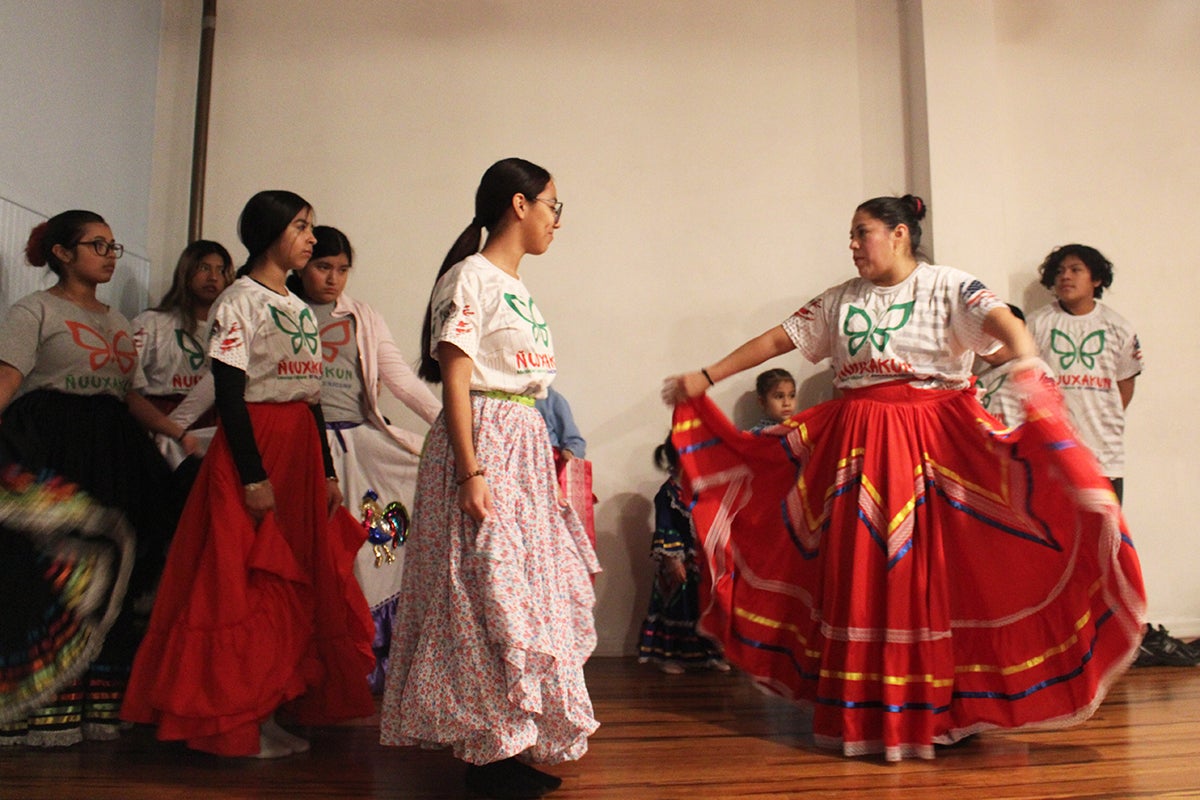
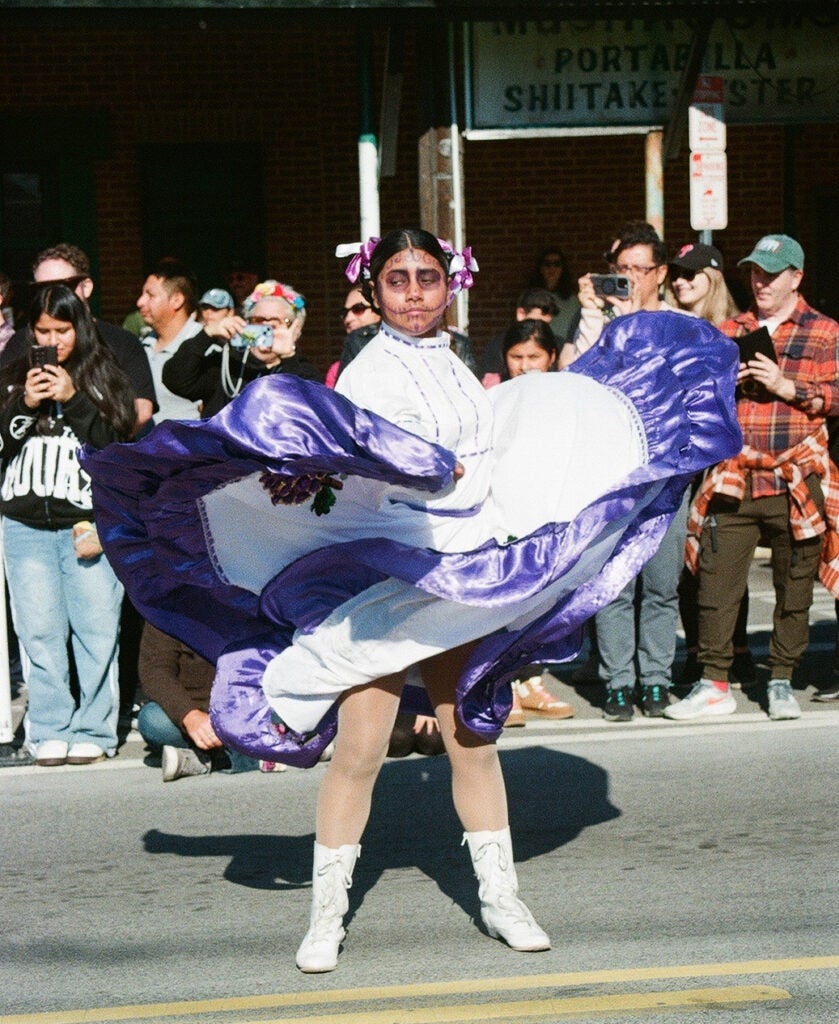
But that changed at age 14, when Luna-Cruz started taking classes with Ñuuxakun, a South Philadelphia-based Mexican folkloric dance group for children.
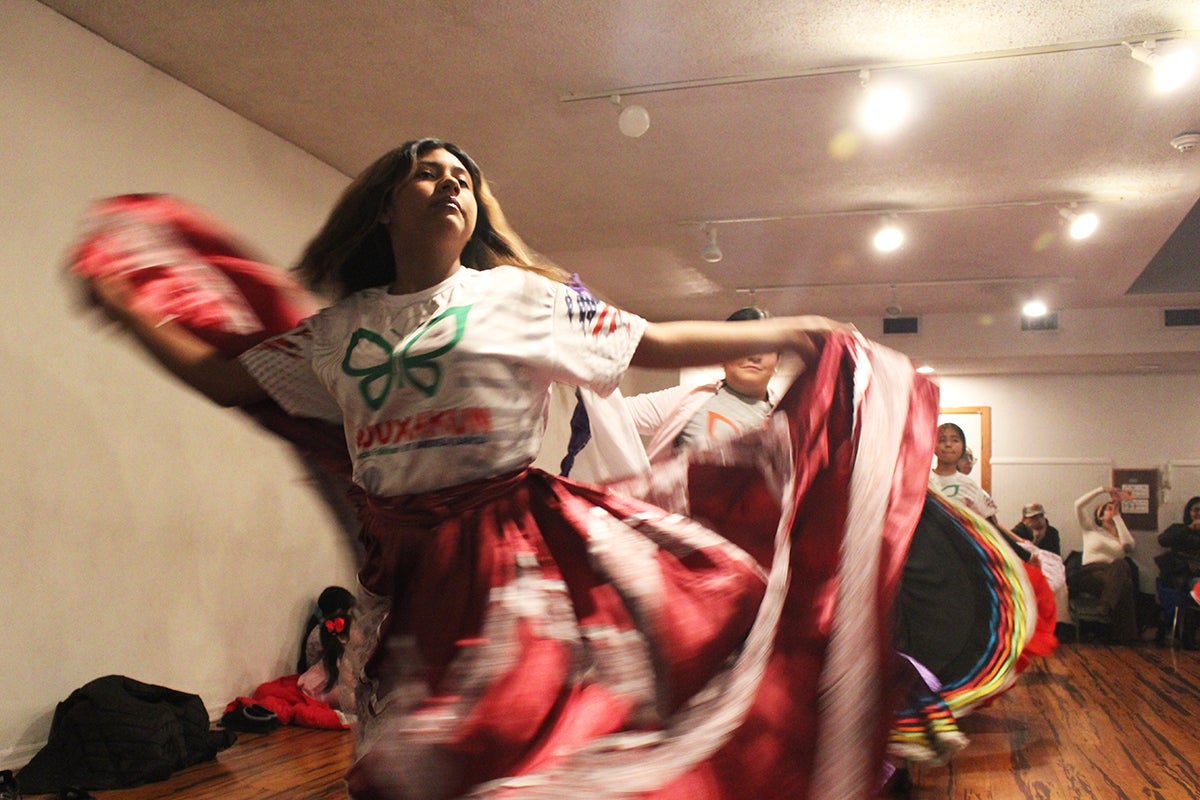
These days, she loves twirling across the stage in traditional costumes with big, beautiful skirts. She welcomes learning about the movements and stories from specific regions of Mexico, including Puebla and Oaxaca, where her father and mother were born.
Luna-Cruz said strengthening her understanding of Mexico and speaking more Spanish in dance classes has improved her relationship with her parents, and shifted her sense of self and identity.
“Now I consider myself a proud Hispanic person, proud Mexican, from Mexican parents, and I’m not ashamed to say that,” she said.
Ñuuxakun is one of many dance groups and organizations throughout Philadelphia that give immigrant communities the space and support to teach important cultural traditions. Multiple students, parents and dance teachers told WHYY News that those spaces have grown all the more important, as President Donald Trump’s federal immigration enforcement crackdown has upended the lives of many immigrant residents in the region.
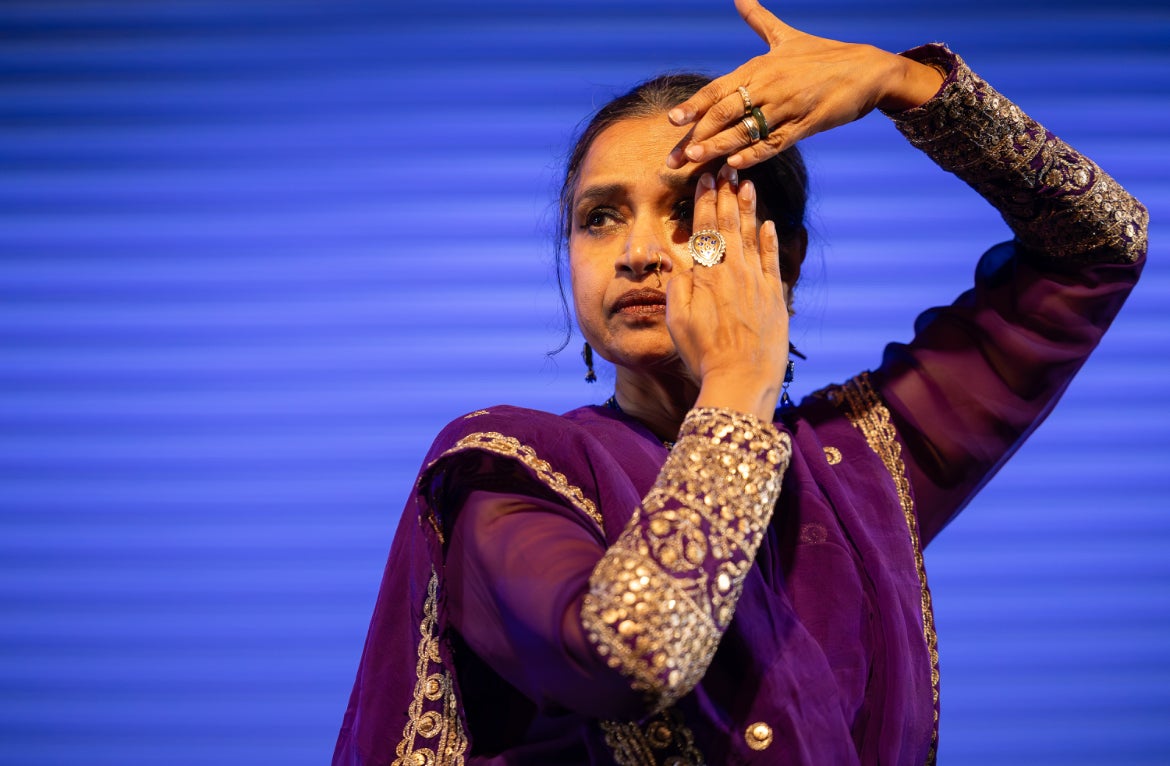
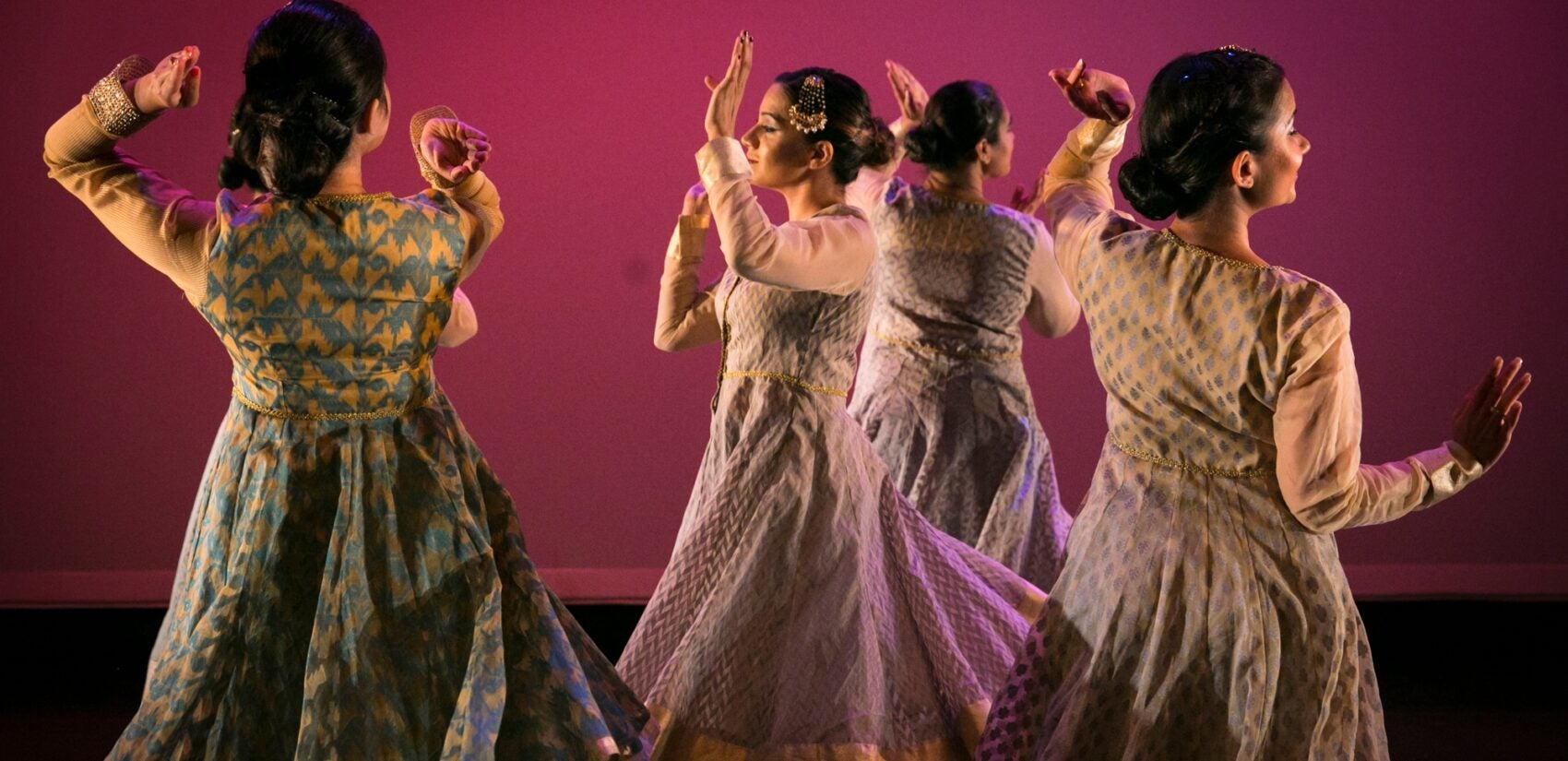
As an art form, dance is unique in its application across all five senses, allowing children to embrace physicality and “occupy space,” said Pallabi Chakravorty, a dancer and choreographer who focuses on Kathak, a classical dance tradition with roots in northern India.
Chakravorty, an anthropologist and a performing arts professor at Swarthmore College, said she has seen firsthand how dance affects identity and belonging for people of all ages in her work as founder and director of Courtyard Dancers, a nonprofit based in Philadelphia and Kolkata, India.
Dance contributes “a certain kind of confidence and comfort in the identity formation of young people” and can help create “a really holistic understanding of the sense of self,” Chakravorty said.
“I myself did not realize that dance could actually do so much,” Chakravorty said. “But I’m just seeing the way people are now wanting to connect to it, and wanting something concrete and tangible to hold on to, so that they can feel that they belong somewhere and launch their love and critique from that place.”
Related Content
Before the rain turned to snow Sunday, thousands packed Philly’s Chinatown for the parade celebrating the Year of the Horse.
2 months ago
Listen 1:10‘We are culture’: Dance is a refuge, response to immigration enforcement policies
When Andrea García Espinal co-founded Ñuuxakun with Edgar Rámirez and Olga Rentería in the summer of 2022, she wasn’t sure what the response would be.
But García Espinal, who specializes in Mexican folkloric dance, said it was clear from the start that children wanted to keep coming to classes and performing.
The group has grown over the years, but attendance to classes has fallen since January 2025 in response to increased federal immigration enforcement, she said.
Many opportunities for the group to perform have been canceled, and some parents are afraid to walk their kids to rehearsals. But among those who still come to practices and shows, there is “more unity and less fear,” García Espinal said.
The group has offered support to families directly affected by immigration enforcement. Gonzalo Octavian, 9, said Ñuuxakun is “like a family” for him — and helped out during a “difficult time” last year, when his father was deported to Mexico.
“The people supported us, and they gave us motivation,” he said.
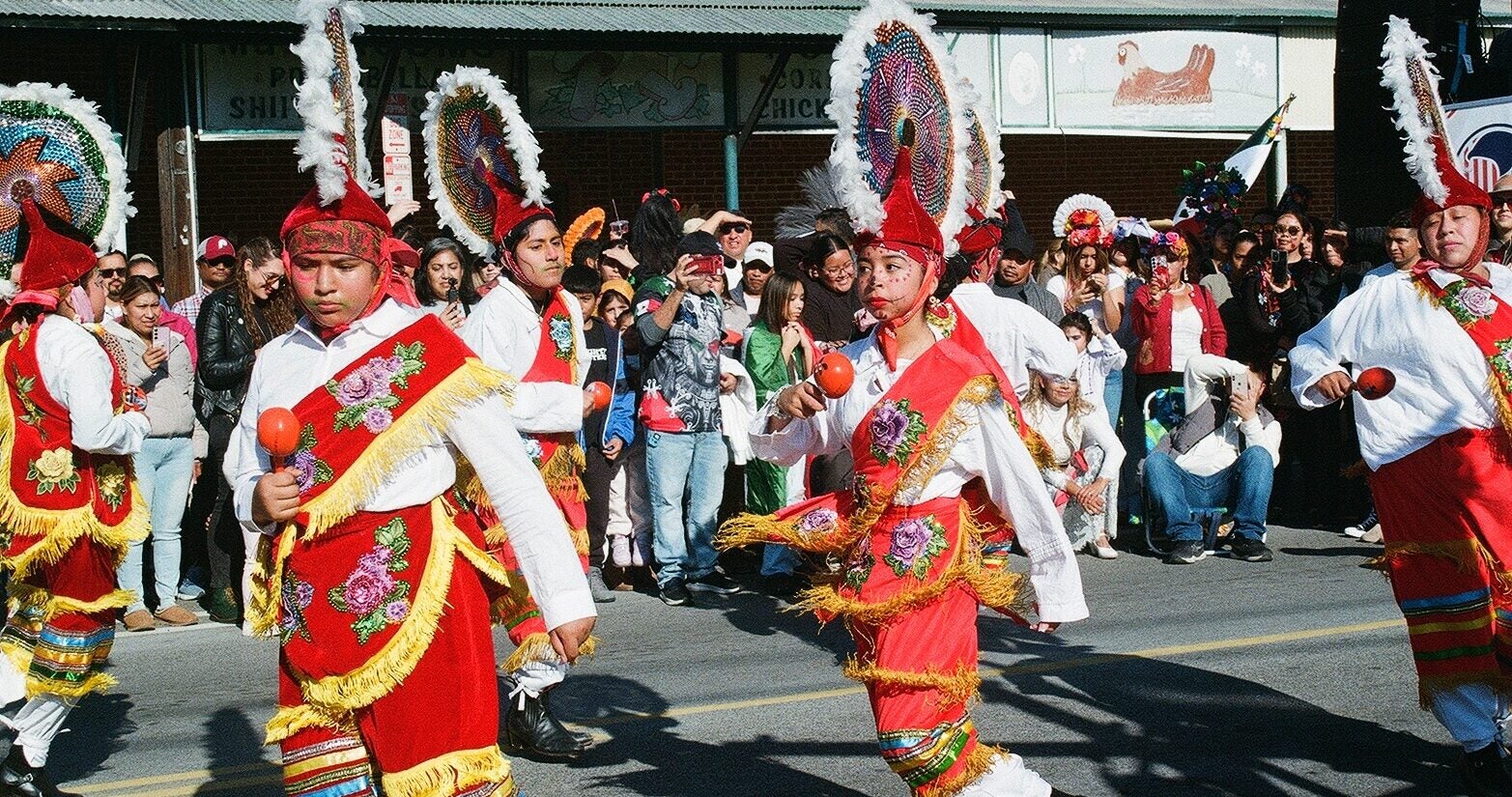
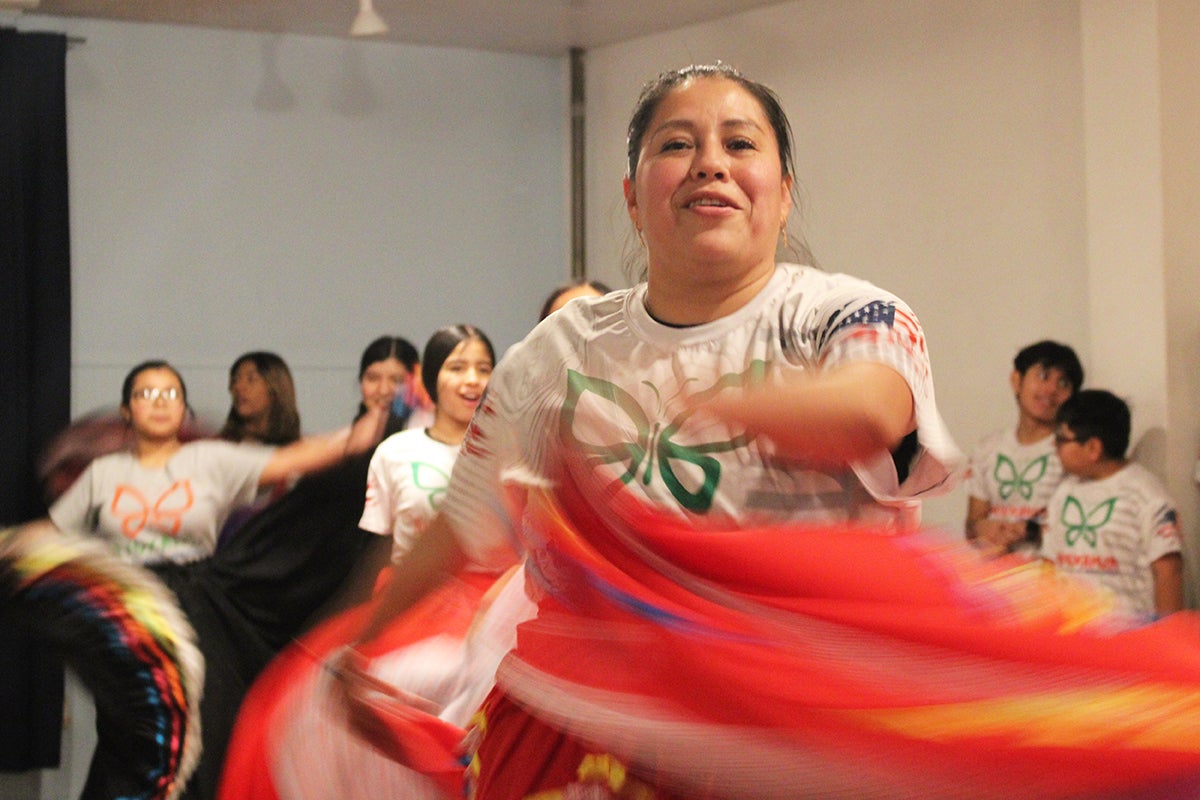
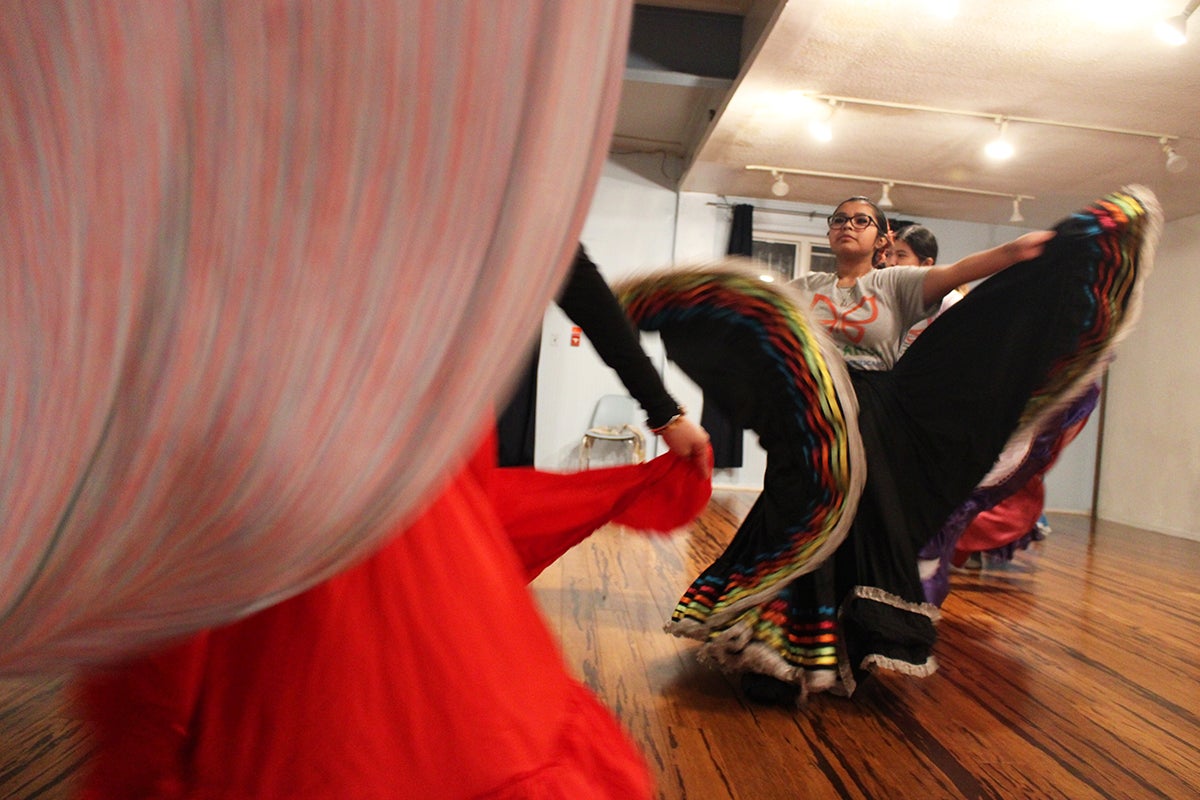
That joy in the face of difficulty is enshrined in the group’s name itself, García Espinal said. “Ñuuxakun” means “people who laugh” in Mixtec, an Indigenous Mexican language spoken by more than half a million people.
García Espinal said the expression of Mexican culture is its own response and invites support in the face of negative rhetoric about immigrants.
“Sometimes as immigrants we don’t have someone to tell our story to, but when we belong to a group or a family like Ñuuxakun … we become strong,” she said.
For Noemi Cortés, seeing her two daughters dance with the group, performing on stages where they wouldn’t otherwise have imagined performing, such as the Betsy Ross House and the Kimmel Center, carries a powerful political message.
“This is a power that we have — to be able to say … that we are not criminals, we are culture,” she said. “We are children that have traditions, that have a kind mentality. They don’t know anything about weapons. They know how to dance and enjoy life.”
Luna-Cruz said Ñuuxakun dances “tell a story of a strong Hispanic community that’s always there for you and doesn’t give up, especially in these circumstances with ICE all around where people don’t want to go out,” she said, referring to U.S. Immigration and Customs Enforcement.
“We want to make sure we let people know that they have rights and they’re not alone,” she added.
Luna-Cruz’s mother, Magalí Cruz, said Ñuuxakun provides some relief from constant news and concerns around immigration policy.
“We come to class, and this topic stays outside,” she said. “We don’t think about it. … We distract ourselves in dance.”
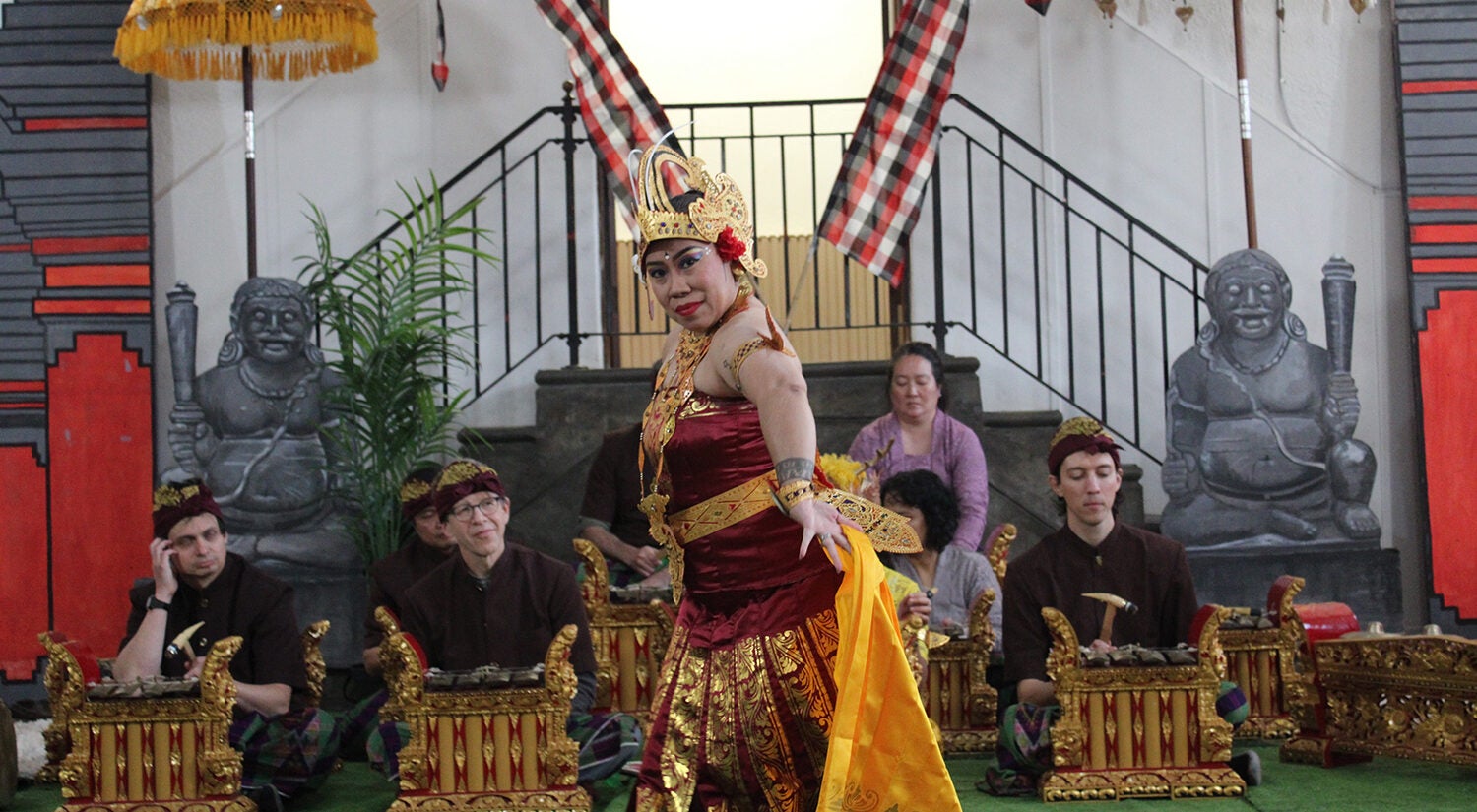
Sinta Penyami Storms, a traditional Indonesian dance artist and the founder and director of Modero & Co., said “existing … is a political stance” for Indonesian Americans and other immigrant communities.
“For us, it’s important to continue … preserving the culture and also presenting it and promoting it,” she said, “because people need to get to know us a little bit more.”
Dancing relieves stress and “ignites resilience,” Penyami Storms said.
“I think a lot of times, when we’re scared, we’re home. We don’t want to leave our safety net,” she said. “But building community is super important, also — to know that you’re supported, that you’re not alone in facing any of this.”
Related Content

Some local law enforcement has signed 287(g) agreements with ICE. Others are doubling down on limiting cooperation with federal agents amid a nationwide crackdown.
2 months ago
How dance traditions help kids explore identity, creativity
After moving to Philadelphia, Zahara Jalil wanted to find a way to connect her daughter, Geubrina Rizky Jalil, with her Indonesian identity.
“As immigrants, as a parent, I think to introduce our culture to our children is, for me, it’s [an] obligation beside [trying] to make sure they’re going to school. They’re doing good. They behave well outside of our home,” she said. “But the other homework we do as a parent … [is] to make sure they know where they came from.”
She started bringing Geubrina to Penyami Storms’ Indonesian dance classes when she was just 8 years old.
“It’s been my community ever since,” Rizky Jalil said.
The 20-year-old Temple University junior still goes to classes and dances with Modero & Co.
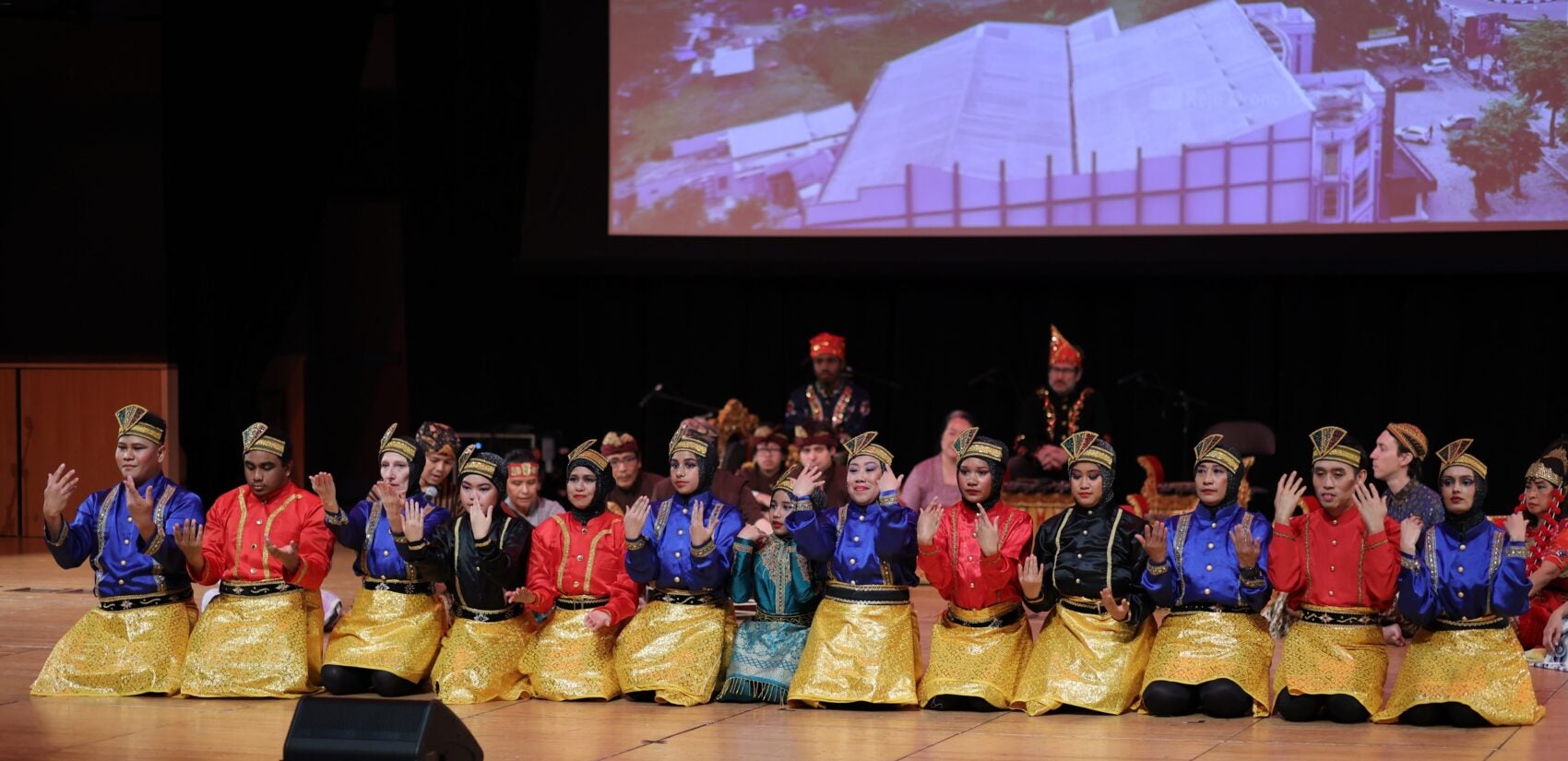
Rizky Jalil says Indonesian dance has shaped who she is and has opened her up to new experiences and community support.
“I’m glad that America hasn’t washed off my ethnicity,” Rizky Jalil said. “Because of the community I am in, and because Sinta has been making a space for us to practice our own ethnicity in our culture.”
She and her best friend are exploring using some of the traditional choreography and music in new contexts, for example, she said, sampling Indonesian gamelan music in a hip-hop context.
Dance and cultural traditions are often transformed in a diasporic context, Chakravorty said.
“It’s preserved, but it’s also dynamic,” she said. “It’s changing.”
Related Content
Greater Philadelphia immigrants fuel population, economic growth, report says
Here are six key takeaways from the report and a panel discussion hosted by The Welcoming Center and WHYY on Thursday.
7 months ago
Listen 1:00Weaving together a tapestry of heritage, history
García Espinal, Penyami Storms and Chrakravotry all use dance to show the many different traditions within their countries of origin.
“In my class, we talk about … why [do] we do this dance a certain way?” Penyami Storms said. “Why do we wear certain costumes? What is the story behind the dance? So we don’t just come and dance, but we talk about the Indonesian values, Indonesian philosophies, and I think they really appreciate that.”
Part of that cultural education, she said, is emphasizing that Indonesia is not a monolith.
“We have over 300 ethnic groups, [each] with its own traditions and culture,” Penyami Storms said.
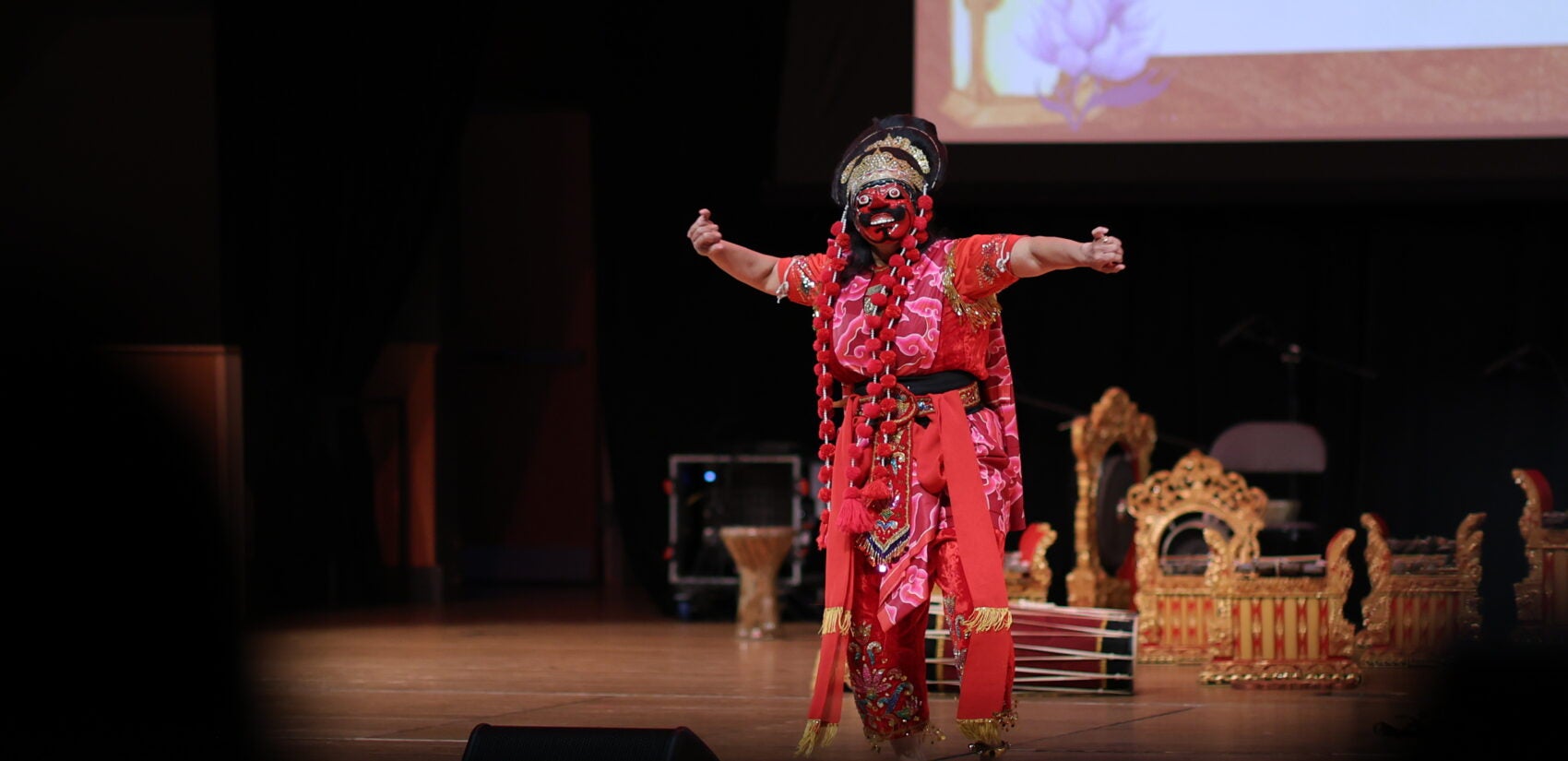
Penyami Storms said she teaches the traditions she’s been trained in, from Sulawesi, the island where she was born, and the Balinese dance tradition.
“I’m not going to pretend that I know everything about Indonesia, either,” she said. “So that’s what I’m passing down to the students and the values … Like, how we should be in the community? How do we talk to each other with respect?”
That inclusivity extends to gender identity as well, she said. Some ethnic groups in Indonesia recognize five genders, and in traditional dances, everyone has to learn the dances for both male and female dancers.
For Courtyard Dancers, Chakravorty ensures both the Islamic and Hindu elements of Kathak dance are recognized and celebrated, and her students represent a range of South Asian countries and ethnicities.
“[Kathak dance] has elements that will allow people to talk about things that might be uncomfortable at their own homes,” she said. “Because if it’s majority Hindu population in the U.S., and even in the Courtyard, we are doing something that has deep Islamic roots. So, that’s going to just be part of what we dance. And these conversations are not going to be just limited in the classroom.”
García Espinal said she also seeks to explain traditional clothing, dances and stories from different Indigenous communities throughout Mexico. It’s important knowledge that not all of the parents have the time or resources to pass on on their own, she added.
“I began to realize that it’s not just dance, it’s also language, it’s family ties, it’s the values that we have as Mexicans and as Latinos in general,” she said.
A $50,000 grant from Mid Atlantic Arts that the group received for this year is a “dream come true,” García Espinal said. She hopes to use the funds to pay for practice space and expand classes in the coming year.
“It’s a little complicated because of all of the situations that we have to manage, but we’re working hard on that and that gives me a lot of joy,” she said.
Editor’s Note: Interviews with Andrea García Espinal, Magalí Cruz, and Noemi Cortés were conducted in Spanish and translated for this article.

Saturdays just got more interesting.
WHYY is your source for fact-based, in-depth journalism and information. As a nonprofit organization, we rely on financial support from readers like you. Please give today.
Part of the series
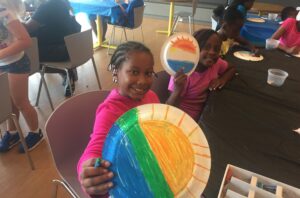
Creativity Sparks Success
WHYY News explores the impact that creativity and arts programming has on the development on school-aged children.
Philadelphia Ballet dancer makes his ‘Nutcracker’ solo debut after recovering from cancer
At this time last year, Nicholas Patterson could barely walk from chemotherapy. Now he is dancing with the Sugar Plum Fairy.
4 months ago
Listen 2:23
‘Not Safe’ For Teens opens a haunted house of teenage political anxieties in former Philly church
With “You Are Here,” teenagers carve out their own space in West Philly to express themselves freely.
5 months ago
Listen 2:50
Philadelphia’s Tempesta di Mare honors the musical genius of 18th-century orphans
“Hidden Virtuosas” premieres Baroque music by the most downtrodden women of Venice, not heard in three centuries.
5 months ago
Listen 2:14