

New Jersey’s homeless population is growing. So too are concerns about federal assistance program budgets being slashed
Many homeless individuals are scared to go to shelters for fear they will be robbed or attacked.
Listen 1:18
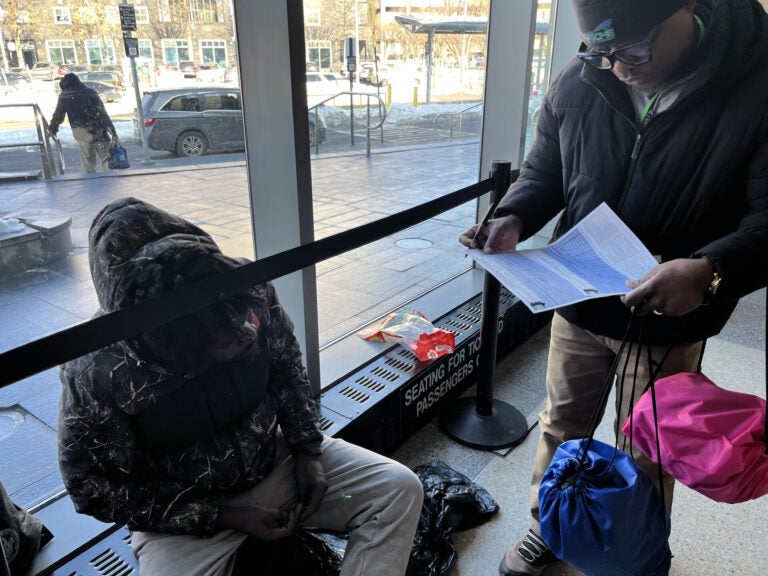
An unhoused man keeping warm in the Trenton Train Station answering questions, during the “point-in-time” count of the unhoused. (David Matthau/WHYY)
From Camden and Cherry Hill to Trenton and the Jersey Shore, what about life in New Jersey do you want WHYY News to cover? Let us know.
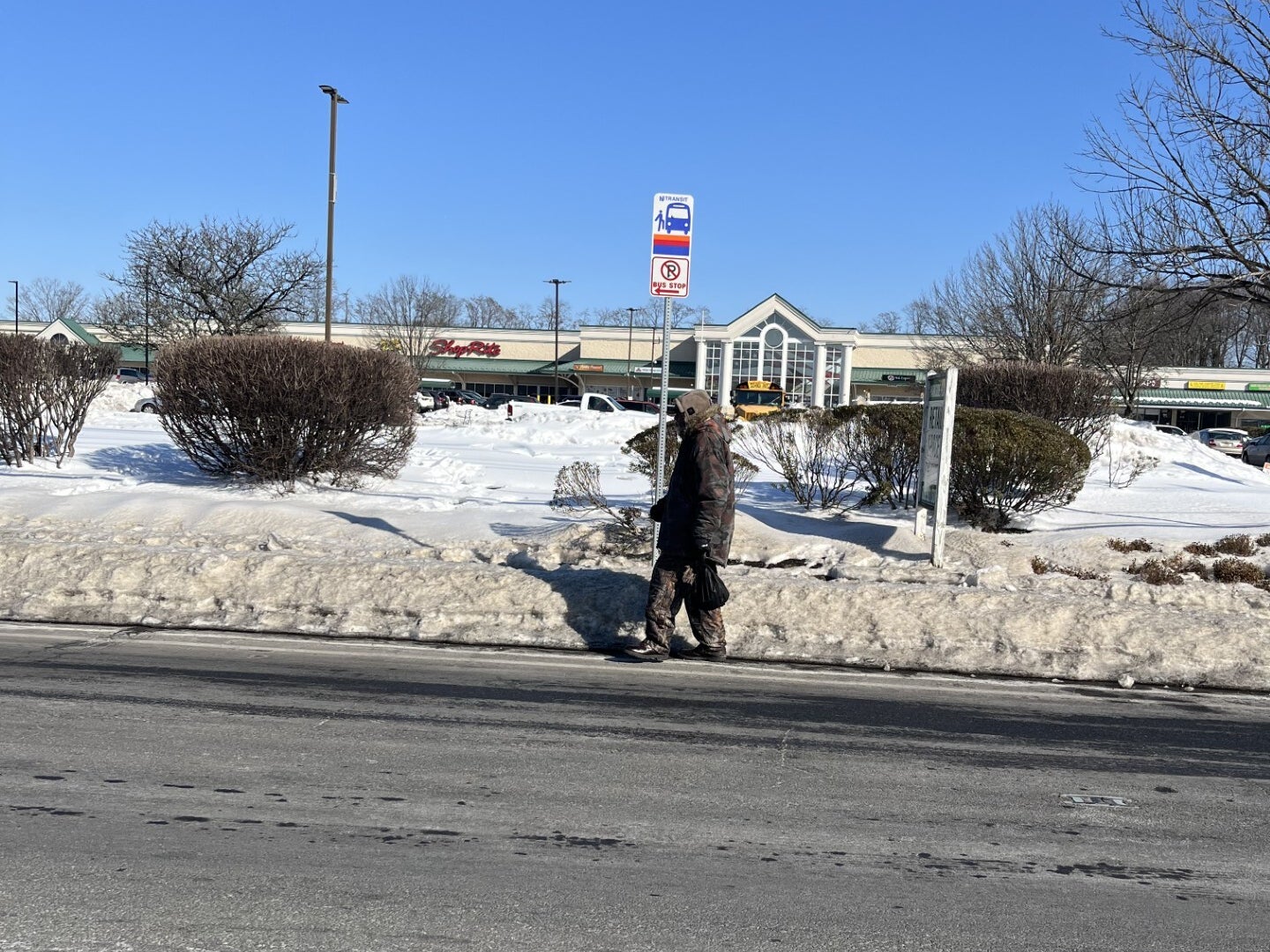
Homelessness isn’t just a problem in New Jersey cities. It’s impacting many suburban areas as well, but it may be less visible if people without homes congregate in wooded areas and behind shopping centers. Five years ago, 8,097 people were identified as being unhoused during a federally mandated point-in-time count that is conducted annually. Last year, that number spiked to 13,748, an increase of almost 70%.
Data collected during the count, which took place Feb. 4, is used by the U.S. Department of Housing and Urban Development to determine federal and state assistance for people who are homeless.
Some homeless individuals find shelter from freezing temperatures in train stations, on buses and in warming centers, while others remain outside with their belongings in shopping carts and bags.
Crystal DeLeon spends much of her time sitting outside a laundromat on the Trenton-Ewing border. She said she has been living on the street for seven years and she cannot go to a shelter because of a spinal issue, but she feels happy to be alive.
“I’m emotionally shook that I made it, because I’m not even supposed to be standing, because I can’t move from here right now,” she said.
Tip of the iceberg
The actual number of people without a home is much higher than the number of people who get counted, said Kasey Vienckowski, leader of the Homeless Planning Team at Monarch Housing Associates. The nonprofit organization assists communities with plans to end homelessness and expand affordable housing.
“They are avoiding service providers, or sometimes during the coldest of the winter months they may find some place to temporarily shelter,” Vienckowski said.
She said individuals who couch surf, going from friend to friend for a place to sleep for days or weeks on end, are not technically counted as homeless because they are sleeping in a permanent residence for a period of time.
Taiisa Kelly, Monarch’s CEO, agreed that the point-in-time count, which has been done for more than a decade, is really just the tip of the homeless iceberg.
“It does provide a consistent assessment of trends over time, but it doesn’t provide a comprehensive picture of every single person experiencing homelessness,” she said.
Each county has a point-in-time coordinator, and when the count is conducted, multiple teams are dispatched to shelters, parks, train stations, soup kitchens, homeless encampments and other areas, asking individuals where they slept the previous night and offering them referrals to warming centers and various assistance programs.
Related Content

Camden County builds $22 million supportive housing complex with 60 units for unsheltered residents
The McKernan Supportive Housing Community in Blackwood is slated to open by summer 2026.
4 months ago
Listen 1:35Mental health concerns
DeLeon said she became homeless because of criminal activity and corruption that resulted in her identity being taken by unidentified authorities.
“They took all of my Social Security disability. I’m permanently disabled and have been so [for] over 30 years,” she said.
According to research by the National Institute of Health, two-thirds of people experiencing homelessness struggle with mental health disorders, and 25% to 30% have a severe mental illness.
DeLeon said she has been hospitalized for mental health care several times. She said she is a victim of fraud, and her family has been the victim of human trafficking. She carries pictures of her daughter and grandchildren and looks at them frequently.
Related Content

In Camden and Atlantic City, health care systems are treating housing as a public health issue
Housing instability is driving ER visits and chronic illness. South Jersey health systems are stepping in with housing support and policy partnerships.
8 months ago
Inadequate services and not enough housing
Kelly said homelessness is an affordability issue.
“If we really want to address homelessness successfully in New Jersey, we need to be creating more housing that is affordable at various price points for families and individuals,” she said.
Adequate support services need to be tied to housing “so for those that need that support, they have the ability to access the services to help them maintain the housing that they have,” she said.
Vienckowski said homelessness prevention programs should be expanded. She said it is much harder to begin to provide rental assistance to someone than to keep them in a program they are already enrolled in.
Related Content

Debating Trump’s approach to homelessness
The Trump administration announced significant cuts to permanent housing programs. It wants to prioritize organizations focusing on drug treatment and work initiatives.
Air Date: November 17, 2025 12:00 pm
Listen 51:40Concern about the future
Kelly said that as the need for help is rising, there is increasing concern about federal cuts.
“We’re seeing a lot of uncertainty with federal programs, pulling back on safety-net services that people rely on to make housing more affordable,” she said. “We’re really in a space where the numbers have the potential to balloon if we are not careful.”
She said a major source of money to support rental assistance programs is federal continuum-of-care funding, but that money may be slashed later this year.
“If that happens it could result in 2,500 households entering back into homelessness,” she said. “It’s a very big concern.”
Mercer County Executive Dan Benson echoed Kelly’s concern about possible federal funding reductions.
“Every dollar cut means another family is on the street,” he said. “This is not about being leaner. This is not about being more efficient. This is literally about whether someone is housed or not.”
Benson said when all of the data is tabulated from the count conducted on Feb. 4, it is expected that Mercer County and other parts of New Jersey will see an uptick in the number of homeless individuals.
“We will continue to fight to offer housing and services to those in need,” he said.
Elena Chaves, a community service worker with the Mercer County Department of Human Services, participated in the point-in-time count the past two years. She said there are more people living on the street now compared to 2025.
“Doing this count accomplishes awareness, the epidemic we’re facing with homelessness, mental health, lack of resources,” she said. “I feel like the years go on, and it’s only going to get worse and worse.”
Chaves said Mercer County has a shelter but many homeless individuals won’t go to it.
“People are scared of the shelter, people are terrified of the living situations at the shelter, they prefer to be on the street,” she said.
Homeless individuals frequently voice concerns about violence and robbery in shelters.
“There is only so much we can do. We try our best,” Chaves said. “But we can’t forget about these people. They need our help.”

Get daily updates from WHYY News!
WHYY is your source for fact-based, in-depth journalism and information. As a nonprofit organization, we rely on financial support from readers like you. Please give today.
Part of the series
Construction on Montgomery County’s latest short-term housing facility is expected to finish by the end of 2026.
1 week ago
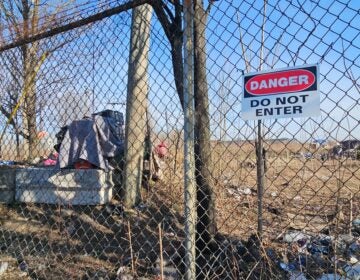
A scheduled sweep of an outdoor encampment called Camp Chloe, home to about 20 people, was delayed Friday morning.
3 weeks ago
Listen 1:33
Montgomery County opens homeless shelter in Lansdale
The 20-bed facility at 1107 E. Main St. is “designed to get residents off the street and back on a stable path,” Montgomery County Commissioner Jamila Winder said.
2 months ago