
South Philly residents’ lawsuit against FDR Park renovations can continue, judge rules
After a three-day hearing, a judge disagreed with the city that the residents waited too long to sue. The residents want the judge to halt renovations.
Listen 1:12
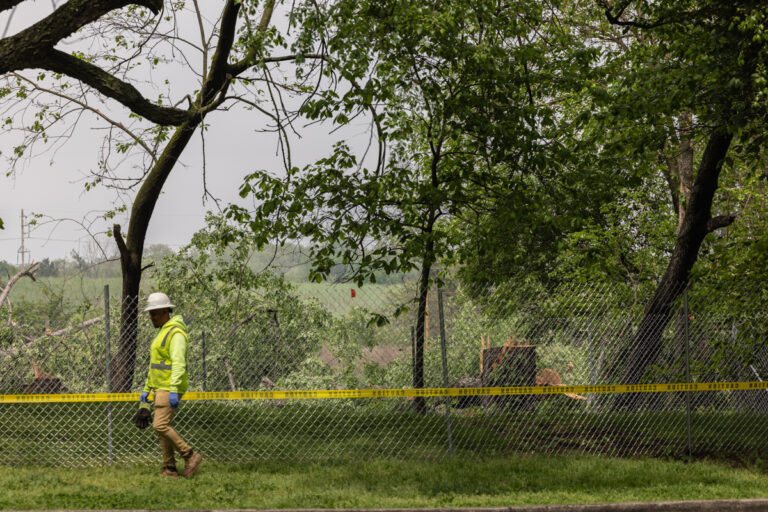
Tree clearing began in the section of FDR Park in South Philadelphia that is slated to become multi-use fields, a playground and basketball courts. (Kimberly Paynter/WHYY)
A lawsuit filed by 11 South Philadelphia residents aiming to stop renovation work at FDR Park will move forward, after a judge on Friday overruled the city’s argument that the plaintiffs waited too long to take legal action.
Philadelphia Court of Common Pleas Judge Sheila Woods-Skipper will next consider the residents’ request for an order to halt renovation work at the park, as the first basketball courts and artificial turf athletic field get under construction.
“The judge saw through all the city’s efforts to block a serious look at this case,” said Rich Garella, who lives about a mile away from the park and is the lead petitioner in the lawsuit. Garella provided WHYY with a copy of the judge’s ruling. “Hopefully now the people get a chance to see what they’re doing down there in the park.”
The popular park is undergoing a $250 million transformation led by the nonprofit Fairmount Park Conservancy, with plans for a dozen new artificial turf athletic fields, six new baseball fields, tennis and basketball courts, a new welcome center, new nature trails and wetlands.
The Conservancy and Philadelphia Department of Parks & Recreation say the changes are necessary to provide sorely needed high-quality athletic fields, solve chronic flooding problems and prepare the park for a wetter future.
Construction is underway on the basketball courts, a fitness area, a bike and walking path, and a multipurpose sports field with stormwater infrastructure, Cari Feiler Bender, a spokesperson for the Conservancy, said.
She said the Conservancy is seeking state permits to build a new wetland, plant trees and create a pollinator meadow.
The Anna C. Verna playground, gateway plaza and a 33-acre tidal wetland are already complete. Renovations to the Welcome Center are finished, but the building is not yet open to the public.
The South Philly residents who filed the suit take issue with the turf fields, which they argue will be toxic, and the removal of trees to make way for the fields and other features. The Conservancy has promised to buy PFAS-free turf, which it argues will reduce maintenance needs and increase playing time on fields, and to replace the clear-cut trees with new trees and vegetation.
The Philadelphia International Airport cut down roughly 58 acres of trees and vegetation in the Southwest corner of the park in 2022 to make way for the tidal wetland. Then in 2024, the Conservancy cut down 48 large “heritage” trees in a former golf course area on the park’s west side.
The complaint filed by the residents’ lawyer, Sam Stretton, argues that the plan will “radically change and undermine the purpose of FDR Park” by replacing natural vegetation with artificial turf fields and, in some cases, requiring paid permits to play on the new fields. Stretton argues the city should have sought approval for these changes from Orphans’ Court and City Council.
The city counters that, after the renovations are done, FDR Park will remain a public park, with the same mix of active and passive recreation characteristic of the park’s original, early 20th- century design. City lawyers say use of the playing fields will be governed by the same permitting rules as in other city parks.
In her order Friday, which came after three days of hearings earlier in the week, Woods-Skipper granted the Conservancy’s request to be dropped as defendants from the lawsuit. The Conservancy argued it should not be subject to the residents’ claims because it does not have the power to sell or lease the park.
Parks & Recreation spokesperson Ra’Chelle Rogers, on behalf of the city and Conservancy, declined to comment on the judge’s order, citing the ongoing litigation.
Related Content
Philadelphians fighting FDR Park renovation can continue their case in city court, judge says
It’s a procedural win for opponents of the renovation, who argue turf athletic fields and a new tidal wetland will radically change the park.
1 year ago
Listen 1:07City argues residents waited too long to file their suit
The city’s bid to get the lawsuit tossed out of court rested on an argument that the plaintiffs’ delay caused harm to the city and its residents by imperiling future fundraising and permitting efforts and threatening to waste tens of millions of dollars already spent on the project.
“That can’t be taken back,” Melissa Medina, divisional deputy city solicitor, argued during Wednesday’s hearing. “That can’t be spent elsewhere.”
During the hearing, city lawyer William Shuey and Leigh Ann Campbell, deputy commissioner for planning, property and strategic engagement with Parks & Recreation, presented several grant agreements and approved payment requests they said showed the city had committed a total of more than $30 million in capital funding before the residents filed their lawsuit in 2024.
The city’s lawyers argued the residents knew or should have known of the plan to transform the former golf course area long before.
The city’s witnesses testified to an extensive planning and public engagement process, starting in 2018, that they said clearly communicated the proposed changes. Allison Schapker, who leads the planning and implementation of the park renovation at the Conservancy, described several public meetings, small stakeholder group meetings, online and paper surveys, a mobile planning booth in the park, social media and blog posts, large signs in the park displaying a map of the proposed renovations, and several community ambassadors who were hired to get the word out about the project years before the plaintiffs sued.
The city argued the plaintiffs’ own writing and actions demonstrated their yearslong knowledge of the plan. Lawyers and witnesses for the city pointed to opinion articles and blog posts two petitioners published in 2022, and a walking tour hosted by the Conservancy that a third petitioner attended that year.
“Delay is completely clear,” Medina said. “It couldn’t be more clear.”
Stretton countered that his clients had exhausted the typical avenues for activism before turning to legal action as a last resort.
“They tried advocacy,” he said. “What else could they do?”
The city argued that if renovation work were halted, it would leave construction in a permanently incomplete state, prevent improvements to aging infrastructure and rob athletic teams of badly needed new fields.
It would also limit the environmental benefits the plan offers, in part by preventing the city from replacing many of the trees that have already been cut down, said Charles Neer, a landscape architect at WRT who wrote much of the master plan and is leading its implementation.
Related Content
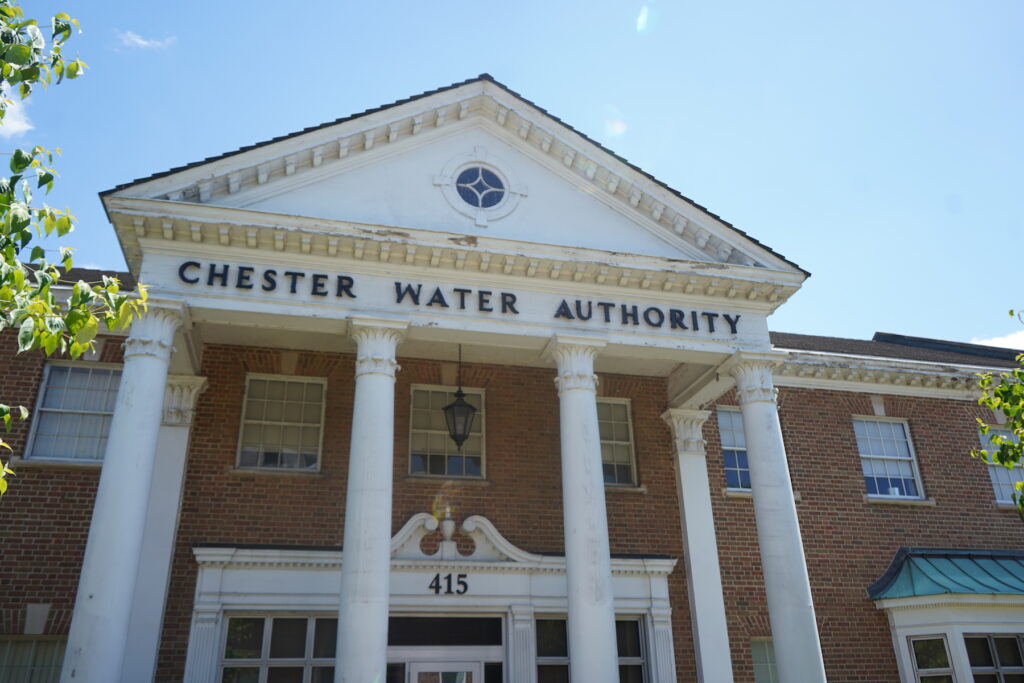
Pa. Supreme Court rules Chester does not have unilateral power to seize Chester Water Authority
The Chester Water Authority is one of the region’s largest public water systems, serving approximately 200,000 across Chester and Delaware counties.
8 months ago
South Philly residents say they tried other tactics, then struggled to find a lawyer to take the case
South Philly resident and petitioner Anisa George said she read the FDR Park plan before writing an opinion article criticizing it in early 2022 but did not realize the extent of the “heartbreaking” tree removal it would entail until she saw dozens of acres clearcut later that year.
George and other petitioners testified they tried other methods of expressing concerns before taking legal action.
Avigail Milder, a designer who lives roughly 3 miles north of the park, said she did not think the final plan accurately reflected the desires of the community expressed during the engagement process. She said she called elected officials, including City Council members and state legislators, joined a coalition pushing officials to rethink the plan and helped start another activist group, Save The Meadows.
“Call me naive,” Milder testified. “But I really believed in that community process.”
But Milder said Parks & Recreation and the Conservancy seemed uninterested in changing the plan.
Some residents testified that it took time to find other likeminded residents and to build the relationships needed to pursue legal action. Residents also said it took time to find a lawyer who would represent them for free. Garella said he reached out to up to 15 lawyers. Milder said Stretton was the only one who would “even entertain” taking the case pro bono.
The judge did not explain her reasons for rejecting the city’s argument. She cited other cases showing that for an argument like the city’s to succeed, the other party’s delay must be “unreasonable and unexplained,” and both the delay and the harm it caused must be “clear on the face of the record.”
In another hearing starting Tuesday, the residents plan to ask the judge for an order to stop work on the renovations while the case goes forward.

Never miss a moment with the WHYY Listen App!


WHYY is your source for fact-based, in-depth journalism and information. As a nonprofit organization, we rely on financial support from readers like you. Please give today.
Family walk ends in tragedy: Hunter says he mistook Georgetown woman for a deer
Santos Maria Chilel Soto was walking with her partner and two of her children when she was fatally shot in an Ellendale-area field. Her family still has questions.
4 days ago
Listen 1:14
Residents suing over FDR Park tree clearing accuse judge of potential bias
One expert on judicial ethics said the connection is too indirect to require the judge to recuse herself.
2 years ago
Listen 1:27
Lawsuit fails to stop FDR Park renovations
A judge decided her court does not have jurisdiction to hear the suit to stop clearing trees. Petitioners plan to appeal.
2 years ago
Listen 1:16