

Data centers explained: What they are, why the Philly area is seeing more of them and how they affect us
Politicians, energy providers, Big Tech and climate activists are talking about data centers. Here’s what to know.

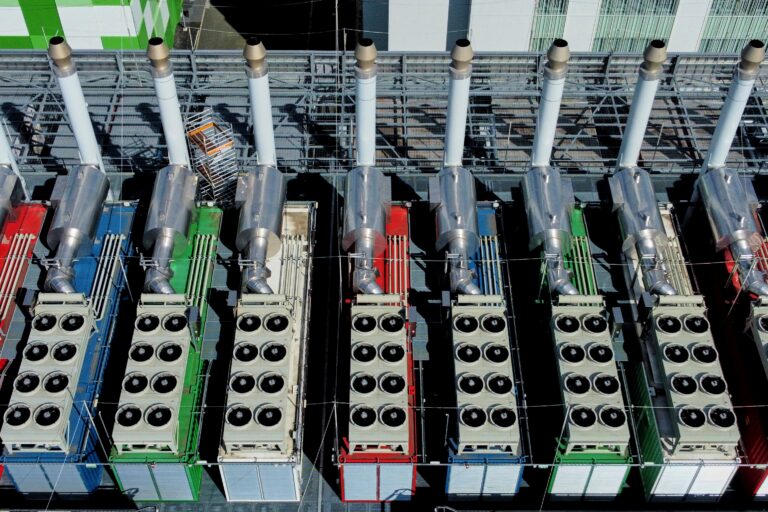
File - The roof of a data center is pictured in Frankfurt, Germany, Friday, Aug. 22, 2025. (AP Photo/Michael Probst)
From Philly and the Pa. suburbs to South Jersey and Delaware, what would you like WHYY News to cover? Let us know!
Data centers have quietly moved from the background of the digital economy to the foreground of Pennsylvania politics. If you’ve been reading about artificial intelligence, the strain on regional power grids or the rising cost of electricity, there’s a good chance you’ve come across the topic.
The modern world runs on data centers — vast facilities built to house powerful computers that store information, run software and keep digital services operating around the clock. Once treated like invisible infrastructure, they are now our enormous neighbors, consuming land, electricity and water, and forcing cities and states to weigh economic promises against costs.
The trade-off is acute in Pennsylvania, the second-largest energy producer in the country and a hot spot for the industry. But these facilities don’t generate many jobs. An analysis from Business Insider found most data centers employ fewer than 150 people and that some employ only 25.
According to analysis by McKinsey, by the end of the decade the industry will need nearly $7 trillion to meet worldwide demands. Donald Trump, shortly into his second term as president, announced a $500 billion private investment into data center creation. He has signed executive orders aimed at building artificial intelligence-focused data centers and challenging state AI laws in order to weaken regulation of the industry.
So what, exactly, is a data center? Where are they in the Philly area? How do they affect energy prices? And what do they have to do with AI? Here’s what to know.
Related Content
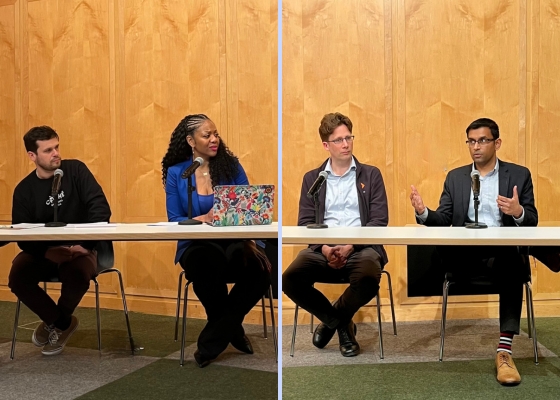
AI experts Arvind Narayanan and Tom Griffiths discuss the rise, risks and opportunities of artificial intelligence at Princeton Public Library for Studio 2: On the Road.
Air Date: March 4, 2025 12:00 pm
Listen 52:56What is a data center?
More than 4,000 data centers exist across the U.S. Each one is a physical space designed to house computers used for IT and data-managing services. Most early data centers were privately owned, but with the growth of distributed computing, many have grown into facilities operated by cloud-service providers working with multiple companies.
Data centers are typically high-security buildings with few windows. The servers, routers, switches, cooling systems and backup generators that live there don’t need sunlight. They are powerful — an operating data center consumes as much electricity as tens of thousands of homes.
One of the earliest-known computers, built at the University of Pennsylvania in the mid-1940s by the U.S. Army for artillery research, is a historical example of a data center. The Electronic Numerical Integrator and Computer weighed 30 tons and performed bulk mathematical jobs in a 30-by-50-foot room. Such computing hardware needs much less space to operate today.
But the demands of new technologies like AI are leading to a larger data center footprint.
One McKinsey and Company study expects the data center industry to grow by 10% a year through 2030. A report from the U.S. Department of Energy expects data centers to account for 12% of all energy use in the country by 2028. Much of that growth is spurred by projections around artificial intelligence — a Goldman Sachs report expects AI to soon account for 30% of the entire data center market.
The processing power required to train AI models demands unprecedented levels of energy. Traditional data services rely on central processing units, while AI relies on graphics processing units, which are able to perform calculations more rapidly. The difference in energy use between CPUs and GPUs is stark: It’s estimated that a typical ChatGPT prompt needs 10 times as much energy as an old-school Google search.
Related Content
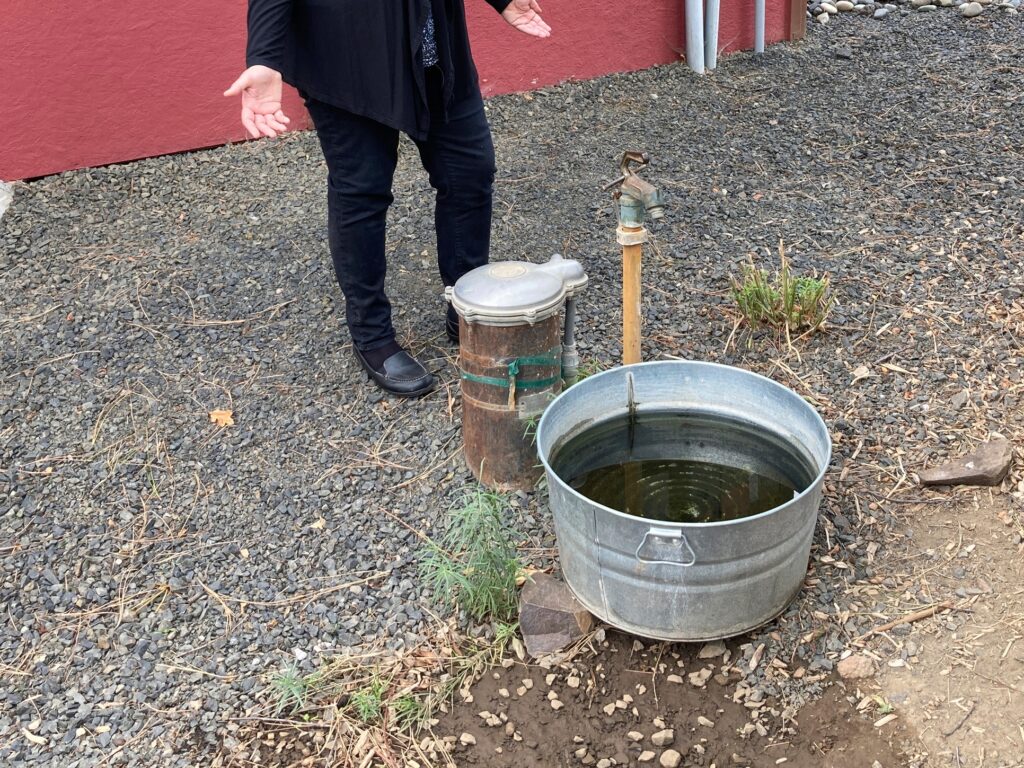
How much water do data centers use? One in Delaware City could use up to 20 million gallons a year
A proposed data center in New Castle County would use tens of millions of gallons of water every year.
8 months ago
Listen 1:03What do critics say?
The growth of data center development has led to higher energy demand, and with that comes concerns about supply, rising electricity bills, pollution and public health. Up to 5 million gallons of drinking water every day is used to cool the running machines.
PJM Interconnection, the nation’s largest regional grid operator and a Montgomery County-based nonprofit serving the mid-Atlantic and beyond, has cited an increase in data centers as a reason for strains on the electricity grid.
Other concerns include land clearing, noise and doubts about the long-term financial viability of investment in data centers and AI.
Related Content
Congresswoman Houlahan talks AI data centers, ICE and federal shutdown in annual address
“ICE is vastly, vastly overfunded,” said U.S. Rep. Chrissy Houlahan of Chester County. “They have a budget that is larger than many countries' entire defense budgets.”
8 months ago
Where are data centers in the Philadelphia area?
There are dozens of data centers locally, according to maps produced by Data Center Map and Business Insider. A large one at Broad and Callowhill streets claims to be “the most interconnected data center in Philadelphia and in the state of Pennsylvania.” There are a few others in the Philadelphia metro area and handfuls in Philly’s suburbs, South Jersey and Delaware.
Last summer, Pennsylvania Gov. Josh Shapiro announced that Amazon was investing $20 billion to build cloud computing and artificial intelligence campuses across the state, including in Bucks County. Other data center proposals include:
- A 1.4 million-square-foot facility in Montgomery County, and similarly sized ones in Chester County
- A 6 million-square-foot facility in Delaware City, Delaware, which recently hit a snag with environmental regulators
- Another near the University of Delaware
- An AI-focused center in Vineland, New Jersey
There are rumors of one coming to the developing Bellwether District in South Philly. Plans for a 2 million-square-foot data center in the Conshohocken area were recently withdrawn due to a legal issue.
Related Content

Pa. Gov. Josh Shapiro wants more data centers but they need to bring their own power
Gov. Shapiro said his data center proposal includes greater transparency, community outreach and water conservation.
9 months ago
Listen 1:11New legislation affecting data centers
Lawmakers are taking steps toward protecting energy customers. A new law in Pennsylvania allows the state’s public utility commission to validate energy-demand projections before utility providers pass on the costs to ratepayers. A New Jersey bill would make electric companies apply tariffs on “large-load” data centers. Legislators in Delaware are working to make utility companies create separate, higher electricity rates for large facilities like data centers. And a bipartisan group of state lawmakers from all three states and others wants to regulate energy sourcing for PJM Interconnection.
On the federal level, a bill co-sponsored by U.S. Rep. Rob Menendez of New Jersey would require data centers to generate their own renewable energy; a separate one would make data centers generate all the electricity they consume; and another would call for creating ‘‘consumer-regulated electric utilities.”
Governors are very interested in keeping energy costs down. Shapiro has threatened to leave PJM if it doesn’t make reforms, and he wants data centers to pay for their own energy. On her first day in office, New Jersey Gov. Mikie Sherrill issued two executive orders aimed at offsetting PJM-created rate increases and expanding power generation throughout the state. And in this year’s State of the State address, Delaware Gov. Matt Meyer asked a state commission to reject rate hike requests from utility provider Delmarva Power.

Get daily updates from WHYY News!
WHYY is your source for fact-based, in-depth journalism and information. As a nonprofit organization, we rely on financial support from readers like you. Please give today.
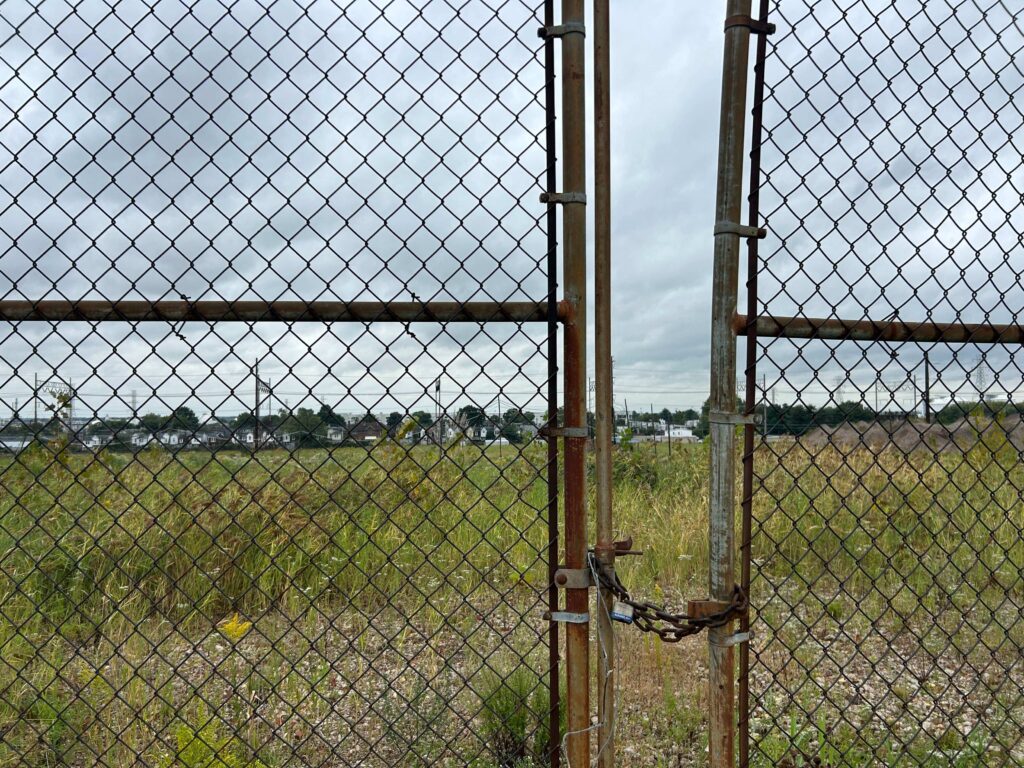
What we know about Delaware County’s potential data center plan, ‘Project Trainer’
Link Logistics is testing the waters for a data center that would sit around 100 feet from homes in Trainer, Pennsylvania.
4 weeks ago
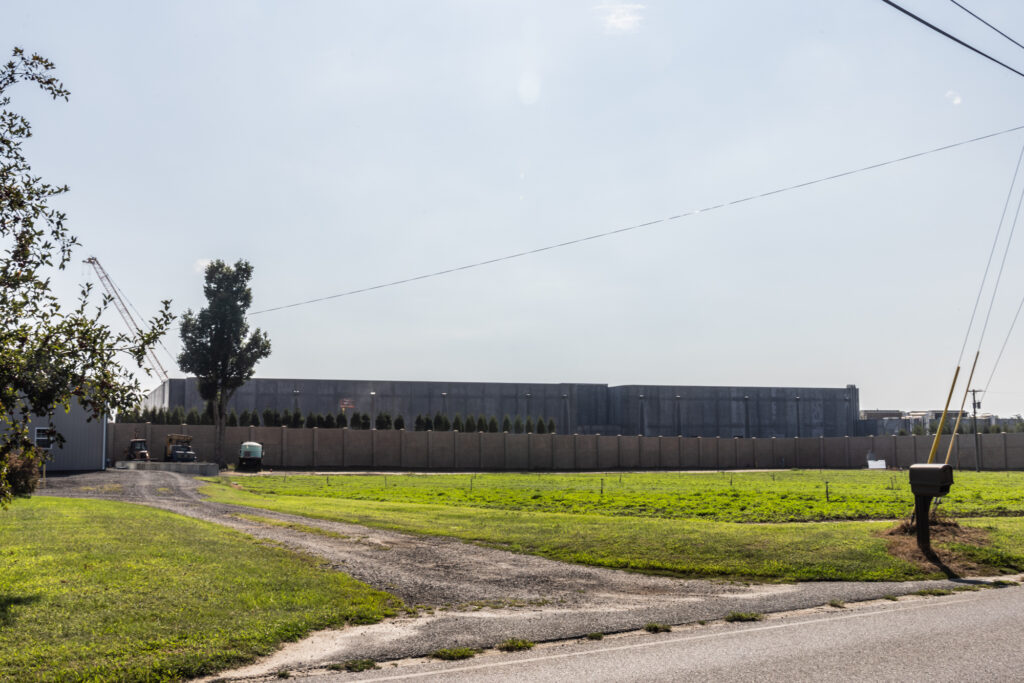
Vineland residents have pushed back against the data center, citing noise and air pollution.
4 weeks ago
Listen 1:00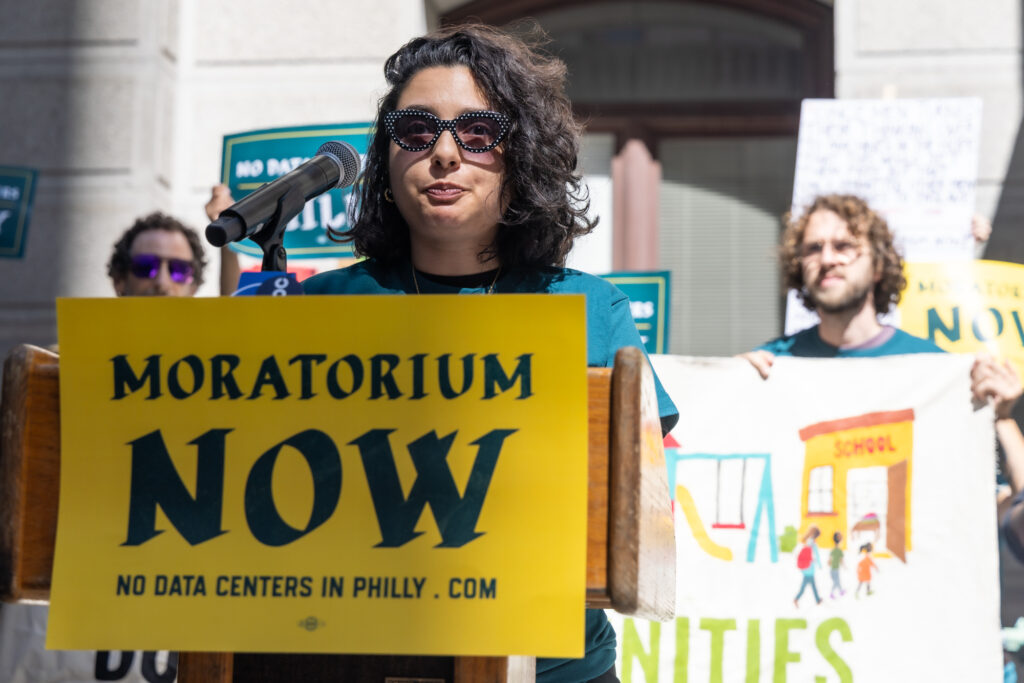
The task force would be required to develop recommendations for data center regulations. Residents say a moratorium is needed in the meantime.
1 month ago
Listen 1:01