

Inspired by the Olympics? Philadelphia-area outdoor enthusiasts offer tips for exercising in the cold
Tempted to grab some skates, snowshoes or skis after watching the Olympics? Take the right precautions before heading outdoors in the winter.
Listen 1:30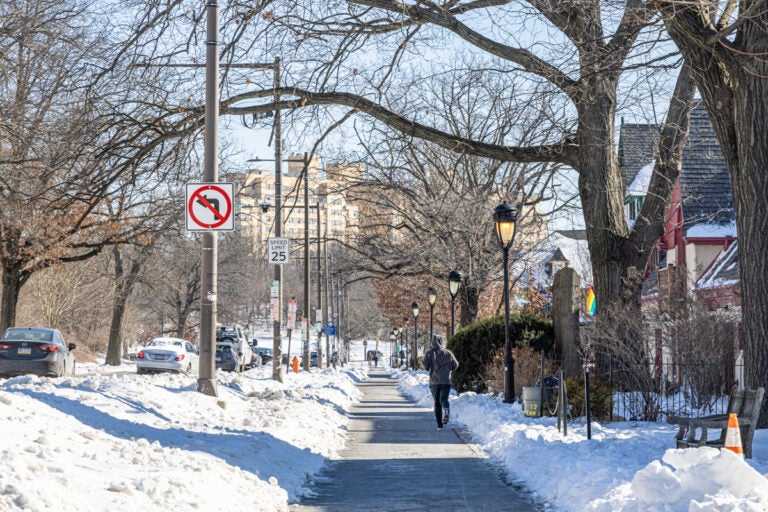
A runner takes advantage of the cleared Kelly Drive footpath in Philadelphia following a substantial winter storm, Jan. 28, 2026. (Kimberly Paynter/WHYY)
From Philly and the Pa. suburbs to South Jersey and Delaware, what would you like WHYY News to cover? Let us know!
Most of us probably aren’t landing triple axels on the ice, racing over 30 miles in cross-country skiing or dropping into a halfpipe on a snowboard atop a mountain in the Italian Alps like the elite athletes competing in the Winter Olympics this month.
But with all the focus on the winter games, some folks might be inspired to pick up some skates, skis or snowshoes and head out for some outdoor activity and exercise of their own.
Philadelphia-area doctors, longtime runners and veteran hikers, backpackers and cross-country skiers say there are some important precautions people should take before spending a lot of time working up a sweat during the coldest months of the year.
“It is never too late to start a well-rounded exercise routine,” said Dr. Douglas Spotts, family physician and associate professor at Penn State University. “But I think I really would emphasize being gradual in how you do that.”
Related Content

The Life-Changing Power of Lifting Weights
We explore the proven and emerging benefits of pumping iron, and why so many people say it’s changing their lives.
Air Date: May 2, 2025
Listen 51:39Don’t underestimate the cold temperatures
Generally, a good goal is to reach about 150 minutes of moderate activity and exercise each week, said Spotts, who practices in Central Pennsylvania and is a fellow with the American Academy of Family Physicians.
“You should be working up to that and not just scurrying off to the mountains and jumping right into a vigorous activity if you haven’t done all of those other kinds of things as a part of your routine,” he cautioned.
While the temperatures have climbed a bit in the past week, the degrees can still drop pretty low, especially in January and February. People may not be thinking about staying hydrated when they’re that cold, Spotts said, which can be a big mistake.
“You really need to make sure you have adequate water intake or, if you’re going to go outside, that you’re prepared and you have enough water to take along with you,” he said.
Wearing warm clothes and layering is a given, Spotts said, because people will go through moments of feeling hot or sweaty as they stay out for longer periods of time. But you still need to protect your extremities like the hands, feet and head and keep enough clothing on to prevent illness, hypothermia or frostbite.
Related Content

The science and history of exercise
In a world where influencers tout magical fitness formulas and new workout gadgets are unveiled seemingly every day, what really matters when it comes to staying in shape?
Air Date: February 5, 2026 1:00 pm
Listen 45:54Cold weather running is refreshing, but watch out for hazards
Seth Weiss started running in the late 1980s, in high school, just for fun. Now, at 51, he leads group outings at Philly Runners, a year-round running club. Participants go out rain or shine, during some of the hottest months of the year, as well as the coldest.
Turnout tends to drop in the winter, but he sees getting about 10 people to show up for a run throughout the city in freezing temperatures as a success.
“One of those Saturdays, our turnout was higher than the temperature. We had like 13 runners and the temp was 11 degrees,” Weiss said, laughing. “That’s a benchmark for us.”
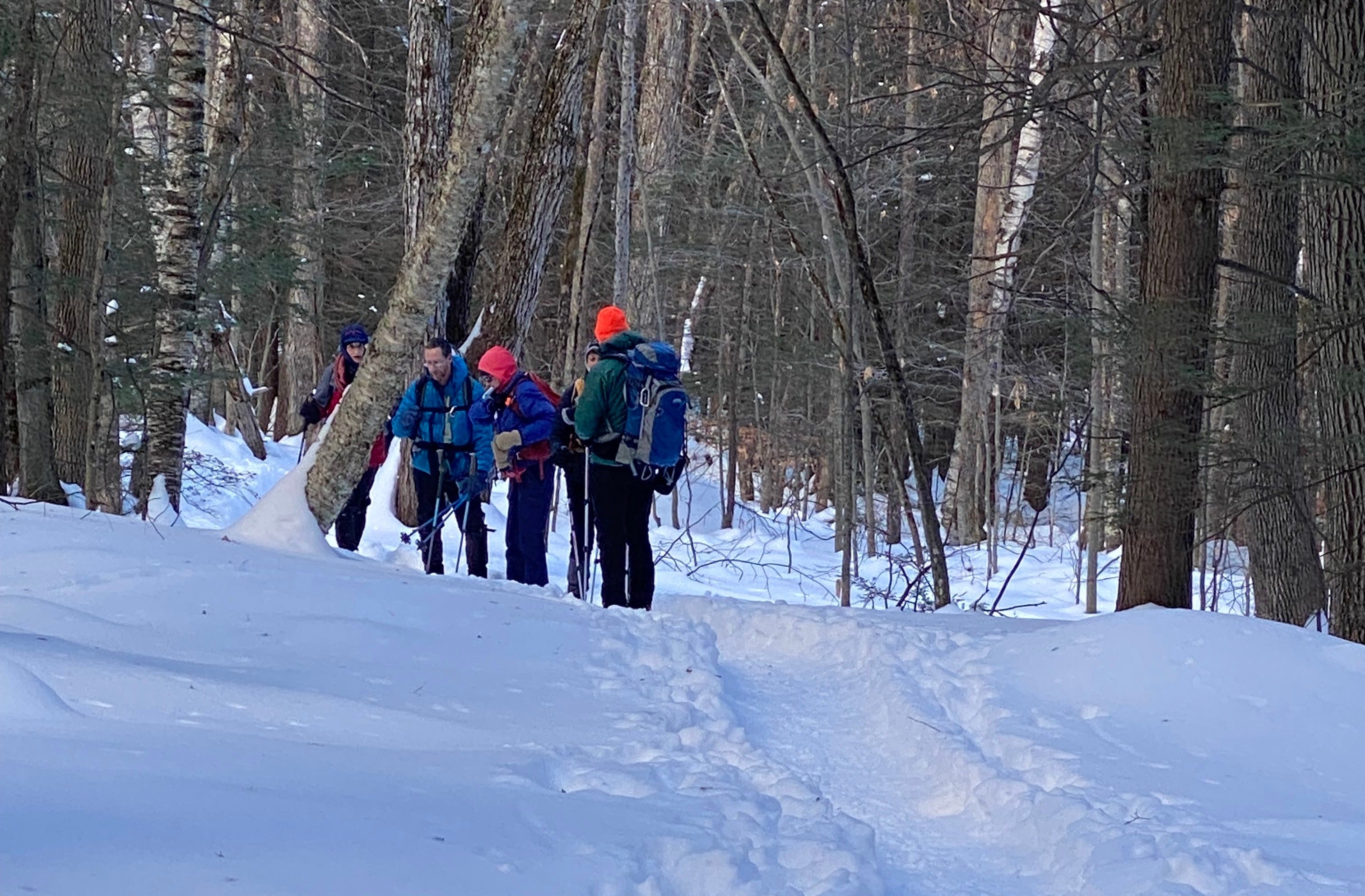
It’s ideal to wear proper clothing and layers that are warm enough to protect against the cold, but not too heavy to cause overheating, he said. Gloves and hats can protect extremities like the head and hands, which can help regulate overall body temperature.
The groups typically run the same distances as they would in the warmer months, Weiss said, but there are generally more hazards on the road this time of year.
Icy conditions can really be dangerous for runners, especially following a snowstorm as temperatures start to warm.
“Before, the snow was cleared from the path and it’s piled up. But then it melts and the pile kind of leaks off into the path and then it refreezes,” he said. “I’ve actually announced at runs, like, ‘Just because it’s warmer, doesn’t mean the conditions are better. In fact, they’re actually worse in a certain way.’”
Some runners combat this by wearing removable spikes on their shoes. Others take a do-it-yourself approach and add screws to create their own traction while out on the road.
A lot of enjoying a winter run comes down to having the proper gear and finding the motivation to get outside, Weiss said.
“The hardest part is getting out the door,” he said. “Once you’re out there and you get going, it’s like, ‘OK, I can do this.’”
Related Content

Visit PA hired comedians to bring Pittsburgh and Philly accents to its winter tourism campaign.
3 months ago
Listen 1:16Winter hiking and cross-country skiing: Safety in numbers
Members of the Appalachian Mountain Club’s Delaware Valley chapter are no strangers to frigid conditions, frozen ground and wind chills. They host day and overnight hiking and backpacking trips year-round, as well as biking, cross-country skiing excursions and more, all throughout the Northeast and in urban areas like Philadelphia.
Leading hikes in the winter is “exhilarating,” said Lisa Kleiman, who lives in Bucks County. But she said there are mistakes people can easily avoid.
“If you’re not familiar with hiking in the cold, you may not know that you might not be able to go as far, it might be a little more strenuous, you might be exerting more effort,” she said.
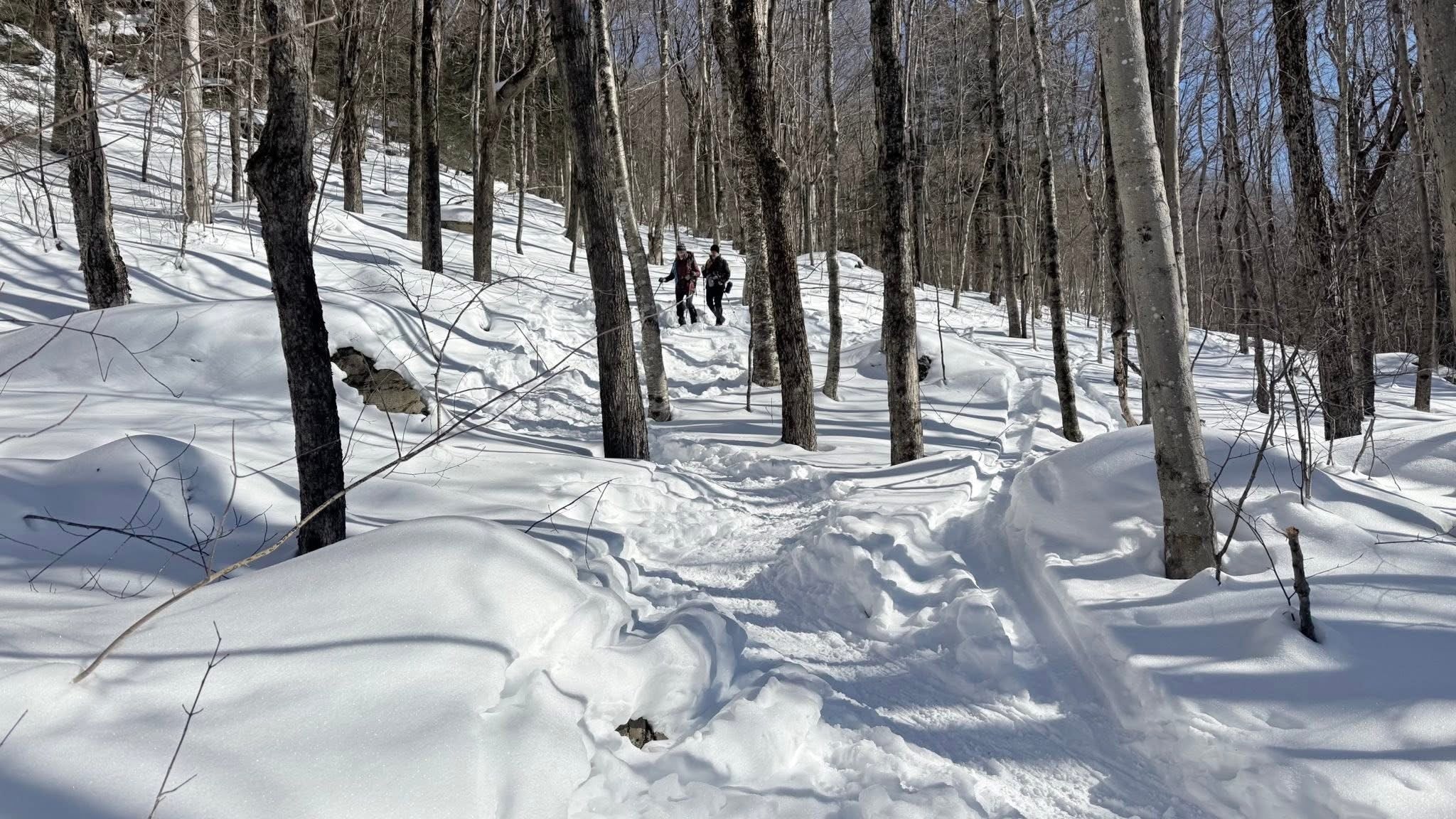
The best way to get started is by going out in a group, said Joe Nanfara, another member. “Safety in numbers,” he added.
Trained volunteer hikers can guide groups through easy, short trips of just a couple miles with no elevation as well as longer, more strenuous trips of 12 to 14 miles with 3,000 feet of elevation.
If you’re headed out into the back country in winter, Nanfara said it’s crucial for hikers, backpackers or skiers to share their itinerary with others and let someone know exactly where they’re going and when.
For those longer trips, hydration and calorie intake is key, said Steven Campanelli, who serves as backpacking chair for the organization.
“Even though you think, ‘I’m not hot, I feel fine,’ every time you exhale, that is moisture that’s exiting your body,” he said. “So, you want to make sure you’re conscious of that and you would drink fluids and replace that.”
Bringing extra food and water is necessary, Campanelli said, because some people tend to burn more energy in the cold. Participants might want to consider eating up to 3,000 calories while outside in the winter and as much as 7,000 calories for extremely cold, extended excursions.
“That’s a lot of calories and your body would definitely use it,” he said.
Other things to pack include essentials like light sources, first aid, a navigation tool, a fire starter and extra layers of different weighted clothing to adapt to temperature and weather conditions, Kleiman said, including additional gloves and socks in case others get wet, which can be dangerous to wear.
Also, be ready to pivot and change plans.
“If you’re not feeling it or if something doesn’t feel right, it’s a little more strenuous than you anticipated or it’s if it seems like it’s taking much longer than you anticipated, it’s a good idea to be cognizant of that and be willing to backtrack,” she said. “The priority should be safety as opposed to achieving ‘X’ number of miles or whatever your goal was. You just want to make sure you’re safe doing it.”
The winter Olympic Games take place through Feb. 22.

Get daily updates from WHYY News!
WHYY is your source for fact-based, in-depth journalism and information. As a nonprofit organization, we rely on financial support from readers like you. Please give today.

Staying fit in 2025: Tips from NBA coach, health columnist
Many people start the year with a resolution to get fit. Whether it’s weightlifting, cycling, or getting outside for some fresh air, we’ll help you get up and going.
Air Date: January 9, 2025 12:00 pm
Listen 50:30
In-person participants must have COVID-19 vaccination for 2021 Broad Street Run
COVID-19 vaccination will be required for all in-person participants taking part in the 2021 Broad Street Run.
5 years ago

The science of fitness and how to make it a habit
Guests: Gretchen Reynolds, Martin Gibala, Angela Duckworth Researchers are continuing to find out about even more ...
Air Date: January 7, 2019 10:00 am
Listen 49:01