

A Warminster food bank is turning spoiled produce into farm-fresh eggs. Here’s how
Unfit for pantry shelves, hundreds of pounds of produce are redirected to a Jamison farm, where the chickens’ “salad bar” curbs waste, cuts costs and helps fight hunger.

From Delco to Chesco and Montco to Bucks, what about life in Philly’s suburbs do you want WHYY News to cover? Let us know!
This year’s frigid winter blanketed the grounds at Hidden Valley Farm in Jamison, Bucks County, and prevented its 1,200 resident chickens from grazing on the fresh grass and plants that are normally a part of their diet.
In search of produce to supplement the standard chicken feed, Eric Kretschman, owner of Hidden Valley Farm, found a solution at Warminster Food Bank that was “as simple as going and knocking on their door,” he said.
Since then, the food bank and farm have developed what they describe as a symbiotic relationship.
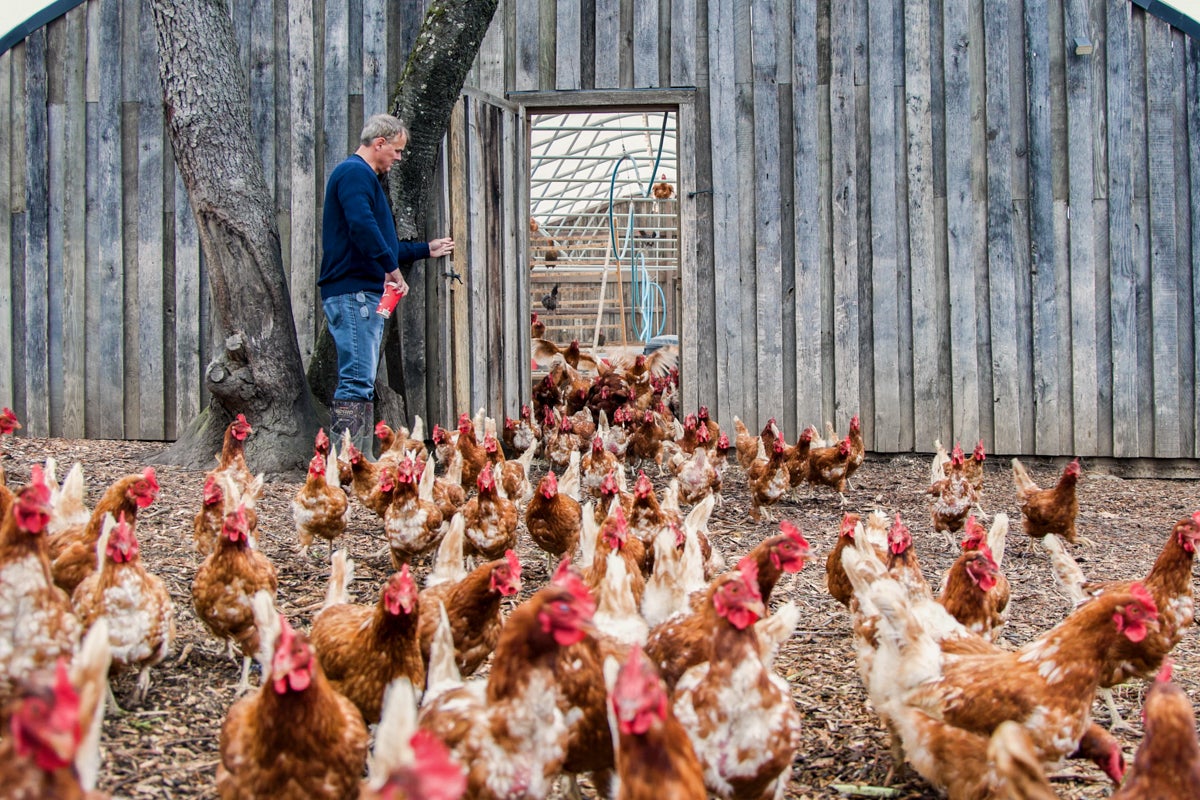
Each month, the food bank provides the farm with hundreds of pounds of produce that is spoiling and no longer fit for their patrons. Then, Kretschman and his team sort the produce and prepare what he calls “the salad bar” for his chickens.
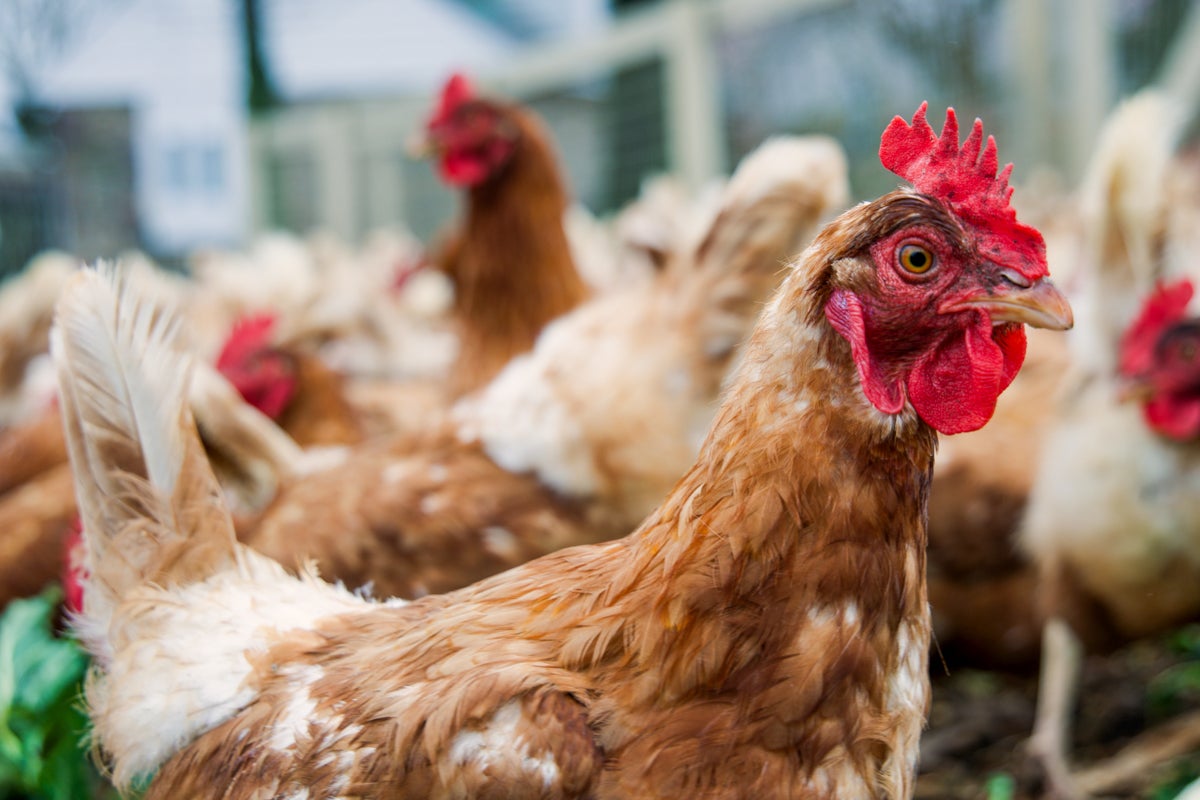
On a recent chilly afternoon in April, the hens rushed out in a clamorous cacophony to peck away at lettuce and tussle over other greens and small pieces of fruit. It turns out the birds are feathered fiends for watermelon, Kretschman said.
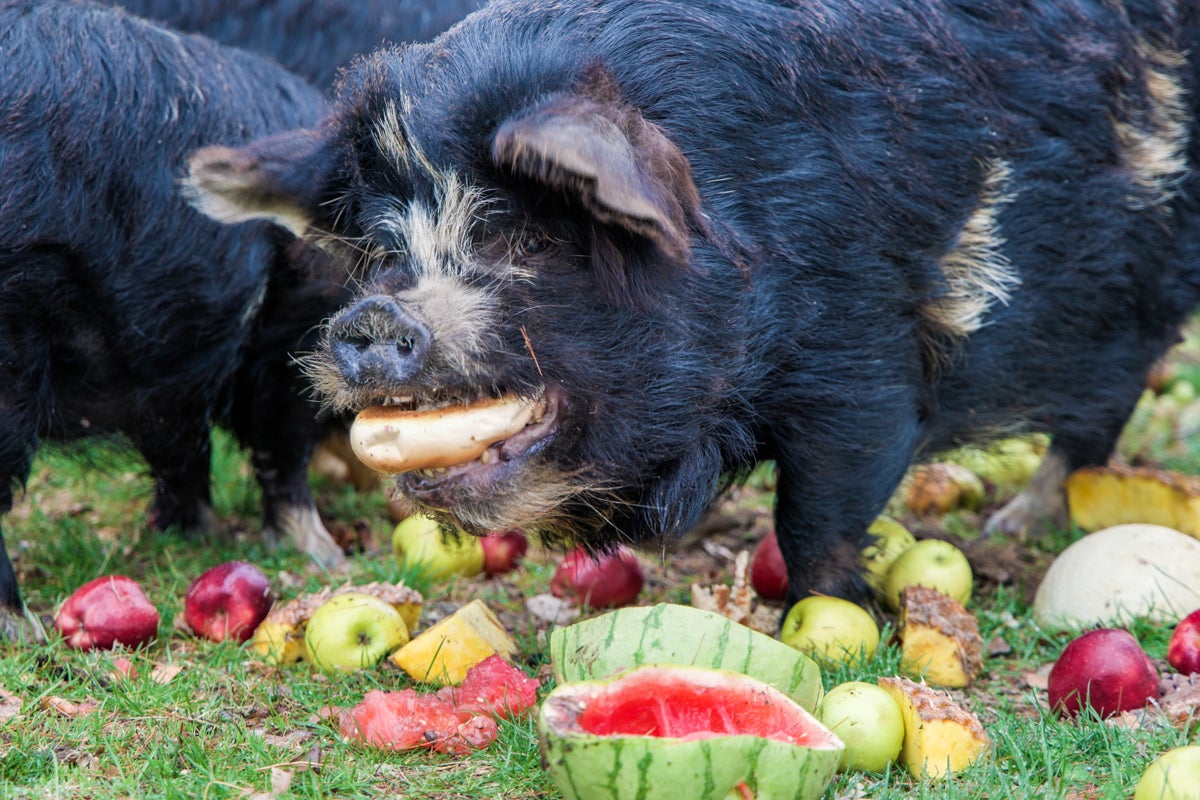
Whatever isn’t fit for the chickens, the “no-kill” farm’s resident 25 pigs happily clean up the rest, dining on bagels, pineapples, carrots and other delicacies.
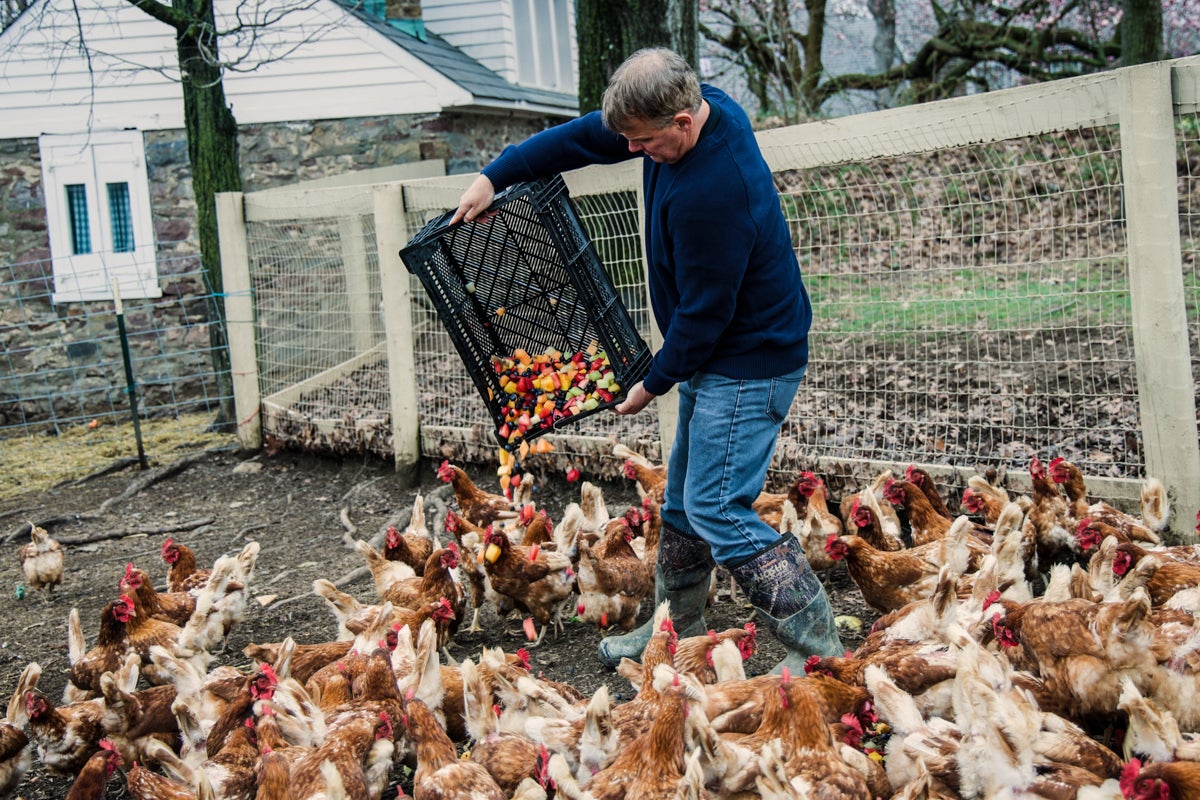
Anything that doesn’t make it to the animals, including the cardboard boxes the produce is delivered in, then goes into the farm’s onsite compost.
Kretschman said the partnership is a way to take care of the environment and ensure food, as much as possible, does not go to waste.
“Because we grow food so we know what it’s like,” Kretschman said. “You have to plant it, you have to weed it, you have to tend to it, you have to pick it, you have to pack it. Everything that goes into food that you see in the food store, there’s a lot of energy behind that. So it’s terrible when it goes basically into a landfill. It’s better if it goes into a human, but if it can circle back and stay in the environment, I think it’s good.”
For Warminster Food Bank, the partnership delivers significant cost savings on waste removal and purchasing eggs for customers, which in early 2025 rose to as high as $7 per dozen.
In exchange for the chickens’ salad bar, the farm donates 30 dozen eggs a week. This means the food bank spends less for the roughly 100 dozen eggs they distribute each week, said Brian Foedisch, its director of operations. That additional help, he said, has been a “huge relief” for the nonprofit, which serves about 300 families a week in Bucks and eastern Montgomery counties.
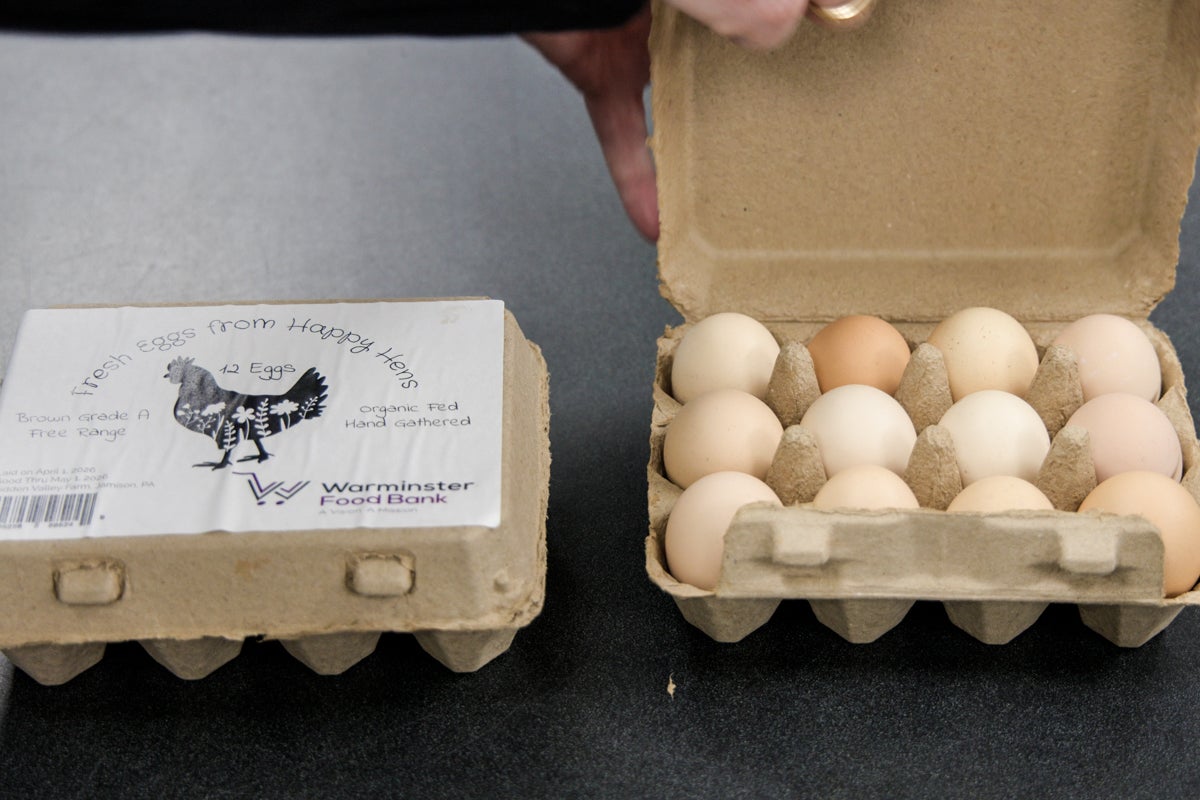
“You can imagine the impact to our budget it was to get farm-fresh Grade A brown eggs for free,” Foedisch said. “A lot of our produce fed those chickens to make them healthy and ready to give us eggs. … It’s a perfect relationship.”
Related Content
Nearly 472,000 Philadelphia residents rely on the federal food assistance program.
11 months ago
Weaving a network of support
As inflation levels continue to soar, and recent cuts to the Supplemental Nutrition Assistance Program have impacted tens of thousands of Pennsylvania residents, nonprofits and community groups throughout Greater Philadelphia are increasingly turning to mutual aid and neighborly partnerships to fill in the gaps and meet increased demand.
Warminster Food Bank has 75 to 80 volunteers who power the operation, as well as a number of other partnerships with nearby businesses and residents.
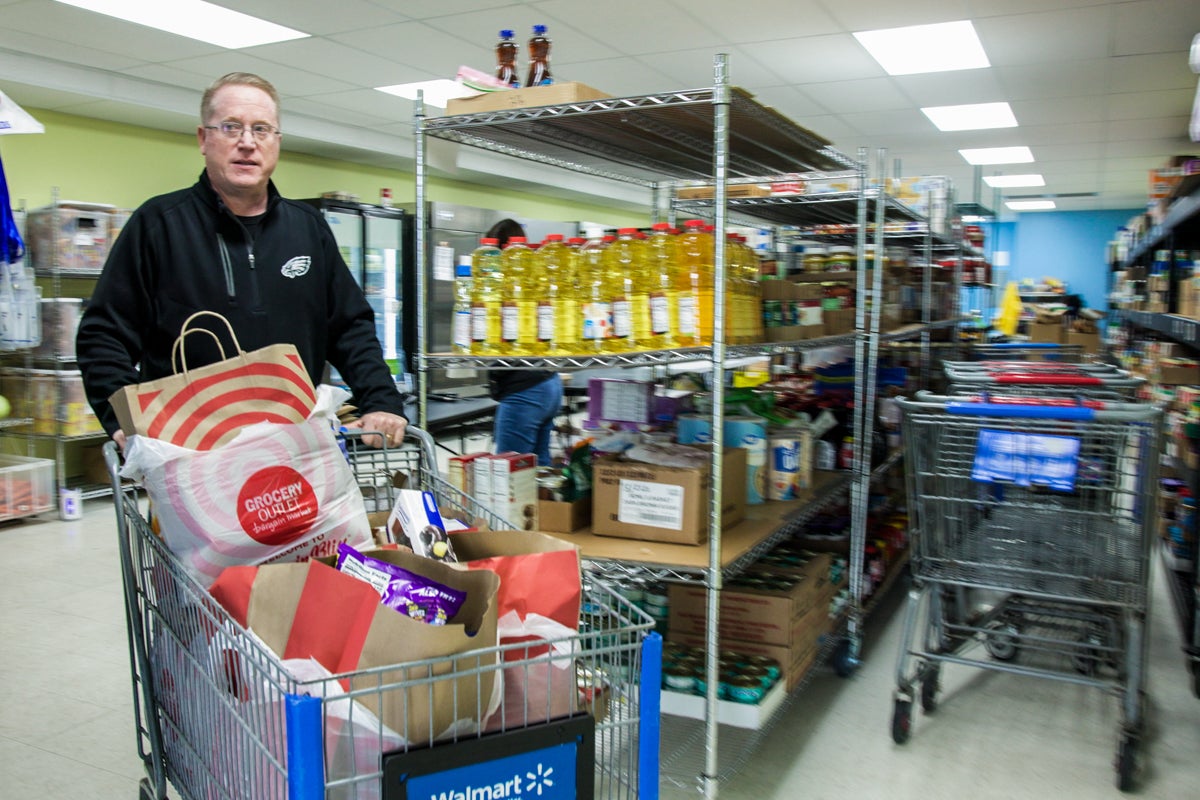
Jonathan Sprout, a resident and publicity committee chairperson at the nearby Bryn Gweled Homesteads, is part of the food bank’s volunteer network. He and other members of the Bryn Gweled Homesteads, a not-for-profit cooperation community owned by its residents, regularly volunteer and assist with packing bags, stocking shelves and putting together shopping carts’ worth of food for customers.
Sprout and his neighbors also help divert waste from their local landfill, taking home some expired food to give goats and other animals on the Bryn Gweled property, or process in their compost.
“We’re just part of that system in place that the food bank has now that makes sure everything gets recycled, that the cycle of food intake and outtake and composting and recycling is as efficient and clean and perfect as possible,” Sprout said.
For Sprout, seeing firsthand the impact he and other volunteers are able to have on people’s lives is “very motivating” and emotional. Sprout struggled to hold back tears and reflected on his experiences.
“Hunger is a debilitating thing, and I think the least we can do is to contribute to our neighbors who are in need of food,” he said. “When you’re hungry, nothing else seems to matter. We live in a world that has the ability to provide food for people who need it. And I’m just happy to be part of that solution, to be helping out in any way that I can, as an individual, as a person from Bryn Gweled.”
Related Content

Soup kitchens across New Jersey are serving more patrons as demand rises for products and services
The Trenton Area Soup Kitchen reports more families with children are seeking help.
6 months ago
Warminster Food Bank provides ‘high-quality’ food
Foedisch, as the food bank’s director of operations, is a volunteer himself. He said the food bank serves people who are struggling with food insecurity in a number of different ways.
“I think most people think of food banks and food insecurity as the desperate poor, people living on the street. And in our situation, that’s the furthest thing from the truth,” he said.
Some people need to come in every month to have their food subsidized. Others come in two or three times in a six-month period, he said, either because they’re underemployed, or are struggling with medical bills or some other unplanned event that has made making ends meet all but impossible.
According to Feeding America’s latest data, nearly 10% of Bucks County’s population, approximately 64,000 individuals, experience food insecurity.
Foedisch urged anyone who wants to donate to the food bank to check its website and consider contributing during the summer months, when donations tend to drop but food insecurity rises.
“We service everybody,” he said. “[From] people who work every day and do the best they can, but just still have trouble feeding their whole families, to the people who are really desperate for food.”
A big part of the work Warminster does is also building relationships with community members.
“When I have a child that comes in, and I can give them a box of Lucky Charms cereal, which they haven’t seen in months, or they can pick out a snack from our snack bin, it’s the best thing in the world,” Foedisch said.
To that end, the food bank strives to always provide the best possible products — and thanks to the partnership with Hidden Valley Farm, that now includes farm-fresh eggs. The people they serve, Foedisch said, notice the difference.
He said that one person recently told him that the eggs were “fantastic,” and together with the fresh vegetables, meat and other grocery items he received, it was the “most high-quality food” he had eaten in a long time.
“It just makes you feel so good that people are appreciating what you’re doing,” Foedisch said.

Get daily updates from WHYY News!
WHYY is your source for fact-based, in-depth journalism and information. As a nonprofit organization, we rely on financial support from readers like you. Please give today.

Why we seek out the wilderness — and what “wilderness” really means in a world defined by human intervention.
Air Date: August 28, 2026
Listen 49:24
Researchers find microplastics in insects from Schuylkill River watershed
The researchers found that microplastics were as prevalent in forested parts of the watershed as they were in urban areas.
2 weeks ago
Listen 1:21
Climate Fixers: Philly’s Get Fresh Daily wants you to eat your veggies
Jiana Murdic is on a mission to get Black communities to embrace a plant-based diet and live Earth-centered lives.
2 years ago