


Philly sheriff wants to double size of eviction unit after shootings shuttered for-profit system. She may not get it
The office is the sole entity responsible for carrying out evictions. It's taking months to close cases — and costing landlords.
Listen 1:17
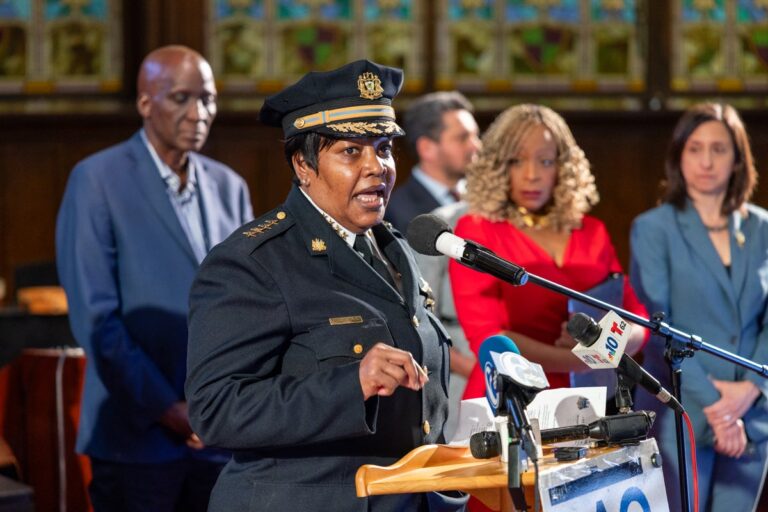
File - Philadelphia Sheriff Rochelle Bilal speaks at the district attorney’s office press conference on public safety and ICE activity in the city on Jan. 14, 2026. (Kimberly Paynter/WHYY)
Have a question about Philly’s neighborhoods or the systems that shape them? PlanPhilly reporters want to hear from you! Ask us a question or send us a story idea you think we should cover.
Philadelphia Sheriff Rochelle Bilal wants to more than double the size of her office’s eviction unit, a budget request aimed at clearing a sizable backlog of cases and keeping pace with new ones.
The office currently has eight to 12 detectives assigned to perform eviction operations each day, including lockouts. To meet the demand, Bilal hopes to hire another 14 detectives as part of a broader push to increase headcount across the office, which also staffs courtrooms, transports prisoners and manages sheriff sales.
“We need staffing,” Bilal told City Council during a budget hearing this week. “We need funding.”
Her request is rooted in recent history.
More than a year ago, the sheriff’s office became the sole entity responsible for conducting evictions in Philadelphia. The shift substantially increased the workload of the eviction unit, prompting Bilal’s effort to add capacity.
The sheriff’s office previously conducted only some evictions. The vast majority of them were completed by armed contractors hired by the Landlord and Tenant Office, a private outfit led by a court-appointed attorney. That stopped in late 2024 when the LTO shut down, the direct result of two tenants being shot by deputy landlord-tenant officers attempting to evict them.
During this week’s budget hearing, Chief Inspector David Fallen said, for several months after the transition, the sheriff’s unit was bringing in cases more quickly than it could schedule evictions, in part because it had inherited thousands of cases from the LTO.
The unit went from scheduling about 25 evictions a week to more than 140, an uptick that has routinely required overtime hours, according to a spokesperson.
Fallen said the office is “about to turn the corner” when it comes to staying on top of the new cases coming into the office now.
“We just have to work to reduce what’s behind,” Fallen said.
Related Content
The bill aims to lower single-family home prices. But it would inadvertently endanger companies that provide housing for some people with disabilities.
6 months ago
Listen 1:49Independent landlords strongly back Bilal’s request for more eviction detectives. At present, it takes an average of six months to complete a single eviction case — three times longer than it did when landlords were able to hire the LTO.
“That time period has to be reduced significantly,” said Paul Cohen, general counsel for HAPCO Philadelphia, the city’s largest advocacy group for landlords and property owners. “Every day that goes by is another day the owner of the property is losing rent.”
Cohen said that’s translating to landlords raising their rents to make up for the lost revenue. He said it has also made the application process more stringent, because landlords are more fearful of getting stuck with a problem tenant that could cost them big. That means landlords are taking fewer risks when deciding who they want renting their units.
“To lose five months’ rent, that’s devastating. They still have to make the mortgage payment. They still have to pay the taxes, insurance and all the rest of the expenses,” Cohen said.
Related Content
Philly renters just secured new protections from landlord retaliation. A lawsuit could undo them
Fair housing advocates say the City Council measures will make it safer for tenants to speak up about dangerous living conditions. But a federal lawsuit looms.
6 months ago
Listen 1:19All of this set the stage for an ongoing fight over City Council legislation aimed at protecting renters that landlords say will make it even harder for them to remove problem tenants.
For now, it’s unclear if the sheriff’s office will receive any new funding to make additional hires.
Bilal is calling for an additional $19.2 million for the fiscal year starting July 1. The money would be part of the city’s five-year plan.
The mayor’s budget proposal, however, effectively includes no new funding for the office, which currently has a $35.5 million budget.
Lawmakers must pass the city’s next budget by June 30.

Get daily updates from WHYY News!
WHYY is your source for fact-based, in-depth journalism and information. As a nonprofit organization, we rely on financial support from readers like you. Please give today.
Brought to you by PlanPhilly

PlanPhilly
In-depth, original reporting on housing, transportation, and development.
Philly’s new crime lab takes shape as City Council approves borrowing $40 million more
The Police Department's $95 million facility in University City will replace what is widely considered an undersized, outdated lab in North Philadelphia.
3 days ago
Listen 0:47
While there’s widespread support for saving the pop art mural, its future remains uncertain due to its condition.
1 week ago
Listen 1:09
Philadelphia real estate developers argue a 20-year tax abatement would boost city revenues
Critics contend tax breaks deprive the city and schools of badly needed funds, while proponents say that’s a misconception.
1 week ago
Listen 1:23