
Philadelphia should do more to help unhoused people during heat waves, advocates say
In an open letter, a coalition of homeless people, advocates and service providers called for a heat response similar to how the city handles cold.

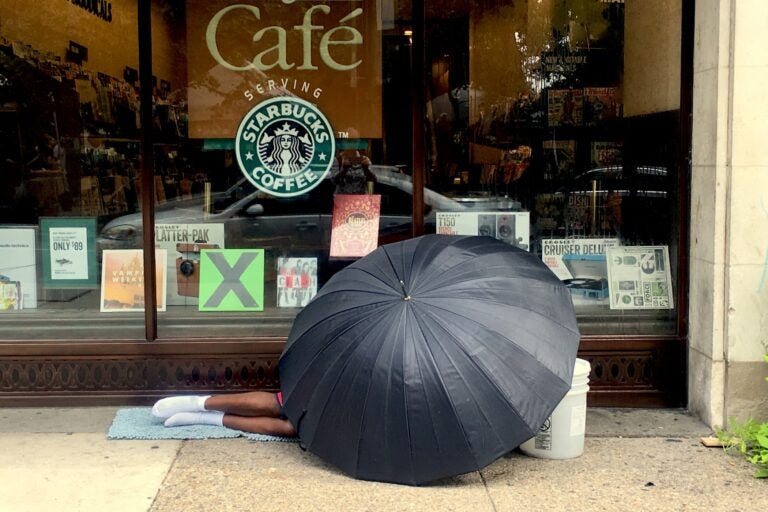
An unhoused person sleeps under an umbrella at Philadelphia's Rittenhouse Square. (Emma Lee/WHYY)
This story is part of the WHYY News Climate Desk, bringing you news and solutions for our changing region.
From the Poconos to the Jersey Shore to the mouth of the Delaware Bay, what do you want to know about climate change? What would you like us to cover? Get in touch.
In early July, when the temperature soared above 100 degrees in Philadelphia for three consecutive days, Barbara Lear slept outside.
Lear has been homeless since February, when the sister she’d been living with moved. Since then, Lear has grown frustrated with the shelter system, which she describes as unsanitary and unpredictable. Several times, Lear said she has traveled to a shelter where she’d been told a bed would be open, only to find out the bed had been taken. Now, she mostly sleeps outdoors.
During the heat wave in early July, the city extended hours at dozens of libraries, rec centers and partner organizations to serve as cooling centers during the day, suspended utility shutoffs and advised residents to use air conditioners due to the “dangerously high heat index values.” Outside, the muggy heat made Lear’s asthma worse, until finally, she struggled to breathe and was forced to seek help at a hospital for steroids.
“It can get so hot outside that I can barely breathe,” said Lear, who is a member of the Philly Homeless Union.
Unhoused Philadelphians like Lear face increasingly dangerous summers, as human-caused climate change fuels heat waves and the conditions for wildfires that can blanket the city with smoke.
A group of advocates, service providers and people experiencing homelessness, including Lear, says the city needs to do more to keep unhoused Philadelphians safe during heat waves and periods of poor air quality. The group, called the Good Works Coalition, wrote an open letter to Mayor Cherelle Parker’s administration earlier this summer calling for a 24/7 “heat respite-and-navigation” site during the summer, better communication about cooling centers and safer, cleaner shelter conditions. It called for the city to provide resources during extreme heat similar to those provided during extreme cold.
“We’re learning as we go that the heat emergencies are as dangerous as cold emergencies,” said Dr. Trisha Acri, director of Courage Medicine, which provides medical services in Philadelphia mainly to people experiencing homelessness. “I think we’re learning that we need more resources in the summer, just like we have in the winter.”
Cheryl Hill, executive director of the city’s Office of Homeless Services, said that the Good Works Coalition had “great ideas,” and that her office is currently evaluating best practices and determining whether it needs to do more during extreme heat. But she pushed back against the idea that the city is failing to provide adequate resources, saying the Parker administration has added hundreds of shelter beds this year as part of the mayor’s bid to end street homelessness, and has increased monitoring of shelter conditions.
The dangers of living outside during extreme heat and poor air quality
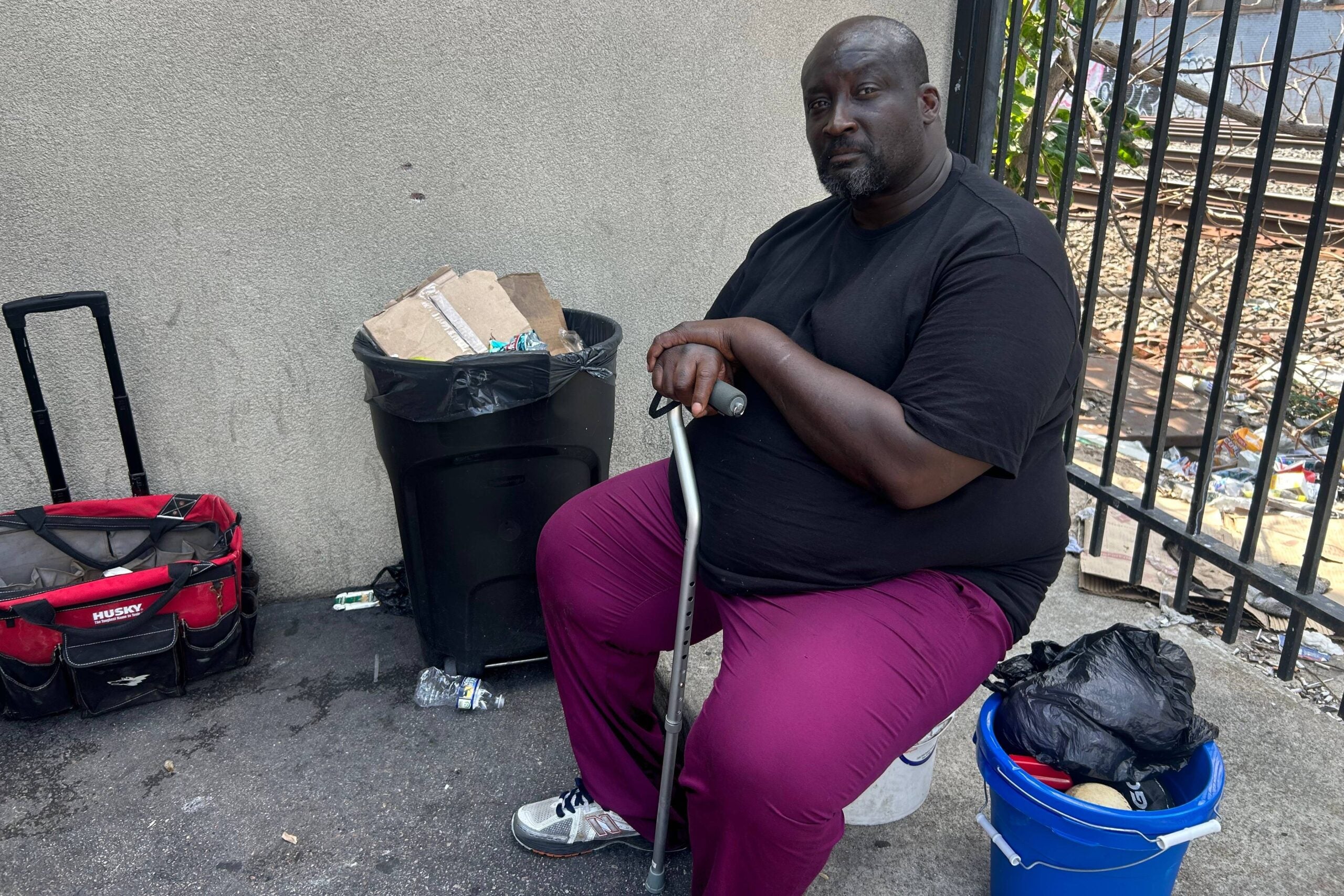
James Sanders has been homeless for “a long time.” The 52-year-old said he sleeps outside when Philadelphia’s weather is tolerable, but tries to find shelter inside when summer nights get too hot.
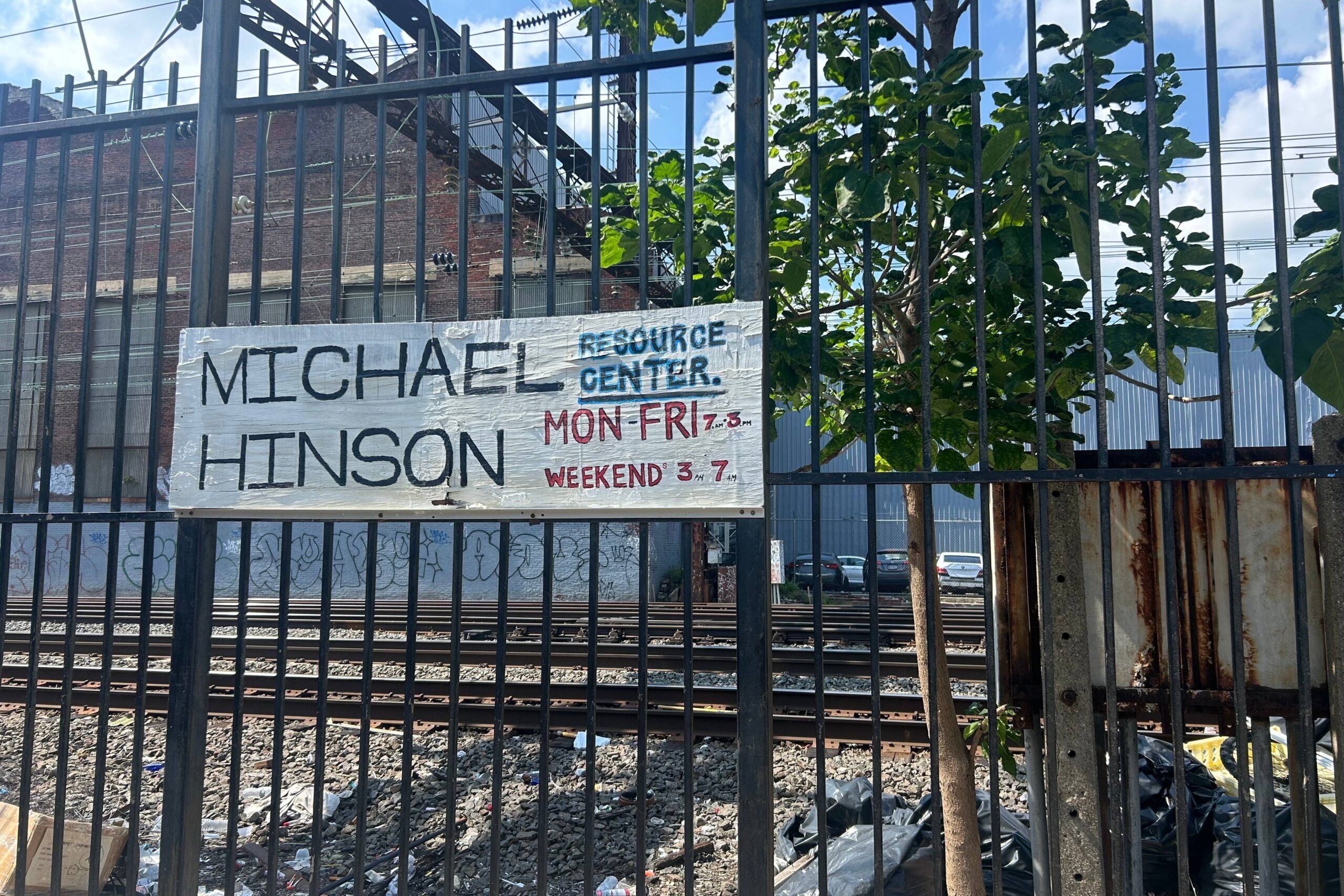
While waiting for placement in an emergency shelter bed outside of the Mike Hinson Resource Center in North Philadelphia this month, Sanders said he passed out, and another man waiting in line called an ambulance.
“I couldn’t take the heat,” Sanders said. “I was tired.”
People experiencing homelessness are at especially high risk for life-threatening complications from heat because of their constant exposure and, often, underlying health conditions, said Dr. Kraftin Schreyer, director of clinical operations for Temple Health’s emergency department.
This summer, unhoused patients have come into Temple’s emergency department with symptoms ranging from mild dehydration and fatigue to heat stroke and severe hyperthermia, Schreyer said. Staff at Arch Street United Methodist Church’s daytime service center have had to call ambulances for unhoused guests experiencing heat-related illness, including dehydration and cardiovascular issues, said Tess Feiler, the church’s director of congregational and community development.
Without fast treatment, heat stroke can cause organ damage.
“Extreme heat is uncomfortable. For a lot of us, that’s kind of all it is,” Schreyer said. “But for people … out in the elements, this is a really serious potential health threat.”
Heat poses an even greater danger for unhoused people who use drugs. Acri said Philadelphia’s current drug supply is severely sedating, which can make it hard for people to take basic steps to stay safe, like sitting in the shade.
“They may fall asleep in the sunlight, they may fall asleep outside and not have any ability to protect themselves from the weather,” Acri said.
Climate change, driven primarily by humans burning fossil fuels, worsens conditions. Philadelphia’s average summer temperature has trended up roughly 3 degrees Fahrenheit over the last 100 years, according to a WHYY News analysis of federal weather data.
Philly’s nights are also trending hotter. For people living outside, this gives a string of hot days an “additive effect,” Schreyer said.
“You’re stressed during the day as the temperatures are going up, and then you can’t remove that stress completely at night,” she said. “There’s still some degree of insult happening from the heat then, and then it could be built upon the next day.”
The city has recorded eight heat-related deaths so far this year, according to the Department of Public Health. It’s not clear how many of these people were unhoused because the department does not track heat victims’ housing status.
Related Content

The ‘One Philly Plan to End Street Homelessness’ is a partnership with Jefferson Hospital in an attempt to help thousands of homeless residents.
8 months ago
Listen 0:59Confusion over Code Red and heat health emergency
The city of Philadelphia has two different designations for hot weather:
- Code Red: Declared by the Office of Homeless Services when forecasters predict at least three consecutive days with a heat index, a measure of how hot the air feels, of at least 95 degrees Fahrenheit.
- Heat health emergency: Declared by the Department of Public Health when the heat index will reach 98 to 106 degrees, depending on the length of the heat wave and time of year.
During a Code Red, more street outreach teams fan out across the city to talk with people living outside, offer them water and resources, and try to get them into shelter, according to the Office of Homeless Services.
During a heat health emergency, the city and its partners open cooling centers, which consist of extended hours at some libraries, rec centers, senior centers, pools and spray grounds. The city also pauses residential utility shutoffs, and the Philadelphia Corporation for Aging opens a phone “heatline” where city Health Department nurses answer questions about medical problems related to heat.
Waiting outside of an emergency shelter during a Code Red earlier this month, a 28-year-old woman who identified herself as Honey said she was not aware of the Code Red declaration, nor that the city extends hours at libraries and other cooling centers during heat health emergencies.
“I don’t really know what that is,” said Honey, who asked WHYY News not to identify her by her full name over concerns that friends, family or prospective employers would find out she was homeless. “I would have to know that there’s a cooling center to even search it, because I didn’t know that that was the name of it. … I only know about the Code Blue.”
Advocates say the two different heat declarations create confusion.
Feiler of Arch Street United Methodist Church, which runs a daytime service center in Center City that provides case management, meals, showers and wellness checks to people experiencing homelessness, said it’s hard to find clear, concise information from the city about the criteria for each declaration and what additional resources or services they trigger.
“I’m not even clear on it,” Feiler said.
Service providers and advocates say the city’s online map of cooling centers is useless to people without consistent internet access and difficult to navigate on a cell phone. They want the city to distribute a paper or printable list of consistent cooling centers that does not change each heat wave.
“I found the map pretty much unusable, unfortunately,” Max Ray-Reik, an organizer with the Philly Homeless Union. “It’s pretty much like word of mouth at this point.”
In a written response to questions, Department of Public Health spokesperson Jason Brooks said the city publishes cooling center locations in list format through online blog posts and that city outreach teams communicate information about cooling centers in person to people living outside and provide transportation.
Hill, with the city’s Office of Homeless Services, said that while the city “can always diversify and increase how we communicate things,” some cooling centers, like libraries, are always resources for people experiencing homelessness, even outside of heat health emergencies.
“I do hope that people understand that there are public spaces that if you need to get out of the outside elements, that you can go to and relax,” she said.
Hill sees the two different declarations as useful, since people experiencing homelessness have greater needs than other Philadelphians. But she said her office is considering whether it needs to ramp up services for people experiencing homelessness during Code Reds.
“As we continue to evaluate best practices, we will continue to see if what we’re doing is enough to help those that are unsheltered, to see if there are things in our Code Red practices that we should change,” she said.
Related Content
New Jersey’s homeless population has risen 17% over the past few years, and there aren't enough resources to properly help unhoused people.
2 years ago
Listen 1:57Heat versus cold: 2 different city responses
During a wintertime Code Blue, which the city declares when the temperature is forecast to dip to 32 degrees or below with precipitation or 20 degrees without precipitation, the city opens extra emergency shelter beds. Emergency shelters allow people to stay inside throughout the day. When Code Blue lasts at least three nights, the city opens warming centers. Over the past two winters, the city has provided 24-hour warming center access across multiple sites during Code Blues, by extending hours at some libraries during the day and opening some rec centers as warming centers overnight.
None of these services are routine practice during the city’s extreme heat declarations. Most city cooling centers close by 9 p.m., although one at the Kensington Wellness Center was open 24 hours during heat health emergencies this year, Brooks said.
This summer, unhoused people had access to hundreds more shelter beds than usual, since the city kept open its additional winter beds year-round to meet Parker’s promise of adding 1,000 shelter beds. But Hill said the additional beds are only funded through the end of this fiscal year.
In its letter to the Parker administration, the Good Works Coalition said Philadelphia should emulate other cities, including Phoenix, which opens heat relief sites May 1 for the entire summer season, including one 24/7 heat respite center.
“Philadelphia already shelters people overnight from the cold under Code Blue; there is no equivalent protection under Code Red,” the letter read. “That gap is a choice, and it can be closed.”
Acri said people experiencing homelessness in Philadelphia are at risk of heat-related illness even at temperatures or durations outside those that trigger the city’s heat responses. Ray-Reik said cooling centers open all summer and overnight would reduce confusion and help unsheltered people avoid getting “really sick” when their bodies can’t cool off while they try to sleep.
But city officials said that heat poses a different kind of threat to unhoused residents than cold and warrants a different response.
“Code Blue, just being outside during that temperature for any extended period of time, it becomes extremely dangerous,” Hill said. “Code Red, we are still checking on individuals and trying to make sure that they have the water and the resources that they need, but it’s not the same type of emergency.”
Brooks said the Department of Public Health’s heat health emergency temperature thresholds were chosen based on an analysis of historic heat index data, as well as illnesses and deaths. He said the city is currently not planning a 24/7 cooling center network “simply because temperatures drop overnight.”
“During Code Blues, the most dangerous part of the day is overnight, but that’s not the case during Heat Health Emergencies,” he said.
Related Content
Enduring extreme cold: What resources are available in Philly, South Jersey and Delaware?
Severe winter weather often triggers special measures to help protect people who are unhoused. Here’s what you need to know.
3 years ago
2026 summer events brought cooling resources that advocates say should continue
Sanders frequently struggles to find enough water to drink on hot days.
“I’m dehydrated. I’m hot, sticky,” he said, waiting outside of the Mike Hinson Resource Center during a Code Red earlier this month. “There’s no water out here.”
Sanders said Philadelphia should have more public water fountains accessible to people living outside.
During the heat wave in early July, which coincided with the FIFA World Cup and Wawa Welcome America events, the Philadelphia Water Department opened hydration and misting stations between City Hall and Lemon Hill.
“They … came up with some decent remediation so that tourists weren’t dropping on Lemon Hill,” said Rev. Michael Caine, pastor at Old First United Church of Christ and member of the Good Works Coalition. “But … when you look at the city’s streets and our neighbors who are homeless, the city doesn’t seem to be as creative or committed or doing as well.”
Caine and the other advocates who signed the letter want these kinds of cooling resources to be readily available to unhoused Philadelphians.
“A misting tent and a medical station work the same way in an encampment as they do at Lemon Hill,” the Good Works Coalition wrote.
Related Content

What Philly’s Fourth of July heat wave reveals about climate change
Scientists say rising temperatures and intense storms will become more likely because of human-caused climate change.
2 months ago
City lacks consistent policy for homeless services during air quality emergencies
Honey has primarily slept outdoors since she became homeless four months ago after losing her job. Her asthma makes it difficult for her to travel between organizations that offer resources such as food or shelter on hot days.
The wildfire smoke that drifted down from Canada and sent Philadelphia’s air quality into the “very unhealthy” range in mid-July exacerbated her breathing issues, she said. While sleeping in Fairmount Park, she used clothing to cover her face because she did not have a mask.
“It was pretty bad,” she said. “When I find a shady place, I usually cover my face so less air comes through. But then it makes me hotter. So it’s a lose-lose situation.”
When periods of dangerous air quality do not fall during a city heat declaration, advocates say people living outside are left without additional help from the city to stay safe.
“There is no plan for people who are outdoors,” Ray-Reik said. “If it happens to interact with hot weather, great. Otherwise, they put out all this information about, ‘stay inside, keep your doors closed.’ What if you can’t stay inside?”
Asked whether the city has a formal response to air quality emergencies for unhoused Philadelphians, Office of Homeless Services director Hill said, “It depends.”
July’s period of unhealthy air quality from the Canadian wildfires overlapped with a heat-related Code Red declaration. Street outreach workers and staff at city shelter intake centers provided surgical and KN95 masks, said Office of Homeless Services spokesperson Sherylle Linton Jones. The city also provided people with transportation from intake centers to shelters.
Hill said her office will “continue to evaluate” with other departments whether the city should develop a formal response to air quality emergencies with more resources for people experiencing homelessness.
“When these scenarios come up, we work together,” she said. “If we find a different need, we’ll definitely talk internally about how to address that in a different way.”

Never miss a moment with the WHYY Listen App!


WHYY is your source for fact-based, in-depth journalism and information. As a nonprofit organization, we rely on financial support from readers like you. Please give today.
Part of the series
Part of the series
Pennsylvanians whose homes were damaged in July storm can apply for financial assistance
The July 11 microbursts knocked out power, downed trees, flooded streets and basements and damaged cars and buildings.
3 weeks ago
Reprieve from wildfire smoke expected to come over the weekend, meteorologists say
Rainfall and a change in wind direction are expected to push the smoky air away from Philadelphia.
1 month ago
Philly pools closed, trash pickup canceled due to very unhealthy air
Wildfire smoke is bringing very unhealthy air pollution to the Philadelphia region. Officials say everyone should avoid optional outdoor activities.
1 month ago
Listen 0:58