

Philly City Council’s big housing push: What changed for renters, homeowners and developers in 2025
The mayor’s housing plan took center stage, but lawmakers also made it easier for certain renters to move and made life easier for affordable housing developers.

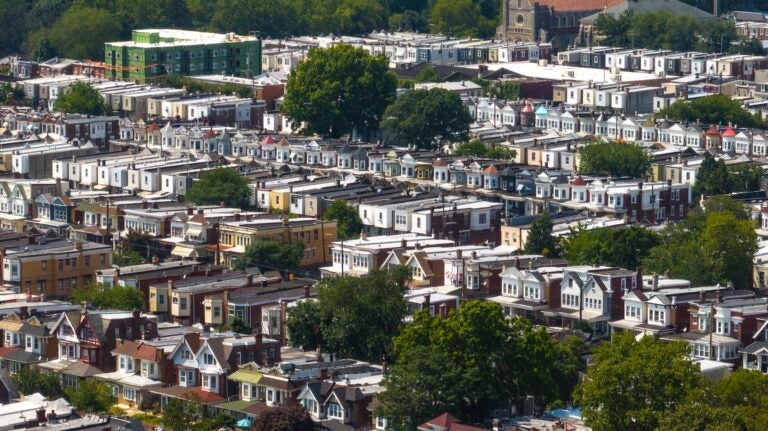
West Philadelphia row homes. (Kimberly Paynter/WHYY)
Have a question about Philly’s neighborhoods or the systems that shape them? PlanPhilly reporters want to hear from you! Ask us a question or send us a story idea you think we should cover.
It was a big year for housing legislation in Philadelphia City Council.
In 2025, lawmakers passed about a dozen measures aimed at increasing the city’s supply of affordable housing, cutting red tape for real estate developers and helping low-income renters looking for a new place to live.
Here’s a look at some of the legislation.
H.O.M.E. initiative
Mayor Cherelle Parker’s $2 billion housing plan was a major part of this year’s legislative calendar.
The plan, dubbed the Housing Opportunities Made Easy initiative, is rooted in creating and preserving 30,000 units amid an affordable housing crisis.
In June, during the final regular meeting before summer recess, lawmakers passed a measure that essentially authorized the city to borrow $800 million in bonds for H.O.M.E. It also details the dozens of programs set to receive funding under the multifaceted initiative, which is designed to help renters and homeowners keep a roof over their heads.
The legislation is considered the centerpiece of Parker’s housing plan.
During the final regular meeting of the year, council members approved funding for the first phase of H.O.M.E. The budget measure, parts of which were strongly opposed by Parker, calls for about $277 million in spending during the first year of the initiative.
Both measures put the city in the position to start borrowing for the plan sometime next year.
“It’s a win-win for the city of Philadelphia, and we’ll continue to work in partnership with the administration to address their issues and concerns, as well as members of City Council,” said Council President Kenyatta Johnson.
Lawmakers must pass an amended version of the bond ordinance before the borrowing can start. Finance Director Rob Dubow has said that $400 million will be borrowed at a time.
Related Content

A new study shows the PHLHousing+ program is reducing evictions and homelessness among participating families. It’s unclear if the pilot will become permanent.
7 months ago
Help for low-income renters
In June, Council passed legislation authorizing the city to create an antidisplacement fund for tenants forced to move because inspectors have issued a cease-operations order to their landlord. Such an order is considered an extreme measure and is issued to properties that pose an “immediate danger to life or property.”
Under the bill, tenants are eligible to receive a one-time payment through the fund if they must move because of a negligent property owner or landlord.
The measure, introduced by Councilmember Nicolas O’Rourke, initially did not come with any funding. But the first annual budget for the H.O.M.E. initiative now includes more money for the FreshStartPHL program, a move-in assistance effort that will include an antidisplacement fund.
It’s unclear how much of the program’s $4 million budget will go to the fund.
O’Rourke still hopes to pass the rest of the Safe Healthy Homes Act.
That includes an authorization for the city to create a program that conducts proactive inspections of rental properties. Another bill bars landlords from ending or modifying a tenant’s lease simply because that tenant is cooperating with a city investigation, has discussed their living conditions with a council member or reporter, or has joined a tenant organization.
Lawmakers this year also passed two bills meant to help renters during and after their application for a new apartment. Councilmember Rue Landau introduced both measures.
One bill bars landlords from charging an application fee unless the money is used to cover the cost of running a background and/or credit check. And within a 12-month period, they can’t charge someone more than the cost of completing those checks or $50, whichever is less.
The other measure requires some landlords to allow renters to pay a portion of their security deposit in installments — if the deposit is more than one month’s rent. In that case, renters can elect to pay the balance in equal installments over three months.
The bill only applies to landlords with more than two units.
“Wages have not kept up with the rising rents, and that’s why we need to do everything we possibly can to make it easier for tenants to move in, so they’re not stuck in properties that are in poor conditions or living in an unsafe living environment,” Landau said in June.
Related Content
South Philly’s Bellwether District has its first tenant. Here’s what to know about DrinkPAK
The canned drink manufacturer plans to create more than 170 long-term jobs at the former PES refinery site.
3 months ago
Listen 1:02‘Defying Displacement’
Councilmember Jamie Gauthier, who leads the legislative body’s housing committee, introduced a legislative package designed to increase Philadelphia’s supply of affordable housing by “cutting red tape” part of the approvals process for private real estate developers.
The legislation is aimed at speeding up and streamlining zoning and permitting requests, while keeping the latter economical for developers building affordable units.
The package is the second phase of the “Defying Displacement” campaign Gauthier launched in 2024. The push is rooted in protecting and expanding affordable housing in Philadelphia, and is primarily aimed at helping Black and Latino residents with low incomes.
One measure requires the city’s Department of Licenses and Inspections to expedite the review process for zoning permit applications for proposed affordable housing projects.
Other parts of the package made operational changes to the Zoning Board of Adjustment, the independent board empowered to make legally binding decisions about which proposed developments get built.
One provision is aimed at speeding up the zoning process for affordable housing projects that require a variance, or permission to deviate from the law. The legislation also makes it mandatory for developers to make an official commitment to the ZBA, as well as the relevant registered community organization, to build the affordable housing they’ve proposed.
Under the measure, the board cannot grant a variance without this proviso.
“This is doing what is in our control to make the development of affordable housing even easier for established developers,” Gauthier said in January.

Subscribe to PlanPhilly
WHYY is your source for fact-based, in-depth journalism and information. As a nonprofit organization, we rely on financial support from readers like you. Please give today.
Brought to you by PlanPhilly

PlanPhilly
In-depth, original reporting on housing, transportation, and development.

Mayor Parker budget plan could fund more library heating and air conditioning fixes next year
Philadelphia relies on libraries as heating and cooling centers, but they frequently close due to heat or air conditioning issues.
4 days ago
Listen 0:58
New Jersey affordable housing plans deadline arrives. Here’s what happens next
Many plans that have been submitted call for redevelopment of vacant malls, office parks and blighted spaces.
5 days ago

Top Parker aide Sinceré Harris to step down as Philadelphia’s chief deputy mayor
Harris, who helped lead Mayor Parker’s historic 2023 campaign, has accepted a new job in private practice.
1 week ago