

No new Philly anti-dumping initiatives in Parker’s third budget proposal
Parker’s $7 billion budget proposal would continue existing efforts to combat litter and illegal dumping and add funding for 125 cameras.
Listen 1:05
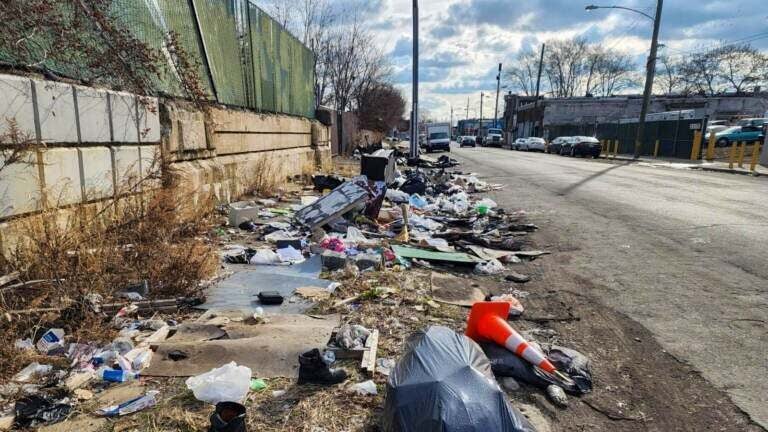
Dumping at Fairhill and Annsbury streets in North Philadelphia, as reported to Philly 311 on March 8, 2022. (Twitter/@PHILLY311PHOTOS)
Have a question about Philly’s neighborhoods or the systems that shape them? PlanPhilly reporters want to hear from you! Ask us a question or send us a story idea you think we should cover.
Philadelphia Mayor Cherelle Parker’s first two budgets launched new efforts to fight litter and illegal dumping across the city. That’s not the case with her latest spending proposal, which city officials say would maintain these current initiatives and add funding for more surveillance cameras in parks.
Parker told members of City Council during her budget address Thursday that the city’s current efforts are starting to work.
“We are cleaning up and greening up our city in a significant way,” Parker said. “We are on our way to eliminating that ‘Filthadelphia’ motto. We are trying, Philadelphia.”
Tackling litter and illegal dumping, problems that plague some of the city’s poorest neighborhoods, has been one of Parker’s top priorities since taking office in 2024. She campaigned on making Philadelphia a “safer, cleaner and greener city.”
Her first budget in 2024 included more funding for illegal dumping cleanups in residential areas, curbside bulk item pickup by appointment and a twice-weekly trash collection pilot in some neighborhoods. It expanded the Taking Care of Business corridor-cleaning program Parker introduced as a council member.
Parker’s second budget added money for vacant lot cleanups and anti-dumping efforts in city parks.
The roughly $7 billion operating budget Parker proposed Thursday for the fiscal year starting in July does not include any new line items for fighting illegal dumping, said Sabrina Maynard, the city’s budget director, during a press briefing Wednesday. But it would add funding for 125 additional surveillance cameras in parks.
“We’re continuing our investments in those areas,” Maynard said. “We’ve made really substantial ones in our first and second budgets, … we’re not proposing taking any of them away.”
Last fall, the city launched a task force of 40 existing city employees, newly empowered to issue larger fines for illegal dumping of up to $5,000 per item.
Since this task force formed, the city issued 105 violation notices and secured $3.5 million in judgments against illegal dumpers, Parker said Thursday.
“I don’t simply want you to listen to me saying that our city is cleaner and greener. I want you to think about what they’ve already done,” Parker said. “We’ve executed 94,000 actions last year. Cleaner streets. Illegal dumping tackled. Twice-a-week trash collection restored.”
Parker said illegal dumping on neighborhood blocks lowers quality of life and “disrespects communities.”
“That’s why in this budget … we continue to strengthen our One Philly Illegal Dumping Task Force,” she said. “We are sending a clear message that illegal dumping will not be tolerated in our city of Philadelphia.”
Related Content
‘Philly ain’t playing’: City steps up anti-dumping enforcement efforts
Forty additional city employees have been given authority to issue notices of violation against illegal dumpers. They hit the streets next month.
5 months ago
Listen 0:47Dallas Herbert, a resident of the Lawncrest neighborhood in Northeast Philadelphia who advocates for solutions to illegal dumping with 215 People’s Alliance and Trash Academy, said since Parker took office, he has seen a drop in dumping along a section of Newtown Avenue in his neighborhood where discarded items had piled up for years.
Herbert wants to see more money put toward the mayor’s current anti-dumping initiatives, but he said it makes sense to wait longer to see whether these initiatives work before investing in new projects.
“We need to make sure … whatever program the money is being spent on now is working, before we decide to spend more money on more programs,” Herbert said.
“We just can’t stop the fight now,” he added.
City budget officials stressed that the city faces fiscal challenges, including inflation, uncertainties in federal funding, the end of federal COVID-19 pandemic relief funding, a high poverty rate leading to a “weak” tax base and significant costs, such as debt service or employee health benefits, leaving less money available for discretionary spending.
Parker is also proposing a $1.5 billion capital program over the next six fiscal years. City budget officials categorize over half of the proposed spending in this six-year plan as “Clean and Green” projects. This total is driven by $400 million for paving streets and building curb cuts compliant with the Americans With Disabilities Act. In 2022, the city agreed to build or remediate 10,000 ADA-compliant curb ramps over 15 years under a settlement reached with a group of Philadelphians who sued the city over poor maintenance of curb cuts and sidewalks they said discriminated against people with disabilities.
The mayor’s proposed six-year capital program also includes $6 million for electric vehicle chargers for city vehicles and $4 million in city funding to supplement financing for energy efficiency projects in city facilities. The plan would put $315,000 toward supporting the city’s compliance with the Clean Water Act and sustaining a staff position dedicated to climate resilience.
City Council will hold a series of hearings on the budget in the coming months and will negotiate the spending plan with Parker’s administration. Council must pass a budget before the start of next fiscal year on July 1.

Get daily updates from WHYY News!
WHYY is your source for fact-based, in-depth journalism and information. As a nonprofit organization, we rely on financial support from readers like you. Please give today.
Brought to you by PlanPhilly

PlanPhilly
In-depth, original reporting on housing, transportation, and development.
Philly landlords escalate fight over legislation aimed at protecting city renters
A motion filed Monday seeks to add new allegations to a rare lawsuit that alleges a City Council committee violated state law.
2 days ago
Listen 1:05
Bills to protect Philadelphia renters are poised for passage following landlord lawsuit
The bills are part of the Safe Healthy Homes Act, a legislative package that has drawn considerable opposition from independent landlords.
3 days ago
Listen 1:00
A vacant Philadelphia factory on Broad Street may be adapted for affordable senior apartments
The five-story property in Philly’s Spring Garden section belongs to the Philadelphia Corporation for Aging and has sat empty for years.
1 week ago