How Philly’s Mütter Museum is rethinking human remains in its collection
The project to collect feedback started two years ago, with a national controversy and high-profile leadership changes along the way.
Listen 3:03
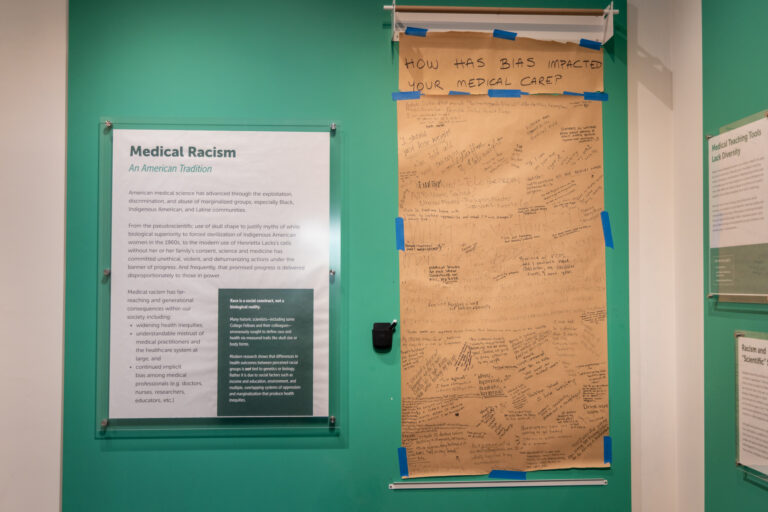
Part of the Postmortem Project exhibit at the Mütter Museum in Philadelphia (Kimberly Paynter/WHYY)
From Philly and the Pa. suburbs to South Jersey and Delaware, what would you like WHYY News to cover? Let us know!
Philadelphia’s Mütter Museum is incorporating visitor and community feedback on how it should handle its collection of medical oddities, specimens and human remains going forward.
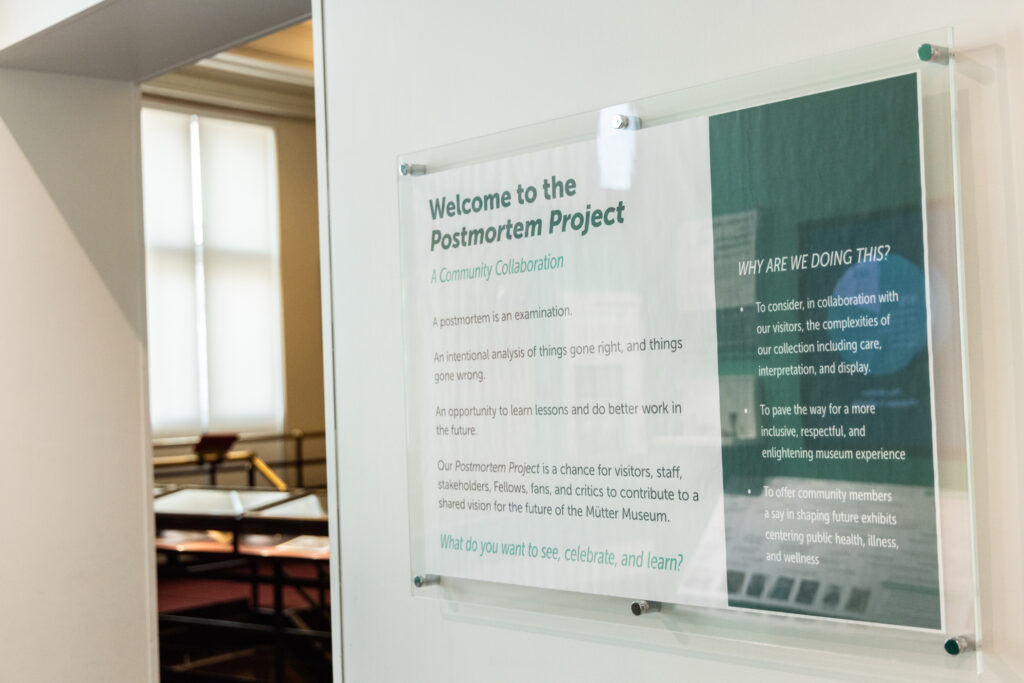
Thousands of people weighed in over a period of two years, during town hall and focus group meetings, and wrote down feedback in a dedicated area of the museum. The project, called the Postmortem project, focused on ethical questions around displaying human remains, which doctors collected more than a century ago. Other museums around the world are grappling with similar issues.
Science historian Sara Ray, the Mütter’s senior director of interpretation and engagement, has been going through the thousands of comments and suggestions. She said there are three big takeaways:
People want the museum to be more transparent about how something ended up in the museum’s collection, to continue its mission to educate people and satisfy their curiosities, and to focus on the human aspects of the collection.
“We start from that place of: these are human beings and let’s connect with the human side of this story and use that as an opportunity to help you think about your own experiences having a body and being a patient and living in our own historical moment,” Ray said.
She said she is excited to see how much the feedback aligns with how she and her colleagues see the collection.
“It was so beautiful to me, frankly, to hear that the public that has not spent a decade in classrooms and scholarship developing that perspective just, sort of naturally, also has that perspective and that connection with the collections — ‘Yeah, these are people like me,’” Ray said.
She said one way the museum will change is to do additional research to tell the stories of the people whose remains are represented in the collection.
For instance, one of the museum’s most high-profile artifacts is a 2.4-meter-long megacolon. The research for the project found that the organ’s owner was a Philadelphia man named Joseph Williams, who died of stomach issues in the 1890s.
Related Content
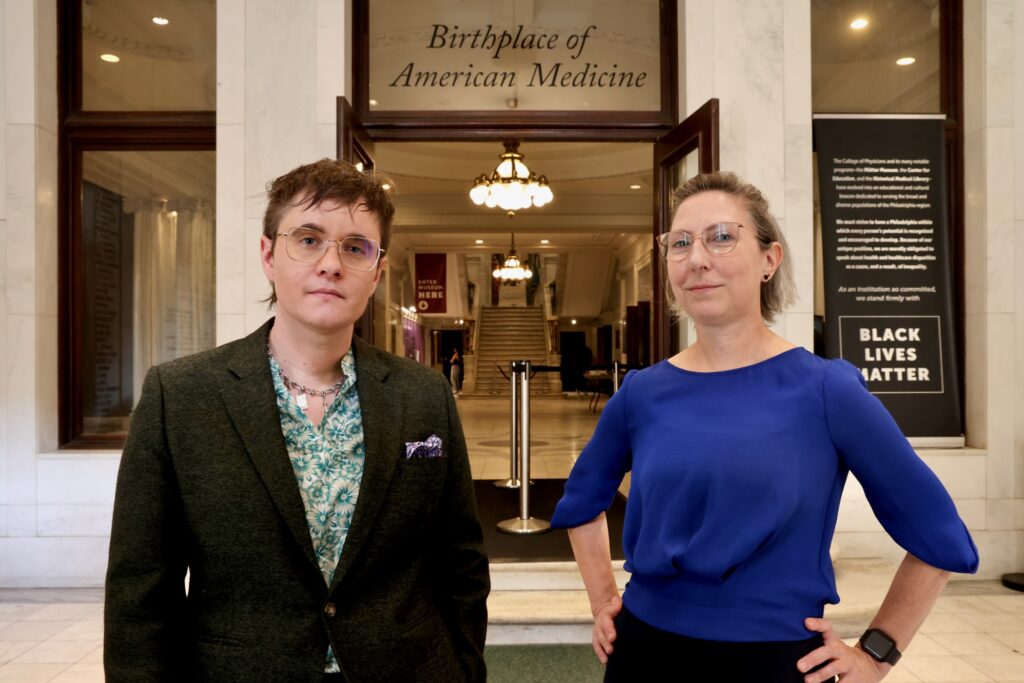
The museum has had two tumultuous years. Now, the two historians newly in charge of this storied institution explain their vision for the future.
1 year ago
Listen 1:47Finding that information required using historical archives and reading patient records in a way that researchers have not done before, said Erin McLeary, senior director of collections and research.
“Instead of reading it from the physician’s perspective, as it is written, you attempt to read against the grain to uncover the patient’s perspective of that encounter,” she said. “It’s a really powerful technique for imagining the lived experience of someone whose lived experience might be documented in a case report.”
Ray said this does justice to the patients because until now the collection reflected the points of view of the physicians who did the collecting.
“It’s just an acknowledgement that the historical record is not equal and that doing this type of storytelling offers us one pathway for equalizing who exists in the historical record,” she said.
She added that this answers a common question people often have about the collection: Why doesn’t the Mütter just give everything back? To which she said her response is always: To whom?
“We actually have to develop completely new techniques for even discovering that information before we can move on to a conversation about what should be done … in service of justice to Joseph Williams,” Ray said.
She said other museums in the U.S. and around the world have contacted the Mütter to learn about the work they are doing around ethics.
“It has been a really thorny problem for collections to navigate and it’s one that I think people, collections, rightfully or not, are sometimes really hesitant to do,” she said. “And I can understand why … it can get very heated, it’s connected to a lot of very tangled difficult problems.”
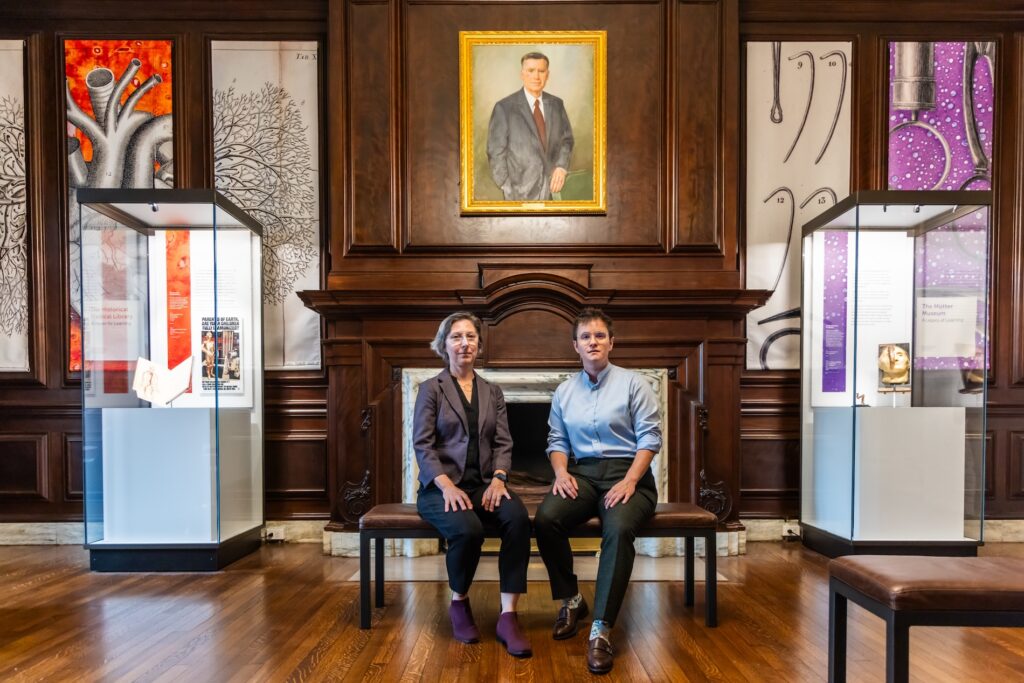
The Mütter Museum’s Postmortem project also came at a turbulent time for the museum, with a national controversy and high profile leadership changes.
Almost three years ago, museum leaders at the time took down all of its online exhibits. They argued the museum had to go through their entire collection and answer long overdue ethical questions about human remains, and how the museum came to have them. Long time fans worried that the museum would lose its identity and no longer serve the same educational purpose. The conflict led to national coverage.
The museum’s CEO, as well as the executive director who started the Postmortem project, Kate Quinn, have since left.
Stacey Mann, who was the lead interpretive planner for the Postmortem project and worked with Quinn, said in a statement that “I was very proud to be part of the project based on its original vision, and while the project changed under several changes in leadership, I hope that the museum and the college have learned something from the process that will inform their practice moving forward for the better.”
Ray said the project changed because they learned “the way that we were asking questions at the end of the grant process looked different than the way that we were asking [when] the grant was written, but that’s not a failure of the project. That means that we learned more.”
Ray and McLeary both stressed that they are grateful to Quinn for her work in starting the project, and “am gratified that we were able to land the plane of that conversation.”

Get daily updates from WHYY News!
WHYY is your source for fact-based, in-depth journalism and information. As a nonprofit organization, we rely on financial support from readers like you. Please give today.
“The Philly Killer exhibition,” as well as a second new exhibit called “Creating a City of Medicine,” are part of the city’s semiquincentennial celebrations.
5 months ago
Listen 1:03
The museum has had two tumultuous years. Now, the two historians newly in charge of this storied institution explain their vision for the future.
1 year ago
Listen 1:47
Penn Museum will no longer display exposed human remains
In an update to its Human Remains Policy, the archeology museum will no longer consider exhibiting any exposed human remains.
3 years ago
Listen 1:14