Delaware to recoup more than $300M over 3 years after law on tax decoupling takes effect
Delaware’s corporate tax revenue was at risk due to federal tax provisions passed in the “one big, beautiful bill.”
Listen 0:59

FILE - Delaware Gov. Matt Meyer delivers his first State of the State address, April 10, 2025. (Emma Lee/WHYY)
What are journalists missing from the state of Delaware? What would you most like WHYY News to cover? Let us know.
The state of Delaware will save $328 million through fiscal year 2028 due to a new law that decouples parts of the state’s and federal government’s tax code.
That was the estimate Monday from the Delaware Financial and Economic Advisory Council, the group tasked with predicting state revenues and expenses. The state had been forecasted in October to lose $400 million in corporate income tax revenue, which makes up about 5% of the state’s budget, without the change.
Delaware lawmakers passed a law last month decoupling state tax law from key federal provisions, including immediate tax breaks for research and development, 100% bonus depreciation and special depreciation for qualified production property.
Delaware’s fiscal year 2026 operating budget, which Gov. Matt Meyer signed into law July 1, was about $6.5 billion. The fiscal year 2027 appropriation limit is nearly $7.1 billion, a $365 million increase from October’s DEFAC meeting and about $517 million more than the current year’s budget.
This month’s forecast is the one Meyer will use to draft his recommended budgets for the next fiscal year.
Related Content

‘We’re not out of the woods’: Delaware passes legislation to shore up $400M budget shortfall
The bill decouples federal and Delaware state tax code. Corporate income tax makes up about 5% of the state budget.
5 months ago
Listen 0:47The fiscal year 2027 forecast remained relatively flat from the October meeting. But some expenses declined, including salaries for teachers. Brian Maxwell, state director of Management and Budget, said teacher salary expenses were down because student enrollment has dropped. He said federal immigration policy could be impacting the state’s Multilingual Learners.
“Obviously, there have been a number of students that may not be showing up to class just because of the enforcement of [Immigration and Customs Enforcement],” he said. “So some of the families may be scared to actually send their kids to school.”
Maxwell said overall enrollment is down, but the number of students needing special education services is up. The next student count is in February.
DEFAC members also discussed the revised Healthcare Spending benchmark. In September, the subcommittee devised a methodology that only used healthcare inflation, resulting in a 7.13% for 2026.
“We all gathered in October and there was a fair amount of concern with that outcome,” said Christen Linke Young, director of Health and Social Services. “So the subcommittee reconvened earlier this month to consider a new approach.”
After adopting the methodology using expected national inflation data and a three-year measure of health care cost growth, the benchmark now sits at 4.9%. But Young said there would be no penalty for hospitals exceeding the guideline.
Gov. Meyer and the state’s largest nongovernmental employer, ChristianaCare Health System, reached an agreement earlier this year in a lawsuit the regional hospital system filed last year. The Diamond State Hospital Cost Review Board was created by lawmakers in June 2024 to try to rein in hospital spending. But the agreement, which requires new legislation and the governor’s signature, would strip the board of its authority to approve and modify hospital budgets.

Get daily updates from WHYY News!
WHYY is your source for fact-based, in-depth journalism and information. As a nonprofit organization, we rely on financial support from readers like you. Please give today.
Part of the series
El presupuesto propuesto por Meyer “modernizaría” las tarifas de constitución de empresas y aumentaría los impuestos al tabaco para incrementar los ingresos estatales.
2 months ago
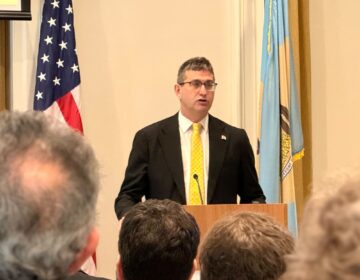
Meyer’s recommended budget would "modernize" business formation fees and raise cigarette taxes to add state revenue.
3 months ago
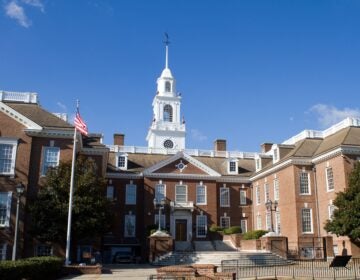
The governor wants to raise new revenue by changing the personal income tax brackets and increasing fees on cigarettes, state parks and roads.
1 year ago
Listen 0:54